wpe6.gif (6819 bytes)

CARBIDE MATERIALS INFORMATION CENTER
AE Carbides ™

32.4 (A)/00.022


Hydrogen                                 Helium
Lithium Beryllium                     Boron Carbon Nitrogen Oxygen Fluorine Neon
Sodium Magnesium                     Aluminum Silicon Phosphorus Sulfur Chlorine Argon
Potassium Calcium Scandium Titanium Vanadium Chromium Manganese Iron Cobalt Nickel Copper Zinc Gallium Germanium Arsenic Selenium Bromine Krypton
Rubidium Strontium Yttrium Zirconium Niobium Molybdenum Technetium Ruthenium Rhodium Palladium Silver Cadmium Indium Tin Antimony Tellurium Iodine Xenon
Cesium Barium Lanthanum Hafnium Tantalum Tungsten Rhenium Osmium Iridium Platinum Gold Mercury Thallium Lead Bismuth Polonium Astatine Radon
                                   
    Cerium Praseodymium Neodymium Promethium Samarium Europium Gadolinium Terbium Dysprosium Holmium Erbium Thulium Ytterbium Lutetium    
    Thorium Protactinium Uranium Neptunium Plutonium Americium Curium Berkelium Californium Einsteinium Fermium Mendelevium Nobelium Lawerencium      

(click on an element to view our products)

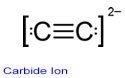
American Elements' manufacturing emphasizes production of carbide materials including Boron Carbide, Cobalt Carbide, Chromium Carbide, Hafnium Carbide, Molybdenum Carbide, Niobium Carbide, Tantalum Carbide, Titanium Carbide, Vanadium Carbide and Zirconium Carbide. Carbides are compounds in which the anion is one or more carbon atoms. Most metals form carbide compounds, thought not all. Indium and Gallium, for example, do not.

Like diamond, a pure carbon compound, Carbide compounds tend to be extremely hard, Crystallography Laboratory showing Nd:YAG crystal growth in processrefractory and resistant to wear, corrosion and heat, making them excellent candidates for coatings for drills and other tools. They often have other valuable properties in combination with toughness, such as electrical conductivity, low thermal expansion and abrasiveness.

Metallic carbide materials are marketed under the tradename AE CarbidesT. Some interesting characteristics and applications of Wet Chemistry and Atomic Absorption Analysis and Certificationa few carbides include:

Chromium Carbide. A typical example of a carbide compound that combines the refractory and hardness of carbides with some other property attributable to the cation. In this case, the anti-corrosive properties of chromium. Chromium carbide is used extensively in aerospace materials, high temperature drilling parts, welding electrodes and in other high temperature corrosive environments.

Hafnium Carbide. Combining the high refractive index of both the element hafnium and of carbides generally, HfC is the most refractory simple binary compound with a melting temperature of 3,890 ºC.

Silicon Carbide. Combines the refractory and hardness of carbides with high thermal conductivity creating a stiff low thermal expansion material.

Tungsten Carbide. The most commonly used of the carbides is tungsten carbide which when combined with cobalt carbide and/or titanium carbide, niobium carbide, chromium carbide and tantalum carbide produces the hardest and least costly cutting drills and tools.

Boron Carbide. An extremely light, hard and versatile material used extensively in grinding media as an abrasive, in lightweight ceramic parts and as a neutron "getter" in parts for nuclear reactors.

Zirconium Carbide. Another one of the refractory group of metals, Zirconium, generally finds applications in its oxide form in ceramic materials and as the carbide also has many potential uses in hard heat resistant ceramics. It has the additional characteristic of being electronically conductive.

A complete list of AE Carbides line of metallic carbide materials includes:

Aluminum Carbide
Antimony Carbide
Arsenic Carbide
Barium Carbide
Beryllium Carbide
Bismuth Carbide
Boron Carbide
Chromium Carbide
Cobalt Carbide
Germanium Carbide
Gold Carbide
Hafnium Carbide
Holmium Carbide

Iridium Carbide
Iron Carbide

Lanthanum Carbide
Lead Carbide
Lithium Carbide
Lutetium Carbide
Magnesium Carbide
Molybdenum Carbide
Neodymium Carbide
Nickel Carbide
Niobium Carbide
Osmium Carbide
Palladium Carbide

Platinum Carbide
Potassium Carbide
Praseodymium Carbide
Rhenium Carbide
Rhodium Carbide
Rubidium Carbide
Ruthenium Carbide
Samarium Carbide
Scandium Carbide
Selenium Carbide
Silicon Carbide
Silver Carbide
Strontium Carbide

Tantalum Carbide
Tellurium Carbide
Terbium Carbide
Thallium Carbide
Thullium Carbide
Tin Carbide
Titanium Carbide
Tungsten Carbide
Vanadium Carbide
Ytterbium Carbide
Yttrium Carbide
Zinc Carbide
Zirconium Carbide


American Elements provides customer guidance on topics such as thermal compatibility of materials, thermal cycling, thermal expansion, thermal shock, co-firing conditions, long term stability, densities, coarsening and other parameters.

American Elements maintains industrial scale production for all its carbide products.

American Elements will execute Non-Disclosure or Confidentiality Agreements to protect customer know-how.


PRODUCT CATALOG Price Quote Submicron & Nanopowder Tolling Ultra High Purity Sputtering Target Crystal Growth Advanced Materials Information Center


Recent Research & Development for Carbides

  • Effect of Confinement in Carbon Nanotubes on the Activity of Fischer-Tropsch Iron Catalyst. J Am Chem Soc. 2008 Jun 25. [Epub ahead of print]

  • Characterization of exposures among cemented tungsten carbide workers. Part II: Assessment of surface contamination and skin exposures to cobalt, chromium and nickel. J Expo Sci Environ Epidemiol. 2008 Jun 4. [Epub ahead of print]

  • Inverse temperature dependence of toughness in an ultrafine grain-structure steel. Science. 2008 May 23;320(5879):1057-60.

  • Understanding the Stabilization of Metal Carbide Endohedral Fullerenes M2C2@C82 and Related Systems. J Phys Chem A. 2008 Apr 26. [Epub ahead of print]

  • Nickel and cobalt hexamethylentetramine complexes (NO3)2Me(H2O)6(HMTA)2.4H2O (Me = Co2+, Ni2+): new molecular precursors for the preparation of metal dispersions. Inorg Chem. 2008 Apr 7;47(7):2303-11. Epub 2008 Mar 5.

  • Characteristics of dusts encountered during the production of cemented tungsten carbides. Ind Health. 2007 Dec;45(6):793-803.

  • Formation of unsaturated C3 hydrocarbons by the protolysis of magnesium sesquicarbide with ammonium halides. Inorg Chem. 2008 Feb 4;47(3):969-73. Epub 2008 Jan 1.

  • Synthesis, molecular structure and properties of the [H6-nNi30C4(CO)34(CdCl)2]n- (n=3-6) bimetallic carbide carbonyl cluster: a model for the growth of noncompact interstitial metal carbides. Chemistry. 2008;14(6):1924-34.

  • V2AlC, V4AlC3-x (x approximately 0.31), and V12Al3C8: synthesis, crystal growth, structure, and superstructure. Inorg Chem. 2007 Sep 3;46(18):7646-53. Epub 2007 Aug 9.

  • Metal nitride cluster fullerenes: their current state and future prospects. Small. 2007 Aug;3(8):1298-320. Review.

  • Bactericidal activity of chlorine-loaded carbide-derived carbon against Escherichia coli and Bacillus anthracis. J Biomed Mater Res A. 2008 Mar 1;84(3):607-13.

  • Experimental electron density of the complex carbides Sc3[Fe(C2)(2)] and Sc3[Co(C2)(2)]. J Am Chem Soc. 2007 Aug 1;129(30):9356-65. Epub 2007 Jul 6.

  • Endohedral clusterfullerenes--playing with cluster and cage sizes. Phys Chem Chem Phys. 2007 Jun 28;9(24):3067-81. Epub 2007 May 15. Review.

  • Wavelength and metal dependence in the photofragmentation of a gas-phase lanthanide beta-diketonate complex. J Phys Chem A. 2007 May 24;111(20):4144-9. Epub 2007 May 2.

  • Three-dimensional atom probe characterization of alloy element partitioning in cementite during tempering of alloy steel. Ultramicroscopy. 2007 Sep;107(9):808-12. Epub 2007 Mar 12.

  • Synthesis of ultra-incompressible superhard rhenium diboride at ambient pressure. Science. 2007 Apr 20;316(5823):436-9. Erratum in: Science. 2007 Aug 10;317(5839):750. Cumberland, Robert W [added].

  • Ultra-rapid processing of refractory carbides; 20 s synthesis of molybdenum carbide, Mo2C. Chem Commun (Camb). 2007 Feb 21;(7):742-4. Epub 2006 Nov 15.

  • BFW: a density functional for transition metal clusters. J Phys Chem A. 2007 Apr 5;111(13):2625-8. Epub 2007 Mar 14.

  • Ta3AlC2 and Ta4AlC3--single-crystal investigations of two new ternary carbides of tantalum synthesized by the molten metal technique. Inorg Chem. 2007 Feb 19;46(4):1410-8. Epub 2007 Jan 26.

  • Anion photoelectron spectroscopy and density functional investigation of vanadium carbide clusters. J Phys Chem A. 2006 Nov 30;110(47):12814-21.


PRODUCT LIST


American Elements Products can also be sourced at these sites:


electronics-ee.com