| KAOLIN PROPERTIES |
Product
Composition:
Appearance:
Whiteness(%)
Particle Size (-2µm%)
325mesh residue(45µm%)
Oil Absorbency (g/100g)
Moisture (%)
Disperse Sediment (um)
Refractive Index
PH
|

K-WHITE 5000TM
Al2O3·2SiO2
White Powder
≥94
≥90
≤0.005
>60
≤0.5
≤45
1.62
6.0-8.0
|

K-WHITE 6000TM
Al2O3·2SiO2
White Powder
≥92
≥80
≤0.005
45±5
≤0.5
≤45
6.0-8.0 |

K-WHITE 7000TM
Al2O3·2SiO2
White Powder
≥92
>90
<0.05
≤0.5
|

K-WHITE 8000TM
Al2O3·2SiO2
White Powder
≥92
≥90
≤0.005
50-65
≤0.5
≤45
1.62
6.0-8.0
|
 
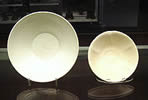
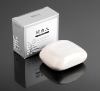
Above: Calcined and classified
American Elements
kaolin powder.
Right: Naturally occuring kaolin sample. |
| |
| CHEMICAL ANALYSIS OF KAOLIN |
Product
Al2O3(%)
SiO2(%)
Fe2O3 (%)
TiO2
CaO
MgO
K2O
Na2O
MnO2 |

K-WHITE 5000TM
45±2.0
52±2.0
≤0.5
<1.5
<0.5
<0.3
<0.1
<0.2
<0.004 |

K-WHITE 6000TM
45±2.0
52±2.0
<0.5
<1.5
<0.5
<0.3
<0.1
<0.2
<0.004 |

K-WHITE 7000TM
45±2.0
52±2.0
<0.5
<1.5
<0.5
<0.3
<0.1
<0.2
<0.004 |

K-WHITE 8000TM
45±2.0
52±2.0
≤0.5
<1.5
<0.5
<0.3
<0.1
<0.2
<0.004 |
| |
| |
USES AND APPLICATIONS FOR KAOLIN
Paper - Kaolin is the most extensively used additive in the manufacturing of paper, primarily as a filler and coating. Kaolin is combined with wood pulp or fiber to generate substantially more paper filler, and thus more paper. It is a less expensive alternative to all wood paper filler, which has become more expensive as demand for paper increases and supply of wood decreases. Kaolin's primary competition in fillers is calcium carbonate which, though more affordable, has less dramatic results. The particle size of Kaolin plays an important role in fillers and coatings, as larger particles provide added strength to paper. Kaolin coatings improve paper appearance, giving it varying degrees of gloss, smoothness, brightness, opacity, and most importantly printability. Three aspects of kaolin that shape these characteristics are purity, rheology, and particle geometry. Kaolin high in titanium and iron oxide impurities tends to be duller, and particle shape and size (rheology) are responsible for kaolin's efficiency as a coating. Kaolin improves printability by providing added ink absorption, ink pigment holdout, lowering linting tendency, and increasing roughness. Kaolin can be processed in different ways to omit varying degrees of these qualities. In some cases it is necessary to blend kaolin with other pigments such as calcium carbonate, talc, titanium dioxide and satin white to produce the desired effect in the final paper product.
Paint - White kaolin high in silica and alumina is widely used in the manufacturing of paint, often as a less expensive alternative to titanium dioxide. Kaolin is essential for improving the brightness of colors in paint, as well as controlling the texture for dispersment and coatability. The silica composition determines texture by absorbing oil in paint mixtures. Levels of alumina determine color brightness, and kaolin free of iron and titanium oxides improves brightness. Generally speaking, the ideal composition of kaolin for paint production is 47% silica, 39% alumina, 13% water (allowing 1% for other elements). Kaolin also improves paint in many other ways such as providing less weight per canister, significantly extending the product life, and improving opacity, gloss, color and viscosity. Calcined kaolin is particularly useful in creating crack resistant paint with high gloss and opacity. Particle size plays a large role in determining qualities opacity, gloss, color and viscosity in paint. Generally speaking the smaller particle size of finer kaolin powder will produce brighter color and more opacity, where coarser kaolin with a small particle size will produce proportionately duller colors and less opacity. Alternatively, coarser kaolin with larger particle size has a positive effect on gloss, and higher viscosity.

Ceramics - Kaolin has a wide range of application is the ceramic industry, and is commonly used in whiteware products, insulators, and refractories. In whitewares, kaolin viscosity improves the molding ability of pre-heated materials, offers a stronger finished product, and a smooth surface finish such as those found in tile and porcelain. Kaolin is becoming more prevalent in porcelain insulation due to its high dielectric strength and as an alternative to the scarcer resources high in potash feldsparic materials. Kaolin is used in refractories due to its extremely high fusion point, low water content, and high green strength.
Ceramics produced with kaolin have a wide variety of uses, mainly as a metal substitute. Ceramics are becoming more prevalent in aerospace due to their refractory strength. Ceramic knives stay sharper longer and have better durability than metal. Toyota has created an all ceramic car engine capable of running at much higher heats. Recently there have also been advances in bio-ceramics that may lead to new and better teeth and bone replacements.
Rubber - Kaolin is an ideal additive to rubber due to its "booklet" particle structure which adds strength and stiffness to the product through enhanced stress transfer. Kaolin is a low cost substitute for silica, and improves properties of calcium carbonate found in rubber solutions. Fine kaolin with smaller particles produces a stiffer rubber due to increased surface area, while providing more abrasion resistance. Coarse kaolin with larger particle size has a lower reinforcing affect and produces a more abrasive product used in applications such as rubber flooring where more abrasion is necessary.
Hard clays are used to produce fine grain for stronger applications while soft clays produce larger flakes and lower reinforcing effects. 80% of the clays used in rubber production are Air Float hard clays, which are air separated to remove impurities. Soft clays tend to incorporate more easily and therefore have higher loading point and quicker extrusions. Kaolin may be weakened further through the process of delaminating if necessary. Calcined kaolin, or water washed clay, is applied in certain wire and cable manufacturing as it improves conductivity.
Cements - Kaolin serves an important function in the cement industry as highly calcinated, pulverized kaolin adds compressive strength, flexural strength and water permeability to cement. In general 5-15% activated kaolin mixed with cement creates a superiorly strong mortar when hardened. Water permeability is useful in prolonging the durability of concrete and reduces weakening as a whole; calcined kaolin adds flexibility, which is often preferred to the usually brittle finished product. High performance concrete (cement with kaolin additives) can be modified to meet a variety of applications. In particular its shrinkage, strength when compressed, and water permeability makes high performance concrete useful in bridge building.
Adhesives - Kaolin's application in the adhesives industry is based almost entirely on the ability to control its rheology. A unique challenge in the adhesive and sealant industry is the necessity of differing levels of viscosity and shearing rates during the mixing phase by the producer and the application phase by the end user. For instance the producer will often require low viscosity during production, and the end product will need to be firmer so it does not spread. Once again particle size determines the rheology of the end product. The relationship between viscosity and shear rates is critical. Low, medium and high viscosity needs to be paired with low, medium and high shear rates based the product in question, and again these relationships may change from production to end use.
Dyes - Kaolin use in dyes has much the same relationship present in paint production. Kaolin acts as an inexpensive filler or extender of the product while increasing color and absorbability. It has been proven to enhance the catalytic ozonation process necessary in some dyes. As in paint, fine kaolin improves brightness, opacity and color, while coarse kaolin improves viscosity.

Cosmetics and Soaps - Kaolin is widely used in the cosmetic industry in mud masks for its absorbent qualities and its ability to control rheology. Calcined kaolin when applied to the face in a mud mask actually draws out impurities and toxins from the skin. This is possible because of the insolubility of kaolin which retains its absorbent qualities when mixed with water. As in most cases, kaolin is an ideal additive because it helps to control the thickness of the mud solution. One rare quality in kaolin mud masks possess is removing oil, dirt and toxins without leaving areas of the face, mainly the nose, shinny. These are essentially the same qualities that make kaolin useful in soap, although it is considered the least absorbent of the clays commonly used in soap. Therefore it is used most often in soaps for less oily, dryer skin. Kaolin is also used in deodorants, tooth paste, anti-inflammatory creams (poultices), and scrubs.
|
| |
| |
PURCHASING KAOLIN
Purchasing is easy. Simply note the product code, click on , and complete and submit the form. A sales engineer will respond immediately with cost and delivery information from our local offices in several time zones. We accept all major credit cards, forms of payment, and currency.
American Elements offers payment terms for bulk orders and term contracts based on your good credit.
| Product |
Description |
Technical Bulletin |
Product Code |
Order |
K-WHITE 5000TM
(for Paper) |
Ultrafine and superwhite calcined aluminum silicate for premium paper and board characterized by high brightness, high covering capacity, good light scattering performance, good suspension capacity and easy dispersing performance. Primary uses include paper coating, paper filling, and deinking of recycled paper.
|
 |
AL-SIO-01-P-5000 |
 |
K-WHITE 6000TM
(for Filler) |
Ultrafine and superwhite calcined kaolin particles, with porous micro-sheet surfaces, characterized by high brightness and easy dispersing performance. Used as a filler in plastics, rubber, and resins to improve electrolysis, thermal stability, aging resistance, and smoothness. Primary uses include cable, rubber, insulating materials, plastics, nylon, and plastics for automobiles.
|
 |
AL-SIO-01-P-6000 |
 |
K-WHITE 7000TM
(for Ceramics) |
Ultrafine and superwhite calcined kaolin for ceramic industry is characterized by high dielectric strength, high fusion point, low water content, and high green strength. It is commonly used in whiteware products, insulators, refractories, and bio-ceramics.
|
 |
AL-SIO-01-P-7000 |
 |
K-WHITE 8000TM
(for Paint) |
Ultrafine and superwhite calcined aluminum silicate for extending pigments in paints and coatings characterized by high brightness, high covering capacity, good light scattering performance, good suspension capacity and easy dispersing performance. Primary uses include as an extender for titanium dioxide.
|
 |
AL-SIO-01-P-8000 |
 |
|
| |
| |
A HISTORY OF KAOLIN
Kaolin (china clay) is a hydrated aluminium silicate crystalline mineral (kaolinite Al2Si2O5(OH)4), formed over many millions of years by the hydrothermal decomposition of granite rocks. Rocks that are rich in kaolin or kaolinite are known as china clay or white clay. The name is derived from Chinese: 高陵/高嶺; pinyin: Gaoling or Kao-ling ("High Hill") in Jingdezhen, Jiangxi province, China; the hill where it was first mined, many years before its discovery in Europe. The name entered English in 1727 from the French version of the word. William Cookworthy, who was looking for a source of material to produce white chinawares, discovered kaolin in Cornwall, England in 1745.
Used in the production of common pipes for centuries in Europe and Asia, Kaolin is most commonly used today in the paper-coating industry. Kaolin can contain very small traces of uranium and thorium, and is therefore useful in radiological dating. Kaolin has also seen some use in organic farming, as a spray applied to crops to deter insect damage, and in the case of apples, to prevent sun scald. As a folk medicine kaolin is used to soothe an upset stomach; in conventional medicine Kaolin is used as the active substance in liquid anti-diarrhea medicines such as Kaomagma and Kaopectate. In Africa it is used for facial masks or soap and is eaten for pleasure or to suppress hunger, a practice known as geophagy. Consumption is greater among women, especially during pregnancy. This practice is also seen among African-American women in the Southern United States, especially Georgia. In April 2008, the US Naval Medical Research Center announced the successful use of a Kaolinite-derived aluminosilicate nanoparticle infusion in traditional gauze, known commercially as QuikClot Combat Gauze.
|
| |
| |
ELEMENTAL CONSTITUTENTS OF KAOLIN
Kaolin is a naturally occurring oxide of two elements, aluminum and silicon:
 Aluminum is a Block P, Group 13, Period 3 element. The number of electrons in each of Aluminum's shells is 2, 8, 3 and its electronic configuration is [Ne] 3s2 3p1. In its elemental form aluminum's CAS number is 7429-90-5. The aluminum atom has a radius of 143.2.pm and it's Van der Waals radius is 200.pm. Aluminum is the most abundant metal in the earth's crust. Aluminum is not known to be harmful but ingestion may cause Alzheimer's disease.Aluminum is a silvery-white metal that possesses many desirable characteristics. It is light, nonmagnetic and nonsparking.
It stands second among metals in the scale of malleability, and sixth in ductility. It is extensively used in many industrial applications where a strong, light, easily constructed material is needed. Although it's electrical conductivity is only about 60% that of copper, it is used in electrical transmission lines because of its light weight. Pure aluminum is soft and lacks strength, but alloyed with small amounts of copper, magnesium, silicon, manganese, or other elements impart a variety of useful properties. These alloys are of vital importance in the construction of modern aircraft and rockets. Aluminum, evaporated in a vacuum, forms a highly reflective coating for both visible light and radiant heat. They are used to coat telescope mirrors. Aluminum is available as metal and compounds with purities from 99% to 99.9999% (ACS grade to ultra-high purity); metals in the form of foil, sputtering target, and rod, and compounds as submicron and nanopowder. See Aluminum research below.
Silicon is a Block P, Group 14, Period 3 element. The number of electrons in each of Silicon's shells is 2, 8, 4 and its electronic configuration is [Ne] 3s2 3p2. In its elemental form silicon's CAS number is 7440-21-3. The silicon atom has a radius of 117.6.pm and it's Van der Waals radius is 210.pm. Silicon is not toxic but can cause chronic respiratory problems if inhaled as a fine silica or silicate dust. Asbestos silicates are carcinogenic. Silicon is one of man's most useful elements. It makes up 25.7% of the earth's crust, by weight, and is the second most abundant element, being exceeded only by oxygen. The Czochralski process is commonly used to produce single crystals of silicon used for solid-state or semiconductor devices. Silica, as sand, is a principal ingredient of glass, one of the most inexpensive of materials with excellent mechanical, optical, thermal, and electrical properties. Silicon is available as metal and compounds with purities from 99% to 99.9999% (ACS grade to ultra-high purity); metals in the form of foil, sputtering target, and rod, and compounds as submicron and nanopowder. Ultra high purity silicon can be doped with boron, gallium, phosphorus , or arsenic to produce silicon for use in transistors, solar cells, rectifiers, and other solid-state devices which are used extensively in the electronics and space-age industries. Hydrogenated amorphous silicon has shown promise in producing economical cells for converting solar energy into electricity. Silcones are important products of silicon. They range from liquids to hard, glasslike solids with many useful properties. Silicon, first discovered by Jons Berzelius in 1823, is rarely found in pure crystal form and is usually produced from the iron-silicon alloy Ferrosilicon. The name Silicon originates from the Latin word "silex" which means flint or hard stone. See Silicon research below.
|
| |
| |
HOW KAOLIN IS MADE
Kaolin products are produced from mined Kaolinite (Al2Si2O5(OH)4), a naturally occurring aluminum silicate deposit. The mined mineral is blunged and degritted than screened for tramp impurities.
The recovered Kaolin powder is than milled in attrition mills to produce a uniform powder with a defined particle size (D50) and narrow particle size distribution.
The milled powder is calcined at specified temperatures depending on the grade to be produced.
Calcined Kaolin is than further screened and processed, lab tested for purity and particle size/distribution and packaged.
|
| |
| |
MATERIAL SAFETY DATA SHEET 
SECTION 1----------------------CHEMICAL IDENTIFICATION------------------------------------
Product Number:AL-SIO-01-P
Product Name: Aluminum Silicate Powder
SECTION 2 --------- COMPOSITION/INGREDIENT INFORMATION-----------------------
Synonyms: Kaolin, K-WHITE 5000TM, K-WHITE 8000TM, Kalionite, Aluminum Oxide/Silicon Dioxide
Component(s): Calcined Kaolin
EINECS No: 296-473-8
% (Approx.): 100
EC Hazard Classification: Not classified as dangerous
SECTION 3 -------------------- HAZARDS IDENTIFICATION-------------------------------------
EC hazard classification: This product is not classified as dangerous according to Directive 1999/45/EC
WHMIS classification: Non controlled
Hazard symbols: None
Most important adverse human health effect: Nuisance dust
SECTION 4 -------------------------------- FIRST-AID -------------------------------------------------
Eye contact: Direct contact with dust may cause irritation by mechanical abrasion.
Hold eyelids apart and flush with a steady stream of water for several minutes.
Skin contact: Direct contact may cause irritation by mechanical abrasion. Wash skin with soap and
water.
Inhalation: Dusts may irritate the nose, throat, and respiratory tract by mechanical abrasion. Coughing,
sneezing, and shortness of breath may occur following exposures in excess of appropriate limits.
Remove person to fresh air.
Ingestion: Expected to be non-toxic. Ingestion of large amounts may cause gastrointestinal irritation and
blockage. Rinse mouth out with water. Do not induce vomiting.
General advice: If symptoms persist seek medical attention. Change contaminated clothing.
SECTION 5 ------------------------ FIRE FIGHTING MEASURES -----------------------------
Extinguishing media: Non-combustible. Use media appropriate for surrounding materials or packaging.
Flash point: Non-combustible.
Flammable limits in air: Not flammable
Inappropriate extinguishing media: None
Autoignition temperature: Not flammable
Unusual fire and explosion hazards: None known.
Explosion data: Non-explosive
Protective measures: Use protective equipment appropriate for surrounding materials or packaging.
Sensitivity to static discharge: Not applicable
General advice: Although inert, product can become slippery when exposed to water. Use caution
walking around or handling broken product bags when exposed to water.
SECTION 6---------------------------ACCIDENTAL RELEASE ----------------------------------
Personal precautions: Avoid dust formation. Use approved respirators if dust exposure is greater than
recommended limits (refer to Section 8). Water should be used with care as it creates a slipping hazard
when mixed with this product.
Environmental precautions: This product is generally non-toxic to aquatic systems but may cause high
turbidity in storm water. Generally not harmful to water treatment systems.
Clean up methods: Collect by vacuum and mechanical sweeping, avoid dust generation. Remaining
residue can be washed to water treatment or storm water systems.
SECTION 7 ----------------------HANDLING AND STORAGE ----------------------------------
Handling: Appropriate personal protection should be used when handling (refer to Section 8). Use care
when dispensing to avoid dust generation. Fold and flatten empty bags carefully to reduce dust
generation. Wash hands thoroughly after handling.
Storage: Best if kept under dry conditions. Not generally affected by hot or cold storage. Keep unused
material in a closed container to avoid contamination and dust exposure.
Product use: Mineral pigment extender (or filler) used in paper coatings, paints, rubber and plastic
formulations.
SECTION 8 ------- EXPOSURE CONTROLS/PERSONAL PROTECTION ------------
Exposure limit values: No exposure limits have been published for calcined kaolin products. We
recommend using the limits published for Kaolin (CAS# 1332-58-7, EC#310-194-1). Use your local /
national occupational exposure limits for kaolin (or "nuisance dust") if more stringent than the following:
Exposure Limits:CAS# Kaolin 1332-58-7
2 mg/m³ (Respirable dust) TWA (8 hour) ACGIH TLV-A4*
15 mg/m³ (Total dust) TWA (8 hour) OSHA PEL
5 mg/m³ (Respirable dust) TWA (8 hour) OSHA PEL
10 mg/m³ (Total dust) TWA (10 hour) NIOSH REL
5 mg/m³ (Respirable dust) TWA (10 hour) NIOSH REL
Notes- (-A4) This indicates that kaolin is "Not Classifiable as a Human Carcinogen" by ACGIH.
Engineering controls: Dust levels in excess of appropriate exposure limits should be reduced by all
feasible engineering controls, including (but not limited to) wet suppression, ventilation, process
enclosure, and enclosed employee work stations.
Occupational exposure controls-
Eye protection: Approved safety glasses with side shields.
Skin / body protection: No special clothing required. Use suitable protection considering the work
environment and exposure risk.
SECTION 9 ------------- PHYSICAL AND CHEMICAL PROPERTIES---------------------
General information, appearance and odor: Off-white dry powder, soil-like odor.
Important health, safety and environmental information:
pH in water (20% solids suspension): 4.0- 6.3
Boiling point: N/A (Solid)
Melting point: >1700° C
Flash point: N/A
Flammability: N/A
Explosive properties: N/A
Oxidizing properties: N/A
Vapor pressure (mm Hg): No Vapor
Specific gravity (H2O=1): 2.2- 2.6
Solubility in water: Insoluble
Vapor density (Air=1): No Vapor
SECTION 10 ---------------------STABILITY/ REACTIVITY -------------------------------------
Conditions to avoid: This product is stable under normal storage, handling and environmental
conditions.
Materials to avoid: None known. This product is stable when used as intended by the manufacturer.
Hazardous decomposition products: None known. This product is stable in water.
SECTION 11 ------------------ TOXICOLOGICAL INFORMATION ------------------------------ Irritant / corrosive / sensitization effects: No data available. No hazards expected.
Effects after repeated or prolonged exposure (subacute, subchronic, chronic): No data available.
Calcined kaolin is not listed as a carcinogen by the International Agency for Research on Cancer
(IARC), the National Toxicology Program (NTP), or the Occupational Safety and Health Administration
(OSHA). The American Conference of Governmental Industrial Hygienists (ACGIH) lists kaolin as- Not
Classifiable as a Human Carcinogen: Inadequate data on which to classify the agent in terms of its
carcinogenicity in humans and/or animals.
This product contains less than 0.1% crystalline silica (quartz) based on testing using NIOSH method
7500.
SECTION 12 -----------------ECOLOGICAL INFORMATION ----------------------------------
Ecotoxicity: No data available. No adverse ecological effects are expected. May affect turbidity of water
if discharged in large quantities to lakes or streams.
Mobility: This product is insoluble in water.
Persistence and degradability: This product is made from a naturally occurring, abundant, innocuous
mineral.
Bioaccumulative potential: No data available. This product is not expected to accumulate in biota.
SECTION 13 -----------------DISPOSAL CONSIDERATIONS --------------------------------
Whenever possible pickup and reuse uncontaminated product, avoiding dust generation. Empty
packaging materials are suitable for recycling.
Product material is not hazardous as a waste. Dispose waste product and packaging materials
according to applicable national and local regulations. Improper disposal may create a nuisance dust
hazard. Dispose waste product and packaging materials in closed containers to avoid dusting.
SECTION 14 -------------------TRANSPORT INFORMATION ---------------------------------
UN or DOT Hazard Classification: Not a hazardous material as defined under national / international
road, rail, sea and air transport regulations.
Placard Required: None
Label Required: Use original label including all warnings. When disposing of this material in its pure
form use a "Non-Hazardous Waste" label.
SECTION 15 -------------------REGULATORY INFORMATION -------------------------------
U.S. Federal Regulations
FDA: Kaolin (aluminum silicate, china clay, clay) is acceptable for several specific uses. See 21 CFR
73, 82, 175, 176, 177, 178, 186, 310, 335, 346, 347 and 872.
SARA Title III (EPCRTKA) Section 302: This product does not contain any extremely hazardous
substances subject to the reporting requirements of 40 CFR Part 355.
SARA Title III (EPCRTKA) Section 311/312: This product is made from kaolin, listed in Table Z-1 of 29
CFR 1910.1000 "Air Contaminants" and is subject to the reporting requirements of 40 CFR Part 370
(threshold quantity of 10,000 lbs)
SARA Title III (EPCRTKA) Section 313: This product does not contain substances subject to the
reporting requirements of 40 CFR Part 372.
TSCA: This product or its components are listed in or exempt from the TSCA inventory requirements.
This product does not contain substances subject to export notification under Section 12(b) of TSCA.
North American Regulations
Several states, provinces and territories specifically list kaolin and regulate dust exposure.
USA: Alaska, Arizona, California, Idaho, Indiana, Massachusetts, Michigan, Minnesota, North Carolina,
Oregon, Pennsylvania, Rhode Island, Tennessee, Texas, Vermont, and Washington.
Canada: Alberta, British Columbia, Manitoba, New Brunswick, Northwest Territories, Nova Scotia,
Nunavut, Ontario, Quebec, Saskatchewan, and Yukon.
This product has been classified in accordance with hazard criteria of the Controlled Products
Regulations and this MSDS contains all the information required by the Controlled Products
Regulations.
WHIMS classification: Non controlled (tested, contains less than 0.1% crystalline silica).
Mexico: see national exposure limits. For the most current regulatory information please contact the
appropriate agencies in the state, province or territory where the product is used.
Foreign Regulations
CAS# 92704-41-1 can be found in the following registries: China Inventory, DSL(Canada), ECL
SECTION 16.------------------------OTHER INFORMATION--------------------------------------
The above information is believed to be correct but does not purport to be all inclusive and shall be
used only as a guide. The information in this document is based on the present state of our knowledge
and is applicable to the product with regard to appropriate safety precautions. It does not represent
any guarantee of the properties of the product.
American Elements shall not be held liable for any damage resulting from handling or from contact
with the above product. See reverse side of invoice or packing slip for additional terms and conditions
of sale.
COPYRIGHT 1997-2010 AMERICAN ELEMENTS.
LICENSED GRANTED TO MAKE UNLIMITED PAPER COPIES FOR INTERNAL USE ONLY. |
| |
| |
|
RECENT RESEARCH IN KAOLIN
Polymer induced flocculation and separation
of particulates from extracts of lignocellulosic materials. Duarte GV, Ramarao BV, Amidon TE. Bioresour Technol.
2010 Jul 3. [Epub ahead of print] PubMed PMID: 20605092.
Congenital Heart
Surgery Research Interest Group. The effective concentration of
epsilon-aminocaproic Acid for inhibition of fibrinolysis in neonatal plasma in
vitro. Yurka HG, Wissler RN, Zanghi CN, Liu X, Tu X, Eaton MP; Anesth Analg. 2010 Jul;111(1):180-4. Epub 2010 Jun 2. PubMed PMID:
20519417.
Correlations between activated clotting time values and heparin concentration
measurements in young infants undergoing cardiopulmonary bypass. Guzzetta NA, Monitz HG, Fernandez JD, Fazlollah TM, Knezevic A, Miller BE. Anesth Analg.
2010 Jul;111(1):173-9. Epub 2010 Jun 2. PubMed PMID: 20519414.
The dynamics of brain
and cerebrospinal fluid growth in normal versus hydrocephalic mice. Mandell JG, Neuberger T, Drapaca CS, Webb AG, Schiff SJ. J Neurosurg
Pediatr. 2010 Jul;6(1):1-10. PubMed PMID: 20593980.
A novel and efficient methodology for
the construction of quinazolines based on supported copper oxide nanoparticles.
Zhang J, Yu C, Wang S, Wan C, Wang Z. Chem Commun (Camb). 2010 Jun 24. [Epub ahead of print] PubMed PMID: 20574559.
Reactivity of lactate-modified
nanoscale iron particles with 2,4-dinitrotoluene in soils. Darko-Kagya K, Khodadoust AP, Reddy KR. J Hazard Mater. 2010
Jun 10. [Epub ahead of print] PubMed PMID: 20594642.
Decreased Fos protein
expression in rat caudal vestibular nucleus is associated with motion sickness
habituation. Cai YL, Wang JQ, Chen XM, Li HX, Li M, Guo JS. Neurosci Lett. 2010 Jun 9. [Epub ahead of print] PubMed PMID:
20540989.
Thromboelastography
results on citrated whole blood from clinically healthy cats depend on modes of
activation. Marschner CB, Bjørnvad CR, Kristensen AT, Wiinberg B. Acta Vet Scand. 2010 Jun 8;52:38. PubMed PMID: 20529334; PubMed
Central PMCID: PMC2890669.
An Assessment of Clinical Interchangeability of TEG(R) and RoTEM(R)
Thromboelastographic Variables in Cardiac Surgical Patients. Venema LF, Post WJ, Hendriks HG, Huet RC, de Wolf JT, de Vries AJ. Anesth Analg. 2010
Jun 7. [Epub ahead of print] PubMed PMID: 20529981.
Optimizing thrombelastography
(TEG) assay conditions to monitor rFVIIa (NovoSeven((R))) therapy in haemophilia
a patients. Viuff D, Andersen S, Sørensen BB, Lethagen S. Thromb Res. 2010 Jun 7. [Epub ahead of print] PubMed PMID: 20542542.
Infliximab administration reduces neuronal apoptosis on the optic pathways in a
rabbit hydrocephalus model: a preliminary report. Kurt G, Cemil B, Borcek AO, Borcek P, Akyurek N, Sepici A, Ceviker N. Br J Neurosurg. 2010
Jun;24(3):275-9. PubMed PMID: 20465456.
Time-course
analysis of pica in rats using an automatic feeding monitoring system. Yamamoto K, Asano K, Matsukawa N, Imaizumi M, Yamatodani A. J
Pharmacol Toxicol Methods. 2010 May 6. [Epub ahead of print] PubMed PMID:
20451632.
Carbon content reduction in a model
reluctant clayey soil: Slurry phase n-hexadecane bioremediation. Partovinia A, Naeimpoor F, Hejazi P. J Hazard Mater.
2010 May 2. [Epub ahead of print] PubMed PMID: 20570040.
Differentiation of Enzymatic
from Platelet Hypercoagulability Using the Novel Thrombelastography Parameter
Delta (Delta). Gonzalez E, Kashuk JL, Moore EE, Silliman CC. J Surg Res. 2010 Apr 21. [Epub ahead of print] PubMed PMID:
20605586.
[Flocculation characteristics
and mechanism of a conical fluidized-bed reactor]. Zhou DD, Zhao H, Li Y, Guo LB, Wang T, Dong SS. Huan Jing Ke Xue. 2010
Apr;31(4):1002-7. Chinese. PubMed PMID: 20527183.
Effect of Surround WP on behavior
and mortality of apple maggot (Diptera: Tephritidae). Leskey TC, Wright SE, Glenn DM, Puterka GJ. J Econ Entomol. 2010
Apr;103(2):394-401. PubMed PMID: 20429454.
Effect of
nano-packing on preservation quality of fresh strawberry (Fragaria ananassa Duch.
cv Fengxiang) during storage at 4 degrees C. Yang FM, Li HM, Li F, Xin ZH, Zhao LY, Zheng YH, Hu QH. J Food Sci. 2010 Apr;75(3):C236-40.
PubMed PMID: 20492272.
The effect of essential oil
formulations for potato sprout suppression. Owolabi MS, Lajide L, Oladimeji MO, Setzer WN. Nat Prod Commun. 2010 Apr;5(4):645-8.
PubMed PMID: 20433090.
|