American Elements Logo and U.S. Registered Trademark


Aluminum Carbon Nanotubes
Single-Walled AlC Nanotube
Product Product Code Order or Specifications
(2N) 99% Aluminum Carbon Nanotubes ALC-M-02-NT Contact American Elements
(3N) 99.9% Aluminum Carbon Nanotubes ALC-M-03-NT Contact American Elements
(4N) 99.99% Aluminum Carbon Nanotubes ALC-M-04-NT Contact American Elements
(5N) 99.999%Aluminum Carbon Nanotubes ALC-M-05-NT Contact American Elements

Aluminum Carbon Nanotubes are generally immediately available in most volumes. Additional technical, research and safety (MSDS) information is available. Carbon Nanotubes are Single-Walled, Double Walled and Multi-Walled black nano scale cylindrical tubes of graphitic carbon with numerous applications. Carbon Nanotubes are the stiffest and strongest known fibers and have unique electrical properties. When used as reinforcement fibers, carbon nanotubes can improve the quality and properties of metal, polymer and ceramics. Applications for AE Carbon Nanotubes™ include in flat screen displays, scanning probe microscopes in brushes for commercial electric motors, and in sensing devices and because of their strength in numerous aerospace and automotive uses, in body armor and tear-resistant cloth fibers and textiles and stronger and lighter sports equipment . Carbon nanotubes can behave like a conductive metallic or semiconductor depending on their structure, which is useful for nanoscale electronic devices and in electrically conductive films in coatings, plastics, nanowire, nanofiber and in certain bioscience applications. Recently, carbon nanotubes have been demonstrated to create the "darkest" known material absorbing all wavelengths or "colors" of light which will prove useful in solar and electronic applications.

When combined with Aluminum, Copper, Magnesium, Nickel, Titanium, and Tin, Single-Walled Carbon Nanotube materials reveal enhanced tensile strength, hardness and elastic modulus characteristics.

Titanium/Carbon Nanotube composites, research shows demonstrate a considerable increase in tensile stress, hardness and yield stress. In an additional study, when compared to pure Titanium, Titanium/Carbon Nanotube composites displayed increased property hardness of the metal as well as improved elastic modulus.

Aluminum(Al) atomic and molecular weight, atomic number and elemental symbolAluminum is a Block P, Group 13, Period 3 element. The number of electrons in each of Aluminum's shells is 2, 8, 3 and its electronic configuration is [Ne] 3s2 3p1. In its elemental form aluminum's CAS number is 7429-90-5. The aluminum atom has a radius of 143.2.pm and it's Van der Waals radius is 200.pm. Aluminum is the most abundant metal in the earth's crust. Aluminum is not known to be harmful but ingestion may cause Alzheimer's disease.Aluminum is a silvery-white metal that possesses many desirable characteristics. It is light, nonmagnetic and nonsparking. It stands second among metals in the scale of malleability, and sixth in ductility. It is extensively used in manyAluminum Bohr Model industrial applications where a strong, light, easily constructed material is needed. Although it's electrical conductivity is only about 60% that of copper, it is used in electrical transmission Elemental Aluminumlines because of its light weight. Pure aluminum is soft and lacks strength, but alloyed with small amounts of copper, magnesium, silicon, manganese, or other elements impart a variety of useful properties. These alloys are of vital importance in the construction of modern aircraft and rockets. Aluminum, evaporated in a vacuum, forms a highly reflective coating for both visible light and radiant heat. They are used to coat telescope mirrors. Aluminum is available as metal and compounds with purities from 99% to 99.9999% (ACS grade to ultra-high purity); metals in the form of foil, sputtering target, and rod, and compounds as submicron and nanopowder. See Aluminum research below.

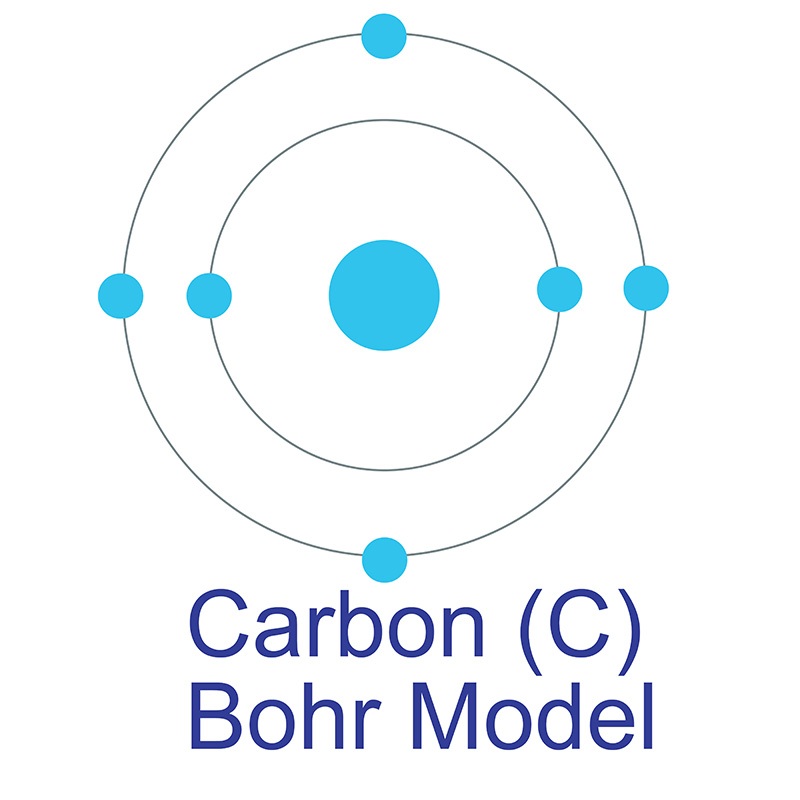
Carbon(C)atomic and molecular weight, atomic number and elemental symbolCarbon is a Block P, Group 12, Period 2 element. The number of electrons in each of Carbon's shells is 2, 4 and its electronic configuration is [He] 2s2 2p2. In its elemental form carbon's CAS number is 7440-44-0. Carbon in its purest form has very low toxicity. Carbon black dust, such as soot or coal dust can cause irritation and damage to the lungs when inhaled in large quantities. Carbon In its elemental form is one of the softest (graphite) and hardest (diamond) materials found in nature. Applications for graphitic carbon include in lubricant formulations and as the replacement for lead in pencils. Diamond and diamond micropowder have numerous industrial applications due to its extreme hardness and resistance to heat and pressure, including in geological drilling bits, grinding media and as a high strength, high temperature abrasive.Graphene is a nanoscale ultra thin film or foil with thicknesses as small as 1 nanometer which can be produced from either silicon carbide or graphite flake processing. These Carbon Bohr Modelinclude in drill bits and grinding media and grinding equipment. Carbon also finds application in steel alloys, in various filtering and purification technologies and as a neutron moderator in nuclear power plants. Carbon  is available as a nanoparticle and in single-walled, double-walled and multi-walled nanotubes with purities from 99% to 99.999% ( ultra-high purity ). Carbon was first discovered by Hans Christian Oersted in 1825. The name carbon originates from the Latin word 'carbo' meaning charcoal. See Carbon research below.

Formula CAS No. Appearance Molecular Weight
AlC      

Have a Question? Ask a Chemical Engineer or Material Scientist   Request an MSDS or Certificate of Analysis


Search by Material, Product Name, Product Code, CAS Number, Formula, Element, Anion, Form, EC Number, MDL Number or PubChem ID.


German   Korean   French   Japanese   Spanish   Chinese (Simplified)   Portuguese   Russian   Chinese (Taiwan)  Italian   Turkish   Polish   Dutch   Czech   Swedish   Hungarian   Danish   Hebrew

Production Catalog Available in 36 Countries & Languages

PACKAGING SPECIFICATIONS FOR BULK & RESEARCH QUANTITIES


Typical bulk packaging includes palletized plastic 5 gallon/25 kg. pails, fiber and steel drums to 1 ton super sacks in full container (FCL) or truck load (T/L) quantities. Research and sample quantities and hygroscopic, oxidizing or other air sensitive materials may be packaged under argon or vacuum. Shipping documentation includes a Certificate of Analysis and Material Safety Data Sheet (MSDS). Solutions are packaged in polypropylene, plastic or glass jars up to palletized 440 gallon liquid totes.


Show me other forms of Aluminum
 
Customers for this product have also looked at:


Recent Research & Development for Aluminum

  • Characterisation of optically stimulated luminescence dosemeters to measure organ doses in diagnostic radiology. Endo A, Katoh T, Kobayashi I, Joshi R, Sur J, Okano T. Dentomaxillofac Radiol. 2011 Nov 24. [Epub ahead of print] PMID: 22116136 [PubMed - as supplied by publisher]

  • Metal recovery from high-grade WEEE: A life cycle assessment. Bigum M, Brogaard L, Christensen TH. J Hazard Mater. 2011 Oct 17. [Epub ahead of print] PMID: 22115841 [PubMed - as supplied by publisher]

  • Protein interactions with nanosized hydrotalcites of different composition. Bellezza F, Alberani A, Posati T, Tarpani L, Latterini L, Cipiciani A. J Inorg Biochem. 2011 Oct 8;106(1):134-142. [Epub ahead of print] PMID: 22115829 [PubMed - as supplied by publisher]

  • Neurobehavioral toxic effects of perinatal oral exposure to aluminum on the developmental motor reflexes, learning, memory and brain neurotransmitters of mice offspring. Abu-Taweel GM, Ajarem JS, Ahmad M. Pharmacol Biochem Behav. 2011 Nov 13. [Epub ahead of print] PMID: 22115621 [PubMed - as supplied by publisher]

  • Lithium-Ion Conducting Electrolyte Salts for Lithium Batteries. Aravindan V, Gnanaraj J, Madhavi S, Liu HK. Chemistry. 2011 Nov 24. doi: 10.1002/chem.201101486. [Epub ahead of print] PMID: 22114046 [PubMed - as supplied by publisher]

  • Contact fatigue response of porcelain-veneered alumina model systems. Stappert CF, Baldassarri M, Zhang Y, Stappert D, Thompson VP. J Biomed Mater Res B Appl Biomater. 2011 Nov 24. doi: 10.1002/jbm.b.31977. [Epub ahead of print] PMID: 22113973 [PubMed - as supplied by publisher]

  • Influence of formulation pH and suspension state on freezing-induced agglomeration of aluminum adjuvants. Salnikova MS, Davis H, Mensch C, Celano L, Thiriot DS. J Pharm Sci. 2011 Nov 23. doi: 10.1002/jps.22815. [Epub ahead of print] PMID: 22113733 [PubMed - as supplied by publisher]

  • Evidence of foliar aluminium accumulation in local, regional and global datasets of wild plants. Metali F, Salim KA, Burslem DF. New Phytol. 2011 Nov 23. doi: 10.1111/j.1469-8137.2011.03965.x. [Epub ahead of print] PMID: 22111583 [PubMed - as supplied by publisher]

  • Turning aluminium into a noble-metal-like catalyst for low-temperature activation of molecular hydrogen. Chopra IS, Chaudhuri S, Veyan JF, Chabal YJ. Nat Mater. 2011 Nov 23;10(12):986. doi: 10.1038/nmat3174. No abstract available. PMID: 22109610 [PubMed - in process]

  • Fabrication of a dual-layer aluminum nanowires polarization filter array. Gruev V. Opt Express. 2011 Nov 21;19(24):24361-9. doi: 10.1364/OE.19.024361. PMID: 22109463 [PubMed - in process]

  • Image-quality perception as a function of dose in digital radiography. Lehnert T, Naguib NN, Korkusuz H, Bauer RW, Kerl JM, Mack MG, Vogl TJ. AJR Am J Roentgenol. 2011 Dec;197(6):1399-403. PMID: 22109295 [PubMed - in process]

  • Highly sensitive nano-porous lattice biosensor based on localized surface plasmon resonance and interference. Yeom SH, Kim OG, Kang BH, Kim KJ, Yuan H, Kwon DH, Kim HR, Kang SW. Opt Express. 2011 Nov 7;19(23):22882-91. doi: 10.1364/OE.19.022882. PMID: 22109166 [PubMed - in process]

  • Regulatory role of zinc during aluminium-induced altered carbohydrate metabolism in rat brain. Singla N, Dhawan DK. J Neurosci Res. 2011 Nov 23. doi: 10.1002/jnr.22790. [Epub ahead of print] PMID: 22108899 [PubMed - as supplied by publisher]

  • Three-shell-based lens barrel for the effective athermalization of an IR optical system. Yang HS, Kihm H, Moon IK, Jung GJ, Choi SC, Lee KJ, Hwang HY, Kim SW, Lee YW. Appl Opt. 2011 Nov 20;50(33):6206-13. doi: 10.1364/AO.50.006206. PMID: 22108878 [PubMed - in process]

  • Influences of heat seal lacquer thickness on the quality of blister packages. Mühlfeld L, Langguth P, Häusler H, Hagels H. Eur J Pharm Sci. 2011 Nov 16. [Epub ahead of print] PMID: 22108348 [PubMed - as supplied by publisher]

  • Efficient extraction of vaccines formulated in aluminum hydroxide gel by including surfactants in the extraction buffer. Zhu D, Huang S, McClellan H, Dai W, Syed NR, Gebregeorgis E, Mullen GE, Long C, Martin LB, Narum D, Duffy P, Miller LH, Saul A. Vaccine. 2011 Nov 18. [Epub ahead of print] PMID: 22107848 [PubMed - as supplied by publisher]

  • Electronic structure investigation of highly compressed aluminum with k edge absorption spectroscopy. Benuzzi-Mounaix A, Dorchies F, Recoules V, Festa F, Peyrusse O, Levy A, Ravasio A, Hall T, Koenig M, Amadou N, Brambrink E, Mazevet S. Phys Rev Lett. 2011 Oct 14;107(16):165006. Epub 2011 Oct 13. PMID: 22107398 [PubMed - in process]

  • Short-time electron dynamics in aluminum excited by femtosecond extreme ultraviolet radiation. Medvedev N, Zastrau U, Förster E, Gericke DO, Rethfeld B. Phys Rev Lett. 2011 Oct 14;107(16):165003. Epub 2011 Oct 12. PMID: 22107395 [PubMed - in process]

  • Nanoporous Polymeric Nanofibers Based on Selectively Etched PS-b-PDMS Block Copolymers. Birlik Demirel G, Buyukserin F, Morris MA, Demirel G. ACS Appl Mater Interfaces. 2011 Nov 22. [Epub ahead of print] PMID: 22107361 [PubMed - as supplied by publisher]

  • Low bias electron scattering in structure-identified single wall carbon nanotubes: role of substrate polar phonons. Chandra B, Perebeinos V, Berciaud S, Katoch J, Ishigami M, Kim P, Heinz TF, Hone J. Phys Rev Lett. 2011 Sep 30;107(14):146601. Epub 2011 Sep 28. PMID: 22107221 [PubMed - in process]


Recent Research & Development for Carbon

  • Catalytic Asymmetric [4 + 2] Additions with Aliphatic Nitroalkenes. Bartelson KJ, Singh RP, Foxman BM, Deng L. Chem Sci. 2011 Oct;2(10):1940-1944. PMID: 22174973 [PubMed]

  • Environmental forcing of nitrogen fixation in the eastern tropical and sub-tropical north atlantic ocean. Rijkenberg MJ, Langlois RJ, Mills MM, Patey MD, Hill PG, Nielsdóttir MC, Compton TJ, Laroche J, Achterberg EP. PLoS One. 2011;6(12):e28989. Epub 2011 Dec 13. PMID: 22174940 [PubMed - in process]

  • Revealing the Functions of the Transketolase Enzyme Isoforms in Rhodopseudomonas palustris Using a Systems Biology Approach. Hu CW, Chang YL, Chen SJ, Kuo-Huang LL, Liao JC, Huang HC, Juan HF. PLoS One. 2011;6(12):e28329. Epub 2011 Dec 8. PMID: 22174789 [PubMed - in process]

  • Prediction of Protein Modification Sites of Pyrrolidone Carboxylic Acid Using mRMR Feature Selection and Analysis. Zheng LL, Niu S, Hao P, Feng K, Cai YD, Li Y. PLoS One. 2011;6(12):e28221. Epub 2011 Dec 9. PMID: 22174779 [PubMed - in process]

  • Plant Community Diversity Influences Allocation to Direct Chemical Defence in Plantago lanceolata. Mraja A, Unsicker SB, Reichelt M, Gershenzon J, Roscher C. PLoS One. 2011;6(12):e28055. Epub 2011 Dec 9. PMID: 22174766 [PubMed - in process]

  • Structural Insights into the Inhibition of Cytosolic 5'-Nucleotidase II (cN-II) by Ribonucleoside 5'-Monophosphate Analogues. Gallier F, Lallemand P, Meurillon M, Jordheim LP, Dumontet C, Périgaud C, Lionne C, Peyrottes S, Chaloin L. PLoS Comput Biol. 2011 Dec;7(12):e1002295. Epub 2011 Dec 8. PMID: 22174667 [PubMed - in process]

  • Topological anisotropy of stone-wales waves in graphenic fragments. Ori O, Cataldo F, Putz MV. Int J Mol Sci. 2011;12(11):7934-49. Epub 2011 Nov 15. PMID: 22174641 [PubMed - in process]

  • Environmental signals and regulatory pathways that influence exopolysaccharide production in rhizobia. Janczarek M. Int J Mol Sci. 2011;12(11):7898-933. Epub 2011 Nov 15. PMID: 22174640 [PubMed - in process]

  • Fatty Acid Composition and Antioxidant Activity of Tea (Camellia sinensis L.) Seed Oil Extracted by Optimized Supercritical Carbon Dioxide. Wang Y, Sun D, Chen H, Qian L, Xu P. Int J Mol Sci. 2011;12(11):7708-19. Epub 2011 Nov 8. PMID: 22174626 [PubMed - in process]

  • A sandwich electrochemical immunosensor using magnetic DNA nanoprobes for carcinoembryonic antigen. Gan N, Jia L, Zheng L. Int J Mol Sci. 2011;12(11):7410-23. Epub 2011 Oct 28. PMID: 22174606 [PubMed - in process]

  • Review of crystalline structures of some selected homologous series of rod-like molecules capable of forming liquid crystalline phases. Zugenmaier P. Int J Mol Sci. 2011;12(11):7360-400. Epub 2011 Oct 28. PMID: 22174604 [PubMed - in process]

  • The Southern Ocean's Role in Carbon Exchange During the Last Deglaciation. Burke A, Robinson LF. Science. 2011 Dec 15. [Epub ahead of print] PMID: 22174131 [PubMed - as supplied by publisher]

  • Consequences of resource limitation for recovery from repeated defoliation in Eucalyptus globulus Labilladiere. Barry KM, Quentin A, Eyles A, Pinkard EA. Tree Physiol. 2011 Dec 14. [Epub ahead of print] PMID: 22174093 [PubMed - as supplied by publisher]

  • Are Unsaturated Isocyanides so Different from the Corresponding Nitriles? Chrostowska A, Matrane A, Maki D, Khayar S, Ushiki H, Graciaa A, Belachemi L, Guillemin JC. Chemphyschem. 2011 Dec 15. doi: 10.1002/cphc.201100672. [Epub ahead of print] PMID: 22174079 [PubMed - as supplied by publisher]

  • Supramolecular Materials: Photosensitized Hydrogen Evolution from Water Using a Single-Walled Carbon Nanotube/Fullerodendron/SiO(2) Coaxial Nanohybrid (Adv. Mater. 48/2011). Tajima T, Sakata W, Wada T, Tsutsui A, Nishimoto S, Miyake M, Takaguchi Y. Adv Mater. 2011 Dec 22;23(48):5749. doi: 10.1002/adma.201190195. PMID: 22174015 [PubMed - in process]

  • Highly Diastereo- and Enantioselective Mannich Reactions of Synthetically Flexible Ketimines with Secondary Amine Organocatalysts. Kano T, Song S, Kubota Y, Maruoka K. Angew Chem Int Ed Engl. 2011 Dec 15. doi: 10.1002/anie.201107375. [Epub ahead of print] PMID: 22173941 [PubMed - as supplied by publisher]

  • A computational and experimental investigation of the mechanical properties of single ZnTe nanowires. Davami K, Mortazavi B, Ghassemi HM, Yassar RS, Lee JS, Rémond Y, Meyyappan M. Nanoscale. 2011 Dec 15. [Epub ahead of print] PMID: 22173853 [PubMed - as supplied by publisher]

  • Preparation and characterization of hybrid conducting polymer-carbon nanotube yarn. Foroughi J, Spinks GM, Ghorbani SR, Kozlov ME, Safaei F, Peleckis G, Wallace GG, Baughman RH. Nanoscale. 2011 Dec 16. [Epub ahead of print] PMID: 22173836 [PubMed - as supplied by publisher]

  • Simultaneous determination of the quantity and isotopic signature of dissolved organic matter from soil water using high-performance liquid chromatography/isotope ratio mass spectrometry. Scheibe A, Krantz L, Gleixner G. Rapid Commun Mass Spectrom. 2012 Jan 30;26(2):173-80. doi: 10.1002/rcm.5311. PMID: 22173805 [PubMed - in process]

  • High-temperature pyrolysis/gas chromatography/isotope ratio mass spectrometry: simultaneous measurement of the stable isotopes of oxygen and carbon in cellulose. Woodley EJ, Loader NJ, McCarroll D, Young GH, Robertson I, Heaton TH, Gagen MH, Warham JO. Rapid Commun Mass Spectrom. 2012 Jan 30;26(2):109-14. doi: 10.1002/rcm.5302. PMID: 22173798 [PubMed - in process]


Swiss Nanoconvention 2012Proud sponsors of the 2012 Swiss NanoConvention. Please join us and our customers & co-sponsors EMPA and the EPFL on
May 22-24, 2012 in Lausanne, Switzerland.


PRODUCT CATALOG Aluminum Products Foil Submicron & Nanopowder Tolling Ultra High Purity Sputtering Target Crystal Growth Rod, Plate, Powder, etc. Home

  Print this Page
Periodic table of the elements science and academic information, elements and advanced materials data, scientific presentations and all pages, designs, concepts, logos, and color schemes herein are the copyrighted proprietary rights and intellectual property of American Elements. American Elements is a U.S. Registered Trademark. © 1998-2012. American Elements. All rights reserved.
Learn Six Sigma


American Elements is a copyrighted U.S. Trademark. All rights reserved.