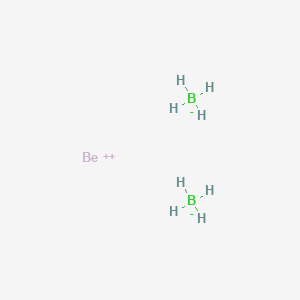
Beryllium Borohydride is generally immediately available in most volumes. Beryllium Borohydride has the highest total hydrogen capacity. Originally, Be(BH4)2 was prepared by reaction of BeMe2 with diborane and, more expediently, by mechanochemical exchange response of BeCl2 with alkali metal borohydrides followed by vacuum distillation at 140 °C. This covalent compound is built of helical polymeric chains -BeH2BH2BeH2BH2- and terminal bidentate BH4groups. Beryllium Borohydried is very unstable, exploding on contact with air and moisture.
Unfortunately, the intense toxicity of beryllium, and very high reactivity of Be(BH4)2, makes this material inappropriate for hydrogen storage despite low decomposition temperature and high frequency.American Elements offers a broad range of products for hydrogen storage research, advanced fuel cells and battery applications. Hydrogen can easily be generated from renewable energy sources and is the most abundant element in the universe. Hydrogen is produced from various sources such as fossil fuels, water and renewables. Hydrogen is nonpolluting and forms water as a harmless byproduct during use. The challenges associated with the use of hydrogen as a form of energy include developing safe, compact, reliable, and cost-effective hydrogen storage and delivery technologies. Currently, hydrogen can be stored in these three forms: Compressed Hydrogen, Liquid Hydrogen and Chemical Storage. High purity, submicron and nanopowder forms may be considered. Hydride compounds are used often used as portable sources of hydrogen gas.American Elements produces to many standard grades when applicable, including Mil Spec (military grade); ACS, Reagent and Technical Grade; Food, Agricultural and Pharmaceutical Grade; Optical Grade, USP and EP/BP (European Pharmacopoeia/British Pharmacopoeia)and follows applicable ASTM testing standards.Typical and custom packaging is available. Additional technical, research and safety (MSDS) information is available as is a Reference Calculator for converting relevant units of measurement.
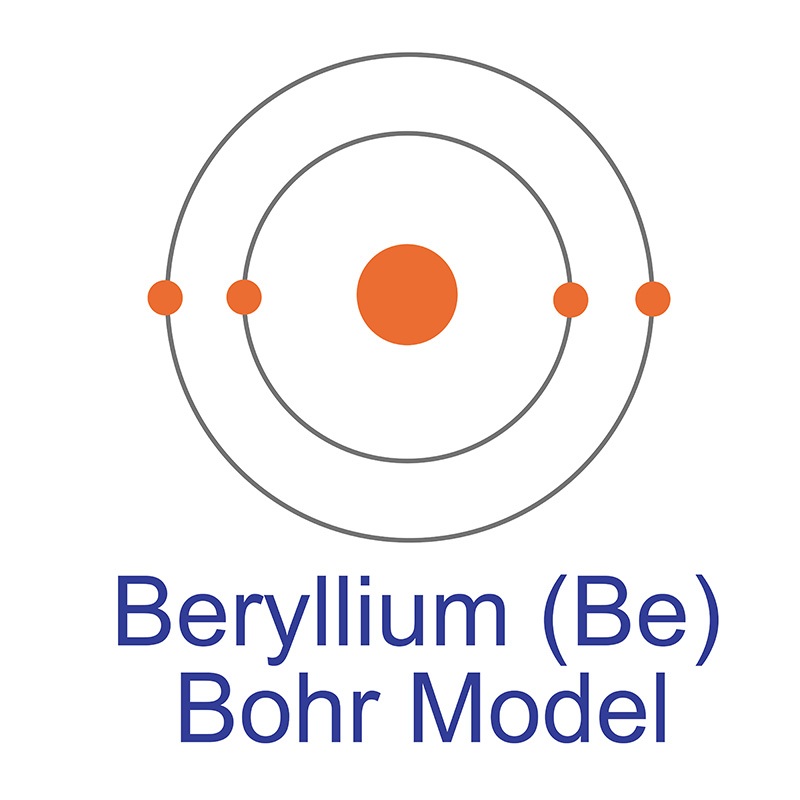
Beryllium is a Block S, Group 2, Period 2 element. The number of electrons in each of Beryllium's shells is 2, 2 and its electronic configuration is [He] 2s2. In its elemental form beryllium's CAS number is 7440-41-7. The beryllium atom has a radius of 111.3.pm and it's Van der Waals radius is 200.pm. Beryllium and its salts are toxic as well as carcinogenic. Beryllium is most commonly used in alloys with our base metallic materials. As a 1 - 3% addition to copper it produces "beryllium bronze", a highly wear resistant material and with nickel it is used to make spot welder electrodes. Beryllium is a fairly soft metal that is brittle yet strong. Beryllium is available as metal and compounds with purities from 99% to 99.999% (ACS grade to ultra-high purity); metals in the form of foil, sputtering target, and rod, and compounds as submicron and nanopowder. It is used as a coating on X-ray tubes because it is transparent to the X-ray range. It emits neutrons on bombardment by alpha rays. It also has applications in the nuclear industry. Beryllium was first discovered by Abbé René-Just Hauy in 1798. The origin of the name Beryllium comes from the Greek word 'beryllos' meaning beryl. See Beryllium research below.
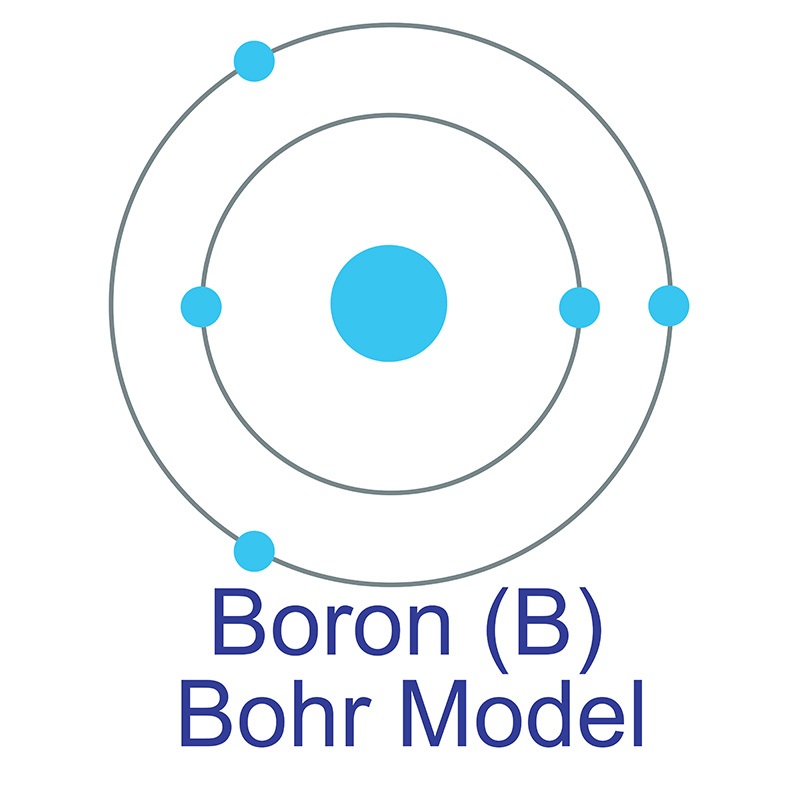
Boron is a Block P, Group 13, Period 2 element. The number of electrons in each of Boron's shells is 2, 3 and its electronic configuration is [He] 2s2 2p1. In its elemental form boron's CAS number is 7440-42-8. The boron atom has a radius of 79.5.pm and it's Van der Waals radius is 200.pm. Boron is not toxic. Boron has an energy band gap of 1.50 to 1.56 eV, which is higher than that of either silicon or germanium. Optical characteristics include transmitting portions of the infrared. Boron is a poor conductor of electricity at room temperature but a good conductor at high temperature. Boron in its elemental form is not toxic. Amorphous boron is used in pyrotechnic flares to provide a distinctive green color, and in rockets as an igniter Boric acid is also an important boron compound with major markets in textile products. Boron compounds are also extensively used in the manufacture of borosilicate glasses. The isotope Boron-10 is used as a control for nuclear reactors, as a shield for nuclear radiation, and in instruments used for detecting neutrons. Boron nitride has remarkable properties and can be used to make a material as hard as diamond. The nitride also behaves like an electrical insulator but conducts heat like a metal. Boron also has lubricating properties similar to graphite. Boron was first discovered by Sir Humphry Davy and J.L Gay-Lussac in 1808. The name Boron originates from a combination of carbon and the Arabic word 'buraqu meaning borax. See Boron research below.
Hydrogen is a Block S, Group 1, Period 1 element. The electronic configuration is 1s1. In its elemental form hydrogen's CAS number is 1333-74-0. The hydrogen atom has a radius of 37.3.pm and it's Van der Waals radius is 120.pm. Hydrogen is highly flammable. Hydrogen was discovered by Sir Henry Cavendish in 176.
PACKAGING SPECIFICATIONS FOR BULK & RESEARCH QUANTITIES
Typical bulk packaging includes palletized plastic 5 gallon/25 kg. pails, fiber and steel drums to 1 ton super sacks in full container (FCL) or truck load (T/L) quantities. Research and sample quantities and hygroscopic, oxidizing or other air sensitive materials may be packaged under argon or vacuum. Shipping documentation includes a Certificate of Analysis and Material Safety Data Sheet (MSDS). Solutions are packaged in polypropylene, plastic or glass jars up to palletized 440 gallon liquid totes.
Search by Material, Product Name, Product Code, CAS Number, Formula, Element, Anion, Form, EC Number, MDL Number or PubChem ID.
Dietary Intake of Metals by the Population of Tarragona County (Catalonia, Spain): Results from a Duplicate Diet Study.
Domingo JL, Perelló G, Giné Bordonaba J.
Biol Trace Elem Res. 2011 Nov 29. [Epub ahead of print]
PMID:
22124862
[PubMed - as supplied by publisher]
Analysis of thomson scattering from nonequilibrium plasmas.
Chapman DA, Gericke DO.
Phys Rev Lett. 2011 Oct 14;107(16):165004. Epub 2011 Oct 12.
PMID:
22107396
[PubMed - in process]
Discrimination of zeolites and beryllium containing silicates using portable Raman spectroscometric equipment with near-infrared excitation.
Jehlicka J, Vandenabeele P, Edwards HG.
Spectrochim Acta A Mol Biomol Spectrosc. 2011 Oct 25. [Epub ahead of print]
PMID:
22099060
[PubMed - as supplied by publisher]
Deposition of beryllium-7 in Hsinchu, Taiwan.
Chao JH, Chiu YJ, Lee HP, Lee MC.
Appl Radiat Isot. 2012 Feb;70(2):415-22. Epub 2011 Oct 29.
PMID:
22056921
[PubMed - in process]
Preparation, certification and interlaboratory analysis of workplace air filters spiked with high-fired beryllium oxide.
Oatts TJ, Hicks CE, Adams AR, Brisson MJ, Youmans-McDonald LD, Hoover MD, Ashley K.
J Environ Monit. 2011 Oct 25. [Epub ahead of print]
PMID:
22025111
[PubMed - as supplied by publisher]
Immunotoxicity of 3 chemical forms of beryllium following inhalation exposure.
Muller C, Salehi F, Mazer B, Bouchard M, Adam-Poupart A, Chevalier G, Truchon G, Lambert J, Zayed J.
Int J Toxicol. 2011 Oct;30(5):538-45.
PMID:
22013136
[PubMed - in process]
H(2) Molecules Encapsulated in Extended Be(n) Cluster Cages: Toward Light-Metal Nanofoams for Hydrogen Storage.
Naumkin FY, Wales DJ.
J Phys Chem A. 2011 Nov 10;115(44):12105-10. Epub 2011 Oct 14.
PMID:
21999658
[PubMed - in process]
Occupational exposure to beryllium in primary aluminium production.
Skaugset NP, Ellingsen DG, Dahl K, Martinsen I, Jordbekken L, Drabløs PA, Thomassen Y.
J Environ Monit. 2011 Oct 13. [Epub ahead of print]
PMID:
21993554
[PubMed - as supplied by publisher]
The ground-state potential energy function of a beryllium dimer determined using the single-reference coupled-cluster approach.
Koput J.
Phys Chem Chem Phys. 2011 Dec 7;13(45):20311-7. Epub 2011 Oct 13.
PMID:
21993509
[PubMed - in process]
Beryllium: a paradigm for occupational lung disease and its prevention.
Kreiss K.
Occup Environ Med. 2011 Nov;68(11):787-8. No abstract available.
PMID:
21984591
[PubMed - in process]
Beryllium-specific CD4+ T cells in blood as a biomarker of disease progression.
Martin AK, Mack DG, Falta MT, Mroz MM, Newman LS, Maier LA, Fontenot AP.
J Allergy Clin Immunol. 2011 Nov;128(5):1100-6.e1-5. Epub 2011 Sep 23.
PMID:
21943943
[PubMed - in process]
On the stability of Be3: a benchmark complete active space self-consistent field + averaged quadratic coupled cluster study.
Amaro-Estrada JI, Scemama A, Caffarel M, Ramírez-Solís A.
J Chem Phys. 2011 Sep 14;135(10):104311.
PMID:
21932897
[PubMed - in process]
Fast IMRT with narrow high energy scanned photon beams.
Andreassen B, Strååt SJ, Holmberg R, Näfstadius P, Brahme A.
Med Phys. 2011 Aug;38(8):4774-84.
PMID:
21928650
[PubMed - indexed for MEDLINE]
Solubility and chemistry of materials encountered by beryllium mine and ore extraction workers: relation to risk.
Deubner DC, Sabey P, Huang W, Fernandez D, Rudd A, Johnson WP, Storrs J, Larson R.
J Occup Environ Med. 2011 Oct;53(10):1187-93.
PMID:
21926919
[PubMed - in process]
Air toxics exposure from vehicle emissions at a U.S. border crossing: Buffalo Peace Bridge Study.
Spengler J, Lwebuga-Mukasa J, Vallarino J, Melly S, Chillrud S, Baker J, Minegishi T.
Res Rep Health Eff Inst. 2011 Jul;(158):5-132.
PMID:
21913504
[PubMed - indexed for MEDLINE]
An independent review and prioritization of past radionuclide and chemical releases from the Los Alamos National Laboratory - implications for future dose reconstruction studies.
Le MH, Buddenbaum JE, Burns RE Jr, Shonka JJ, Gaffney SH, Donovan EP, Flack SM, Widner TE.
J Environ Monit. 2011 Oct 4;13(10):2735-47. Epub 2011 Sep 9.
PMID:
21904770
[PubMed - in process]
Tritium plasma experiment: parameters and potentials for fusion plasma-wall interaction studies.
Shimada M, Kolasinski RD, Sharpe JP, Causey RA.
Rev Sci Instrum. 2011 Aug;82(8):083503.
PMID:
21895244
[PubMed - in process]
Fluorescence "Turn-On" chemosensor for the selective detection of beryllium.
Hosseini M, Vaezi Z, Ganjali MR, Faridbod F, Abkenar SD.
Spectrochim Acta A Mol Biomol Spectrosc. 2011 Dec;83(1):161-4. Epub 2011 Aug 18.
PMID:
21890399
[PubMed - in process]
Vertical migration of radionuclides in the vicinity of the chernobyl confinement shelter.
Bondarkov MD, Zheltonozhsky VA, Zheltonozhskaya MV, Kulich NV, Maksimenko AM, Farfán EB, Jannik GT, Marra JC.
Health Phys. 2011 Oct;101(4):362-7.
PMID:
21878761
[PubMed - indexed for MEDLINE]
Sensitization and chronic beryllium disease at a primary manufacturing facility, part 3: exposure-response among short-term workers.
Schuler CR, Virji MA, Deubner DC, Stanton ML, Stefaniak AB, Day GA, Park JY, Kent MS, Sparks R, Kreiss K.
Scand J Work Environ Health. 2011 Aug 29. pii: 3192. doi: 10.5271/sjweh.3192. [Epub ahead of print]
PMID:
21877099
[PubMed - as supplied by publisher]
Application of a novel boronated porphyrin (H(2) OCP) as a dual sensitizer for both PDT and BNCT.
Hiramatsu R, Kawabata S, Miyatake S, Kuroiwa T, Easson MW, Vicente MG.
Lasers Surg Med. 2011 Jan;43(1):52-8. doi: 10.1002/lsm.21026.PMID: 21254143 [PubMed - in process]
A novel and sensitive resonance scattering assay for detection of urea in serum coupled urease catalytic reaction and NH(4) (+) associated particle reaction.
Liang A, Qin H, Zhou L, Zhang Y, Ouyang H, Wang P, Jiang Z.
Bioprocess Biosyst Eng. 2011 Jan 21. [Epub ahead of print]PMID: 21253771 [PubMed - as supplied by publisher]
Electrochemical treatment of wastewater polluted by nitrate: selective reduction to N(2) on Boron-Doped Diamond cathode.
Georgeaud V, Diamand A, Borrut D, Grange D, Coste M.
Water Sci Technol. 2011;63(2):206-12.PMID: 21252421 [PubMed - in process]
Novel Pyridazine Based Scorpionate Ligands in Cobalt and Nickel Boratrane Compounds.
Nuss G, Saischek G, Harum BN, Volpe M, Gatterer K, Belaj F, Mo?sch-Zanetti NC.
Inorg Chem. 2011 Jan 20. [Epub ahead of print]PMID: 21250681 [PubMed - as supplied by publisher]
Cationized gelatin-HVJ envelope with sodium borocaptate improved the BNCT efficacy for liver tumors in vivo.
Fujii H, Matsuyama A, Komoda H, Sasai M, Suzuki M, Asano T, Doki Y, Kirihata M, Ono K, Tabata Y, Kaneda Y, Sawa Y, Lee CM.
Radiat Oncol. 2011 Jan 20;6(1):8. [Epub ahead of print]PMID: 21247507 [PubMed - as supplied by publisher]Free Article
High-temperature thermal stability and axial compressive properties of a coaxial carbon nanotube inside a boron nitride nanotube.
Liew KM, Yuan J.
Nanotechnology. 2011 Feb 25;22(8):085701. Epub 2011 Jan 17.PMID: 21242624 [PubMed - in process]
Experimental analysis of charge redistribution due to chemical bonding by high-resolution transmission electron microscopy.
Meyer JC, Kurasch S, Park HJ, Skakalova V, Künzel D, Groß A, Chuvilin A, Algara-Siller G, Roth S, Iwasaki T, Starke U, Smet JH, Kaiser U.
Nat Mater. 2011 Jan 16. [Epub ahead of print]PMID: 21240288 [PubMed - as supplied by publisher]
l-Boronophenylalanine-mediated Boron Neutron Capture Therapy for Malignant Glioma Progressing After External Beam Radiation Therapy: A Phase I Study.
Kankaanranta L, Seppälä T, Koivunoro H, Välimäki P, Beule A, Collan J, Kortesniemi M, Uusi-Simola J, Kotiluoto P, Auterinen I, Serèn T, Paetau A, Saarilahti K, Savolainen S, Joensuu H.
Int J Radiat Oncol Biol Phys. 2011 Jan 13. [Epub ahead of print]PMID: 21236605 [PubMed - as supplied by publisher]
Trace Elements in the Hair of Hemodialysis Patients.
Ochi A, Ishimura E, Tsujimoto Y, Kakiya R, Tabata T, Mori K, Shoji T, Yasuda H, Nishizawa Y, Inaba M.
Biol Trace Elem Res. 2011 Jan 14. [Epub ahead of print]PMID: 21234813 [PubMed - as supplied by publisher]
New superconducting and semiconducting fe-B compounds predicted with an ab initio evolutionary search.
Kolmogorov AN, Shah S, Margine ER, Bialon AF, Hammerschmidt T, Drautz R.
Phys Rev Lett. 2010 Nov 19;105(21):217003. Epub 2010 Nov 19.PMID: 21231344 [PubMed - in process]
Soft Bond-Deformation Paths in Superhard ?-Boron.
Zhou W, Sun H, Chen C.
Phys Rev Lett. 2010 Nov 19;105(21):215503. Epub 2010 Nov 17.PMID: 21231321 [PubMed - in process]
Micronutrient mineral and folate content of Australian and imported dried fruit products.
Bennett LE, Singh DP, Clingeleffer PR.
Crit Rev Food Sci Nutr. 2011 Jan;51(1):38-49.PMID: 21229417 [PubMed - in process]
Silencing of the GDP-D-mannose 3,5-epimerase affects the structure and cross-linking of the pectic polysaccharide rhamnogalacturonan II and plant growth in tomato.
Voxeur A, Gilbert L, Rihouey C, Driouich A, Rothan C, Baldet P, Lerouge P.
J Biol Chem. 2011 Jan 11. [Epub ahead of print]PMID: 21224383 [PubMed - as supplied by publisher]Free Article
Role of an extracellular loop in determining the stoichiometry of Na/HCO3 cotransporters.
Chen LM, Liu Y, Boron WF.
J Physiol. 2011 Jan 4. [Epub ahead of print]PMID: 21224233 [PubMed - as supplied by publisher]
Borate Minerals and Origin of the RNA World.
Grew ES, Bada JL, Hazen RM.
Orig Life Evol Biosph. 2011 Jan 8. [Epub ahead of print]PMID: 21221809 [PubMed - as supplied by publisher]
Hunting for Monolayer Boron Nitride: Optical and Raman Signatures.
Gorbachev RV, Riaz I, Nair RR, Jalil R, Britnell L, Belle BD, Hill EW, Novoselov KS, Watanabe K, Taniguchi T, Geim AK, Blake P.
Small. 2011 Jan 7. [Epub ahead of print] No abstract available. PMID: 21218420 [PubMed - as supplied by publisher]
Fabrication of Vertically Aligned Diamond Whiskers from Highly Boron-Doped Diamond by Oxygen Plasma Etching.
Terashima C, Arihara K, Okazaki S, Shichi T, Tryk DA, Shirafuji T, Saito N, Takai O, Fujishima A.
ACS Appl Mater Interfaces. 2011 Jan 7. [Epub ahead of print]PMID: 21214209 [PubMed - as supplied by publisher]
Factors Controlling Stripping Voltammetry of Lead at Polycrystalline Boron Doped Diamond Electrodes: New Insights from High-Resolution Microscopy.
Hutton LA, Newton ME, Unwin PR, Macpherson JV.
Anal Chem. 2011 Jan 7. [Epub ahead of print]PMID: 21214184 [PubMed - as supplied by publisher]
Boron removal and recovery from concentrated wastewater using a microwave hydrothermal method.
Tsai HC, Lo SL.
J Hazard Mater. 2010 Dec 10. [Epub ahead of print]PMID: 21211905 [PubMed - as supplied by publisher]
Water-supported organized structures based on wedge-shaped amphiphilic derivatives of dipyrrolyldiketone boron complexes.
Maeda H, Eifuku N, Haketa Y, Ito Y, Lee E, Lee M.
Phys Chem Chem Phys. 2011 Jan 5. [Epub ahead of print]PMID: 21210031 [PubMed - as supplied by publisher]
Proud sponsors of Aeromat 2012. Please join us and our customers & co-sponsors Boeing and ATI on
June 18-20, 2012
in Charlotte, North Carolina