wpe6.gif (6819 bytes)
NLO
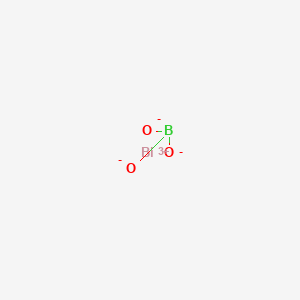
High Purity BiB3O3

Product Product Code Order or Specifications
(2N) 99% NLO LI-NB-02-C Contact American Elements
(3N) 99.9% NLO LI-NB-03-C Contact American Elements
(4N) 99.99% NLO LI-NB-04-C Contact American Elements
(5N) 99.999% NLO LI-NB-05-C Contact American Elements

NLO is a line solid used in photo optic applications.American Elements produces to many standard grades when applicable, including Mil Spec (military grade); ACS, Reagent and Technical Grade; Food, Agricultural and Pharmaceutical Grade; Optical Grade, USP and EP/BP (European Pharmacopoeia/British Pharmacopoeia)and follows applicable ASTM testing standards.Typical and custom packaging is available. Additional technical, research and safety (MSDS) information is available as is a Reference Calculator for converting relevant units of measurement.

Bismuth(Bi) atomic and molecular weight, atomic number and elemental symbolBismuth is a Block P, Group 15, Period 6 element. The number of electrons in each of Bismuth's shells is 2, 8, 18, 32, 18, 5 and its electronic configuration is [Xe] 4f14 5d10 6s2 6p3. In its elemental form bismuth's CAS number is 7440-69-9. The bismuth atom has a radius of 154.5.pm and it's Van der Waals radius is 200.pm. Bismuth is the most diamagnetic of all metals, and the thermal conductivity is lower than any metal, except mercury. Bismuth is not toxic. It has a high electrical resistance, and has the highest Hall Effect of any metal (i.e., greatest increase in electrical resistance when placed in a magnetic field). Bismuth expands on solidification. This property makes bismuth alloys particularly suited to the making of sharp castings of objects subject to damage by high temperatures. With other metalsElemental Bismuth such as tin, cadmium , etc., bismuth forms low-melting alloys which Bismuth Bohr Modelare extensively used for safety devices in fire detection and extinguishing systems. Bismuth is used in producing malleable irons and is finding use as a catalyst for making acrylic fibers. When bismuth is heated in air it burns with a blue flame, forming yellow fumes of the oxide. The metal is also used as a thermocoupling material, and has found application as a carrier for 235 U or 233 U fuel in nuclear reactors. Its soluble salts are characterized by forming unsoluble basic salts on the addition of water, a property sometimes used in detection work. Bismuth oxychloride is used extensively in cosmetics. Bismuth was first discovered by Early Man. The name Bismuth originates from the German word 'wissmuth' meaning white mass. See Bismuth research below.

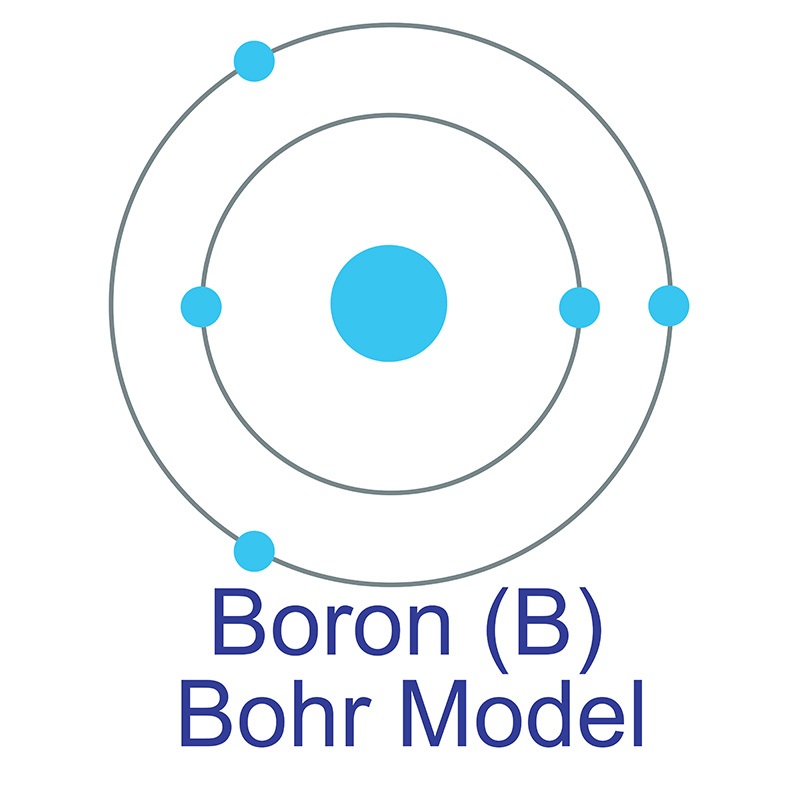
Boron(B) atomic and molecular weight, atomic number and elemental symbolBoron is a Block P, Group 13, Period 2 element. The number of electrons in each of Boron's shells is 2, 3 and its electronic configuration is [He] 2s2 2p1. In its elemental form boron's CAS number is 7440-42-8. The boron atom has a radius of 79.5.pm and it's Van der Waals radius is 200.pm. Boron has an energy band gap of 1.50 to 1.56 eV, which is higher than that of either silicon or germanium. Optical characteristics include transmitting portions of the infrared. Boron is a poor conductor of electricity at room temperature but a good conductor at high temperature. Boron in its elemental form is not toxic. Amorphous Elemental Boronboron is used in pyrotechnic flares to provide a distinctive green color, and in rockets as an igniter Boric acid is also an important boron compound with major markets in textile products. Boron compounds are also extensively used in the manufacture of borosilicate Boron Bohr Modelglasses. The isotope Boron-10 is used as a control for nuclear reactors, as a shield for nuclear radiation, and in instruments used for detecting neutrons. Boron nitride has remarkable properties and can be used to make a material as hard as diamond. The nitride also behaves like an electrical insulator but conducts heat like a metal. Boron also has lubricating properties similar to graphite. Boron was first discovered by Sir Humphry Davy and J.L Gay-Lussac in 1808. The name Boron originates from a combination of carbon and the Arabic word 'buraqu meaning borax. See Boron research below.

American Elements semi conducting materials are structures produced from ultra high purity starting materials synthesized by our high purity production facility which includes several large electric muffle furnaces, a tube furnace for hydrogen reduction, 50 gallon glass-lined Pfaudler reactors supported by our analytical laboratory containing X-ray diffraction, SEM, AA, BET surface area, and ICP Spectrometry for trace metals analysis. See a discussion of American Elements Ultra High Purity and Analytical capabilities. See Crystal Growth for processes used to fabricate semiconductor materials, which include:

  • Crystal "pulling" by the Czochaiski method for production of semiconductor materials
  • Flux growth and gradient freeze
  • Directional solidification of fluorites using both the Bridgman-Stockbarger and float zoning techniques
PRODUCT CATALOG News Foil Submicron & Nanopowder Tolling Ultra High Purity Sputtering Target Crystal Growth Rod, Plate, Powder, etc. Home

Have a Question? Ask a Chemical Engineer or Material Scientist   Request an MSDS or Certificate of Analysis


Search by Material, Product Name, Product Code, CAS Number, Formula, Element, Anion, Form, EC Number, MDL Number or PubChem ID.


German   Korean   French   Japanese   Spanish   Chinese (Simplified)   Portuguese   Russian   Chinese (Taiwan)  Italian   Turkish   Polish   Dutch   Czech   Swedish   Hungarian   Danish   Hebrew

Production Catalog Available in 36 Countries & Languages

PACKAGING SPECIFICATIONS FOR BULK & RESEARCH QUANTITIES


Typical bulk packaging includes palletized plastic 5 gallon/25 kg. pails, fiber and steel drums to 1 ton super sacks in full container (FCL) or truck load (T/L) quantities. Research and sample quantities and hygroscopic, oxidizing or other air sensitive materials may be packaged under argon or vacuum. Shipping documentation includes a Certificate of Analysis and Material Safety Data Sheet (MSDS). Solutions are packaged in polypropylene, plastic or glass jars up to palletized 440 gallon liquid totes.


Show me more forms of Bismuth
 
Customers for this product have also looked at:

Recent Research & Development for Bismuth

  • Helicobacter pylori antibiotic resistance in Brazil: clarithromycin is still a good option. Jaime Natan E, Silva FM, Barbuti RC, Navarro-Rodriguez T, Moraes-Filho JP, Pedrazzoli J Jr. Arq Gastroenterol. 2011 Dec;48(4):261-4. PMID: 22147131 [PubMed - in process]

  • Towards better photocatalysts: first-principles studies of the alloying effects on the photocatalytic activities of bismuth oxyhalides under visible light. Zhang H, Liu L, Zhou Z. Phys Chem Chem Phys. 2011 Dec 7. [Epub ahead of print] PMID: 22146949 [PubMed - as supplied by publisher]

  • A stannum-bismuth composite film electrode for simultaneous determination of zinc(ii) and cadmium(ii) using differential pulse anodic stripping voltammetry. Li NB, Zhu WW, Luo JH, Luo HQ. Analyst. 2011 Dec 6. [Epub ahead of print] PMID: 22145153 [PubMed - as supplied by publisher]

  • Conductive scanning probe microscopy of nanostructured Bi(2)Te(3). Souier T, Li G, Santos S, Stefancich M, Chiesa M. Nanoscale. 2011 Dec 6. [Epub ahead of print] PMID: 22143255 [PubMed - as supplied by publisher]

  • Near-infrared ultrabroadband luminescence spectra properties of subvalent bismuth in CsI halide crystals. Su L, Zhao H, Li H, Zheng L, Ren G, Xu J, Ryba-Romanowski W, Lisiecki R, Solarz P. Opt Lett. 2011 Dec 1;36(23):4551-3. doi: 10.1364/OL.36.004551. PMID: 22139239 [PubMed - in process]

  • Bismuth Shields for CT Dose Reduction: Do They Help or Hurt? McCollough CH, Wang J, Berland LL. J Am Coll Radiol. 2011 Dec;8(12):878-9. No abstract available. PMID: 22137008 [PubMed - in process]

  • Treatment and diagnostic accuracy of neurosyphilis at Boston City Hospital's Neurological Unit, 1930-1979. Patterson D, Vilensky JA, Robertson WM, Berger J. J Neurol Sci. 2011 Nov 29. [Epub ahead of print] PMID: 22129939 [PubMed - as supplied by publisher]

  • Three novel Bi(iii) complexes with in situ generated anilate ligands: unusual oxidation of cyclohexanedione to dihydroxy benzoquinone. Gao H, Zhang XM. Dalton Trans. 2011 Nov 29. [Epub ahead of print] PMID: 22124341 [PubMed - as supplied by publisher]

  • Microfabricated disposable lab-on-a-chip sensors with integrated bismuth microelectrode arrays for voltammetric determination of trace metals. Kokkinos C, Economou A, Raptis I. Anal Chim Acta. 2012 Jan 13;710:1-8. Epub 2011 Nov 3. PMID: 22123106 [PubMed - in process]

  • Novel in situ N-Doped (BiO)2CO3 Hierarchical Microspheres Self-Assembled by Nanosheets as Efficient and Durable Visible Light Driven Photocatalyst. Dong F, Sun Y, Fu M, Ho WK, Lee SC, Wu Z. Langmuir. 2011 Nov 28. [Epub ahead of print] PMID: 22122119 [PubMed - as supplied by publisher]

  • From {Bi(22) O(26) } to Chiral Ligand-Protected {Bi(38) O(45) }-Based Bismuth Oxido Clusters. Mansfeld D, Miersch L, Rüffer T, Schaarschmidt D, Lang H, Böhle T, Troff RW, Schalley CA, Müller J, Mehring M. Chemistry. 2011 Nov 25. doi: 10.1002/chem.201102437. [Epub ahead of print] PMID: 22120957 [PubMed - as supplied by publisher]

  • Status of development of gamma-ray detector response function code or GAMDRF. Li F, Han X. Appl Radiat Isot. 2011 Nov 18. [Epub ahead of print] PMID: 22118837 [PubMed - as supplied by publisher]

  • Metronidazole-based quadruple versus standard triple therapy: which is better as first-line therapy for Helicobacter pylori eradication? Suzuki H, Matsuzaki J, Hibi T. Expert Rev Clin Pharmacol. 2011 Sep;4(5):579-82. PMID: 22114887 [PubMed - in process]

  • Characteristics of rational harmonic mode-locked short-cavity fiber ring laser using a bismuth-oxide-based erbium-doped fiber and a bismuth-oxide-based highly nonlinear fiber. Fukuchi Y, Maeda J. Opt Express. 2011 Nov 7;19(23):22502-9. doi: 10.1364/OE.19.022502. PMID: 22109128 [PubMed - in process]

  • Fabrication and supercontinuum generation in dispersion flattened bismuth microstructured optical fiber. Zhang WQ, Ebendorff-Heidepriem H, Monro TM, Afshar V S. Opt Express. 2011 Oct 24;19(22):21135-44. doi: 10.1364/OE.19.021135. PMID: 22108964 [PubMed - in process]

  • Structural motifs in phenylbismuth heterocyclic carboxylates - secondary interactions leading to oligomers. Anjaneyulu O, Maddileti D, Kumara Swamy KC. Dalton Trans. 2011 Nov 21. [Epub ahead of print] PMID: 22105914 [PubMed - as supplied by publisher]

  • Influences of Oxygen Pressure on Optical Properties and Interband Electronic Transitions in Multiferroic Bismuth Ferrite Nanocrystalline Films Grown by Pulsed Laser Deposition. Jiang K, Zhu J, Wu J, Sun J, Hu Z, Chu J. ACS Appl Mater Interfaces. 2011 Nov 21. [Epub ahead of print] PMID: 22103473 [PubMed - as supplied by publisher]

  • Hydride generation in-atomizer collection atomic absorption spectrometry for the determination of antimony in acetic acid leachates from pewter cups. Dessuy MB, Kratzer J, Vale MG, Welz B, Dedina J. Talanta. 2011 Dec 15;87:255-61. Epub 2011 Oct 17. PMID: 22099676 [PubMed - in process]

  • Preparation and characterization of bismuth oxide nanoparticles-multiwalled carbon nanotube composite for the development of horseradish peroxidase based H(2)O(2) biosensor. Periasamy AP, Yang S, Chen SM. Talanta. 2011 Dec 15;87:15-23. Epub 2011 Oct 5. PMID: 22099642 [PubMed - in process]

  • Etiopathogenetic principles and peptic ulcer disease classification. Tytgat GN. Dig Dis. 2011;29(5):454-8. Epub 2011 Nov 16. PMID: 22095009 [PubMed - in process]


Customers for this product have also looked at:
Boron Pellets Boron Rod Boron Bars Aluminum Boron Alloy Boron Oxide Nanopowder
Boron Chloride Boron Metal Boron Oxide Boron Oxide Pellets Boron Phosphate
Boron Powder Boron Foil Boron Sputtering Target Nickel Silicon Boron Alloy Boron NanoPowder

Recent Research & Development for Boron

  • Photoluminescence, white light emitting properties and related aspects of ZnO nanoparticles admixed with graphene and GaN. Kumar P, Panchakarla LS, Venkataprasad Bhat S, Maitra U, Subrahmanyam KS, Rao CN. Nanotechnology. 2010 Sep 24;21(38):385701. Epub 2010 Aug 26. PubMed PMID: 20739740.

    Reactivity of an oxoboryl complex toward fluorinated aryl boron reagents. Braunschweig H, Radacki K, Schneider A. Chem Commun (Camb). 2010 Sep 21;46(35):6473-5. Epub 2010 Aug 19. PubMed PMID: 20721386.

    Direct separation of boron from Na- and Ca-rich matrices by sublimation for stable isotope measurement by MC-ICP-MS. Wang BS, You CF, Huang KF, Wu SF, Aggarwal SK, Chung CH, Lin PY. Talanta. 2010 Sep 15;82(4):1378-1384. Epub 2010 Jul 31. PubMed PMID: 20801344.

    Synthesis and Reactivity of Boron-, Silicon-, and Tin-Bridged ansa-Cyclopentadienyl-Cycloheptatrienyl Titanium Complexes (Troticenophanes). Braunschweig H, Fuß M, Mohapatra SK, Kraft K, Kupfer T, Lang M, Radacki K, Daniliuc CG, Jones PG, Tamm M. Chemistry. 2010 Aug 27. [Epub ahead of print] PubMed PMID: 20803585.

    Cloning and characterization of a zebrafish homologue of human AQP1: A bifunctional water and gas channel. Chen LM, Zhao J, Musa-Aziz R, Pelletier MF, Drummond IA, Boron WF. Am J Physiol Regul Integr Comp Physiol. 2010 Aug 25. [Epub ahead of print] PubMed PMID: 20739606.

    Mechanisms of Boron Tolerance and Accumulation in Plants: A Physiological Comparison of the Extremely Boron-Tolerant Plant Species, Puccinellia distans, with the Moderately Boron-Tolerant Gypsophila arrostil. Stiles AR, Bautista D, Atalay E, Babaog?lu M, Terry N. Environ Sci Technol. 2010 Aug 25. [Epub ahead of print] PubMed PMID: 20738130.

    Incorporation of Boron, Aluminum, and Gallium Derivatives into [{Ti(eta(5)-C(5)Me(5))(mu-O)}(3)(mu(3)-CR)] (R = H, Me). Herna´n-Go´mez A, Marti´n A, Mena M, Santamari´a C. Inorg Chem. 2010 Aug 25. [Epub ahead of print] PubMed PMID: 20738137.

    Spectroscopic and Modeling Investigations of the Gas Phase Chemistry and Composition in Microwave Plasma Activated B(2)H(6)/CH(4)/Ar/H(2) Mixtures. Ma J, Richley JC, Davies DR, Ashfold MN, Mankelevich YA. J Phys Chem A. 2010 Aug 25. [Epub ahead of print] PubMed PMID: 20735120.

    Total Syntheses of Tubulysins. Shibue T, Hirai T, Okamoto I, Morita N, Masu H, Azumaya I, Tamura O. Chemistry. 2010 Aug 23. [Epub ahead of print] PubMed PMID: 20734394.

    Structure and Bonding of gamma-B(28): Is the High Pressure Form of Elemental Boron Ionic? Ha¨ussermann U, Mikhaylushkin AS. Inorg Chem. 2010 Aug 23. [Epub ahead of print] PubMed PMID: 20731410.

    Boron nitride substrates for high-quality graphene electronics. Dean CR, Young AF, Meric I, Lee C, Wang L, Sorgenfrei S, Watanabe K, Taniguchi T, Kim P, Shepard KL, Hone J. Nat Nanotechnol. 2010 Aug 22. [Epub ahead of print] PubMed PMID: 20729834.

    Synthesis and formation mechanism of hydrogenated boron clusters B(12)H(n) with controlled hydrogen content. Ohishi Y, Kimura K, Yamaguchi M, Uchida N, Kanayama T. J Chem Phys. 2010 Aug 21;133(7):074305. PubMed PMID: 20726640.

    Tensile Tests on Individual Multi-Walled Boron Nitride Nanotubes. Wei X, Wang MS, Bando Y, Golberg D. Adv Mater. 2010 Aug 20. [Epub ahead of print] PubMed PMID: 20730820.

    Two Concise Total Syntheses of (-)-Bitungolide F. Elmarrouni A, Joolakanti SR, Colon A, Heras M, Arseniyadis S, Cossy J. Org Lett. 2010 Aug 20. [Epub ahead of print] PubMed PMID: 20726574.

    Cell Adhesion Properties on Chemically Micropatterned Boron-Doped Diamond Surfaces. Marcon L, Spriet C, Coffinier Y, Galopin E, Rosnoblet C, Szunerits S, He´liot L, Angrand PO, Boukherroub R. Langmuir. 2010 Aug 18. [Epub ahead of print] PubMed PMID: 20715878.

    Probing the active-site requirements of human intestinal N-terminal maltase glucoamylase: The effect of replacing the sulfate moiety by a methyl ether in ponkoranol, a naturally occurring alpha-glucosidase inhibitor. Eskandari R, Jones K, Rose DR, Pinto BM. Bioorg Med Chem Lett. 2010 Aug 11. [Epub ahead of print] PubMed PMID: 20801033.

    Porosity calculations using a C/O logging tool with boron-lined NaI detectors. Metwally WA. Appl Radiat Isot. 2010 Aug 10. [Epub ahead of print] PubMed PMID: 20727774.

    Novel macrocyclic HCV NS3 protease inhibitors derived from alpha-amino cyclic boronates. Li X, Zhang YK, Liu Y, Ding CZ, Zhou Y, Li Q, Plattner JJ, Baker SJ, Zhang S, Kazmierski WM, Wright LL, Smith GK, Grimes RM, Crosby RM, Creech KL, Carballo LH, Slater MJ, Jarvest RL, Thommes P, Hubbard JA, Convery MA, Nassau PM, McDowell W, Skarzynski TJ, Qian X, Fan D, Liao L, Ni ZJ, Pennicott LE, Zou W, Wright J. Bioorg Med Chem Lett. 2010 Aug 10. [Epub ahead of print] PubMed PMID: 20801653.

    [Evaluation of the efficiency of measures to reduce the influence of risk factors on human health]. Gig Sanit. 2010 May-Jun;(3):7-8. Russian. PubMed PMID: 20734732.

  • Electrochemical disinfection of secondary wastewater treatment plant (WWTP) effluent. Pérez G, Gómez P, Ibañez R, Ortiz I, Urtiaga AM. Water Sci Technol. 2010;62(4):892-7. PubMed PMID: 20729593.


American Elements is a copyrighted U.S. Trademark. All rights reserved.