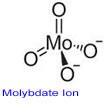
Cadmium Molybdate is generally immediately available in most volumes. High purity, submicron and nanopowder forms may be considered.American Elements produces to many standard grades when applicable, including Mil Spec (military grade); ACS, Reagent and Technical Grade; Food, Agricultural and Pharmaceutical Grade; Optical Grade, USP and EP/BP (European Pharmacopoeia/British Pharmacopoeia)and follows applicable ASTM testing standards.Typical and custom packaging is available. Additional technical, research and safety (MSDS) information is available as is a Reference Calculator for converting relevant units of measurement.
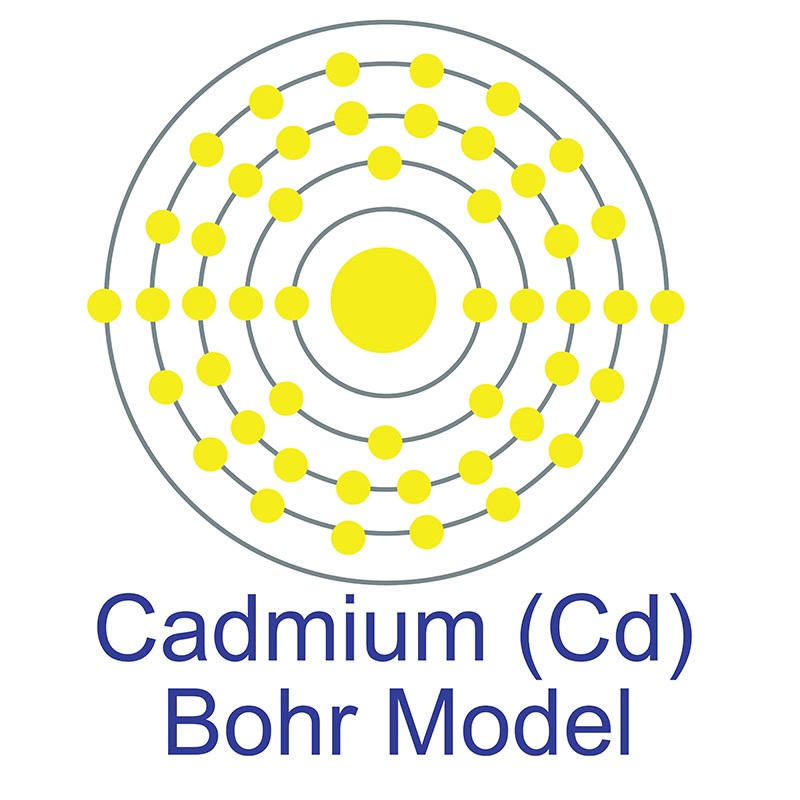
Cadmium is a Block D, Group 12, Period 5 element. The number of electrons in each of Cadmium's shells is 2, 8, 18, 18, 2 and its electronic configuration is [Kr] 4d10 5s2. In its elemental form cadmium's CAS number is 7440-43-9. The cadmium atom has a radius of 148.9.pm and it's Van der Waals radius is 158.pm. Cadmium and its compounds are very toxic. Cadmium is a component of some of the lowest melting alloys; it is used in bearing alloys with low coefficients of friction and great resistance to fatigue. Cadmium is used extensively in electroplating, which accounts for about 60% of its use. It is also used in many types of solder, for standard E.M.F.. cells, for nickel-cadmium batteries, and as a barrier to control nuclear fission. Cadmium compounds are used in black and white television phosphors and in blue and green phosphors for color television tubes and CRT monitors. Cadmium in glass and ceramic glazes creates a distinctive cadmium yellow. It forms a number of compounds, of which the sulfate is most common; the sulfide is used as a yellow pigment. Cadmium is similar to carbon in that it has a capacity to form stable covalently bonded molecular networks. Cadmium and its compounds are extremely toxic. Cadmium was first discovered by Fredrich Stromeyer in 1817. See Cadmium research below. It forms a number of compounds, of which the sulfate is most common; the sulfide is used as a yellow pigment. Cadmium is similar to carbon in that it has a capacity to form stable covalently bonded molecular networks. The name Cadmium originates from the Latin word 'cadmia' and the Greek word 'kadmeia'. See Cadmium research below.
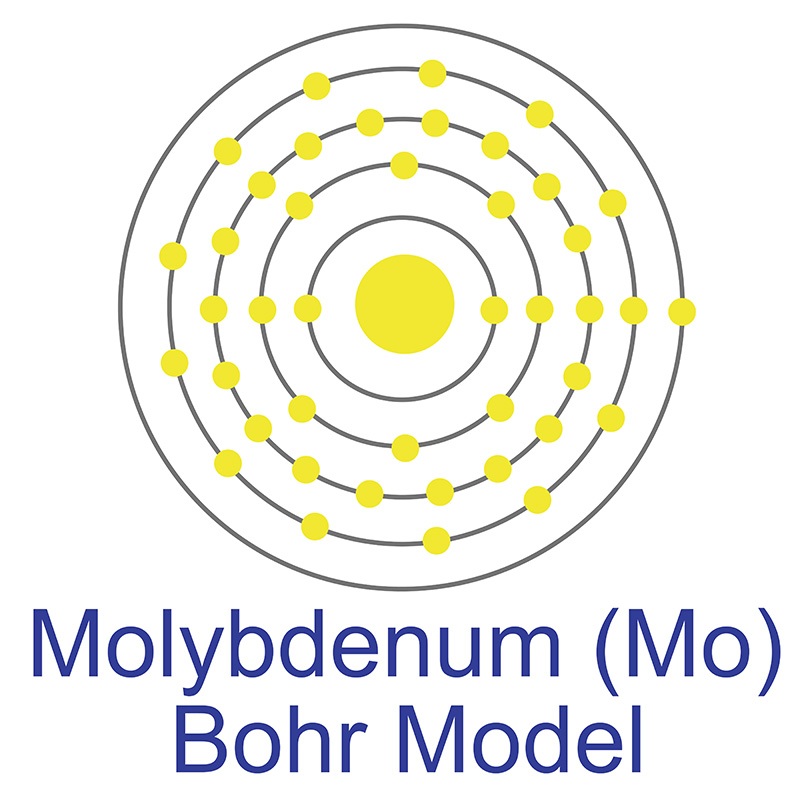
Molybdenum is a Block D, Group 6, Period 5 element. The number of electrons in each of Molybdenum's shells is 2, 8, 18, 13, 1 and its electronic configuration is [Kr] 4d5 5s1. In its elemental form molybdenum's CAS number is 7439-98-7. The molybdenum atom has a radius of 136.3.pm and it's Van der Waals radius is 200.pm. Molybdenum is toxic unless it is in small quantities. Molybdenum has the third highest melting point of any element, exceeded only by tungsten and tantalum. Molybdenum is a catalyst in the oil refining. It has many other applications, including in catalysts, pigments, corrosion inhibitors and lubricants. It has a very high elastic modulus. Molybdenum is available as metal and compounds with purities from 99% to 99.999% (ACS grade to ultra-high purity); metals in the form of foil, sputtering target, and rod, and compounds as submicron and nanopowder. It is used in steel alloys to add hardness and raise melting points. It is a component in Hastelloys brand steel. Molybdenum is used in nuclear reactors and aerospace components. Molybdenum was first discovered by Carl Wilhelm in 1778. The origin of the name Molybdenum comes from the Greek word molubdos meaning lead. See Molybdenum research below.
PACKAGING SPECIFICATIONS FOR BULK & RESEARCH QUANTITIES
Typical bulk packaging includes palletized plastic 5 gallon/25 kg. pails, fiber and steel drums to 1 ton super sacks in full container (FCL) or truck load (T/L) quantities. Research and sample quantities and hygroscopic, oxidizing or other air sensitive materials may be packaged under argon or vacuum. Shipping documentation includes a Certificate of Analysis and Material Safety Data Sheet (MSDS). Solutions are packaged in polypropylene, plastic or glass jars up to palletized 440 gallon liquid totes.
Gadolinium chloride pretreatment ameliorates acute cadmium-induced hepatotoxicity.
Kyriakou LG, Tzirogiannis KN, Demonakou MD, Kourentzi KT, Mykoniatis MG, Panoutsopoulos GI.
Toxicol Ind Health. 2011 Dec 15. [Epub ahead of print]
PMID:
22173957
[PubMed - as supplied by publisher]
In vitro-cultured wheat spikes provide a simplified alternative for studies of cadmium uptake in developing grains.
Ganeshan S, Leis M, Drinkwater JM, Madsen LT, Jain JC, Chibbar RN.
J Sci Food Agric. 2011 Dec 16. doi: 10.1002/jsfa.5540. [Epub ahead of print]
PMID:
22173723
[PubMed - as supplied by publisher]
Evaluation of physiological importance of metallothionein protein expressed by Tetrahymena cadmium metallothionein 1 (TMCd1) gene in Escherichia coli.
Suleman A, Shakoori AR.
J Cell Biochem. 2011 Dec 15. doi: 10.1002/jcb.24030. [Epub ahead of print]
PMID:
22173614
[PubMed - as supplied by publisher]
Kinetic, Equilibrium and Thermodynamic Studies of Cadmium (II) Adsorption by Modified Agricultural Wastes.
Al Othman ZA, Hashem A, Habila MA.
Molecules. 2011 Dec 15;16(12):10443-56.
PMID:
22173337
[PubMed - in process]
Photochemical synthesis of N-adamantylhomoallylamines through addition of cyclic olefins to imines catalyzed by alumina grafted cadmium sulfide.
Aldemir M, Heinemann FW, Kisch H.
Photochem Photobiol Sci. 2011 Dec 14. [Epub ahead of print]
PMID:
22170328
[PubMed - as supplied by publisher]
Evaluation of the toxic effects of arsenite, chromate, cadmium, and copper using a battery of four bioassays.
Ko KS, Lee PK, Kong IC.
Appl Microbiol Biotechnol. 2011 Dec 15. [Epub ahead of print]
PMID:
22170103
[PubMed - as supplied by publisher]
Glutathione degradation is a key determinant of glutathione homeostasis.
Baudouin-Cornu P, Lagniel G, Kumar C, Huang ME, Labarre J.
J Biol Chem. 2011 Dec 13. [Epub ahead of print]
PMID:
22170048
[PubMed - as supplied by publisher]
[Cacoa and dark chocolate in cardiovascular prevention?].
Belz GG, Mohr-Kahaly S.
Dtsch Med Wochenschr. 2011 Dec;136(51-52):2657-63. Epub 2011 Dec 14. German.
PMID:
22169919
[PubMed - in process]
Do toxic heavy metals affect antioxidant defense mechanisms in humans?
Wieloch M, Kaminski P, Ossowska A, Koim-Puchowska B, Stuczynski T, Kuligowska-Prusinska M, Dymek G, Mankowska A, Odrowaz-Sypniewska G.
Ecotoxicol Environ Saf. 2011 Dec 12. [Epub ahead of print]
PMID:
22169892
[PubMed - as supplied by publisher]
Gender differences for associations between circulating levels of metals and coronary risk in the elderly.
Olsén L, Lind PM, Lind L.
Int J Hyg Environ Health. 2011 Dec 8. [Epub ahead of print]
PMID:
22169700
[PubMed - as supplied by publisher]
Differential toxicity of cadmium to mustard (Brassica juncia L.) genotypes under higher metal levels.
Bauddh K, Singh RP.
J Environ Biol. 2011 May;32(3):355-62.
PMID:
22167949
[PubMed - in process]
[Cd uptake in rice cultivars and Cd fractions in soil treated with organic acids and EDTA].
Zhang HB, Li YR, Xu WH, Chen GQ, Wang HX, Han GQ, Zhang XJ, Xiong ZT, Zhang JZ, Xie DT.
Huan Jing Ke Xue. 2011 Sep;32(9):2625-31. Chinese.
PMID:
22165231
[PubMed - in process]
Short-term effects of compost amendment on the fractionation of cadmium in soil and cadmium accumulation in rice plants.
Juang KW, Ho PC, Yu CH.
Environ Sci Pollut Res Int. 2011 Dec 9. [Epub ahead of print]
PMID:
22161300
[PubMed - as supplied by publisher]
Cadmium a metalloestrogen: are we convinced?
Silva N, Peiris-John R, Wickremasinghe R, Senanayake H, Sathiakumar N.
J Appl Toxicol. 2011 Dec 12. doi: 10.1002/jat.1771. [Epub ahead of print]
PMID:
22161274
[PubMed - as supplied by publisher]
Heterologous Expression of a Nelumbo nucifera Phytochelatin Synthase Gene Enhances Cadmium Tolerance in Arabidopsis thaliana.
Liu Z, Gu C, Chen F, Yang D, Wu K, Chen S, Jiang J, Zhang Z.
Appl Biochem Biotechnol. 2011 Dec 9. [Epub ahead of print]
PMID:
22161260
[PubMed - as supplied by publisher]
Low-affinity cation transporter (OsLCT1) regulates cadmium transport into rice grains.
Uraguchi S, Kamiya T, Sakamoto T, Kasai K, Sato Y, Nagamura Y, Yoshida A, Kyozuka J, Ishikawa S, Fujiwara T.
Proc Natl Acad Sci U S A. 2011 Dec 12. [Epub ahead of print]
PMID:
22160725
[PubMed - as supplied by publisher]
Heavy metal contamination in feathers of Western Reef Heron (Egretta gularis) and Siberian gull (Larus heuglini) from Hara biosphere reserve of Southern Iran.
Mansouri B, Babaei H, Hoshyari E.
Environ Monit Assess. 2011 Dec 9. [Epub ahead of print]
PMID:
22160473
[PubMed - as supplied by publisher]
Metal Concentrations in Surface Sediments of Beyler Reservoir (Turkey).
Findik O, Turan MA.
Bull Environ Contam Toxicol. 2011 Dec 9. [Epub ahead of print]
PMID:
22160166
[PubMed - as supplied by publisher]
Evaluation of genotoxic effects of lead in pottery-glaze workers using micronucleus assay, alkaline comet assay and DNA diffusion assay.
Kasuba V, Rozgaj R, Milic M, Zeljezic D, Kopjar N, Pizent A, Kljakovic-Gaspic Z, Jazbec A.
Int Arch Occup Environ Health. 2011 Dec 9. [Epub ahead of print]
PMID:
22160131
[PubMed - as supplied by publisher]
Two-dimensional assembly of tetrahedral chalcogenide clusters with tetrakis(imidazolyl)borate ligands.
Chen Z, Luo D, Luo X, Kang M, Lin Z.
Dalton Trans. 2011 Dec 12. [Epub ahead of print]
PMID:
22159355
[PubMed - as supplied by publisher]
Recent Research & Development for Molybdate
Assessment of pre-digested piggery wastewater
treatment operations with surface flow integrated constructed wetland systems.
Harrington C, Scholz M. Bioresour Technol. 2010 Sep;101(18):6950-60. PubMed PMID: 20435471.
Field turbidity method for the determination of lead in
acid extracts of dried paint. J Environ Monit. 2010 Jul 8;12(7):1393-403. Studabaker WB, McCombs M, Sorrell K, Salmons C, Brown GG, Binstock D,
Gutknecht WF, Harper SL. Epub
2010 Apr 16. PubMed PMID: 20396827.
Planetary organic chemistry and the
origins of biomolecules. Benner SA, Kim HJ, Kim MJ, Ricardo A. Cold Spring Harb Perspect Biol. 2010 Jul 1;2(7):a003467.
Epub 2010 May 26. PubMed PMID: 20504964.
Giardia duodenalis: Biochemical characterization of an ecto-5'-nucleotidase
activity. Russo-Abrahăo T, Cosentino-Gomes D, Daflon-Yunes N, Meyer-Fernandes JR. Exp Parasitol. 2010 Jul 1. [Epub ahead of print] PubMed PMID: 20599434.
Molybdenum incorporation in tungsten aldehyde
oxidoreductase enzymes from Pyrococcus furiosus. Sevcenco AM, Bevers LE, Pinkse MW, Krijger GC, Wolterbeek HT, Verhaert PD,
Hagen WR, Hagedoorn PL. J Bacteriol. 2010 Jun 18. [Epub
ahead of print] PubMed PMID: 20562313.
Effects of
oxyanions, natural organic matter, and bacterial cell numbers on the bioreduction
of lepidocrocite (gamma-FeOOH) and the formation of secondary mineralization
products. O'Loughlin EJ, Gorski CA, Scherer MM, Boyanov MI, Kemner KM. Environ Sci Technol. 2010 Jun 15;44(12):4570-6. PubMed PMID: 20476735.
Wavelet transform EXAFS analysis of mono- and
dimolybdate model compounds and a Mo/HZSM-5 dehydroaromatization catalyst. Savinelli RO, Scott SL. Phys
Chem Chem Phys. 2010 Jun 7;12(21):5660-7. Epub 2010 Apr 29. PubMed PMID:
20431821.
Combination of Pichia membranifaciens and
ammonium molybdate for controlling blue mould caused by Penicillium expansum in
peach fruit. Cao S, Yuan Y, Hu Z, Zheng Y. Int J Food Microbiol. 2010 May 20. [Epub ahead of print] PubMed
PMID: 20605650.
Relevance of individual Mo-box nucleotides to DNA binding by the related
molybdenum-responsive regulators MopA and MopB in Rhodobacter capsulatus. Müller A, Püttmann L, Barthel R, Schön M, Lackmann JW, Narberhaus F, Masepohl
B. FEMS
Microbiol Lett. 2010 Apr 8. [Epub ahead of print] PubMed PMID: 20455946.
Hexavalent molybdenum
reduction to Mo-blue by Acinetobacter calcoaceticus. Shukor MY, Rahman MF, Suhaili Z, Shamaan NA, Syed MA. Folia Microbiol (Praha).
2010 Mar;55(2):137-43. Epub 2010 May 19. PubMed PMID: 20490756.
Proud sponsors of Aeromat 2012. Please join us and our customers & co-sponsors Boeing and ATI on
June 18-20, 2012
in Charlotte, North Carolina