SECTION 1. IDENTIFICATION
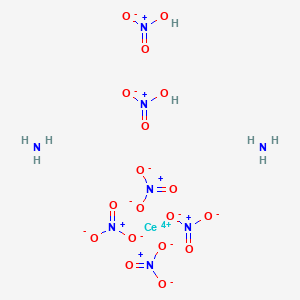
Product Name: Cerium Ammonium Nitrate
Product Number: All applicable American Elements product codes, e.g. CE-AMN-02
, CE-AMN-03
, CE-AMN-04
, CE-AMN-05
CAS #: 16774-21-3
Relevant identified uses of the substance: Scientific research and development
Supplier details:
American Elements
10884 Weyburn Ave.
Los Angeles, CA 90024
Tel: +1 310-208-0551
Fax: +1 310-208-0351
Emergency telephone number:
Domestic, North America: +1 800-424-9300
International: +1 703-527-3887
SECTION 2. HAZARDS IDENTIFICATION
Classification of the substance or mixture
Classification according to Regulation (EC) No 1272/2008
GHS03 Flame over circle
Ox. Sol. 2 H272 May intensify fire; oxidizer.
GHS07
Skin Irrit. 2 H315 Causes skin irritation.
Eye Irrit. 2A H319 Causes serious eye irritation.
STOT SE 3 H335 May cause respiratory irritation.
Hazards not otherwise classified
No data available
Label elements
Labelling according to Regulation (EC) No 1272/2008
The substance is classified and labeled according to the CLP regulation.
Hazard pictograms


GHS03 GHS07
Signal word: Danger
Hazard statements
H272 May intensify fire; oxidizer.
H315 Causes skin irritation.
H319 Causes serious eye irritation.
H335 May cause respiratory irritation.
Precautionary statements
P221 Take any precaution to avoid mixing with combustibles.
P210 Keep away from heat/sparks/open flames/hot surfaces. - No smoking.
P220 Keep/Store away from clothing/combustible materials.
P305+P351+P338 IF IN EYES: Rinse cautiously with water for several minutes. Remove contact lenses, if present and easy to do. Continue rinsing.
P405 Store locked up.
P501 Dispose of contents/container in accordance with local/regional/national/international regulations.
WHMIS classification
C - Oxidizing materials
D2B - Toxic material causing other toxic effects
Classification system
HMIS ratings (scale 0-4)
(Hazardous Materials Identification System)
HEALTH
FIRE
REACTIVITY
1
0
2
Health (acute effects) = 1
Flammability = 0
Physical Hazard = 2
Other hazards
Results of PBT and vPvB assessment
PBT: N/A
vPvB: N/A
SECTION 3. COMPOSITION/INFORMATION ON INGREDIENTS
Substances
CAS No. / Substance Name:
16774-21-3 Cerium(IV) ammonium nitrate
Identification number(s):
EC number: 240-827-6
SECTION 4. FIRST AID MEASURES
Description of first aid measures
If inhaled:
Supply patient with fresh air. If not breathing, provide artificial respiration. Keep patient warm.
Seek immediate medical advice.
In case of skin contact:
Immediately wash with soap and water; rinse thoroughly.
Seek immediate medical advice.
In case of eye contact:
Rinse opened eye for several minutes under running water. Consult a physician.
If swallowed:
Seek medical treatment.
Information for doctor
Most important symptoms and effects, both acute and delayed
No data available
Indication of any immediate medical attention and special treatment needed
No data available
SECTION 5. FIREFIGHTING MEASURES
Extinguishing media
Suitable extinguishing agents
Carbon dioxide, extinguishing powder or water spray. Fight larger fires with water spray or alcohol resistant foam.
For safety reasons unsuitable extinguishing agents
Halocarbon extinguisher
Special hazards arising from the substance or mixture
This substance is an oxidizer and its heat of reaction with reducing agents or combustibles may cause ignition.
If this product is involved in a fire, the following can be released:
Nitrogen oxides (NOx)
Metal oxide fume
Ammonia
Advice for firefighters
Protective equipment:
Wear self-contained respirator.
Wear fully protective impervious suit.
SECTION 6. ACCIDENTAL RELEASE MEASURES
Personal precautions, protective equipment and emergency procedures
Use personal protective equipment. Keep unprotected persons away.
Ensure adequate ventilation
Environmental precautions:
Do not allow material to be released to the environment without official permits.
Methods and materials for containment and cleanup:
Ensure adequate ventilation.
Prevention of secondary hazards:
Acts as an oxidizing agent on organic materials such as wood, paper and fats
Keep away from combustible material.
Reference to other sections
See Section 7 for information on safe handling
See Section 8 for information on personal protection equipment.
See Section 13 for disposal information.
SECTION 7. HANDLING AND STORAGE
Handling
Precautions for safe handling
Keep container tightly sealed.
Store in cool, dry place in tightly closed containers.
Ensure good ventilation at the workplace.
Information about protection against explosions and fires:
Substance/product can reduce the ignition temperature of flammable substances.
This substance is an oxidizer and its heat of reaction with reducing agents or combustibles may cause ignition.
Conditions for safe storage, including any incompatibilities
Requirements to be met by storerooms and receptacles:
No special requirements.
Information about storage in one common storage facility:
Store away from flammable substances.
Store away from reducing agents.
Do not store with organic materials.
Do not store together with acids.
Store away from strong bases.
Store away from metal powders.
Further information about storage conditions:
Keep container tightly sealed.
Store in cool, dry conditions in well-sealed containers.
Specific end use(s)
No data available
SECTION 8. EXPOSURE CONTROLS/PERSONAL PROTECTION
Additional information about design of technical systems:
Properly operating chemical fume hood designed for hazardous chemicals and having an average face velocity of at least 100 feet per minute.
Control parameters
Components with limit values that require monitoring at the workplace:
None.
Additional information: No data
Exposure controls
Personal protective equipment
Follow typical protective and hygienic practices for handling chemicals.
Keep away from foodstuffs, beverages and feed.
Remove all soiled and contaminated clothing immediately.
Wash hands before breaks and at the end of work.
Avoid contact with the eyes and skin.
Maintain an ergonomically appropriate working environment.
Breathing equipment:
Use suitable respirator when high concentrations are present.
Recommended filter device for short term use:
Use a respirator with type N95 (USA) or PE (EN 143) cartridges as a backup to engineering controls. Risk assessment should be performed to determine if air-purifying respirators are appropriate. Only use equipment tested and approved under appropriate government standards.
Protection of hands:
Impervious gloves
Inspect gloves prior to use.
Suitability of gloves should be determined both by material and quality, the latter of which may vary by manufacturer.
Material of gloves
Nitrile rubber, NBR
Penetration time of glove material (in minutes)
480
Glove thickness
0.11 mm
Eye protection: Safety glasses
Body protection: Protective work clothing.
SECTION 9. PHYSICAL AND CHEMICAL PROPERTIES
Information on basic physical and chemical properties
Appearance:
Form: Various forms (powder/flake/crystalline/beads, etc.)
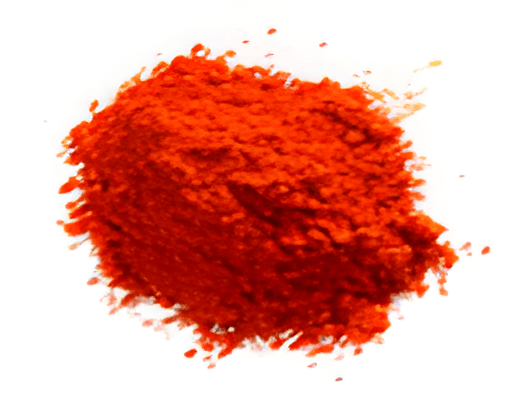
Color: Yellow to orange
Odor: Pungent
Odor threshold: No data available.
pH: N/A
Melting point/Melting range: No data available
Boiling point/Boiling range: No data available
Sublimation temperature / start: No data available
Flammability (solid, gas)
Contact with combustible material may cause fire.
Ignition temperature: No data available
Decomposition temperature: No data available
Autoignition: No data available.
Danger of explosion: No data available.
Explosion limits:
Lower: No data available
Upper: No data available
Vapor pressure: N/A
Density: No data available
Relative density: No data available.
Vapor density: N/A
Evaporation rate: N/A
Solubility in / Miscibility with Water at 20 °C (68 °F): 1410 g/l
Partition coefficient (n-octanol/water): No data available.
Viscosity:
Dynamic: N/A
Kinematic: N/A
Other information
No data available
SECTION 10. STABILITY AND REACTIVITY
Reactivity
May intensify fire; oxidizer.
Chemical stability
Stable under recommended storage conditions.
Thermal decomposition / conditions to be avoided:
Decomposition will not occur if used and stored according to specifications.
Possibility of hazardous reactions
Reacts with reducing agents
Reacts with flammable substances
Conditions to avoid
No data available
Incompatible materials:
Acids
Flammable substances
Reducing agents
Bases
Organic materials
Metal powders
Hazardous decomposition products:
Nitrogen oxides
Metal oxide fume
Ammonia
SECTION 11. TOXICOLOGICAL INFORMATION
Information on toxicological effects
Acute toxicity: No effects known.
LD/LC50 values that are relevant for classification: No data
Skin irritation or corrosion: Causes skin irritation.
Eye irritation or corrosion: Causes serious eye irritation.
Sensitization: No sensitizing effects known.
Germ cell mutagenicity: No effects known.
Carcinogenicity:
No classification data on carcinogenic properties of this material is available from the EPA, IARC, NTP, OSHA or ACGIH.
Reproductive toxicity: No effects known.
Specific target organ system toxicity - repeated exposure: No effects known.
Specific target organ system toxicity - single exposure: May cause respiratory irritation.
Aspiration hazard: No effects known.
Subacute to chronic toxicity: No effects known.
Additional toxicological information:
To the best of our knowledge the acute and chronic toxicity of this substance is not fully known.
Carcinogenic categories
OSHA-Ca (Occupational Safety & Health Administration)
Substance is not listed.
SECTION 12. ECOLOGICAL INFORMATION
Toxicity
Aquatic toxicity:
No data available
Persistence and degradability
No data available
Bioaccumulative potential
No data available
Mobility in soil
No data available
Additional ecological information:
Do not allow material to be released to the environment without official permits.
Avoid transfer into the environment.
Results of PBT and vPvB assessment
PBT: N/A
vPvB: N/A
Other adverse effects
No data available
SECTION 13. DISPOSAL CONSIDERATIONS
Waste treatment methods
Recommendation
Consult official regulations to ensure proper disposal.
Uncleaned packagings:
Recommendation:
Disposal must be made according to official regulations.
SECTION 14. EXPOSURE CONTROLS/PERSONAL PROTECTION
UN-Number
DOT, IMDG, IATA
UN1477
UN proper shipping name
DOT
Nitrates, inorganic, n.o.s. (Cerium(IV) ammonium nitrate)
IMDG, IATA
NITRATES, INORGANIC, N.O.S. (Cerium(IV) ammonium nitrate)
Transport hazard class(es)
DOT
Class
5.1 Oxidising substances.
Label
5.1
Class
5.1 (O2) Oxidizing substances
Label
5.1
IMDG, IATA
Class
5.1 Oxidising substances.
Label
5.1
Packing group
DOT, IMDG, IATA
II
Environmental hazards:
N/A
Special precautions for user
Warning: Oxidizing substances
EMS Number:
F-A,S-Q
Transport in bulk according to Annex II of MARPOL73/78 and the IBC Code
N/A
Transport/Additional information:
DOT
Marine Pollutant (DOT):
No
UN "Model Regulation":
UN1477, Nitrates, inorganic, n.o.s. (Cerium(IV) ammonium nitrate), 5.1, II
SECTION 15. REGULATORY INFORMATION
Safety, health and environmental regulations/legislation specific for the substance or mixture
National regulations
All components of this product are listed in the U.S. Environmental Protection Agency Toxic Substances Control Act Chemical substance Inventory.
All components of this product are listed on the Canadian Domestic Substances List (DSL).
SARA Section 313 (specific toxic chemical listings)
Substance is not listed.
California Proposition 65
Prop 65 - Chemicals known to cause cancer
Substance is not listed.
Prop 65 - Developmental toxicity
Substance is not listed.
Prop 65 - Developmental toxicity, female
Substance is not listed.
Prop 65 - Developmental toxicity, male
Substance is not listed.
Information about limitation of use:
For use only by technically qualified individuals.
Other regulations, limitations and prohibitive regulations
Substance of Very High Concern (SVHC) according to the REACH Regulations (EC) No. 1907/2006.
Substance is not listed.
The conditions of restrictions according to Article 67 and Annex XVII of the Regulation (EC) No 1907/2006 (REACH) for the manufacturing, placing on the market and use must be observed.
Substance is not listed.
Annex XIV of the REACH Regulations (requiring Authorisation for use)
Substance is not listed.
Chemical safety assessment:
A Chemical Safety Assessment has not been carried out.
SECTION 16. OTHER INFORMATION
Safety Data Sheet according to Regulation (EC) No. 1907/2006 (REACH). The above information is believed to be correct but does not purport to be all inclusive and shall be used only as a guide. The information in this document is based on the present state of our knowledge and is applicable to the product with regard to appropriate safety precautions. It does not represent any guarantee of the properties of the product. American Elements shall not be held liable for any damage resulting from handling or from contact with the above product. See reverse side of invoice or packing slip for additional terms and conditions of sale. COPYRIGHT 1997-2022 AMERICAN ELEMENTS. LICENSED GRANTED TO MAKE UNLIMITED PAPER COPIES FOR INTERNAL USE ONLY.


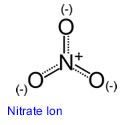
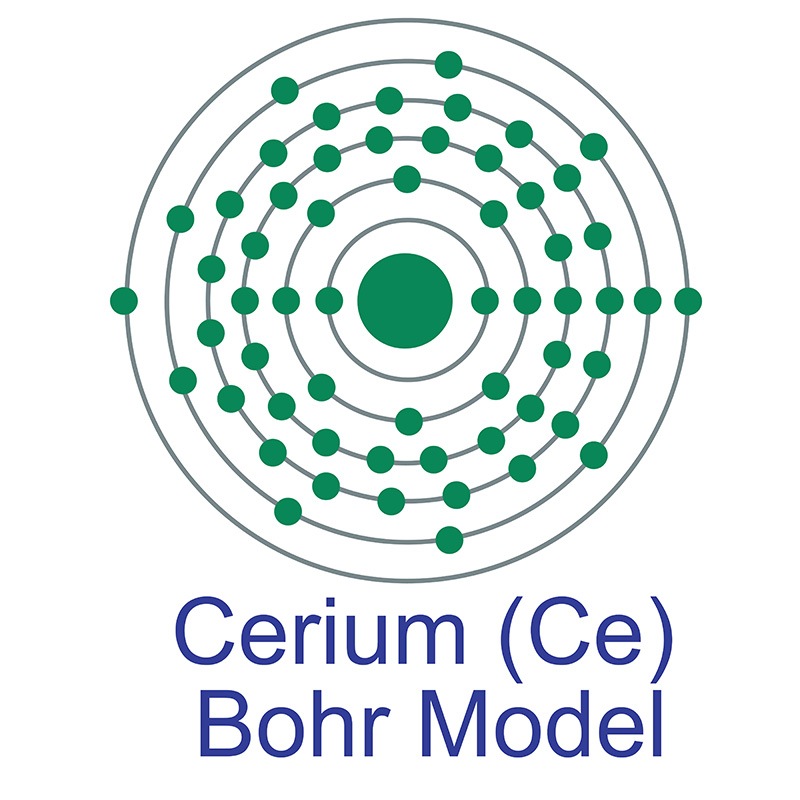 The cerium atom has a radius of 182.5 pm and a Van der Waals radius of 235 pm. In its elemental form, cerium has a silvery white appearance. Cerium is the most abundant of the
  It is therefore strongly acidic and oxidizing, in addition to being moderately toxic.The cerous state closely resembles the other trivalent rare earths. Cerium is found in the minerals allanite, bastnasite, hydroxylbastnasite, monazite, rhabdophane, synchysite and zircon. Cerium was discovered by Martin Heinrich Klaproth, Jöns Jakob Berzelius, and Wilhelm Hisinger in 1803 and first isolated by Carl Gustaf Mosander in 1839. The element was named after the asteroid Ceres, which itself was named after the Roman god of agriculture.