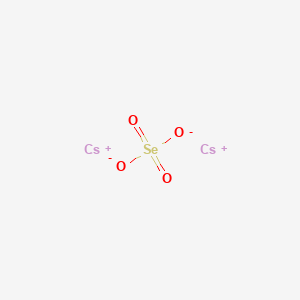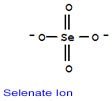
Cesium Selenate is generally immediately available in most volumes. High purity, submicron and nanopowder forms may be considered.American Elements produces to many standard grades when applicable, including Mil Spec (military grade); ACS, Reagent and Technical Grade; Food, Agricultural and Pharmaceutical Grade; Optical Grade, USP and EP/BP (European Pharmacopoeia/British Pharmacopoeia)and follows applicable ASTM testing standards.Typical and custom packaging is available. Additional technical, research and safety (MSDS) information is available as is a Reference Calculator for converting relevant units of measurement.
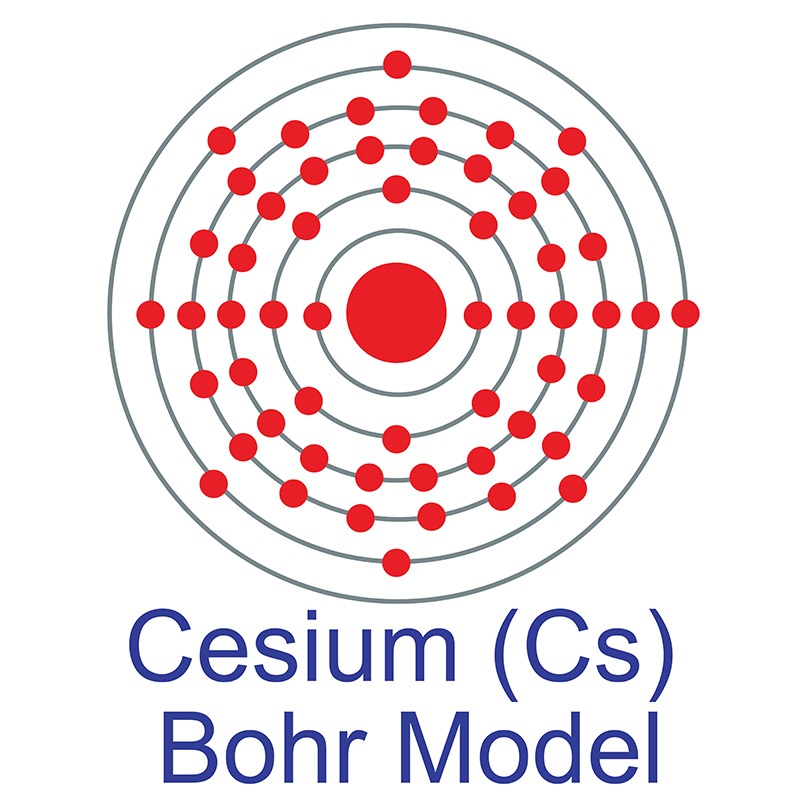
Cesium is a Block S, Group 1, Period 6 element. The number of electrons in each of Cesium's shells is 2, 8, 18, 18, 8, 1 and its electronic configuration is [Xe] 6s1. In its elemental form cesium's CAS number is 7440-46-2. The cesium atom has a radius of 265.5.pm and it's Van der Waals radius is 200.pm. Cesium compounds are slightly toxic. Cesium is a member of the alkali group of metals. It is one of three metals that occur as a liquid at room temperature - the others are mercury and gallium. Cesium is available as metal and compounds with purities from 99% to 99.999% (ACS grade to ultra-high purity); metals in the form of foil, sputtering target, and rod, and compounds as submicron and nanopowder. Cesium is used as an oxygen "getter" in vacuum and electronic tubes and as a component of photoelectric cells. Cesium compounds are considered to be slightly toxic. Atomic clocks use the microwave spectral line emitted by Cesium Isotope 133 for reference. Cesium chloride is an unproven treatment for cancer. Radioactive Cesium 137 is an artificial isotope produced that is an approved radiation source for cancer radiotherapy. Under pressure, Cesium hydride is stiffer than diamond. Laboratories use various cesium compounds for their ability to hydrogenate organic compounds. Cesium was first discovered by Fustov Kirchhoff in 1860.
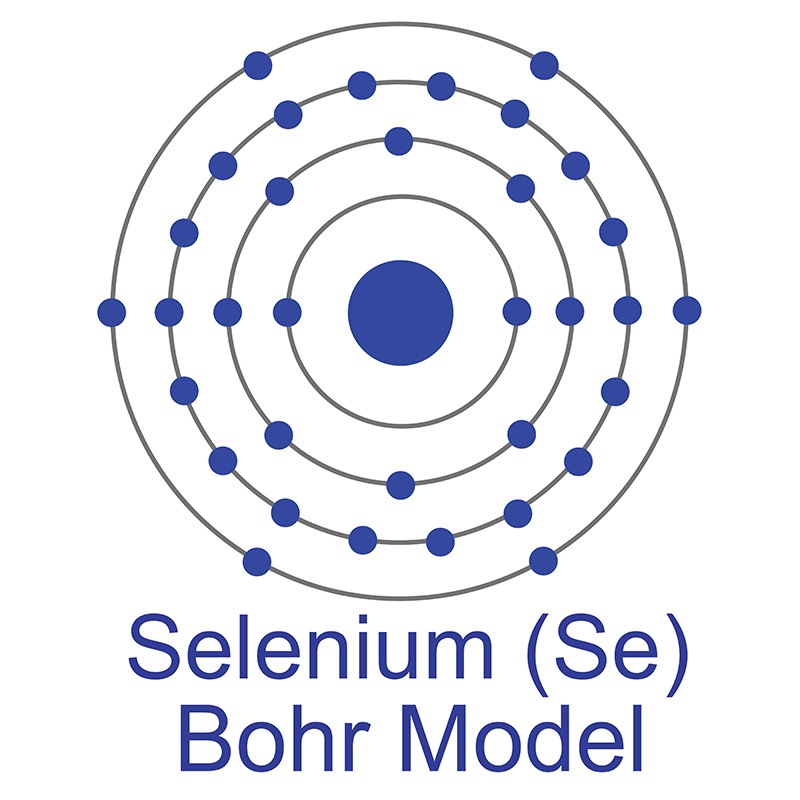
Selenium is a Block P, Group 16, Period 4 element. The number of electrons in each of Selenium's shells is 2, 8, 18, 6 and its electronic configuration is [Ar] 3d10 4s2 4p4. In its elemental form selenium's CAS number is 7782-49-2. The selenium atom has a radius of 116.pm and it's Van der Waals radius is 190.pm. The EPA does not classify selenium as carcinogenic, although selenium sulfide is a probable carcinogen. Selenates and selenites which are compounds of selenium, are highly toxic. Hydrogen selenide gas (SeH2) is the most acutely toxic compound of selenium. Selenium exhibits both photovoltaic action, where light is converted directly into electricity, and photoconductive action, where the electrical resistance decreases with increased illumination. of photocells and exposure meters for photographic use, as well as solar cells. Below its melting point, selenium is a p-type semiconductor and has many uses in electronic and solid-state applications. Selenium is available as metal and compounds with purities from 99% to 99.9999% (ACS grade to ultra-high purity); metals in the form of foil, sputtering target, and rod, and compounds as submicron and nanopowder. Selenium was first discovered by Jons Berzelius in 1817. The origin of the name Selenium comes from the Greek word "Selênê" meaning moon. See selenium research below.
PACKAGING SPECIFICATIONS FOR BULK & RESEARCH QUANTITIES
Typical bulk packaging includes palletized plastic 5 gallon/25 kg. pails, fiber and steel drums to 1 ton super sacks in full container (FCL) or truck load (T/L) quantities. Research and sample quantities and hygroscopic, oxidizing or other air sensitive materials may be packaged under argon or vacuum. Shipping documentation includes a Certificate of Analysis and Material Safety Data Sheet (MSDS). Solutions are packaged in polypropylene, plastic or glass jars up to palletized 440 gallon liquid totes.
Search by Material, Product Name, Product Code, CAS Number, Formula, Element, Anion, Form, EC Number, MDL Number or PubChem ID.
Crystal structure of Sa239 reveals the structural basis for the activation of ribokinase by monovalent cations.
Li J, Wang C, Wu Y, Wu M, Wang L, Wang Y, Zang J.
J Struct Biol. 2011 Dec 16. [Epub ahead of print]
PMID:
22198595
[PubMed - as supplied by publisher]
Radioactive pollution in Athens, Greece due to the Fukushima nuclear accident.
Kritidis P, Florou H, Eleftheriadis K, Evangeliou N, Gini M, Sotiropoulou M, Diapouli E, Vratolis S.
J Environ Radioact. 2011 Dec 22. [Epub ahead of print]
PMID:
22197531
[PubMed - as supplied by publisher]
Selected Trace Elements in the Sacramento River, California: Occurrence and Distribution.
Taylor HE, Antweiler RC, Roth DA, Alpers CN, Dileanis P.
Arch Environ Contam Toxicol. 2011 Dec 23. [Epub ahead of print]
PMID:
22193863
[PubMed - as supplied by publisher]
A laboratory experiment for determining both the hydraulic and diffusive properties and the initial pore-water composition of an argillaceous rock sample: A test with the Opalinus clay (Mont Terri, Switzerland).
Savoye S, Michelot JL, Matray JM, Wittebroodt Ch, Mifsud A.
J Contam Hydrol. 2012 Feb 1;128(1-4):47-57. Epub 2011 Oct 20.
PMID:
22192344
[PubMed - in process]
Controlling Cesium Cation Recognition via Cation Metathesis within an Ion Pair Receptor.
Kim SK, Vargas-Zúñiga GI, Hay BP, Young NJ, Delmau LH, Masselin C, Lee CH, Kim JS, Lynch VM, Moyer BA, Sessler JL.
J Am Chem Soc. 2011 Dec 19. [Epub ahead of print]
PMID:
22191574
[PubMed - as supplied by publisher]
High affinity of water-soluble cryptophanes for cesium cations.
Brotin T, Montserret R, Bouchet A, Cavagnat D, Linares M, Buffeteau T.
J Org Chem. 2011 Dec 22. [Epub ahead of print]
PMID:
22191454
[PubMed - as supplied by publisher]
Improved Measurement of the Hydrogen 1S-2S Transition Frequency.
Parthey CG, Matveev A, Alnis J, Bernhardt B, Beyer A, Holzwarth R, Maistrou A, Pohl R, Predehl K, Udem T, Wilken T, Kolachevsky N, Abgrall M, Rovera D, Salomon C, Laurent P, Hänsch TW.
Phys Rev Lett. 2011 Nov 11;107(20):203001. Epub 2011 Nov 11.
PMID:
22181729
[PubMed - in process]
Enhanced field electron emission of graphene sheets by CsI coating after electrophoretic deposition.
Liu J, Zeng B, Wu Z, Sun H.
ACS Appl Mater Interfaces. 2011 Dec 16. [Epub ahead of print]
PMID:
22175648
[PubMed - as supplied by publisher]
A Study of the Hydration of the Alkali Metal Ions in Aqueous Solution.
Mähler J, Persson I.
Inorg Chem. 2011 Dec 14. [Epub ahead of print]
PMID:
22168370
[PubMed - as supplied by publisher]
Can Infrared Spectroscopy Be Used to Measure Change in Potassium Nitrate Concentration as a Proxy for Soil Particle Movement?
Luleva MI, van der Werff H, Jetten V, van der Meer F.
Sensors (Basel). 2011;11(4):4188-4206. Epub 2011 Apr 7.
PMID:
22163843
[PubMed - as supplied by publisher]
Inorganic-Organic Magnetic Nanocomposites for use in Preventive Medicine: A Rapid and Reliable Elimination System for Cesium.
Namiki Y, Namiki T, Ishii Y, Koido S, Nagase Y, Tsubota A, Tada N, Kitamoto Y.
Pharm Res. 2011 Dec 7. [Epub ahead of print]
PMID:
22146802
[PubMed - as supplied by publisher]
Production and Titering of Recombinant Adeno-associated Viral Vectors.
McClure C, Cole KL, Wulff P, Klugmann M, Murray AJ.
J Vis Exp. 2011 Nov 27;(57). pii: 3348. doi: 10.3791/3348.
PMID:
22143312
[PubMed - in process]
Estimation of the time-dependent radioactive source-term from the Fukushima nuclear power plant accident using atmospheric transport modelling.
Schöppner M, Plastino W, Povinec PP, Wotawa G, Bella F, Budano A, De Vincenzi M, Ruggieri F.
J Environ Radioact. 2011 Dec 2. [Epub ahead of print]
PMID:
22137089
[PubMed - as supplied by publisher]
Removal efficiency of water purifier and adsorbent for iodine, cesium, strontium, barium and zirconium in drinking water.
Sato I, Kudo H, Tsuda S.
J Toxicol Sci. 2011;36(6):829-34.
PMID:
22129747
[PubMed - in process]
Biosorption of cesium(I) from aqueous solution by a novel exopolymers secreted from Pseudomonas fluorescens C-2: equilibrium and kinetic studies.
Mao Y, Hu H, Yan Y.
J Environ Sci (China). 2011;23(7):1104-12.
PMID:
22125902
[PubMed - indexed for MEDLINE]
Radiation measurements in the Chiba Metropolitan Area and radiological aspects of fallout from the Fukushima Daiichi Nuclear Power Plants accident.
Amano H, Akiyama M, Chunlei B, Kawamura T, Kishimoto T, Kuroda T, Muroi T, Odaira T, Ohta Y, Takeda K, Watanabe Y, Morimoto T.
J Environ Radioact. 2011 Nov 23. [Epub ahead of print]
PMID:
22119284
[PubMed - as supplied by publisher]
Variability of (137)Cs and (40)K soil-to-fruit transfer factor in tropical lemon trees during the fruit development period.
Velasco H, Cid AS, Anjos RM, Zamboni CB, Rizzotto M, Valladares DL, Juri Ayub J.
J Environ Radioact. 2012 Feb;103(2):64-70. Epub 2011 Nov 1.
PMID:
22115437
[PubMed - in process]
Use of natural radionuclides to determine the time range of the accidental melting of an orphan radioactive source in a steel recycling plant.
Cantaluppi C, Ceccotto F, Cianchi A.
J Environ Radioact. 2011 Nov 19. [Epub ahead of print]
PMID:
22103976
[PubMed - as supplied by publisher]
Membrane treatment of liquid wastes from radiological decontamination operations.
Svittsov AA, Khubetsov SB, Volchek K.
Water Sci Technol. 2011;64(4):854-60.
PMID:
22097071
[PubMed - indexed for MEDLINE]
Deposition of aerosol particles in a model vitreous chamber.
G Lden O, Wiedmann TS.
Drug Dev Ind Pharm. 2011 Nov 16. [Epub ahead of print]
PMID:
22087844
[PubMed - as supplied by publisher]
Recent Research & Development for Selenate
Speciation analysis of arsenic and
selenium compounds by CE-dynamic reaction cell-ICP-MS. Hsieh MW, Liu CL, Chen JH, Jiang SJ. Electrophoresis. 2010
Jul;31(13):2272-8. PubMed PMID: 20593404.
Sodium selenate effect on Synechococcus elongatus
PCC 7942: appearance of novel enzymatic reaction, ATP:selenate
adenylyltransferase, and variation in antioxidant enzyme activities. Saggu M, Jain A, Bagchi D. J Basic
Microbiol. 2010 Jun 28. [Epub ahead of print] PubMed PMID: 20586061.
Removal of Selenium from Se
Enriched Natural Soils by a Consortium of Bacillus Isolates. Prakash NT, Sharma N, Prakash R, Acharya R. Bull Environ Contam
Toxicol. 2010 Jun 25. [Epub ahead of print] PubMed PMID: 20577868.
The increase of immunity
and disease resistance of the giant freshwater prawn, Macrobrachium rosenbergii
by feeding with selenium enriched-diet. Chiu ST, Hsieh SL, Yeh SP, Jian SJ, Cheng W, Liu CH. Fish Shellfish Immunol. 2010 Jun 16.
[Epub ahead of print] PubMed PMID: 20561587.
Thermostable properties of the periplasmic selenate
reductase from Thauera selenatis. Dridge EJ, Butler CS. Biochimie. 2010 Jun 12. [Epub ahead of print]
PubMed PMID: 20547201.
Response of nitrogen metabolism in lettuce plants subjected to
different doses and forms of selenium. Rios JJ, Blasco B, Rosales MA, Sanchez-Rodriguez E, Leyva R, Cervilla LM,
Romero L, Ruiz JM. J Sci Food Agric. 2010 Jun
10;90(11):1914-1919. [Epub ahead of print] PubMed PMID: 20602511.
New selenite ion-selective electrodes based on
5,10,15,20-tetrakis-(4-methoxyphenyl)-21H,23H-porphyrin-Co(II). Ibrahim H, Issa YM, Shehab OR. J Hazard Mater.
2010 May 26. [Epub ahead of print] PubMed PMID: 20561747.
Sodium selenate specifically activates PP2A
phosphatase, dephosphorylates tau and reverses memory deficits in an Alzheimer's
disease model. Corcoran NM, Martin D, Hutter-Paier B, Windisch M, Nguyen T, Nheu L, Sundstrom
LE, Costello AJ, Hovens CM. J Clin Neurosci. 2010 May 25. [Epub ahead of print] PubMed PMID:
20537899.
A study on the immobilization of selenium
oxyanions by H(2)/Pd(s) in aqueous solution Confirmation of the one-electron
reduction barrier of selenate. Puranen A, Jansson M, Jonsson M. J Contam Hydrol. 2010 May 25. [Epub ahead of
print] PubMed PMID: 20537758.
Involvement of silicon influx
transporter OsNIP2;1 in selenite uptake in rice. Zhao XQ, Mitani N, Yamaji N, Shen RF, Ma JF. Plant Physiol. 2010 May 24.
[Epub ahead of print] PubMed PMID: 20498338.
Proud sponsors of Aeromat 2012. Please join us and our customers & co-sponsors Boeing and ATI on
June 18-20, 2012
in Charlotte, North Carolina