American Elements Logo and U.S. Registered Trademark
Dysprosium Foil
Dy
7429-91-6
Product
Product Code
Order or Specifications
99% Dysprosium Foil
DY-M-02F
Contact American Elements
99.5% Dysprosium Foil
DY-M-025F
Contact American Elements
99.9% Dysprosium Foil
DY-M-03F
Contact American Elements
99.95% Dysprosium Foil
DY-M-035F
Contact American Elements
99.99% Dysprosium Foil
DY-M-04F
Contact American Elements
99.999% Dysprosium Foil
DY-M-05F
Contact American Elements
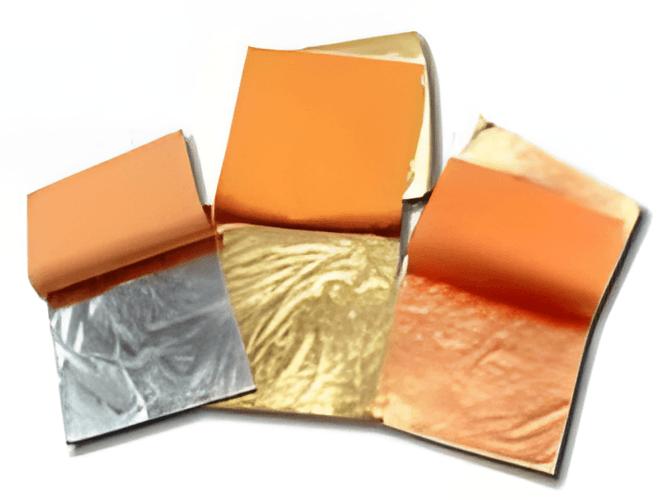
See safety data below. American Elements specializes in producing Dysprosium as rolled foils and sheets in various thicknesses and sizes. Most foils are produced from cast ingots for use in coating and thin film Chemical Vapor Deposition (CVD) and Physical Vapor Deposition (PVD) processes including Ultra High Purity (99.9+%) thin film foilThermal and Electron Beam (E-Beam) Evaporation, Low Temperature Organic Evaporation, Atomic Layer Deposition (ALD), Organometallic and Chemical Vapor Deposition (MOCVD) for specific applications such as fuel cells and solar energy. Thickness can range from 0.003" to approximately 2mm for all metals. Some metals can also be rolled down as thin as 0.001". Piece sizes are available up to approximately 7" maximum width. Maximum lengths of about 20" can be obtained with a nominal thickness between about 0.005" and 0.020" for thin film deposition on glass or metal substrates. Materials are produced using crystallization, solid state and other ultra high purification processes such as sublimation. American Elements specializes in producing custom compositions for commercial and research applications and for new proprietary technologies. American Elements also casts any of the rare earth metals and most other advanced materials into rod, bar or plate form, as well as other machined shapes and through other processes such as nanoparticles (See also application discussion at Nanotechnology Information and at Quantum Dots) and in the form of solutions and organometallics. We also produce Dysprosium as rods, powder and plates. Other shapes are available by request.

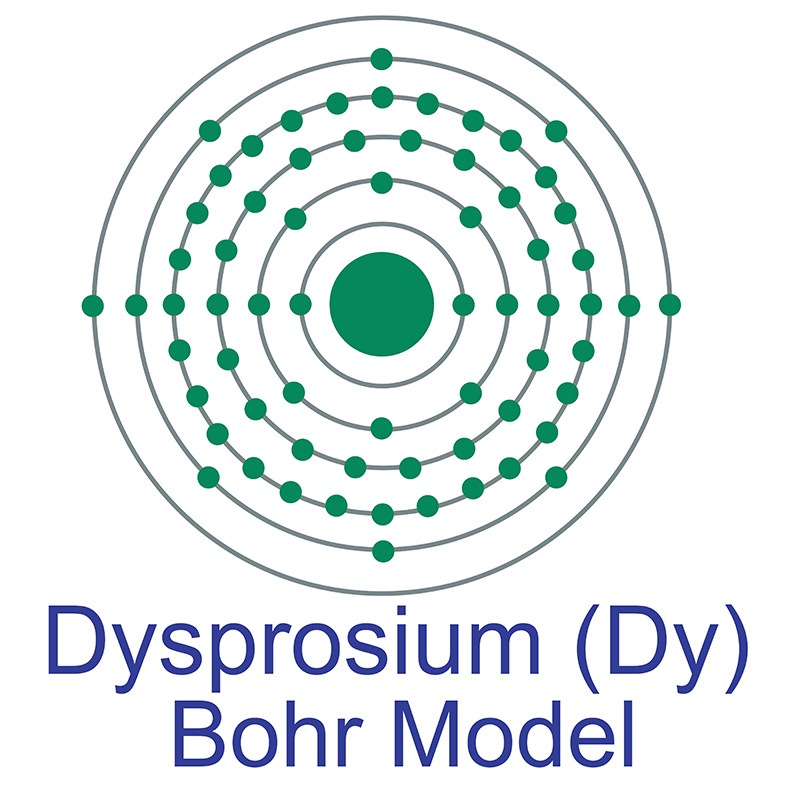
Dysprosium is a Block F, Group 3, Period 6 element. The electronic configuration is [Xe]4f106s2. In its elemental form dysprosium's CAS number is 7429-91-6. The dysprosium atom has a radius of 175.2.pm and it's Van der Waals radius is unknown. Dysprosium is most commonly used in neodymium-iron-boron high strength permanent magnets. Dysprosium is available as metal and compounds with purities from 99% to 99.999% (ACS grade to ultra-high purity); metals in the form of foil, sputtering target, and rod, and compounds as submicron and nanopowder.

Formula CAS No. Appearance Molecular Weight Solubility Stability
Dy 7429-91-6 Silvery 162.5 N/A Moderately reactive in air
PRODUCT CATALOG Dysprosium Research, Properties, & Information Submicron & Nanopowder Tolling Ultra High Purity Sputtering Target Crystal Growth Rod, Plate, Powder, etc. MSDS
© 2001-2008. American Elements is a U.S. Registered Trademark. All rights reserved.
This website and all pages, designs, concepts, logos, and color schemes herein are
the copyrighted proprietary rights and intellectual property of American Elements.


Recent Research & Development for Dysprosium

  • Preparation and properties of porous microspheres made from borate glass. J Biomed Mater Res A. 2008 Feb 27; [Epub ahead of print]

  • On the effect of 4f electrons on the structural characteristics of lanthanide trihalides: Computational and electron diffraction study of dysprosium trichloride. J Chem Phys. 2008 Feb 21;128(7):074301.

  • Solution structures of cyclosporin a and its complex with dysprosium(III) in SDS micelles: NMR and molecular dynamics studies. J Phys Chem B. 2008 Jan 24;112(3):828-35. Epub 2007 Dec 21.

  • Dysprosium compounds studied by resonant inelastic X-ray scattering and high-resolution X-ray absorption near edge structure spectroscopy. Spectrochim Acta A Mol Biomol Spectrosc. 2008 Jan 16; [Epub ahead of print]

  • Isolation of Pu-isotopes from environmental samples using ion chromatography for accelerator mass spectrometry and alpha spectrometry. Anal Chim Acta. 2008 Jan 14;606(2):239-45. Epub 2007 Nov 9.

  • Magnetophoretic Evaluation of Interfacial Adsorption of Dysprosium(III) on a Single Microdroplet. Anal Sci. 2008 Jan;24(1):133-7.

  • Magnetic alignment study of rare-earth-containing liquid crystals. J Phys Chem B. 2007 Dec 20;111(50):13881-5. Epub 2007 Nov 29.

  • Cytotoxic activity of Gd(III)- and Dy(III)-complexes. Arch Pharm (Weinheim). 2007 Dec;340(12):642-9.

  • [Enhancement effect on fluorescence of Tm3+ mixed dysprosium perchlorate in phenyl-phenacyl sulfoxide] Guang Pu Xue Yu Guang Pu Fen Xi. 2007 Dec;27(12):2527-30. Chinese.

  • Use of the electrochromic behaviour of lanthanide phthalocyanine films for nicotinamide adenine dinucleotide detection. J R Soc Interface. 2007 Oct 30; [Epub ahead of print]

  • Paramagnetism-based NMR restraints provide maximum allowed probabilities for the different conformations of partially independent protein domains. J Am Chem Soc. 2007 Oct 24;129(42):12786-94. Epub 2007 Oct 2.

  • Crystallographic and vibrational spectroscopic studies of octakis(DMSO)lanthanoid(III) iodides. Inorg Chem. 2007 Sep 17;46(19):7731-41. Epub 2007 Aug 24.

  • Heavy metal contents of refined and unrefined table salts from Turkey, Egypt and Greece. Environ Monit Assess. 2007 Sep 16; [Epub ahead of print]

  • A new ion-imprinted silica gel sorbent for on-line selective solid-phase extraction of dysprosium(III) with detection by inductively coupled plasma-atomic emission spectrometry. Anal Chim Acta. 2007 Jul 30;597(1):12-8. Epub 2007 Jun 28.

  • Synthesis and luminescent properties of the lanthanide isothiocyanate complexes with an amide-type tripodal ligand. Spectrochim Acta A Mol Biomol Spectrosc. 2007 Jul;67(3-4):858-63. Epub 2006 Sep 5.

  • Optical characterization of Sm3+ and Dy3+:ZnO-PbO-B2O3 glasses. Spectrochim Acta A Mol Biomol Spectrosc. 2007 Jul;67(3-4):802-7. Epub 2006 Sep 5.

  • Excess calcium increases bone zinc concentration without affecting zinc absorption in rats. Biol Trace Elem Res. 2007 Jun;116(3):311-20.

  • Magnetic interactions in CuII-LnIII cyclic tetranuclear complexes: is it possible to explain the occurrence of SMM behavior in CuII-TbIII and CuII-DyIII complexes? Inorg Chem. 2007 May 28;46(11):4458-68. Epub 2007 Apr 26.

  • A rational approach to the modulation of the dynamics of the magnetisation in a dysprosium-nitronyl-nitroxide radical complex. Chem Commun (Camb). 2007 May 14;(18):1807-9. Epub 2007 Feb 14.

  • Dysprosium(III) hydroxide coprecipitation system for the separation and preconcentration of heavy metal contents of table salts and natural waters. J Hazard Mater. 2007 May 8;143(1-2):555-60. Epub 2006 Sep 29.


Material Safety Data Sheet
  • 1 Identification of substance

    • Product details

    • Trade name Dysprosium metal
  • 2 Composition/Data on components:

    • Chemical characterization:
                 Designation: (CAS#)                                        
      Dysprosium (CAS# 7429-91-6), 100%
    • Identification number(s):
    • EINECS Number: 231-073-9
  • 3 Hazards identification

    • Hazard designation: F Highly flammable
    • Information pertaining to particular dangers for man and environment
      R 11 Highly flammable.
      R 15 Contact with water liberates extremely flammable gases.
  • 4 First aid measures

    • After inhalation
      Supply fresh air. If required, provide artificial respiration. Keep patient warm. Consult doctor if symptoms persist.
      Seek immediate medical advice.
    • After skin contact
      Instantly wash with water and soap and rinse thoroughly.
      Seek immediate medical advice.
    • After eye contact
      Rinse opened eye for several minutes under running water. Then consult doctor.
    • After swallowing Seek immediate medical advice.
  • 5 Fire fighting measures

    • Suitable extinguishing agents Extinguishing powder. Do not use water.
    • For safety reasons unsuitable extinguishing agents
      Water.
      Halocarbon extinguisher
    • Special hazards caused by the material, its products of combustion or
        flue gases:
      Contact with water releases hydrogen (explosive).
    • Protective equipment:
      Wear self-contained breathing apparatus.
      Wear full protective suit.
  • 6 Accidental release measures

    • Person-related safety precautions:
      Wear protective equipment. Keep unprotected persons away.
      Ensure adequate ventilation
      Keep away from ignition sources
    • Measures for environmental protection:
      Do not allow material to be released to the environment without proper governmental permits.
    • Measures for cleaning/collecting:
      Ensure adequate ventilation.
      Do not flush with water or aqueous cleansing agents
      Keep away from ignition sources.
    • Additional information:
      See Section 7 for information on safe handling
      See section 8 for information on personal protection equipment.
      See Section 13 for information on disposal.
  • 7 Handling and storage


    • Handling
    • Information for safe handling:
      Keep containers tightly sealed.
      Store in cool, dry place in tightly closed containers.
      Ensure good ventilation/exhaustion at the workplace.
      Open and handle container with care.
    • Information about protection against explosions and fires:
      Keep ignition sources away - Do not smoke.
      Protect against electrostatic charges.
      Fumes can combine with air to form an explosive mixture.

    • Storage
    • Requirements to be met by storerooms and containers:
      Store in cool location.
    • Information about storage in one common storage facility:
      Store away from water.
      Do not store together with oxidizing and acidic materials.
      Store away from halogens.
    • Further information about storage conditions:
      Store in petroleum or under dry argon.
      Protect from humidity and keep away from water.
      Keep container tightly sealed.
      Store in cool, dry conditions in well sealed containers.
  • 8 Exposure controls and personal protection

    • Additional information about design of technical systems:
      Properly operating chemical fume hood designed for hazardous chemicals and having an average face velocity of at least 100 feet per minute.

    • Components with critical values that require monitoring at the
      workplace:                                                             
      Not required.
    • Additional information: No data

    • Personal protective equipment
    • General protective and hygienic measures
      The usual precautionary measures should be adhered to in handling the chemicals.
      Keep away from foodstuffs, beverages and food.
      Instantly remove any soiled and impregnated garments.
      Wash hands during breaks and at the end of the work.
    • Breathing equipment: Use breathing protection with high concentrations.
    • Protection of hands: Impervious gloves
    • Eye protection:
      Safety glasses
      Full face protection
      Face protection
    • Body protection: Protective work clothing.
  • 9 Physical and chemical properties:

    • General Information

    • Form: Solid.
    • Colour: Silver-coloured
    • Smell: Odourless
    •   Value/Range  Unit    Method      
    • Change in condition
    • Melting point/Melting range:                  1407 ° C
    • Boiling point/Boiling range:                  2600 ° C
    • Sublimation temperature / start:   Not determined

    • Flash point:                       Not applicable

    • Inflammability (solid, gaseous)    Highly flammable.
      Contact with water liberates extremely flammable gases.

    • Ignition temperature:              Not determined

    • Decomposition temperature:         Not determined

    • Critical values for explosion:
    • Lower:                             Not determined
    • Upper:                             Not determined

    • Steam pressure:                    Not determined

    • Density                at   20 ° C            8.54 g/cm³

    • Solubility in / Miscibility with
    • Water:                             Not determined
  • 10 Stability and reactivity

    • Thermal decomposition / conditions to be avoided:
      No decomposition if used and stored according to specifications.
    • Materials to be avoided:
      Oxidizing agents
      Water/moisture
      Acids
      Halogens
      Air
    • Dangerous reactions: Contact with water releases flammable gases
    • Dangerous products of decomposition: Hydrogen
  • 11 Toxicological information

    • Acute toxicity:
    • Primary irritant effect:
    • on the skin: Irritant for skin and mucous membranes.
    • on the eye: Irritant effect.
    • Sensitization: No sensitizing effect known.
    • Additional toxicological information:
      To the best of our knowledge the acute and chronic toxicity of this substance is not fully known.
  • 12 Ecological information:

    • General notes:
      Do not allow material to be released to the environment without proper governmental permits.
      Water hazard class 1 (Self-assessment): slightly hazardous for water.
      Do not allow undiluted product or large quantities of it to reach ground water, water bodies or sewage system.
  • 13 Disposal considerations


    • Product:
    • Recommendation
      Consult state, local or national regulations for proper disposal.
      Hand over to disposers of hazardous waste.
      Must be specially treated under adherence to official regulations.

    • Uncleaned packagings:
    • Recommendation:
      Disposal must be made according to official regulations.
  • 14 Transport information


    • Land transport ADR/RID and GGVS/GGVE (cross-border/domestic)
    • ADR/RID-GGVS/E Class:     4.1 (F3) Flammable solids.
    • Kemler Number:            40
    • UN-Number:                3178
    • Packaging group:          III
    • Label                     4.1
    • Designation of goods:     3178 FLAMMABLE SOLID, INORGANIC, N.O.S.
                                 (dysprosium)

    • Maritime transport IMDG/GGVSea:
    • IMDG/GGVSea Class:        4.1
    • UN Number:                3178
    • Label                     4.1
    • Packaging group:          III
    • Correct technical name:   FLAMMABLE SOLID, INORGANIC, N.O.S.
                                 (dysprosium)

    • Air transport ICAO-TI and IATA-DGR:
    • ICAO/IATA Class:          4.1
    • UN/ID Number:             3178
    • Label                     4.1
    • Packaging group:          III
    • Correct technical name:   FLAMMABLE SOLID, INORGANIC, N.O.S.
                                 (dysprosium)
  • 15 Regulatory information


    • Designation according to EC guidelines:

    • Code letter and hazard designation of product: F Highly flammable

    • Risk phrases:
      11 Highly flammable.
      15 Contact with water liberates extremely flammable gases.

    • National regulations

    • Information about limitation of use:
      For use only by technically qualified individuals.
      Employment restrictions concerning young persons must be observed.

    • Water hazard class:
      Water hazard class 1 (Self-assessment): slightly hazardous for water.
  • 16 Other information:

      Employers should use this information only as a supplement to other information gathered by them, and should make independent judgement of suitability of this information to ensure proper use and protect the health and safety of employees.  This information is furnished without warranty, and any use of the product not in conformance with this Material Safety Data Sheet, or in combination with any other product or process, is the responsibility of the user.
  •  

    American Elements Products can also be sourced at these sites:


    electronics-ee.com