American Elements
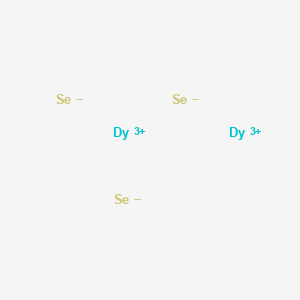
Dysprosium Selenide
Product
Product Code
Order or Specifications
99.999% Dysprosium Selenide Powder
DY-SE-05-P
Contact American Elements
99.999% Dysprosium Selenide Ingot
DY-SE-05-I
Contact American Elements
99.999% Dysprosium Selenide Chunk
DY-SE-05-CK
Contact American Elements
99.999% Dysprosium Selenide Lump
DY-SE-05-L
Contact American Elements
99.999% Dysprosium Selenide Sputtering Target
DY-SE-05-ST
Contact American Elements
Dysprosium Selenide is generally immediately available in most volumes. High purity, submicron and nanopowder forms may be considered. Additional technical, research and safety (MSDS) information is available as is a Reference Calculator for converting relevant units of measurement.

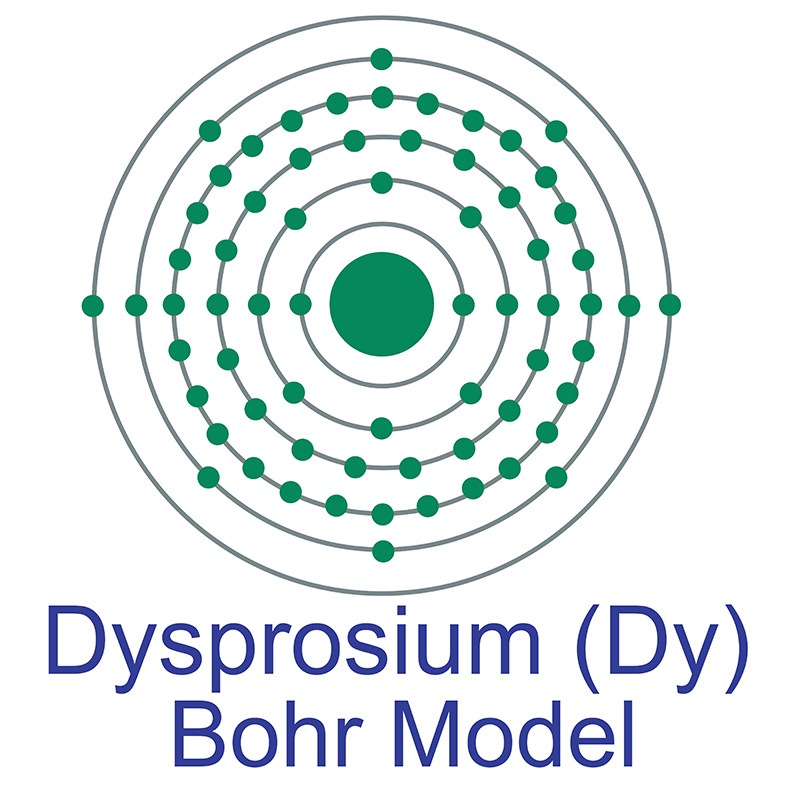
Dysprosium is a Block F, Group 3, Period 6 element. The electronic configuration is [Xe]4f106s2. In its elemental form dysprosium's CAS number is 7429-91-6. The dysprosium atom has a radius of 175.2.pm and it's Van der Waals radius is unknown. Dysprosium is most commonly used in neodymium-iron-boron high strength permanent magnets. Dysprosium is available as metal and compounds with purities from 99% to 99.999% (ACS grade to ultra-high purity); metals in the form of foil, sputtering target, and rod, and compounds as submicron and nanopowder. While it has one of the highest magnetic moments of any of the rare earths (10.6µB), this has not resulted in an ability to perform on its own as a practical alternative to neodymium compositions. It is however now an essential additive in NdFeB production. It is also used in special ceramic compositions based on BaTiO formulations. Recent research has examined the use of dysprosium in dysprosium-iron-garnet (DyIG) and silicon implanted with dysprosium and holmium to form donor centers. Dysprosium is added to various advanced optical formulations due to the fact that it emits in the 470-500 and 570-600 nm wavelengths. Recent research has examined the use of dysprosium in dysprosium-iron-garnet (DyIG) and silicon implanted with dysprosium and holmium to form donor centers. Dysprosium is added to various advanced optical formulations due to the fact that it emits in the 470-500 and 570-600 nm wavelengths.

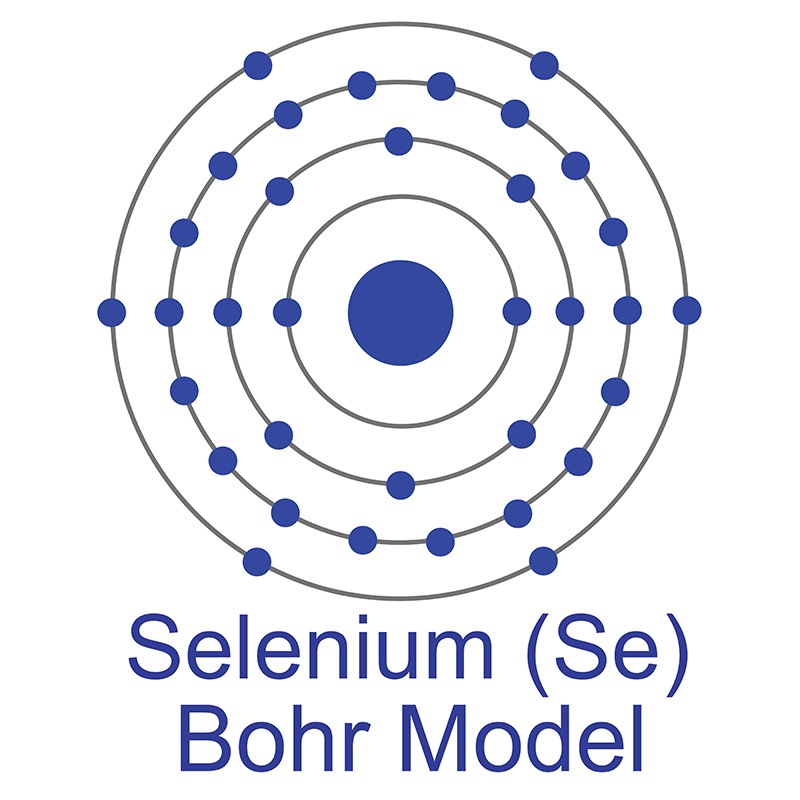
Selenium is a Block P, Group 16, Period 4 element. The electronic configuration is [Ar] 3d10 4s2 4p4. In its elemental form selenium's CAS number is 7782-49-2. The selenium atom has a radius of 116.pm and it's Van der Waals radius is 190.pm. Selenium exhibits both photovoltaic action, where light is converted directly into electricity, and photoconductive action, where the electrical resistance decreases with increased illumination. These properties make selenium useful in the production of photocells and exposure meters for photographic use, as well as solar cells. Below its melting point, selenium is a p-type semiconductor and has many uses in electronic and solid-state applications. Selenium is available as metal and compounds with purities from 99% to 99.9999% (ACS grade to ultra-high purity); metals in the form of foil, sputtering target, and rod, and compounds as submicron and nanopowder. Selenium was first discovered by Jons Berzelius in 1817.

American Elements semi conducting materials are crystal structures produced from ultra high purity starting materials synthesized by our high purity production facility which includes several large electric muffle furnaces, a tube furnace for hydrogen reduction, 50 gallon glass-lined Pfaudler reactors supported by our analytical laboratory containing X-ray diffraction, SEM, AA, BET surface area, and ICP Spectrometry for trace metals analysis. See a discussion of American Elements Ultra High Purity and Analytical capabilities. See Crystal Growth for processes used to fabricate semiconductor materials, which include:

  • Crystal "pulling" by the Czochaiski method for production of semiconductor materials
  • Flux growth and gradient freeze
  • Directional solidification of fluorites using both the Bridgman-Stockbarger and float zoning techniques
 
PRODUCT CATALOG Submicron & Nanopowder Tolling Ultra High Purity Sputtering Target Crystal Growth Rod, Plate, Powder, etc.

© 2001-2009. American Elements is a U.S. Registered Trademark. All rights reserved.
This website and all pages, designs, concepts, logos, and color schemes herein are
the copyrighted proprietary rights and intellectual property of American Elements.

Recent Research & Development for Dysprosium

  • Isolation of Dysprosium and Yttrium Complexes of a Three-Electron Reduction Product in the Activation of Dinitrogen, the (N(2))(3-) Radical. Evans WJ, Fang M, Zucchi G, Furche F, Ziller JW, Hoekstra RM, Zink JI. J Am Chem Soc. 2009 Jul 17. [Epub ahead of print] PMID: 19610635 [PubMed - as supplied by publisher]

  • Evidence for in vivo macrophage mediated tumor uptake of paramagnetic/fluorescent liposomes. Castelli DD, Terreno E, Cabella C, Chaabane L, Lanzardo S, Tei L, Visigalli M, Aime S. NMR Biomed. 2009 Jun 30. [Epub ahead of print] PMID: 19569084 [PubMed - as supplied by publisher]

  • Copper-responsive magnetic resonance imaging contrast agents. Que EL, Gianolio E, Baker SL, Wong AP, Aime S, Chang CJ. J Am Chem Soc. 2009 Jun 24;131(24):8527-36. PMID: 19489557 [PubMed - in process]

  • Measurement of dysprosium optical constants in the 2-830 eV spectral range using a transmittance method, and compilation of the revised optical constants of lanthanum, terbium, neodymium, and gadolinium. Kjornrattanawanich B, Windt DL, Bellotti JA, Seely JF. Appl Opt. 2009 Jun 1;48(16):3084-93. PMID: 19488122 [PubMed - in process]

  • Rare-earth doped gadolinia based phosphors for potential multicolor and white light emitting deep UV LEDs. Bedekar V, Dutta DP, Mohapatra M, Godbole SV, Ghildiyal R, Tyagi AK. Nanotechnology. 2009 Mar 25;20(12):125707. Epub 2009 Mar 4. PMID: 19420484 [PubMed - in process]

  • Ionic liquids for simultaneous preconcentration of some lanthanoids using dispersive liquid-liquid microextraction technique in uranium dioxide powder. Mallah MH, Shemirani F, Maragheh MG. Environ Sci Technol. 2009 Mar 15;43(6):1947-51. PMID: 19368197 [PubMed - indexed for MEDLINE]

  • Does the 4f electron configuration affect molecular geometries? A joint computational, vibrational spectroscopic, and electron diffraction study of dysprosium tribromide. Groen CP, Varga Z, Kolonits M, Peterson KA, Hargittai M. Inorg Chem. 2009 May 4;48(9):4143-53. PMID: 19334708 [PubMed]

  • Micro-Meter Size Organogelator with Tri-Color Luminescence (Blue, Green and Red) Activated by Dy(3+), Tb (3+) and Eu (3+) ions. Wang Q. J Fluoresc. 2009 Mar 4. [Epub ahead of print] PMID: 19259797 [PubMed - as supplied by publisher]

  • Oscillation properties of dysprosium-doped lead thiogallate crystal. Doroshenko ME, Basiev TT, Osiko VV, Badikov VV, Badikov DV, Jelínková H, Koranda P, Sulc J. Opt Lett. 2009 Mar 1;34(5):590-2. PMID: 19252561 [PubMed]

  • Structure and dynamics of a DNA-based model system for the study of electron spin-spin interactions. Biczo R, Hirsh DJ. J Inorg Biochem. 2009 Mar;103(3):362-72. Epub 2008 Dec 3. PMID: 19114287 [PubMed - indexed for MEDLINE]

  • A dysprosium nanowire modified carbon paste electrode for determination of levodopa using fast Fourier transformation square-wave voltammetry method. Daneshgar P, Norouzi P, Ganjali MR, Ordikhani-Seyedlar A, Eshraghi H. Colloids Surf B Biointerfaces. 2009 Jan 1;68(1):27-32. Epub 2008 Sep 26. PMID: 19013061 [PubMed - indexed for MEDLINE]

  • Anion-perturbed magnetic slow relaxation in planar {Dy4} clusters. Zheng YZ, Lan Y, Anson CE, Powell AK. Inorg Chem. 2008 Dec 1;47(23):10813-5. PMID: 18986136 [PubMed]

  • Effect of gamma-irradiation of ion imprinted polymer (IIP) particles for the preconcentrative separation of dysprosium from other selected lanthanides. Biju VM, Gladis JM, Rao TP. Talanta. 2003 Jul 4;60(4):747-54. PMID: 18969099 [PubMed - in process]

  • Determination of dysprosium and europium in sheep faeces by graphite furnace and tungsten coil electrothermal atomic absorption spectrometry. Silva JC, Garcia EE, Nogueira AR, Nóbrega JA. Talanta. 2001 Oct 31;55(4):847-54. PMID: 18968433 [PubMed - in process]

  • Dinuclear dysprosium(III) single-molecule magnets with a large anisotropic barrier. Lin PH, Burchell TJ, Clérac R, Murugesu M. Angew Chem Int Ed Engl. 2008;47(46):8848-51. No abstract available. PMID: 18924201 [PubMed]

  • Effects of chemically induced contraction of a coordination polyhedron on the dynamical magnetism of bis(phthalocyaninato)disprosium, a single-4f-ionic single-molecule magnet with a Kramers ground state. Ishikawa N, Mizuno Y, Takamatsu S, Ishikawa T, Koshihara SY. Inorg Chem. 2008 Nov 17;47(22):10217-9. Epub 2008 Oct 15. PMID: 18855382 [PubMed]

  • Dysprosium room-temperature ionic liquids with strong luminescence and response to magnetic fields. Mallick B, Balke B, Felser C, Mudring AV. Angew Chem Int Ed Engl. 2008;47(40):7635-8. No abstract available. PMID: 18759243 [PubMed]

  • High-sensitive CaSO4:Dy thermoluminescent phosphor synthesis by co-precipitation technique. Lakshmanan AR, Jose MT, Annalakshmi O. Radiat Prot Dosimetry. 2008;132(1):42-50. Epub 2008 Aug 20. PMID: 18716066 [PubMed - indexed for MEDLINE]

  • Relaxation-based distance measurements between a nitroxide and a lanthanide spin label. Jäger H, Koch A, Maus V, Spiess HW, Jeschke G. J Magn Reson. 2008 Oct;194(2):254-63. Epub 2008 Jul 18. PMID: 18674941 [PubMed - indexed for MEDLINE]

  • Spin chirality in a molecular dysprosium triangle: the archetype of the noncollinear ising model. Luzon J, Bernot K, Hewitt IJ, Anson CE, Powell AK, Sessoli R. Phys Rev Lett. 2008 Jun 20;100(24):247205. Epub 2008 Jun 18. PMID: 18643625 [PubMed]
American Elements Products can also be sourced at these sites:


electronics-ee.com