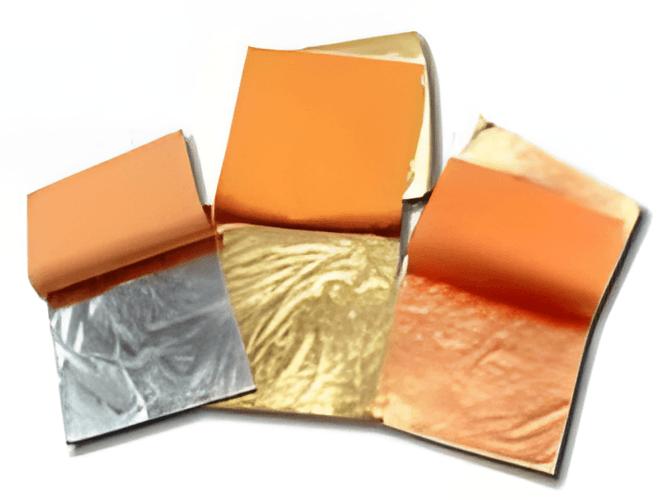
See safety data and research below. American Elements specializes in producing Erbium as rolled microfoils and sheets mounted on a removable support. Most foils are produced from cast Ingots for use in coating and thin film Chemical Vapor Deposition (CVD) and Physical Vapor Deposition (PVD) processes including Thermal and Electron Beam (E-Beam) Evaporation, Low Temperature Organic Evaporation, Atomic Layer Deposition (ALD), Organometallic and Chemical Vapor Deposition (MOCVD) for specific applications such as fuel cells and solar energy. Thickness can range from 0.003" to approximately 2mm for all metals. Some metals can also be rolled down as thin as 0.001” for use as an evaporation source in microelectronics, optics, magnetics, MEMS, and hard resistant coatings. Piece sizes are available up to approximately 7" maximum width. Maximum lengths of about 20" can be obtained with a nominal thickness between about 0.005" and 0.020" for thin film deposition on glass or metal substrates. Materials are produced using crystallization, solid state and other ultra high purification processes such as sublimation. American Elements specializes in producing custom compositions for commercial and research applications and for new proprietary technologies. American Elements also casts any of the rare earth metals and most other advanced materials into rod, bar or plate form, as well as other machined shapes and through other processes such as nanoparticles (See also application discussion at Nanotechnology Information and at Quantum Dots) and in the form of solutions and organometallics. We also produce Erbium as rods, powder and plates. Other shapes are available by request.
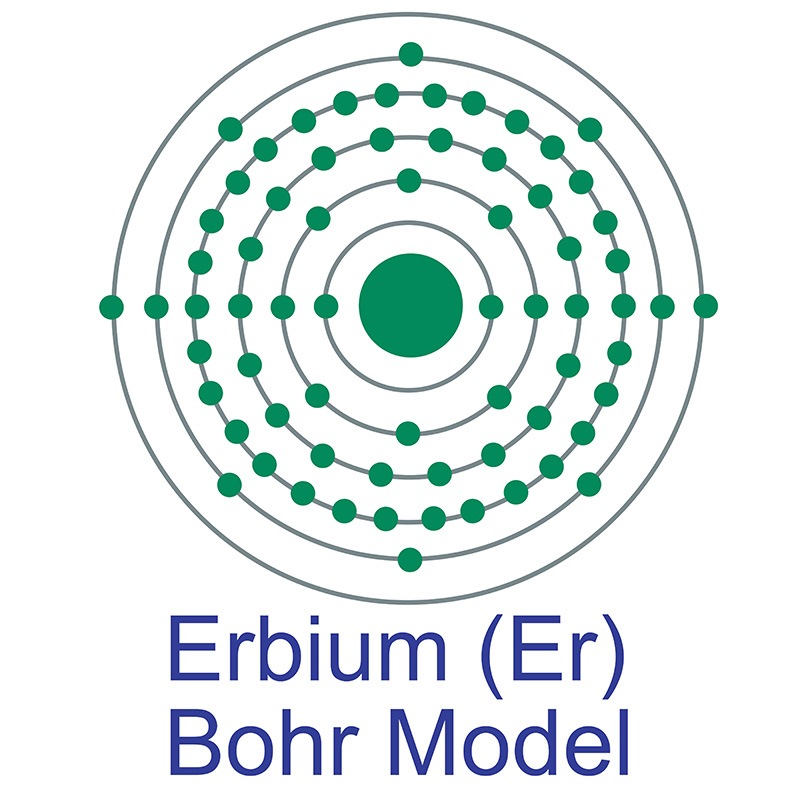
Erbium is a Block F, Group 3, Period 6 element. The number of electrons in each of Erbium's shells is 2, 8, 18, 30, 8, 2 and its electronic configuration is [Xe]4f12 6s2. In its elemental form erbium's CAS number is 7440-52-0. The erbium atom has a radius of 173.4.pm and it's Van der Waals radius is unknown. Erbium is moderately toxic. Erbium has application in glass coloring, as an amplifier in fiber optics, and in lasers for medical and dental use. Erbium is available as metal and compounds with purities from 99% to 99.999% (ACS grade to ultra-high purity); metals in the form of foil, sputtering target, and rod, and compounds as submicron and nanopowder. The ion has a very narrow absorption band coloring erbium salts pink. It is therefore used in eyeware and decorative glassware. It can neutralize discoloring impurities such as ferric ions and produce a neutral gray shade. It is used in a variety of glass products for this purpose. It is particularly useful as an amplifier for fiber optic data transfer. Erbium was first discovered by Carl Mosander in 1843. Erbium is named after the Swedish town, Ytterby. See Eribium research below.
PACKAGING SPECIFICATIONS FOR BULK & RESEARCH QUANTITIES
Typical bulk packaging includes palletized plastic 5 gallon/25 kg. pails, fiber and steel drums to 1 ton super sacks in full container (FCL) or truck load (T/L) quantities. Research and sample quantities and hygroscopic, oxidizing or other air sensitive materials may be packaged under argon or vacuum. Shipping documentation includes a Certificate of Analysis and Material Safety Data Sheet (MSDS). Solutions are packaged in polypropylene, plastic or glass jars up to palletized 440 gallon liquid totes.
Removal of Sea Urchin Spines Using Erbium-Doped Yttrium Aluminum Garnet Ablation.
Gungor S, Tarikçi N, Gokdemir G.
Dermatol Surg. 2011 Dec 30. doi: 10.1111/j.1524-4725.2011.02259.x. [Epub ahead of print] No abstract available.
PMID:
22211378
[PubMed - as supplied by publisher]
Laser and intense pulsed light management of couperose and rosacea.
Dahan S.
Ann Dermatol Venereol. 2011 Nov;138 Suppl 3:S219-22.
PMID:
22183103
[PubMed - in process]
In Solution Sensitization of Er(III) Luminescence by the 4-Tetrathiafulvalene-2,6-pyridinedicarboxylic Acid Dimethyl Antenna Ligand.
Pointillart F, Bourdolle A, Cauchy T, Maury O, Le Gal Y, Golhen S, Cador O, Ouahab L.
Inorg Chem. 2011 Dec 30. [Epub ahead of print]
PMID:
22208478
[PubMed - as supplied by publisher]
Selected Trace Elements in the Sacramento River, California: Occurrence and Distribution.
Taylor HE, Antweiler RC, Roth DA, Alpers CN, Dileanis P.
Arch Environ Contam Toxicol. 2011 Dec 23. [Epub ahead of print]
PMID:
22193863
[PubMed - as supplied by publisher]
Study about the effects of dental noises on the emotional experiences of children aged 6 to 10 years. A pilot study.
Birardi V, Pasini F.
Eur J Paediatr Dent. 2011 Dec;12(4):236-8.
PMID:
22185247
[PubMed - in process]
High-power polycrystalline Er:YAG ceramic laser at 1617 nm.
Zhang C, Shen DY, Wang Y, Qian LJ, Zhang J, Qin XP, Tang DY, Yang XF, Zhao T.
Opt Lett. 2011 Dec 15;36(24):4767-9. doi: 10.1364/OL.36.004767.
PMID:
22179877
[PubMed - in process]
Uranyl Sensitization of Samarium(III) Luminescence in a Two-Dimensional Coordination Polymer.
Knope KE, de Lill DT, Rowland CE, Cantos PM, de Bettencourt-Dias A, Cahill CL.
Inorg Chem. 2012 Jan 2;51(1):201-6. Epub 2011 Dec 15.
PMID:
22171660
[PubMed - in process]
Core/shell structured NaYF(4):Yb(3+)/Er(3+)/Gd(+3) nanorods with Au nanoparticles or shells for flexible amorphous silicon solar cells.
Li ZQ, Li XD, Liu QQ, Chen XH, Sun Z, Liu C, Ye XJ, Huang SM.
Nanotechnology. 2011 Dec 14;23(2):025402. [Epub ahead of print]
PMID:
22166792
[PubMed - as supplied by publisher]
Side effects and complications of fractional 1550-nm erbium fiber laser treatment among Asians.
Vaiyavatjamai P, Wattanakrai P.
J Cosmet Dermatol. 2011 Dec;10(4):313-6. doi: 10.1111/j.1473-2165.2011.00585.x.
PMID:
22151942
[PubMed - in process]
Skin characteristics after fractional photothermolysis.
Oh BH, Hwang YJ, Lee YW, Choe YB, Ahn KJ.
Ann Dermatol. 2011 Nov;23(4):448-54. Epub 2011 Nov 3.
PMID:
22148011
[PubMed - in process]
Novel heterometal-organic complexes as first single source precursors for up-converting NaY(Ln)F(4) (Ln = Yb, Er, Tm) nanomaterials.
Mishra S, Ledoux G, Jeanneau E, Daniele S, Joubert MF.
Dalton Trans. 2011 Dec 2. [Epub ahead of print]
PMID:
22134711
[PubMed - as supplied by publisher]
The Efficacy of Er,Cr:YSGG Laser in Reconditioning of Metallic Orthodontic Brackets.
Ahrari F, Basafa M, Fekrazad R, Mokarram M, Akbari M.
Photomed Laser Surg. 2012 Jan;30(1):41-6. Epub 2011 Dec 1.
PMID:
22133152
[PubMed - in process]
Electrically pumped silicon waveguide light sources.
Jayatilleka H, Nasrollahy-Shiraz A, Kenyon AJ.
Opt Express. 2011 Nov 21;19(24):24569-76. doi: 10.1364/OE.19.024569.
PMID:
22109485
[PubMed - in process]
Characteristics of rational harmonic mode-locked short-cavity fiber ring laser using a bismuth-oxide-based erbium-doped fiber and a bismuth-oxide-based highly nonlinear fiber.
Fukuchi Y, Maeda J.
Opt Express. 2011 Nov 7;19(23):22502-9. doi: 10.1364/OE.19.022502.
PMID:
22109128
[PubMed - in process]
Generation of 120-fs laser pulses at 1-GHz repetition rate derived from continuous wave laser diode.
Ishizawa A, Nishikawa T, Mizutori A, Takara H, Nakano H, Sogawa T, Takada A, Koga M.
Opt Express. 2011 Nov 7;19(23):22402-9. doi: 10.1364/OE.19.022402.
PMID:
22109116
[PubMed - in process]
Multiwavelength Brillouin fiber laser with enhanced reverse-S-shaped feedback coupling assisted by out-of-cavity optical amplifier.
Rahman ZA, Hitam S, Al-Mansoori MH, Abas AF, Mahdi MA.
Opt Express. 2011 Oct 24;19(22):21238-45. doi: 10.1364/OE.19.021238.
PMID:
22108976
[PubMed - in process]
Effects of Dentin Surface Modifications Treated with Er:YAG and Nd:YAG Laser Irradiation on Fibroblast Cell Adhesion.
Bolortuya G, Ebihara A, Ichinose S, Watanabe S, Anjo T, Kokuzawa C, Saegusa H, Kawashima N, Suda H.
Photomed Laser Surg. 2011 Nov 22. [Epub ahead of print]
PMID:
22107609
[PubMed - as supplied by publisher]
Treatment of Melasma Using a Novel 1,927-nm Fractional Thulium Fiber Laser: A Pilot Study.
Polder KD, Bruce S.
Dermatol Surg. 2011 Oct 10. doi: 10.1111/j.1524-4725.2011.02178.x. [Epub ahead of print]
PMID:
22093448
[PubMed - as supplied by publisher]
Letter: successful treatment of multiple miliary osteomas of the face using an erbium-doped yttrium aluminum garnet laser.
Ortiz AE, Ross EV.
Dermatol Surg. 2011 Oct;37(10):1548-50. doi: 10.1111/j.1524-4725.2011.02112.x. No abstract available.
PMID:
22092945
[PubMed - indexed for MEDLINE]
Material Safety Data Sheet
1 Identification of substance
Product details
Trade name Erbium metal
2 Composition/Data on components:
Chemical characterization: Designation: (CAS#)
Erbium (CAS# 7440-52-0), 100%
Identification number(s):
EINECS Number: 231-160-1
3 Hazards identification
Hazard designation: F Highly flammable
Information pertaining to particular dangers for man and environment
R 11 Highly flammable.
R 15 Contact with water liberates extremely flammable gases.
4 First aid measures
After inhalation
Supply fresh air. If required, provide artificial respiration. Keep patient warm. Consult doctor if symptoms persist.
Seek immediate medical advice.
After skin contact
Instantly wash with water and soap and rinse thoroughly.
Seek immediate medical advice.
After eye contact
Rinse opened eye for several minutes under running water. Then consult doctor.
After swallowing Seek immediate medical advice.
5 Fire fighting measures
Suitable extinguishing agents Extinguishing powder. Do not use water.
For safety reasons unsuitable extinguishing agents
Water.
Halocarbon extinguisher
Special hazards caused by the material, its products of combustion or flue gases:
Contact with water releases hydrogen (explosive).
Protective equipment:
Wear self-contained breathing apparatus.
Wear full protective suit.
Measures for environmental protection:
Do not allow material to be released to the environment without proper governmental permits.
Measures for cleaning/collecting:
Ensure adequate ventilation.
Do not flush with water or aqueous cleansing agents
Keep away from ignition sources.
Additional information:
See Section 7 for information on safe handling
See section 8 for information on personal protection equipment.
See Section 13 for information on disposal.
7 Handling and storage
Handling
Information for safe handling:
Keep containers tightly sealed.
Store in cool, dry place in tightly closed containers.
Ensure good ventilation/exhaustion at the workplace.
Open and handle container with care.
Information about protection against explosions and fires:
Keep ignition sources away - Do not smoke.
Protect against electrostatic charges.
Fumes can combine with air to form an explosive mixture.
Storage
Requirements to be met by storerooms and containers:
Store in cool location.
Information about storage in one common storage facility:
Store away from water.
Do not store together with oxidizing and acidic materials.
Store away from halogens.
Further information about storage conditions:
Store in petroleum or under dry argon.
Protect from humidity and keep away from water.
Keep container tightly sealed.
Store in cool, dry conditions in well sealed containers.
8 Exposure controls and personal protection
Additional information about design of technical systems:
Properly operating chemical fume hood designed for hazardous chemicals and having an average face velocity of at least 100 feet per minute.
Components with critical values that require monitoring at the workplace:
Not required.
Additional information: No data
Personal protective equipment
General protective and hygienic measures
The usual precautionary measures should be adhered to in handling the chemicals.
Keep away from foodstuffs, beverages and food.
Instantly remove any soiled and impregnated garments.
Wash hands during breaks and at the end of the work.
Breathing equipment: Use breathing protection with high concentrations.
Protection of hands: Impervious gloves
Eye protection:
Safety glasses
Full face protection
Face protection
Body protection: Protective work clothing.
9 Physical and chemical properties:
General Information
Form: Solid.
Colour: Silver-coloured
Smell: Odourless
Value/Range Unit Method
Change in condition
Melting point/Melting range: 1529 ° C
Boiling point/Boiling range: 2900 ° C
Sublimation temperature / start: Not determined
Flash point: Not applicable
Inflammability (solid, gaseous) Highly flammable.
Contact with water liberates extremely flammable gases.
Ignition temperature: Not determined
Decomposition temperature: Not determined
Critical values for explosion:
Lower: Not determined
Upper: Not determined
Steam pressure: Not determined
Density at 20 ° C 9.05 g/cm³
Solubility in / Miscibility with
Water: Not determined
10 Stability and reactivity
Thermal decomposition / conditions to be avoided:
No decomposition if used and stored according to specifications.
Materials to be avoided:
Oxidizing agents
Water/moisture
Acids
Halogens
Air
Dangerous reactions: Contact with water releases flammable gases
Dangerous products of decomposition: Hydrogen
11 Toxicological information
Acute toxicity:
Primary irritant effect:
on the skin: Irritant for skin and mucous membranes.
on the eye: Irritant effect.
Sensitization: No sensitizing effect known.
Additional toxicological information:
To the best of our knowledge the acute and chronic toxicity of this substance is not fully known.
12 Ecological information:
General notes:
Do not allow material to be released to the environment without proper governmental permits.
Water hazard class 1 (Self-assessment): slightly hazardous for water.
Do not allow undiluted product or large quantities of it to reach ground water, water bodies or sewage system.
13 Disposal considerations
Product:
Recommendation
Consult state, local or national regulations for proper disposal.
Hand over to disposers of hazardous waste.
Must be specially treated under adherence to official regulations.
Uncleaned packagings:
Recommendation:
Disposal must be made according to official regulations.
14 Transport information
Land transport ADR/RID and GGVS/GGVE (cross-border/domestic)
ADR/RID-GGVS/E Class: 4.1 (F3) Flammable solids.
Kemler Number: 40
UN-Number: 3178
Packaging group: II
Label 4.1
Designation of goods: 3178 FLAMMABLE SOLID, INORGANIC, N.O.S.
(erbium)
Code letter and hazard designation of product: F Highly flammable
Risk phrases:
11 Highly flammable.
15 Contact with water liberates extremely flammable gases.
National regulations
Information about limitation of use:
For use only by technically qualified individuals.
Employment restrictions concerning young persons must be observed.
Water hazard class:
Water hazard class 1 (Self-assessment): slightly hazardous for water.
16 Other information:
Employers should use this information only as a supplement to other information gathered by them, and should make independent judgement of suitability of this information to ensure proper use and protect the health and safety of employees. This information is furnished without warranty, and any use of the product not in conformance with this Material Safety Data Sheet, or in combination with any other product or process, is the responsibility of the user.