American Elements Logo and U.S. Registered Trademark


Europium Carbonate
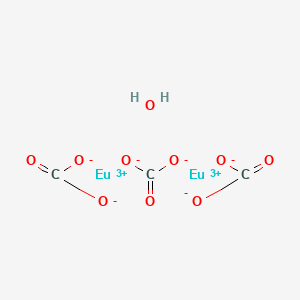
Eu2(CO3)3.xH2O
Product Product Code Order or Specifications
(2N) 99% Europium Carbonate EU-CB-02 Contact American Elements
(3N) 99.9% Europium Carbonate EU-CB-03 Contact American Elements
(4N) 99.99% Europium Carbonate EU-CB-04 Contact American Elements
(5N) 99.999% Europium Carbonate EU-CB-05 Contact American Elements
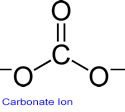
Carbonate IonEuropium Carbonate is a water insoluble Europium source that can easily be converted to other Europium compounds, such as the oxide by heating (calcination). Carbonate compounds also give off carbon dioxide when treated with dilute acids. In energy efficient fluorescent lighting, Europium provides not only the neccessary red, but also the blue. Europium Carbonate is generally immediately available in most volumes. Ultra high purity and high purity compositions improve both optical quality and usefulness as scientific standards. Nanoscale (See also Nanotechnology Information and Quantum Dots) elemental powders and suspensions, as alternative high surface area forms, may be considered.American Elements produces to many standard grades when applicable, including Mil Spec (military grade); ACS, Reagent and Technical Grade; Food, Agricultural and Pharmaceutical Grade; Optical Grade, USP and EP/BP (European Pharmacopoeia/British Pharmacopoeia)and follows applicable ASTM testing standards.Typical and custom packaging is available. Additional technical, research and safety (MSDS) information is available as is a Reference Calculator for converting relevant units of measurement.

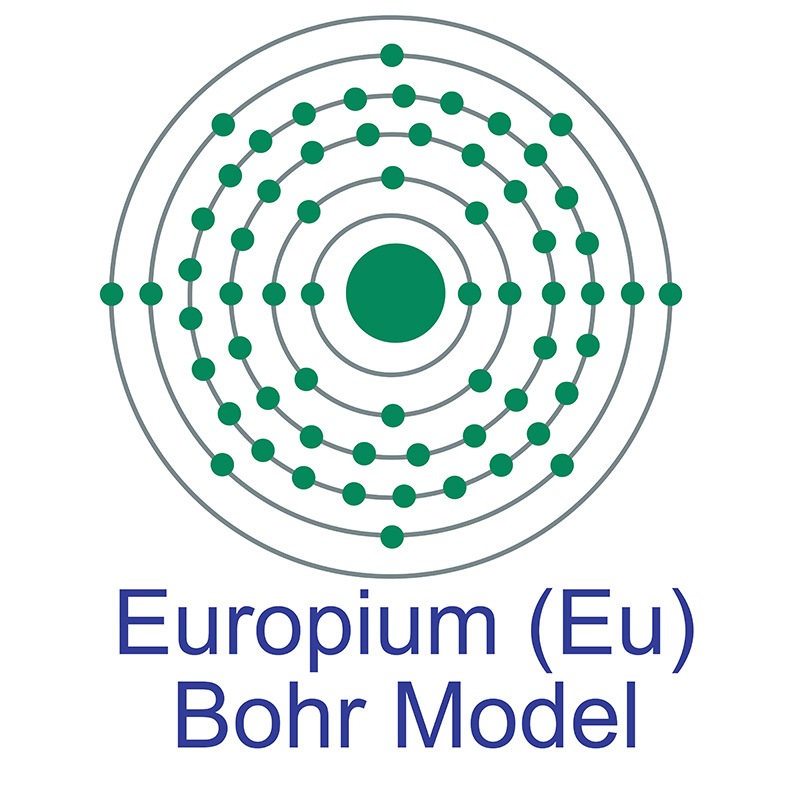
Europium(Eu) atomic and molecular weight, atomic number and elemental symbolEuropium is a Block F, Group 3, Period 6 element. The number of electrons in each of Europium's shells is 2, 8, 18, 25, 8, 2 and its electronic configuration is [Xe]4f7 6s2. In its elemental form europium's CAS number is 7440-53-1. The europium atom has a radius of 199.5.pm and it's Van der Waals radius is unknown. Europium is moderately toxic. Europium is utilized primarily for its unique luminescent behavior. Europium is available as metal andElemental Europium Europium Bohr Model compounds with purities from 99% to 99.999% (ACS grade to ultra-high purity); metals in the form of foil, sputtering target, and rod, and compounds as submicron and nanopowder. Excitation of the Europium atom by absorption of ultra violet radiation can result in specific energy level transitions within the atom creating an emission of visible radiation.In energy efficient fluorescent lighting, Europium provides not only the necessary red, but also the blue. Several commercial blue phosphors are based on Europium. Europium was named after the continent of Europe. See Europium research below.

Formula CAS No. Appearance Molecular Weight Solubility Stability
Eu2(CO3)3.xH2O 86546-99-8 White 483.95 Soluble in water, moderately soluble in strong mineral acids Slightly hygroscopic
PRODUCT CATALOG Europium Products Europium Research, Properties, & Information Foil Submicron & Nanopowder Tolling Ultra High Purity Sputtering Target Crystal Growth Rod, Plate, Powder, etc. MSDS Home

Have a Question? Ask a Chemical Engineer or Material Scientist   Request an MSDS or Certificate of Analysis


Search by Material, Product Name, Product Code, CAS Number, Formula, Element, Anion, Form, EC Number, MDL Number or PubChem ID.
German   Korean   French   Japanese   Spanish   Chinese (Simplified)   Portuguese   Russian   Chinese (Taiwan)   Italian   Turkish   Polish   Dutch   Czech   Swedish   Hungarian   Danish   Hebrew

Production Catalog Available in 36 Countries & Languages

PACKAGING SPECIFICATIONS FOR BULK & RESEARCH QUANTITIES


Typical bulk packaging includes palletized plastic 5 gallon/25 kg. pails, fiber and steel drums to 1 ton super sacks in full container (FCL) or truck load (T/L) quantities. Research and sample quantities and hygroscopic, oxidizing or other air sensitive materials may be packaged under argon or vacuum. Shipping documentation includes a Certificate of Analysis and Material Safety Data Sheet (MSDS). Solutions are packaged in polypropylene, plastic or glass jars up to palletized 440 gallon liquid totes.


Show me more forms of Europium
 
Customers for this product have also looked at:

Recent Research & Development for Europium

  • Sensitization of Lanthanoid Luminescence by Organic and Inorganic Ligands in Lanthanoid-Organic-Polyoxometalates. Ritchie C, Baslon V, Moore EG, Reber C, Boskovic C. Inorg Chem. 2011 Dec 23. [Epub ahead of print] PMID: 22220495 [PubMed - as supplied by publisher]

  • Di-?-benzoato-?O,O':O';?O:O,O'-bis[aqua-bis-(benzoato-?O,O')(dimethylformamide-?O)europium(III)]. Wang Z, Zhou X. Acta Crystallogr Sect E Struct Rep Online. 2011 Nov 1;67(Pt 11):m1579-80. Epub 2011 Oct 22. PMID: 22219814 [PubMed - in process]

  • Silver Nanoparticle-Enhanced Chemiluminescence Method for Determining Naproxen Based on Europium(III)-Sensitized Ce(IV)-Na(2)S (2)O (4) Reaction. Kamruzzaman M, Alam AM, Kim KM, Lee SH, Kim YH, Kim SH. J Fluoresc. 2012 Jan 4. [Epub ahead of print] PMID: 22215565 [PubMed - as supplied by publisher]

  • Effects of crystallization and dopant concentration on the emission behavior of TiO2:Eu nanophosphors. Pal M, Pal U, Gracia Y Jimenez JM, Perez-Rodriguez F. Nanoscale Res Lett. 2012 Jan 3;7(1):1. [Epub ahead of print] PMID: 22214494 [PubMed - as supplied by publisher]

  • Influence of Catalyses on the Preparation of YVO(4):Eu (3+) Phosphors by the Sol-gel Methodology. Saltarelli M, Luz PP, Matos MG, de Faria EH, Ciuffi KJ, Calefi PS, Rocha LA, Nassar EJ. J Fluoresc. 2011 Dec 30. [Epub ahead of print] PMID: 22205247 [PubMed - as supplied by publisher]

  • Selected Trace Elements in the Sacramento River, California: Occurrence and Distribution. Taylor HE, Antweiler RC, Roth DA, Alpers CN, Dileanis P. Arch Environ Contam Toxicol. 2011 Dec 23. [Epub ahead of print] PMID: 22193863 [PubMed - as supplied by publisher]

  • A Sensitive, Homogeneous, and High-Throughput Assay for Lysine-Specific Histone Demethylases at the H3K4 Site. Wang C, Caron M, Burdick D, Kang Z, Auld D, Hill WA, Padrós J, Zhang JH. Assay Drug Dev Technol. 2011 Dec 22. [Epub ahead of print] PMID: 22192306 [PubMed - as supplied by publisher]

  • Modelling and optimisation of preparative chromatographic purification of europium. Ojala F, Max-Hansen M, Kifle D, Borg N, Nilsson B. J Chromatogr A. 2012 Jan 13;1220:21-5. Epub 2011 Nov 23. PMID: 22189296 [PubMed - in process]

  • Site-specific DOTA/europium-labeling of recombinant human relaxin-3 for receptor-ligand interaction studies. Zhang WJ, Luo X, Liu YL, Shao XX, Wade JD, Bathgate RA, Guo ZY. Amino Acids. 2011 Dec 21. [Epub ahead of print] PMID: 22187146 [PubMed - as supplied by publisher]

  • Building large supramolecular nanocapsules with europium cations. Hamacek J, Poggiali D, Zebret S, Aroussi BE, Schneider MW, Mastalerz M. Chem Commun (Camb). 2011 Dec 19. [Epub ahead of print] PMID: 22179299 [PubMed - as supplied by publisher]

  • Circularly Polarized Lanthanide Luminescence from Langmuir-Blodgett Films Formed from Optically Active and Amphiphilic Eu(III) -Based Self-Assembly Complexes. Kitchen JA, Barry DE, Mercs L, Albrecht M, Peacock RD, Gunnlaugsson T. Angew Chem Int Ed Engl. 2011 Dec 7. doi: 10.1002/anie.201106863. [Epub ahead of print] PMID: 22162422 [PubMed - as supplied by publisher]

  • Enhancement of the Luminescence Efficiency of Europium(III) Tris(?-diketonato) Complex in Organic Media by Quaternary Ammonium Salts with Anionic Ligands. Katano H, Uematsu K, Tsukatani T. Anal Sci. 2011;27(12):1249. PMID: 22156255 [PubMed - in process]

  • High-pressure phase transition and thermoelastic properties of europium chalcogenides. Gupta DC, Singh KC. J Mol Model. 2011 Nov 26. [Epub ahead of print] PMID: 22146983 [PubMed - as supplied by publisher]

  • Spectrofluorimetric study of the interaction between europium(III) and moxifloxacin in micellar solution and its analytical application. Kamruzzaman M, Alam AM, Lee SH, Ragupathy D, Kim YH, Park SR, Kim SH. Spectrochim Acta A Mol Biomol Spectrosc. 2012 Feb;86:375-80. Epub 2011 Oct 29. PMID: 22133700 [PubMed - in process]

  • Complexation of Europium(III) by Bis(dialkyltriazinyl)bipyridines in 1-Octanol. Steppert M, Císarová I, Fanghänel T, Geist A, Lindqvist-Reis P, Panak P, Stepnicka P, Trumm S, Walther C. Inorg Chem. 2012 Jan 2;51(1):591-600. Epub 2011 Dec 1. PMID: 22133151 [PubMed - in process]

  • Photoluminescent Properties of Novel Rare Earth Organic-Inorganic Nanocomposite with TiO(2) Modified Silica via Double Crosslinking Units. Zhao Y, Yan B. Photochem Photobiol. 2012 Jan;88(1):21-31. doi: 10.1111/j.1751-1097.2011.01033.x. Epub 2011 Nov 29. PMID: 22126262 [PubMed - in process]

  • Nonradiative deactivation of europium(iii) luminescence as a detection scheme for moisture. Knall AC, Tscherner M, Noormofidi N, Pein A, Saf R, Mereiter K, Ribitsch V, Stelzer F, Slugovc C. Analyst. 2011 Nov 28. [Epub ahead of print] PMID: 22125794 [PubMed - as supplied by publisher]

  • Probing the metal ion selectivity in methionine aminopeptidase via changes in the luminescence properties of the enzyme bound europium ion. Sule N, Singh RK, Zhao P, Srivastava DK. J Inorg Biochem. 2012 Jan;106(1):84-9. Epub 2011 Sep 22. PMID: 22112844 [PubMed - in process]

  • Characteristics of functionalized nano-hydroxyapatite and internalization by human epithelial cell. Yan-Zhong Z, Yan-Yan H, Jun Z, Shai-Hong Z, Zhi-You L, Ke-Chao Z. Nanoscale Res Lett. 2011 Nov 23;6:600. PMID: 22108000 [PubMed - in process]

  • The oxidation state of europium in halide glasses. Weber JK, Vu M, Passlick C, Schweizer S, Brown DE, Johnson CE, Johnson JA. J Phys Condens Matter. 2011 Dec 14;23(49):495402. Epub 2011 Nov 18. PMID: 22101252 [PubMed - in process]


Material Safety Data Sheet
  • 1 Identification of substance

    • Product details

    • Trade name Europium (III) carbonate
  • 2 Composition/Data on components:

    • Chemical characterization:
                 Designation: (CAS#)                                        
      Europium (III) carbonate, hydrate (CAS# 5895-48-7), 100%
    • Identification number(s):
    • EINECS Number: 227-582-0
  • 3 Hazards identification

    • Hazard designation: · void
    • Information pertaining to particular dangers for man and environment
      Not applicable
  • 4 First aid measures

    • After inhalation
      Supply fresh air. If required, provide artificial respiration. Keep patient warm. Consult doctor if symptoms persist.
      Seek immediate medical advice.
    • After skin contact
      Instantly wash with water and soap and rinse thoroughly.
      Seek immediate medical advice.
    • After eye contact
      Rinse opened eye for several minutes under running water. Then consult doctor.
    • After swallowing Seek medical treatment.
  • 5 Fire fighting measures

    • Suitable extinguishing agents
      CO2, extinguishing powder or water jet. Fight larger fires with water jet.
    • Special hazards caused by the material, its products of combustion or
        flue gases:
      Can be released in case of fire:
      Carbon monoxide (CO)
    • Protective equipment:
      Wear self-contained breathing apparatus.
      Wear full protective suit.
  • 6 Accidental release measures

    • Person-related safety precautions:
      Wear protective equipment. Keep unprotected persons away.
      Ensure adequate ventilation
    • Measures for environmental protection:
      Do not allow material to be released to the environment without proper governmental permits.
    • Measures for cleaning/collecting: Collect mechanically.
    • Additional information:
      See Section 7 for information on safe handling
      See section 8 for information on personal protection equipment.
      See Section 13 for information on disposal.
  • 7 Handling and storage


    • Handling
    • Information for safe handling:
      Keep containers tightly sealed.
      Store in cool, dry place in tightly closed containers.
      No special precautions necessary if used correctly.
    • Information about protection against explosions and fires:
      No special measures required.

    • Storage
    • Requirements to be met by storerooms and containers:
      No special requirements.
    • Information about storage in one common storage facility:
      Do not store together with acids.
      Store away from water.
    • Further information about storage conditions:
      Keep container tightly sealed.
      Store in cool, dry conditions in well sealed containers.
  • 8 Exposure controls and personal protection

    • Additional information about design of technical systems:
      Properly operating chemical fume hood designed for hazardous chemicals and having an average face velocity of at least 100 feet per minute.

    • Components with critical values that require monitoring at the
      workplace:                                                             
      Not required.
    • Additional information: No data

    • Personal protective equipment
    • General protective and hygienic measures
      The usual precautionary measures should be adhered to in handling the chemicals.
      Keep away from foodstuffs, beverages and food.
      Instantly remove any soiled and impregnated garments.
      Wash hands during breaks and at the end of the work.
    • Breathing equipment: Use breathing protection with high concentrations.
    • Protection of hands: Impervious gloves
    • Eye protection: Safety glasses
    • Body protection: Protective work clothing.
  • 9 Physical and chemical properties:

    • General Information

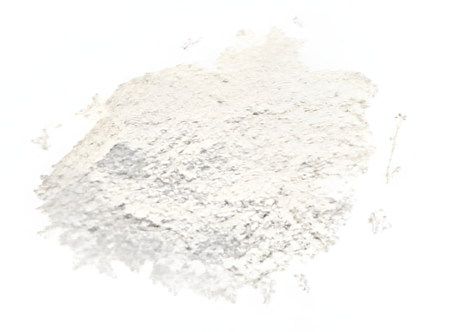
    • Form: Powder
    • Colour: White
    • Smell: Odourless
    •   Value/Range  Unit    Method      
    • Change in condition
    • Melting point/Melting range:       Not determined
    • Boiling point/Boiling range:       Not determined
    • Sublimation temperature / start:   Not determined

    • Flash point:                       Not applicable

    • Inflammability (solid, gaseous)    Product is not inflammable.

    • Ignition temperature:              Not determined

    • Decomposition temperature:         Not determined

    • Danger of explosion:               Product is not explosive.

    • Critical values for explosion:
    • Lower:                             Not determined
    • Upper:                             Not determined

    • Steam pressure:                    Not determined

    • Density                            Not determined

    • Solubility in / Miscibility with
    • Water:                             Insoluble
  • 10 Stability and reactivity

    • Thermal decomposition / conditions to be avoided:
      No decomposition if used and stored according to specifications.
    • Materials to be avoided: Acids
    • Dangerous reactions: No dangerous reactions known
    • Dangerous products of decomposition:
      Carbon monoxide and carbon dioxide
      Metal oxide
  • 11 Toxicological information

    • Acute toxicity:
    • Primary irritant effect:
    • on the skin: May cause irritation
    • on the eye: May cause irritation
    • Sensitization: No sensitizing effect known.
    • Additional toxicological information:
      To the best of our knowledge the acute and chronic toxicity of this substance is not fully known.
      No classification data on carcinogenic properties of this material is available from the EPA, IARC, NTP, OSHA or ACGIH.
  • 12 Ecological information:

    • General notes:
      Do not allow material to be released to the environment without proper governmental permits.
      Generally not hazardous for water.
  • 13 Disposal considerations


    • Product:
    • Recommendation
      Consult state, local or national regulations for proper disposal.
      Hand over to disposers of hazardous waste.
      Must be specially treated under adherence to official regulations.

    • Uncleaned packagings:
    • Recommendation:
      Disposal must be made according to official regulations.
  • 14 Transport information


    • Land transport ADR/RID and GGVS/GGVE (cross-border/domestic)
    • ADR/RID-GGVS/E Class:         None

    • Maritime transport IMDG/GGVSea:
    • IMDG/GGVSea Class:        None

    • Air transport ICAO-TI and IATA-DGR:
    • ICAO/IATA Class:          None

    • Transport/Additional information:
      Not dangerous according to the above specifications.
  • 15 Regulatory information


    • Designation according to EC guidelines:
      Observe the normal safety regulations when handling chemicals
      The product is not subject to identification regulations under EC Directives and the Ordinance on Hazardous Materials (GefStoffV).

    • National regulations

    • Information about limitation of use:
      For use only by technically qualified individuals.

    • Water hazard class: Generally not hazardous for water.
  • 16 Other information:

      Employers should use this information only as a supplement to other information gathered by them, and should make independent judgement of suitability of this information to ensure proper use and protect the health and safety of employees.  This information is furnished without warranty, and any use of the product not in conformance with this Material Safety Data Sheet, or in combination with any other product or process, is the responsibility of the user.
  •  

    American Elements is a copyrighted U.S. Trademark. All rights reserved.