SECTION 1. IDENTIFICATION
Product Name: Europium(II) Fluoride
Product Number: All applicable American Elements product codes, e.g. EU2-F-02
, EU2-F-03
, EU2-F-04
, EU2-F-05
CAS #: 14077-39-5
Relevant identified uses of the substance: Scientific research and development
Supplier details:
American Elements
10884 Weyburn Ave.
Los Angeles, CA 90024
Tel: +1 310-208-0551
Fax: +1 310-208-0351
Emergency telephone number:
Domestic, North America: +1 800-424-9300
International: +1 703-527-3887
SECTION 2. HAZARDS IDENTIFICATION
Classification
This chemical is considered hazardous by the 2012 OSHA Hazard Communication Standard (29 CFR 1910.1200)
Label Elements
Signal Word: Warning
Hazard Statements
Harmful if swallowed
Harmful in contact with skin
Causes skin irritation
Causes serious eye irritation
Harmful if inhaled
May cause respiratory irritation

Precautionary Statements
Prevention
Wash face, hands and any exposed skin thoroughly after handling
Do not eat, drink or smoke when using this product
Wear protective gloves/protective clothing/eye protection/face protection
Avoid breathing dust/fume/gas/mist/vapors/spray
Use only outdoors or in a well-ventilated area
Inhalation
IF INHALED: Remove victim to fresh air and keep at rest in a position comfortable for breathing
Call a POISON CENTER or doctor/physician if you feel unwell
Skin
IF ON SKIN: Wash with plenty of soap and water
Call a POISON CENTER or doctor/physician if you feel unwell
If skin irritation occurs: Get medical advice/attention
Take off contaminated clothing and wash before reuse
Eyes
IF IN EYES: Rinse cautiously with water for several minutes. Remove contact lenses, if present and easy to do. Continue rinsing
If eye irritation persists: Get medical advice/attention
Ingestion
IF SWALLOWED: Call a POISON CENTER or doctor/physician if you feel unwell
Rinse mouth
Storage
Store in a well-ventilated place. Keep container tightly closed
Store locked up
Disposal
Dispose of contents/container to an approved waste disposal plant
Hazards not otherwise classified (HNOC)
None identified
SECTION 3. COMPOSITION/INFORMATION ON INGREDIENTS
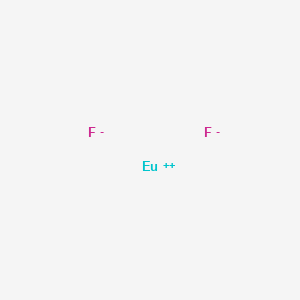
Component: Europium fluoride (EuF2)
CAS-No: 14077-39-5
Weight %: <=100
SECTION 4. FIRST AID MEASURES
General Advice If symptoms persist, call a physician.
Eye Contact Rinse immediately with plenty of water, also under the eyelids, for at least 15 minutes. Get medical attention.
Skin Contact Wash off immediately with plenty of water for at least 15 minutes. If skin irritation persists, call a physician.
Inhalation Move to fresh air. If not breathing, give artificial respiration. Get medical attention if
symptoms occur.
Ingestion Clean mouth with water and drink afterwards plenty of water. Get medical attention if
symptoms occur.
Most important symptoms and effects
None reasonably foreseeable.
Notes to Physician Treat symptomatically
SECTION 5. FIREFIGHTING MEASURES
Unsuitable Extinguishing Media No information available
Flash Point No information available
Method - No information available
Autoignition Temperature No information available
Explosion Limits
Upper No data available
Lower No data available
Sensitivity to Mechanical Impact No information available
Sensitivity to Static Discharge No information available
Specific Hazards Arising from the Chemical
Keep product and empty container away from heat and sources of ignition.
Hazardous Combustion Products
Hydrogen fluoride Europium oxide
Protective Equipment and Precautions for Firefighters
As in any fire, wear self-contained breathing apparatus pressure-demand, MSHA/NIOSH (approved or equivalent) and full protective gear.
NFPA
Health: 2
Flammability: 0
Instability: 0
Physical hazards: -
SECTION 6. ACCIDENTAL RELEASE MEASURES
Personal Precautions Ensure adequate ventilation. Use personal protective equipment. Avoid dust formation.
Environmental Precautions Should not be released into the environment. See Section 12 for additional ecological
information. Do not allow material to contaminate ground water system. Do not flush into surface water or sanitary sewer system.
Methods for Containment and Clean Up
Sweep up or vacuum up spillage and collect in suitable container for disposal. Keep in suitable, closed containers for disposal.
SECTION 7. HANDLING AND STORAGE
Handling
Wear personal protective equipment. Ensure adequate ventilation. Avoid ingestion and
inhalation. Avoid dust formation. Do not get in eyes, on skin, or on clothing.
Storage
Protect from moisture.
SECTION 8. EXPOSURE CONTROLS/PERSONAL PROTECTION
Personal Protective Equipment
Eye/face Protection Wear appropriate protective eyeglasses or chemical safety goggles as described by OSHA's eye and face protection regulations in 29 CFR 1910.133 or European Standard EN166.
Skin and body protection Long sleeved clothing.
Respiratory Protection No protective equipment is needed under normal use conditions.
Hygiene Measures
Handle in accordance with good industrial hygiene and safety practice
SECTION 9. PHYSICAL AND CHEMICAL PROPERTIES
Physical State Solid
Appearance Yellow
Odor Odorless
Odor Threshold No information available
pH No information available
Melting Point/Range 1380 °C / 2516 °F
Boiling Point/Range > 2400 °C / 4352 °F
Flash Point No information available
Evaporation Rate Not applicable
Flammability (solid,gas) No information available
Flammability or explosive limits
Upper No data available
Lower No data available
Vapor Pressure No information available
Vapor Density Not applicable
Specific Gravity 6.495 g/cm3
Solubility No information available
Partition coefficient; n-octanol/water No data available
Autoignition Temperature No information available
Decomposition Temperature No information available
Viscosity Not applicable
Molecular Formula EuF2
Molecular Weight 189.96
SECTION 10. STABILITY AND REACTIVITY
Reactive Hazard None known, based on information available
Stability Moisture sensitive.
Conditions to Avoid Incompatible products.
Incompatible Materials Strong oxidizing agents
Hazardous Decomposition ProductsHydrogen fluoride, Europium oxide
Hazardous Polymerization Hazardous polymerization does not occur.
Hazardous Reactions None under normal processing.
SECTION 11. TOXICOLOGICAL INFORMATION
Acute Toxicity
Product Information
Component Information
Toxicologically Synergistic
Products
No information available
Delayed and immediate effects as well as chronic effects from short and long-term exposure
Irritation No information available
Sensitization No information available
Carcinogenicity The table below indicates whether each agency has listed any ingredient as a carcinogen.
Mutagenic Effects No information available
Reproductive Effects No information available.
Developmental Effects No information available.
Teratogenicity No information available.
STOT - single exposure Respiratory system
STOT - repeated exposure None known
Aspiration hazard No information available
Symptoms / effects,both acute and delayed
No information available
Endocrine Disruptor Information No information available
Other Adverse Effects The toxicological properties have not been fully investigated.
SECTION 12. ECOLOGICAL INFORMATION
Ecotoxicity
May cause long-term adverse effects in the environment. Do not allow material to contaminate ground water system.
Persistence and Degradability Insoluble in water May persist
Bioaccumulation/ Accumulation No information available.
Mobility Is not likely mobile in the environment due its low water solubility.
SECTION 13. DISPOSAL CONSIDERATIONS
Waste Disposal Methods Chemical waste generators must determine whether a discarded chemical is classified as a hazardous waste. Chemical waste generators must also consult local, regional, and national hazardous waste regulations to ensure complete and accurate classification.
SECTION 14. TRANSPORT INFORMATION
DOT
UN-No UN3288
Proper Shipping Name TOXIC SOLID, INORGANIC, N.O.S.
Proper technical name (Europium(II) fluoride, anhydrous)
Hazard Class 6.1
Packing Group III
TDG
UN-No UN3288
Proper Shipping Name TOXIC SOLID, INORGANIC, N.O.S.
Hazard Class 6.1
Packing Group III
IATA
UN-No UN3288
Proper Shipping Name TOXIC SOLID, INORGANIC, N.O.S.
Hazard Class 6.1
Packing Group III
IMDG/IMO
UN-No UN3288
Proper Shipping Name TOXIC SOLID, INORGANIC, N.O.S.
Hazard Class 6.1
Packing Group III
SECTION 15. REGULATORY INFORMATION
U.S. Federal Regulations
TSCA 12(b) Not applicable
SARA 313 Not applicable
SARA 311/312 Hazard Categories See section 2 for more information
CWA (Clean Water Act) Not applicable
Clean Air Act Not applicable
OSHA Occupational Safety and Health Administration
Not applicable
CERCLA Not applicable
California Proposition 65 This product does not contain any Proposition 65 chemicals
U.S. Department of Transportation
Reportable Quantity (RQ): N
DOT Marine Pollutant N
DOT Severe Marine Pollutant N
U.S. Department of Homeland Security
This product does not contain any DHS chemicals.
Other International Regulations
Mexico - Grade No information available
SECTION 16. OTHER INFORMATION
Safety Data Sheet according to Regulation (EC) No. 1907/2006 (REACH). The above information is believed to be correct but does not purport to be all inclusive and shall be used only as a guide. The information in this document is based on the present state of our knowledge and is applicable to the product with regard to appropriate safety precautions. It does not represent any guarantee of the properties of the product. American Elements shall not be held liable for any damage resulting from handling or from contact with the above product. See reverse side of invoice or packing slip for additional terms and conditions of sale. COPYRIGHT 1997-2022 AMERICAN ELEMENTS. LICENSED GRANTED TO MAKE UNLIMITED PAPER COPIES FOR INTERNAL USE ONLY.

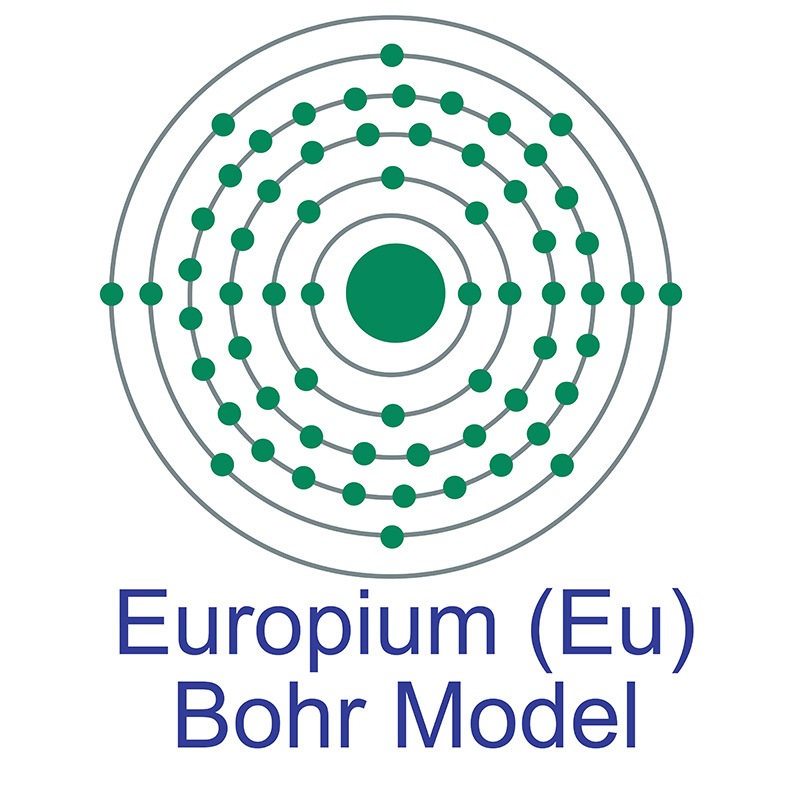 The number of electrons in each of Europium's shells is 2, 8, 18, 25, 8, 2 and its electron configuration is [Xe]4f7 6s2. The europium atom has an atomic radius of 180 pm and a Van der Waals radius of 233 pm. Europium was discovered by Eugène-Anatole Demarçay in 1896, however, he did not isolate it until 1901. Europium was named after the continent of Europe.
 Europium is a member of the lanthanide or