American Elements Logo and U.S. Registered Trademark
Europium Fluoride Sputtering Target
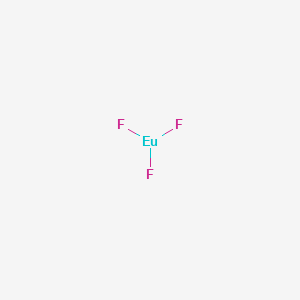
EuF3
Product
Product Code
Order or Specifications
99% Europium Fluoride
EU-F-01
Contact American Elements
99.9% Europium Fluoride Sputtering Target
EU-F-03ST
Contact American Elements
99.99% Europium Fluoride Sputtering Target
EU-F-04ST
Contact American Elements
99.999% Europium Fluoride Sputtering Target
EU-F-05ST
Contact American Elements
 
American Elements specializes in producing high purity Europium fluoride sputtering targets with the highest possible density High Purity (99.99%) Metallic Sputtering Targetand smallest possible average grain sizes for use in semiconductor, chemical vapor deposition (CVD) and physical vapor deposition (PVD) display and optical applications. Our standard Sputtering Targets for thin film are available monoblock or bonded with dimensions and configurations up to 820 mm with hole drill locations and threading, beveling, grooves and backing designed to work with both older sputtering devises as well as the latest process equipment, such as large area coating for solar energy or fuel cells and flip-chip applications. Research sized targets are also produced as well as custom sizes and alloys. All targets are analyzed using best demonstrated techniques including X-Ray Fluorescence (XRF), Glow Discharge Mass Spectrometry (GDMS), and Inductively Coupled Plasma (ICP). "Sputtering" allows for thin film deposition of an ultra high purity sputtering metallic or oxide material onto another solid substrate by the controlled removal and conversion of the target material into a directed gaseous/plasma phase through ionic bombardment. We can also provide targets outside this range in addition to just about any size rectangular, annular, or oval target. Materials are produced using crystallization, solid state and other ultra high purification processes such as sublimation. American Elements specializes in producing custom compositions for commercial and research applications and for new proprietary technologies. American Elements also casts any of the rare earth metals and most other advanced materials into rod, bar or plate form, as well as other machined shapes and through other processes nanoparticles. We also produce Europium Fluoride as rods, powder and plates. Other shapes are available by request.

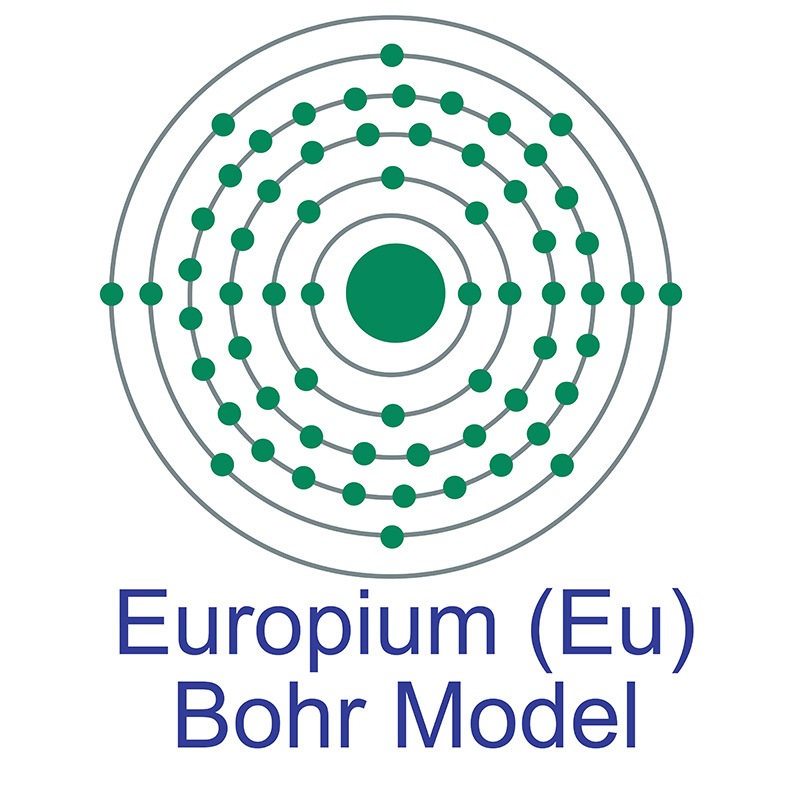
Europium is a Block F, Group 3, Period 6 element. The electronic configuration is [Xe]4f76s2. In its elemental form europium's CAS number is 7440-53-1. The europium atom has a radius of 199.5.pm and it's Van der Waals radius is unknown. Europium is utilized primarily for its unique luminescent behavior. Europium is available as metal and compounds with purities from 99% to 99.999% (ACS grade to ultra-high purity); metals in the form of foil, sputtering target, and rod, and compounds as submicron and nanopowder. Excitation of the Europium atom by absorption of ultra violet radiation can result in specific energy level transitions within the atom creating an emission of visible radiation.In energy efficient fluorescent lighting, Europium provides not only the necessary red, but also the blue. Several commercial blue phosphors are based on Europium.

Formula CAS No. Appearance Molecular Weight Density Melting Point Boiling Point Solubility Stability
EuF3 13765-25-8 White 208.96   1276°C 2280°C Soluble in water, moderately soluble in strong mineral acids Slightly hygroscopic
PRODUCT CATALOG Europium Research, Properties, & Information Submicron & Nanopowder Tolling Ultra High Purity Sputtering Target Crystal Growth Rod, Plate, Powder, etc. MSDS
German   Korean   French   Japanese   Spanish   Chinese (Simplified)   Portuguese   Russian   Chinese (Taiwan)   Italian   Turkish   Polish   Dutch   Czech   Swedish   Hungarian   Danish   Hebrew

Production Catalog Available in 32 Countries
 
Periodic table of the elements science and academic information, elements and advanced materials data, scientific presentations and all pages, designs, concepts, logos, and color schemes herein are the copyrighted proprietary rights and intellectual property of American Elements. American Elements is a U.S. Registered Trademark. © 2001-2009. American Elements. All rights reserved.


Recent Research & Development for Europium

  • Covalently Bonded Assembly of Lanthanide/Silicon-Oxygen Network/Polyethylene Glycol Hybrid Materials through Functionalized 2-Thenoyltrifluoroacetone Linkage. Qiao XF, Yan B. J Phys Chem B. 2009 Aug 6. [Epub ahead of print] PMID: 19658417 [PubMed - as supplied by publisher]

  • Surface potential of spherical polyelectrolyte brushes in the presence of trivalent counterions. Hoffmann M, Jusufi A, Schneider C, Ballauff M. J Colloid Interface Sci. 2009 Jun 18. [Epub ahead of print] PMID: 19651414 [PubMed - as supplied by publisher]

  • Crystal Growth, Structural Properties, and Photophysical Characterization of Ln(4)Na(2)K(2)M(2)O(13) (M = Nb, Ta; Ln = Nd, Sm, Eu, Gd). Jagau TC, Roof IP, Smith MD, Zur Loye HC. Inorg Chem. 2009 Jul 30. [Epub ahead of print] PMID: 19642658 [PubMed - as supplied by publisher]

  • Synthesis and luminescence properties of a trinucleotide-europium(III) complex conjugate. Escudier JM, Dupouy C, Fountain MA, del Mundo IM, Jacklin EM, Morrow JR. Org Biomol Chem. 2009 Aug 21;7(16):3251-7. Epub 2009 Jun 23. PMID: 19641782 [PubMed - in process]

  • Circularly Polarized Luminescence in Enantiopure Europium and Terbium Complexes with Modular, All-Oxygen Donor Ligands. Seitz M, Do K, Ingram AJ, Moore EG, Muller G, Raymond KN. Inorg Chem. 2009 Jul 29. [Epub ahead of print] PMID: 19639983 [PubMed - as supplied by publisher]

  • Photochemical Mineralization of Europium, Titanium, and Iron Oxyhydroxide Nanoparticles in the Ferritin Protein Cage. Klem MT, Mosolf J, Young M, Douglas T. Inorg Chem. 2009 Jul 27. [Epub ahead of print] No abstract available. PMID: 19634892 [PubMed - as supplied by publisher]

  • Chemiluminescence determination of naproxen based on europium(III)-sensitized KIO(4)-H(2)O(2) reaction. Du J, Li D, Lu J. Luminescence. 2009 Jul 23. [Epub ahead of print] PMID: 19630092 [PubMed - as supplied by publisher]

  • Synthesis and luminescent properties of Eu(TTA)(3).3H(2)O nanocrystallines. Liu Q, Wang DM, Li YY, Yan M, Wei Q, Du B. Luminescence. 2009 Jul 23. [Epub ahead of print] PMID: 19630091 [PubMed - as supplied by publisher]

  • A Miniaturized Linear pH Sensor Based on a Highly Photoluminescent Self-Assembled Europium(III) Metal-Organic Framework. Harbuzaru BV, Corma A, Rey F, Jordá JL, Ananias D, Carlos LD, Rocha J. Angew Chem Int Ed Engl. 2009 Jul 23. [Epub ahead of print] No abstract available. PMID: 19630048 [PubMed - as supplied by publisher]

  • [Spectral analysis and photoluminescence properties of Eu-Tb codoped polymer] Li J, Xu BS, Li YC, Xie JB. Guang Pu Xue Yu Guang Pu Fen Xi. 2009 Apr;29(4):891-5. Chinese. PMID: 19626866 [PubMed - in process]

  • [Preparation and luminescence properties of EuVO4] Namila, Wang XG, Zheng XF, Ao CH, Kang YY. Guang Pu Xue Yu Guang Pu Fen Xi. 2009 Apr;29(4):887-90. Chinese. PMID: 19626865 [PubMed - in process]

  • Spherical core-shell structured nanophosphors on the basis of europium-doped lutetium compounds. Yermolayeva YV, Tolmachev AV, Korshikova TI, Yavetskiy RP, Dobrotvorskaya MV, Danylenko NI, Sofronov DS. Nanotechnology. 2009 Aug 12;20(32):325601. Epub 2009 Jul 21. PMID: 19620751 [PubMed - in process]

  • In vivo toxicity studies of europium hydroxide nanorods in mice. Patra CR, Abdel Moneim SS, Wang E, Dutta S, Patra S, Eshed M, Mukherjee P, Gedanken A, Shah VH, Mukhopadhyay D. Toxicol Appl Pharmacol. 2009 Jul 17. [Epub ahead of print] PMID: 19616569 [PubMed - as supplied by publisher]

  • Mixed Valence Europium Nitridosilicate Eu(2)SiN(3). Zeuner M, Pagano S, Matthes P, Bichler D, Johrendt D, Harmening T, Po¨ttgen R, Schnick W. J Am Chem Soc. 2009 Jul 17. [Epub ahead of print] PMID: 19610643 [PubMed - as supplied by publisher]

  • Layer silicates modified with 1,4-bis(3-aminopropyl)piperazine for the removal of Th(IV), U(VI) and Eu(III) from aqueous media. Guerra DL, Pinto AA, Viana RR, Airoldi C. J Hazard Mater. 2009 Jun 17. [Epub ahead of print] PMID: 19604631 [PubMed - as supplied by publisher]

  • Polarized Luminescence of Non-mesogenic Europium(III) Complexes Doped into a Nematic Liquid Crystal. Driesen K, Vaes C, Cardinaels T, Goossens K, Go¨rller-Walrand C, Binnemans K. J Phys Chem B. 2009 Jul 14. [Epub ahead of print] PMID: 19601595 [PubMed - as supplied by publisher]

  • Aggregation in methanol and formation of molecular glasses for europium(iii) N-acylaminocarboxylates: effects of alkyl chain length and head group. Naren G, Yasuda A, Iida M, Harada M, Suzuki T, Kato M. Dalton Trans. 2009 Jul 28;(28):5512-22. Epub 2009 May 29. PMID: 19587995 [PubMed - in process]

  • Metal-pi interactions dominate in the solid-state structures of molecular heterobimetallic alkali-metal-europium(II) aryloxo complexes. Deacon GB, Junk PC, Moxey GJ. Chem Asian J. 2009 Aug 3;4(8):1309-17. PMID: 19585640 [PubMed - in process]

  • A color-tunable europium complex emitting three primary colors and white light. He G, Guo D, He C, Zhang X, Zhao X, Duan C. Angew Chem Int Ed Engl. 2009;48(33):6132-5. No abstract available. PMID: 19585629 [PubMed - in process]

  • A novel europium(III) complex with versatility in excitation ranging from infrared to ultraviolet. Shi M, Ding C, Dong J, Wang H, Tian Y, Hu Z. Phys Chem Chem Phys. 2009 Jul 7;11(25):5119-23. Epub 2009 Apr 3. PMID: 19562143 [PubMed - in process]


Material Safety Data Sheet
  • 1 Identification of substance

    • Product details

    • Trade name Europium (II) fluoride
  • 2 Composition/Data on components:

    • Chemical characterization:
                 Designation: (CAS#)                                        
      Europium (II) fluoride, anhydrous (CAS# 14077-37-5), 100%
  • 3 Hazards identification

    • Hazard designation: Xn Harmful
    • Information pertaining to particular dangers for man and environment
      R 20/21/22 Harmful by inhalation, in contact with skin and if swallowed.
      R 36/37/38 Irritating to eyes, respiratory system and skin.
  • 4 First aid measures

    • After inhalation
      Supply fresh air. If required, provide artificial respiration. Keep patient warm. Consult doctor if symptoms persist.
      Seek immediate medical advice.
    • After skin contact
      Instantly wash with water and soap and rinse thoroughly.
      Seek immediate medical advice.
      Rub in Ca-gluconate solution or Ca-gluconate gel immediately.
    • After eye contact
      Rinse opened eye for several minutes under running water. Then consult doctor.
    • After swallowing Seek immediate medical advice.
  • 5 Fire fighting measures

    • Suitable extinguishing agents
      Use fire fighting measures that suit the environment.
    • Special hazards caused by the material, its products of combustion or
        flue gases:
      Can be released in case of fire:
      Hydrogen fluoride (HF)
    • Protective equipment:
      Wear self-contained breathing apparatus.
      Wear full protective suit.
  • 6 Accidental release measures

    • Person-related safety precautions:
      Wear protective equipment. Keep unprotected persons away.
      Ensure adequate ventilation
    • Measures for environmental protection:
      Do not allow material to be released to the environment without proper governmental permits.
    • Measures for cleaning/collecting:
      Dispose of contaminated material as waste according to item 13.
      Ensure adequate ventilation.
    • Additional information:
      See Section 7 for information on safe handling
      See section 8 for information on personal protection equipment.
      See Section 13 for information on disposal.
  • 7 Handling and storage


    • Handling
    • Information for safe handling:
      Keep containers tightly sealed.
      Store in cool, dry place in tightly closed containers.
      Ensure good ventilation/exhaustion at the workplace.
    • Information about protection against explosions and fires:
      The product is not flammable

    • Storage
    • Requirements to be met by storerooms and containers:
      No special requirements.
    • Information about storage in one common storage facility:
      Store away from water.
    • Further information about storage conditions:
      Protect from humidity and keep away from water.
      This product is hygroscopic.
      Keep container tightly sealed.
      Store in cool, dry conditions in well sealed containers.
  • 8 Exposure controls and personal protection

    • Additional information about design of technical systems:
      Properly operating chemical fume hood designed for hazardous chemicals and having an average face velocity of at least 100 feet per minute.

    • Components with critical values that require monitoring at the
      workplace:                                                             

      Fluorides (as F)
                             mg/m3
      ACGIH TLV             2.5
      Austria TWA           2.5
      Belgium TWA           2.5
      Finland TWA           2.5
      France  TWA           2.5
      Germany MAK           2.5
      Hungary TWA           1; 2-STEL
      Netherlands TWA       3.5
      Norway TWA            0.6
      Poland TWA            1; 3-STEL
      Sweden NGV            2
      Switzerland MAK-W     1.5
      United Kingdom TWA    2.5
      Russia TWA            2
      Denmark TWA           2.5
      USA PEL               2.5
    • Additional information: No data

    • Personal protective equipment
    • General protective and hygienic measures
      The usual precautionary measures should be adhered to in handling the chemicals.
      Keep away from foodstuffs, beverages and food.
      Instantly remove any soiled and impregnated garments.
      Wash hands during breaks and at the end of the work.
      Avoid contact with the eyes and skin.
    • Breathing equipment: Use breathing protection with high concentrations.
    • Protection of hands: Impervious gloves
    • Eye protection:
      Safety glasses
      Face protection
    • Body protection: Protective work clothing.
  • 9 Physical and chemical properties:

    • General Information

    • Form: Powder
    • Colour: Yellow
    • Smell: Odourless
    •   Value/Range  Unit    Method      
    • Change in condition
    • Melting point/Melting range:                  1380 ° C
    • Boiling point/Boiling range:                 >2400 ° C
    • Sublimation temperature / start:   Not determined

    • Flash point:                       Not applicable

    • Ignition temperature:              Not determined

    • Decomposition temperature:         Not determined

    • Danger of explosion:               Product is not explosive.

    • Critical values for explosion:
    • Lower:                             Not determined
    • Upper:                             Not determined

    • Steam pressure:                    Not determined

    • Density                at   20 ° C           6.495 g/cm³

    • Solubility in / Miscibility with
    • Water:                             Insoluble
      Not miscible or difficult to mix
  • 10 Stability and reactivity

    • Thermal decomposition / conditions to be avoided:
      No decomposition if used and stored according to specifications.
    • Materials to be avoided: Water/moisture
    • Dangerous reactions: No dangerous reactions known
    • Dangerous products of decomposition: Hydrogen fluoride
  • 11 Toxicological information

    • Acute toxicity:
    • Primary irritant effect:
    • on the skin: Irritant for skin and mucous membranes.
    • on the eye: Irritant effect.
    • Sensitization: No sensitizing effect known.
    • Additional toxicological information:
      Danger by skin resorption.
      To the best of our knowledge the acute and chronic toxicity of this substance is not fully known.
      No classification data on carcinogenic properties of this material is available from the EPA, IARC, NTP, OSHA or ACGIH.
  • 12 Ecological information:

    • General notes:
      Do not allow material to be released to the environment without proper governmental permits.
      Water hazard class 1 (Self-assessment): slightly hazardous for water.
      Do not allow undiluted product or large quantities of it to reach ground water, water bodies or sewage system.
  • 13 Disposal considerations


    • Product:
    • Recommendation
      Consult state, local or national regulations for proper disposal.
      Hand over to disposers of hazardous waste.
      Must be specially treated under adherence to official regulations.

    • Uncleaned packagings:
    • Recommendation:
      Disposal must be made according to official regulations.
  • 14 Transport information


    • Land transport ADR/RID and GGVS/GGVE (cross-border/domestic)
    • ADR/RID-GGVS/E Class:     6.1 (T5) Toxic substances.
    • Kemler Number:            60
    • UN-Number:                3288
    • Packaging group:          III
    • Label                     6.1
    • Designation of goods:     3288 TOXIC SOLID, INORGANIC, N.O.S. (europium
                                 fluoride)

    • Maritime transport IMDG/GGVSea:
    • IMDG/GGVSea Class:        6.1
    • UN Number:                3288
    • Label                     6.1
    • Packaging group:          III
    • Correct technical name:   TOXIC SOLID, INORGANIC, N.O.S. (europium
                                 fluoride)

    • Air transport ICAO-TI and IATA-DGR:
    • ICAO/IATA Class:          6.1
    • UN/ID Number:             3288
    • Label                     6.1
    • Packaging group:          III
    • Correct technical name:   TOXIC SOLID, INORGANIC, N.O.S. (europium
                                 fluoride)
  • 15 Regulatory information


    • Designation according to EC guidelines:

    • Code letter and hazard designation of product: Xn Harmful

    • Risk phrases:
      20/21/22 Harmful by inhalation, in contact with skin and if swallowed.
      36/37/38 Irritating to eyes, respiratory system and skin.

    • Safety phrases:
      9        Keep container in a well-ventilated place.
      26       In case of contact with eyes, rinse immediately with plenty of water and seek medical advice.
      36/37    Wear suitable protective clothing and gloves.

    • National regulations

    • Information about limitation of use:
      For use only by technically qualified individuals.
      Employment restrictions concerning young persons must be observed.

    • Water hazard class:
      Water hazard class 1 (Self-assessment): slightly hazardous for water.
  • 16 Other information:

      Employers should use this information only as a supplement to other information gathered by them, and should make independent judgement of suitability of this information to ensure proper use and protect the health and safety of employees.  This information is furnished without warranty, and any use of the product not in conformance with this Material Safety Data Sheet, or in combination with any other product or process, is the responsibility of the user.
  •  

    American Elements Products can also be sourced at these sites:


    electronics-ee.com