American Elements Logo and U.S. Registered Trademark
Europium Sulfate
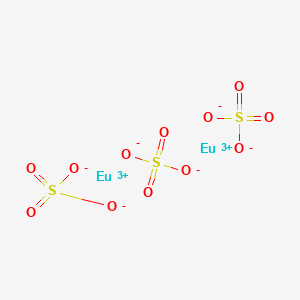
Eu2(SO4)3
Product
Product Code
Order or Specifications
99% Europium Sulfate
EU-S-01
Contact American Elements
99.9% Europium Sulfate
EU-S-03
Contact American Elements
99.99% Europium Sulfate
EU-S-04
Contact American Elements
99.999% Europium Sulfate
EU-S-05
Contact American Elements
Europium Sulfate is generally immediately available in most volumes. High purity, submicron and nanopowder forms may be considered. Additional technical, research and safety (MSDS) information is available as is a Reference Calculator for converting relevant units of measurement.

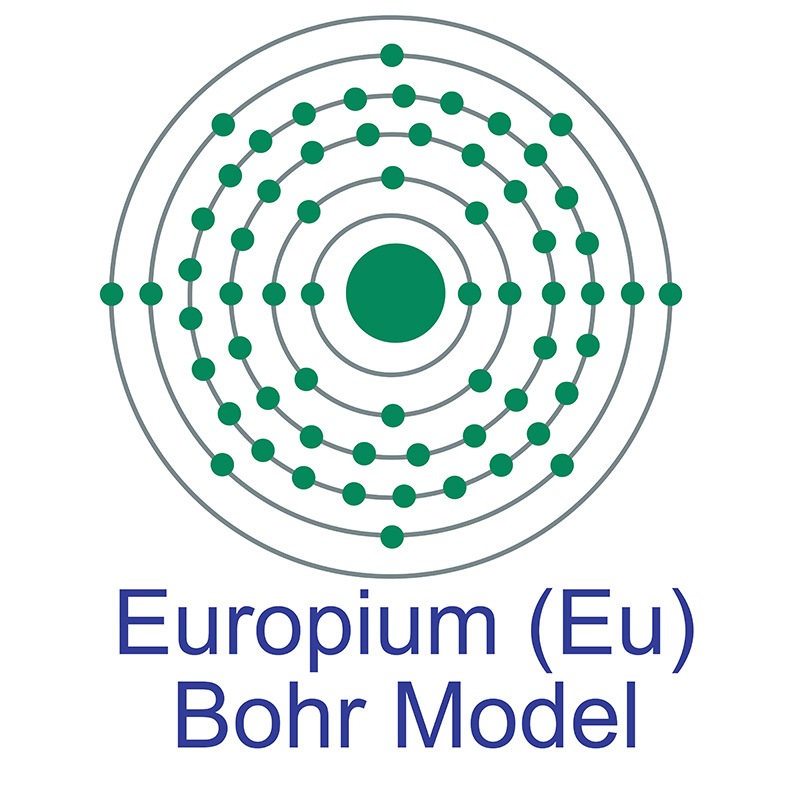
Europium is a Block F, Group 3, Period 6 element. The electronic configuration is [Xe]4f76s2. In its elemental form europium's CAS number is 7440-53-1. The europium atom has a radius of 199.5.pm and it's Van der Waals radius is unknown. Europium is utilized primarily for its unique luminescent behavior. Europium is available as metal and compounds with purities from 99% to 99.999% (ACS grade to ultra-high purity); metals in the form of foil, sputtering target, and rod, and compounds as submicron and nanopowder.

Formula CAS No. Appearance Molecular Weight Solubility Stability
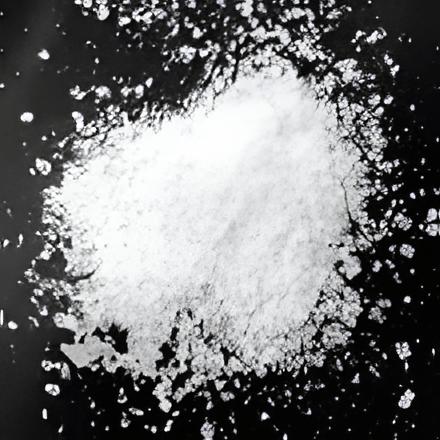
Eu2(SO4)3. 10031-55-7 White 592.10 Soluble in water, moderately soluble in strong mineral acids Slightly hygroscopic
PRODUCT CATALOG Europium Research, Properties, & Information Submicron & Nanopowder Tolling Ultra High Purity Sputtering Target Crystal Growth Rod, Plate, Powder, etc. MSDS
© 2001-2008. American Elements is a U.S. Registered Trademark. All rights reserved.
This website and all pages, designs, concepts, logos, and color schemes herein are
the copyrighted proprietary rights and intellectual property of American Elements.


Recent Research & Development for Europium

  • Modification of the luminescence spectra of chloro(tetrapyridylcyclotetramine)europium complexes by fine tuning of the Eu-Cl distance with outer-sphere counterions in the solid state, in a polymer matrix and in solution. Chem Commun (Camb). 2008 Apr 14;(14):1671-3. Epub 2008 Feb 6.

  • Synthesis, crystal structure, magnetic and luminescence properties of KEuGe(2)O(6): a europium cyclogermanate containing infinite chains of edge-sharing Eu-O polyhedra. Dalton Trans. 2008 Apr 7;(13):1721-6. Epub 2008 Feb 26.

  • Rapid and quantitative DNA analysis of genetic mutations for polycystic kidney disease (PKD) using magnetic/luminescent nanoparticles. Anal Bioanal Chem. 2008 Apr;390(7):1829-35. Epub 2008 Feb 7.

  • A dual-step fluorescence resonance energy transfer-based quenching assay for screening of caspase-3 inhibitors. Anal Biochem. 2008 Apr 1;375(1):71-81. Epub 2007 Dec 31.

  • A single red InGaN-based light-emitting diode with a europium (III) ternary complex as mono-phosphor. Spectrochim Acta A Mol Biomol Spectrosc. 2008 Apr;69(4):1150-3. Epub 2007 Jun 22.

  • Structural and Luminescent Properties of Micro- and Nanosized Particles of Lanthanide Terephthalate Coordination Polymers. Inorg Chem. 2008 Mar 26; [Epub ahead of print]

  • A ratiometric optical imaging probe for intracellular pH based on modulation of europium emission. Org Biomol Chem. 2008 Mar 21;6(6):1020-33. Epub 2008 Feb 19.

  • Intramolecular energy transfer in a one-dimensional europium tetracyanoplatinate. Inorg Chem. 2008 Mar 17;47(6):1895-7. Epub 2008 Feb 14.

  • RE(AuAl2)nAl2(AuxSi1-x)2: A New Homologous Series of Quaternary Intermetallics Grown from Aluminum Flux. Inorg Chem. 2008 Mar 17;47(6):2089-97. Epub 2008 Jan 17.

  • An automated PCR platform with homogeneous time-resolved fluorescence detection and dry chemistry assay kits. Anal Biochem. 2008 Mar 15;374(2):411-6. Epub 2007 Dec 23.

  • A novel sensitive immunoassay method based on the Invader technique. Anal Biochem. 2008 Mar 15;374(2):278-284. Epub 2007 Nov 29.

  • Listening to lanthanide complexes: determination of the intrinsic luminescence quantum yield by nonradiative relaxation. Chemphyschem. 2008 Mar 14;9(4):600-6.

  • Europium(iii) complex-based luminescent sensing probes for multi-phosphate anions: modulating selectivity by ligand choice. Chem Commun (Camb). 2008 Mar 7;(9):1127-9. Epub 2008 Jan 10.

  • ENSAM: Europium Nanoparticles for Signal Enhancement of Antibody Microarrays on Nanoporous Silicon. J Proteome Res. 2008 Mar 7;7(3):1308-1314. Epub 2008 Feb 8.

  • Investigations of Acidity and Nucleophilicity of Diphenyldithiophosphinate Ligands Using Theory and Gas-Phase Dissociation Reactions. Inorg Chem. 2008 Mar 5; [Epub ahead of print]

  • Development of time-resolved immunofluorometric assays for vascular endothelial growth factor and application on plasma of patients with gastric tumours. Clin Exp Immunol. 2008 Mar;151(3):459-66.

  • Blue LED Excitable Temperature Sensors Based on a New Europium(III) Chelate. J Fluoresc. 2008 Mar;18(2):581-9. Epub 2008 Feb 21.

  • Photochemical Mineralization of Europium, Titanium, and Iron Oxyhydroxide Nanoparticles in the Ferritin Protein Cage. Inorg Chem. 2008 Feb 29; [Epub ahead of print]

  • Fluorescence-enhanced europium-diethylenetriaminepentaacetic (DTPA)-monoamide complexes for the assessment of renal function. J Med Chem. 2008 Feb 28;51(4):957-62. Epub 2008 Feb 6.

  • Highly Efficient Sensitized Red Emission from Europium (III) in Ir-Eu Bimetallic Complexes by (3)MLCT Energy Transfer. Inorg Chem. 2008 Feb 27; [Epub ahead of print]


Material Safety Data Sheet
  • 1 Identification of substance

    • Product details

    • Trade name Europium (III) sulfate
  • 2 Composition/Data on components:

    • Chemical characterization:
                 Designation: (CAS#)                                        
      Europium (III) sulfate, octahydrate (CAS# 10031-55-7), 100%
    • Identification number(s):
    • EINECS Number: 236-903-3
  • 3 Hazards identification

    • Hazard designation: Xi Irritant
    • Information pertaining to particular dangers for man and environment
      R 36/37/38 Irritating to eyes, respiratory system and skin.
  • 4 First aid measures

    • After inhalation
      Supply fresh air. If required, provide artificial respiration. Keep patient warm. Consult doctor if symptoms persist.
      Seek immediate medical advice.
    • After skin contact
      Instantly wash with water and soap and rinse thoroughly.
      Seek immediate medical advice.
    • After eye contact
      Rinse opened eye for several minutes under running water. Then consult doctor.
    • After swallowing Seek immediate medical advice.
  • 5 Fire fighting measures

    • Suitable extinguishing agents
      CO2, extinguishing powder or water jet. Fight larger fires with water jet or alcohol-resistant foam.
    • Special hazards caused by the material, its products of combustion or
        flue gases:
      Can be released in case of fire:
      Sulphur oxides (SOx)
    • Protective equipment:
      Wear self-contained breathing apparatus.
      Wear full protective suit.
  • 6 Accidental release measures

    • Person-related safety precautions:
      Wear protective equipment. Keep unprotected persons away.
      Ensure adequate ventilation
    • Measures for environmental protection:
      Do not allow material to be released to the environment without proper governmental permits.
    • Measures for cleaning/collecting: Ensure adequate ventilation.
    • Additional information:
      See Section 7 for information on safe handling
      See section 8 for information on personal protection equipment.
      See Section 13 for information on disposal.
  • 7 Handling and storage


    • Handling
    • Information for safe handling:
      Keep containers tightly sealed.
      Store in cool, dry place in tightly closed containers.
      Ensure good ventilation/exhaustion at the workplace.
    • Information about protection against explosions and fires:
      No special measures required.

    • Storage
    • Requirements to be met by storerooms and containers:
      No special requirements.
    • Information about storage in one common storage facility:
      Store away from water.
      Do not store together with acids.
    • Further information about storage conditions:
      This product is hygroscopic.
      Protect from humidity and keep away from water.
      Keep container tightly sealed.
      Store in cool, dry conditions in well sealed containers.
  • 8 Exposure controls and personal protection

    • Additional information about design of technical systems:
      Properly operating chemical fume hood designed for hazardous chemicals and having an average face velocity of at least 100 feet per minute.

    • Components with critical values that require monitoring at the
      workplace:                                                             
      Not required.
    • Additional information: No data

    • Personal protective equipment
    • General protective and hygienic measures
      The usual precautionary measures should be adhered to in handling the chemicals.
      Keep away from foodstuffs, beverages and food.
      Instantly remove any soiled and impregnated garments.
      Wash hands during breaks and at the end of the work.
      Avoid contact with the eyes and skin.
    • Breathing equipment: Use breathing protection with high concentrations.
    • Protection of hands: Impervious gloves
    • Eye protection:
      Safety glasses
      Face protection
    • Body protection: Protective work clothing.
  • 9 Physical and chemical properties:

    • General Information

    • Form: Crystalline
    • Colour: Light red
    • Smell: Odourless
    •   Value/Range  Unit    Method      
    • Change in condition
    • Melting point/Melting range:                   375 ° C     (-8H2O)
    • Boiling point/Boiling range:       Not determined
    • Sublimation temperature / start:   Not determined

    • Flash point:                       Not applicable

    • Ignition temperature:              Not determined

    • Decomposition temperature:         Not determined

    • Danger of explosion:               Product is not explosive.

    • Critical values for explosion:
    • Lower:                             Not determined
    • Upper:                             Not determined

    • Steam pressure:                    Not determined

    • Density                            Not determined

    • Solubility in / Miscibility with
    • Water:                             Soluble
  • 10 Stability and reactivity

    • Thermal decomposition / conditions to be avoided:
      No decomposition if used and stored according to specifications.
    • Materials to be avoided:
      Water/moisture
      Acids
    • Dangerous reactions: No dangerous reactions known
    • Dangerous products of decomposition: Sulphur oxides (SOx)
  • 11 Toxicological information

    • Acute toxicity:
    • Primary irritant effect:
    • on the skin: Irritant for skin and mucous membranes.
    • on the eye: Irritant effect.
    • Sensitization: No sensitizing effect known.
    • Additional toxicological information:
      To the best of our knowledge the acute and chronic toxicity of this substance is not fully known.
      No classification data on carcinogenic properties of this material is available from the EPA, IARC, NTP, OSHA or ACGIH.
  • 12 Ecological information:

    • General notes:
      Do not allow material to be released to the environment without proper governmental permits.
      Water hazard class 1 (Self-assessment): slightly hazardous for water.
      Do not allow undiluted product or large quantities of it to reach ground water, water bodies or sewage system.
  • 13 Disposal considerations


    • Product:
    • Recommendation
      Consult state, local or national regulations for proper disposal.
      Hand over to disposers of hazardous waste.
      Must be specially treated under adherence to official regulations.

    • Uncleaned packagings:
    • Recommendation:
      Disposal must be made according to official regulations.
    • Recommended cleaning agent: Water, if necessary with cleaning agent.
  • 14 Transport information


    • Land transport ADR/RID and GGVS/GGVE (cross-border/domestic)
    • ADR/RID-GGVS/E Class:         None

    • Maritime transport IMDG/GGVSea:
    • IMDG/GGVSea Class:        None

    • Air transport ICAO-TI and IATA-DGR:
    • ICAO/IATA Class:          None

    • Transport/Additional information:
      Not dangerous according to the above specifications.
  • 15 Regulatory information


    • Designation according to EC guidelines:

    • Code letter and hazard designation of product: Xi Irritant

    • Risk phrases:
      36/37/38 Irritating to eyes, respiratory system and skin.

    • Safety phrases:
      26       In case of contact with eyes, rinse immediately with plenty of water and seek medical advice.

    • National regulations

    • Information about limitation of use:
      For use only by technically qualified individuals.
      Employment restrictions concerning young persons must be observed.

    • Water hazard class:
      Water hazard class 1 (Self-assessment): slightly hazardous for water.
  • 16 Other information:

      Employers should use this information only as a supplement to other information gathered by them, and should make independent judgement of suitability of this information to ensure proper use and protect the health and safety of employees.  This information is furnished without warranty, and any use of the product not in conformance with this Material Safety Data Sheet, or in combination with any other product or process, is the responsibility of the user.
  •  

    American Elements Products can also be sourced at these sites: