American Elements Logo and U.S. Registered Trademark


Ultra Dry Lanthanum Bromide
High Anhydrous LaBr3
Product Product Code Order or Specifications
(2N) 99% Ultra Dry Lanthanum Bromide LA-BR-02-UD Contact American Elements
(3N) 99.9% Ultra Dry Lanthanum Bromide LA-BR-03-UD Contact American Elements
(4N) 99.99% Ultra Dry Lanthanum Bromide LA-BR-04-UD Contact American Elements
(5N) 99.999% Ultra Dry Lanthanum Bromide LA-BR-05-UD Contact American Elements
(6N) 99.9999% Ultra Dry Lanthanum Bromide LA-BR-06-UD Contact American Elements
Boride IonAmerican Elements specializes in producing Lanthanum Bromide in an ultra dry form for use as a compound in semiconductors and other high purity applications. Ultra Dry Lanthanum Bromide is generally immediately available in most volumes. High purity, submicron and nanopowder forms may be considered.American Elements produces to many standard grades when applicable, including Mil Spec (military grade); ACS, Reagent and Technical Grade; Food, Agricultural and Pharmaceutical Grade; Optical Grade, USP and EP/BP (European Pharmacopoeia/British Pharmacopoeia)and follows applicable ASTM testing standards.Typical and custom packaging is available. Additional technical, research and safety (MSDS) information is available as is a Reference Calculator for converting relevant units of measurement.

Lanthanum(La) atomic and molecular weight, atomic number and elemental symbol Lanthanum is a Block F, Group 3, Period 6 element. The number of electrons in each of Lanthanum's shells is 2, 8, 18, 18, 9, 2 and its electronic configuration is [Xe] 5d1 6s2. In its elemental form lanthanum 's CAS number is 7439-91-0. The lanthanum atom has a radius of 187.pm and it's Van der Waals radius is 200.pm. Lanthanum and compounds of Elemental LanthanumLanthanum are somewhat toxic. Lanthanum is one of the products manufactured and distributed under the tradename AE Rare EarthsLanthanum Bohr Model. Lanthanum is the first element in the rare earth or lanthanide series. It is the model for all the other trivalent rare earths. After cerium, it is the second most abundant of the rare earths. Lanthanum is available as metal and compounds with purities from 99% to 99.999% (ACS grade to ultra high purity); metals in the form of foil, sputtering target, and rod, and compounds as submicron and nanopowder.Lanthanum-rich lanthanide compositions have been used extensively for cracking reactions in FCC catalysts, especially to manufacture low-octane fuel for heavy crude oil. The name Lanthanum originates from the Greek word Lanthaneia which means 'To lie hidden'. See Lanthanum research below.

Formula CAS No. Appearance Molecular Weight Density Melting Point Boiling Point Solubility Stability
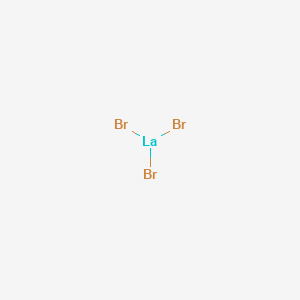
LaBr3 13465-19-5 White 378.617 5100 kg/m³ 783 °C Not determined Soluble in water and strong mineral acids Easily hygroscopic
PRODUCT CATALOG Bromide Products News Lanthanum Research, Properties, & Information Foil Submicron & Nanopowder Tolling Ultra High Purity Sputtering Target Crystal Growth Rod, Plate, Powder, etc. MSDS Home

Have a Question? Ask a Chemical Engineer or Material Scientist   Request an MSDS or Certificate of Analysis


Search by Material, Product Name, Product Code, CAS Number, Formula, Element, Anion, Form, EC Number, MDL Number or PubChem ID.
German   Korean   French   Japanese   Spanish   Chinese (Simplified)   Portuguese   Russian   Chinese (Taiwan)   Italian   Turkish   Polish   Dutch   Czech   Swedish   Hungarian   Danish   Hebrew

Production Catalog Available in 36 Countries & Languages

Recent Research & Development for Lanthanum

  • Sorption of lanthanum and erbium from aqueous solution by activated carbon prepared from rice husk. Awwad NS, Gad HM, Ahmad MI, Aly HF. Colloids Surf B Biointerfaces. 2010 Dec 1;81(2):593-9. Epub 2010 Aug 10. PubMed PMID: 20800456.

  • The effect of sevelamer carbonate and lanthanum carbonate on the pharmacokinetics of oral calcitriol. Pierce D, Hossack S, Poole L, Robinson A, Van Heusen H, Martin P, Smyth M. Nephrol Dial Transplant. 2010 Oct 4. [Epub ahead of print] PubMed PMID: 20921291.

  • Intrinsic microwave dielectric loss of lanthanum aluminate. Shimada T, Ichikawa K, Minemura T, Yamauchi H, Utsumi W, Ishii Y, Breeze J, Alford N. IEEE Trans Ultrason Ferroelectr Freq Control. 2010 Oct;57(10):2243-9. PubMed PMID: 20889412.

  • Effects of Lanthanum Chloride Administration on Detouring Learning in Chicks. Che Y, Xing R, Zhu Y, Cui Y, Jiang X. Biol Trace Elem Res. 2010 Sep 28. [Epub ahead of print] PubMed PMID: 20878364.

  • Core-shell La(1-x)Sr(x)MnO3 nanoparticles as colloidal mediators for magnetic fluid hyperthermia. Pollert E, Kaman O, Veverka P, Veverka M, Marysko M, Záveta K, Kacenka M, Lukes I, Jendelová P, Kaspar P, Burian M, Herynek V. Philos Transact A Math Phys Eng Sci. 2010 Sep 28;368(1927):4389-405. PubMed PMID: 20732893.

  • Overestimation of Lumbar Spine Calcium with Dual Energy X-Ray Absorptiometry Scanning due to the Prescription of Lanthanum Carbonate in Patients with Chronic Kidney Disease. Fürstenberg A, Buscombe J, Davenport A. Am J Nephrol. 2010 Sep 23;32(5):425-431. [Epub ahead of print] PubMed PMID: 20861616.

  • Effects of Lanthanum on Calcium and Magnesium Contents and Cytoplasmic Streaming of Internodal Cells of Chara corallina. Li Z, Zhang Z, Yu M, Zhou Y, Zhao Y. Biol Trace Elem Res. 2010 Sep 23. [Epub ahead of print] PubMed PMID: 20862562.

  • Human serum albumin nanoparticles modified with apolipoprotein A-I cross the blood-brain barrier and enter the rodent brain. Zensi A, Begley D, Pontikis C, Legros C, Mihoreanu L, Büchel C, Kreuter J. J Drug Target. 2010 Sep 20. [Epub ahead of print] PubMed PMID: 20849354.

  • Nano rare-earth oxides induced size-dependent vacuolization: an independent pathway from autophagy. Zhang Y, Yu C, Huang G, Wang C, Wen L. Int J Nanomedicine. 2010 Sep 7;5:601-9. PubMed PMID: 20856835; PubMed Central PMCID: PMC2939705.

  • Three-year extension study of lanthanum carbonate therapy in Japanese hemodialysis patients. Shigematsu T; The Lanthanum Carbonate Research Group. Clin Exp Nephrol. 2010 Sep 4. [Epub ahead of print] PubMed PMID: 20814807.

  • Coordination polymers and hydrogen-bonded assemblies of 2,2'-[2,5-bis(carboxymethoxy)-1,4-phenylene]diacetic acid with ammonium, lanthanum and zinc cations. Titi HM, Karmakar A, Goldberg I. Acta Crystallogr C. 2010 Sep;66(Pt 9):m238-44. Epub 2010 Aug 18. PubMed PMID: 20814094.

  • Molecules containing rare-earth atoms solely bonded by transition metals. Butovskii MV, Döring C, Bezugly V, Wagner FR, Grin Y, Kempe R. Nat Chem. 2010 Sep;2(9):741-4. Epub 2010 Jun 27. PubMed PMID: 20729893.

  • Regulation and mechanism of potassium release from barley roots: an in planta(42)K analysis. Coskun D, Britto DT, Kronzucker HJ. New Phytol. 2010 Aug 20. [Epub ahead of print] PubMed PMID: 20731780.

  • Proteomic analysis of lanthanum citrate-induced apoptosis in human cervical carcinoma SiHa cells. Shen L, Lan Z, Sun X, Shi L, Liu Q, Ni J. Biometals. 2010 Aug 1. [Epub ahead of print] PubMed PMID: 20814718.

  • Hybrid x-ray/optical luminescence imaging: characterization of experimental conditions. Carpenter CM, Sun C, Pratx G, Rao R, Xing L. Med Phys. 2010 Aug;37(8):4011-8. PubMed PMID: 20879562; PubMed Central PMCID: PMC2917453.

  • Compact lanthanum hexaboride hollow cathode. Goebel DM, Watkins RM. Rev Sci Instrum. 2010 Aug;81(8):083504. PubMed PMID: 20815605.

  • A new large area lanthanum hexaboride plasma source. Cooper CM, Gekelman W, Pribyl P, Lucky Z. Rev Sci Instrum. 2010 Aug;81(8):083503. PubMed PMID: 20815604.

  • [Combined injured effects of acid rain and lanthanum on growth of soybean seedling]. Liang CJ, Pan DY, Xu QR, Zhou Q. Huan Jing Ke Xue. 2010 Jul;31(7):1652-6. Chinese. PubMed PMID: 20825040.

  • Stability behavior of anionic spherical polyelectrolyte brushes in the presence of La(III) counterions. Schneider C, Jusufi A, Farina R, Pincus P, Tirrell M, Ballauff M. Phys Rev E Stat Nonlin Soft Matter Phys. 2010 Jul;82(1 Pt 1):011401. Epub 2010 Jul 7. PubMed PMID: 20866614.

  • Antibacterial effect of lanthanum calcium manganate (La0.67Ca0.33MnO3) nanoparticles against Pseudomonas aeruginosa ATCC 27853. De D, Mandal SM, Gauri SS, Bhattacharya R, Ram S, Roy SK. J Biomed Nanotechnol. 2010 Apr;6(2):138-44. PubMed PMID: 20738067


Recent Research & Development for Bromides

  • Synthesis of Enol Lactones via Cu(I)-Catalyzed Intramolecular O-Vinylation of Carboxylic Acids. Sun C, Fang Y, Li S, Zhang Y, Zhao Q, Zhu S, Li C. Org Lett. 2010 Jan 5. [Epub ahead of print] PMID: 19689116 [PubMed - as supplied by publisher]

  • Formation of ArF from LPdAr(F): Catalytic Conversion of Aryl Triflates to Aryl Fluorides. Watson DA, Su M, Teverovskiy G, Zhang Y, García-Fortanet J, Kinzel T, Buchwald SL. Science. 2009 Aug 13. [Epub ahead of print] PMID: 19679769 [PubMed - as supplied by publisher]

  • (2-Pyridyl)acetone-Promoted Cu-Catalyzed O-Arylation of Phenols with Aryl Iodides, Bromides, and Chlorides. Zhang Q, Wang D, Wang X, Ding K. J Org Chem. 2009 Aug 12. [Epub ahead of print] PMID: 19673481 [PubMed - as supplied by publisher]

  • Ni-Catalyzed Sonogashira Coupling of Nonactivated Alkyl Halides: Orthogonal Functionalization of Alkyl Iodides, Bromides, and Chlorides. Vechorkin O, Barmaz D, Proust V, Hu X. J Am Chem Soc. 2009 Aug 11. [Epub ahead of print] PMID: 19670863 [PubMed - as supplied by publisher]

  • Zn-mediated electrochemical allylation of aldehydes in aqueous ammonia. Huang JM, Dong Y. Chem Commun (Camb). 2009 Jul 14;(26):3943-5. Epub 2009 May 28. PMID: 19662260 [PubMed - in process]

  • Practical Catalytic Asymmetric Synthesis of Diaryl-, Aryl Heteroaryl-, and Diheteroarylmethanols. Salvi L, Kim JG, Walsh PJ. J Am Chem Soc. 2009 Aug 4. [Epub ahead of print] PMID: 19653691 [PubMed - as supplied by publisher]

  • Direct Palladium-Catalyzed Arylations of Aryl Bromides with 2/9-Substituted Pyrimido[5,4-b]indolizines. Jiang M, Li T, Meng L, Yang C, Xie Y, Ding J. J Comb Chem. 2009 Jul 31. [Epub ahead of print] PMID: 19645499 [PubMed - as supplied by publisher]

  • Versatile chemoselectivity in Ni-catalyzed multiple bond carbonylations and cyclocarbonylations in CO(2)-expanded liquids. del Moral D, Banet Osuna AM, Córdoba A, Moretó JM, Veciana J, Ricart S, Ventosa N. Chem Commun (Camb). 2009 Aug 21;(31):4723-5. Epub 2009 Jun 29. PMID: 19641822 [PubMed - in process]

  • Highly Selective Biaryl Cross-Coupling Reactions between Aryl Halides and Aryl Grignard Reagents: A New Catalyst Combination of N-Heterocyclic Carbenes and Iron, Cobalt, and Nickel Fluorides. Hatakeyama T, Hashimoto S, Ishizuka K, Nakamura M. J Am Chem Soc. 2009 Jul 29. [Epub ahead of print] PMID: 19639999 [PubMed - as supplied by publisher]

  • Hexacationic Dendriphos Ligands in the Pd-Catalyzed Suzuki-Miyaura Cross-Coupling Reaction: Scope and Mechanistic Studies. Snelders DJ, van Koten G, Klein Gebbink RJ. J Am Chem Soc. 2009 Jul 29. [Epub ahead of print] PMID: 19639941 [PubMed - as supplied by publisher]

  • Can One Predict Changes from S(N)1 to S(N)2 Mechanisms? Phan TB, Nolte C, Kobayashi S, Ofial AR, Mayr H. J Am Chem Soc. 2009 Jul 27. [Epub ahead of print] PMID: 19634906 [PubMed - as supplied by publisher]

  • A General Copper-Catalyzed Coupling of Azoles with Vinyl Bromides. Liao Q, Wang Y, Zhang L, Xi C. J Org Chem. 2009 Jul 15. [Epub ahead of print] PMID: 19603753 [PubMed - as supplied by publisher]

  • Kinetics of Bromine-Magnesium Exchange Reactions in Heteroaryl Bromides. Shi L, Chu Y, Knochel P, Mayr H. Org Lett. 2009 Jul 14. [Epub ahead of print] PMID: 19601592 [PubMed - as supplied by publisher]

  • C5-Modified nucleosides exhibiting anticancer activity. Lee YS, Park SM, Kim HM, Park SK, Lee K, Lee CW, Kim BH. Bioorg Med Chem Lett. 2009 Aug 15;19(16):4688-91. Epub 2009 Jun 21. PMID: 19596579 [PubMed - in process]

  • Palladium-Catalyzed Coupling of Ammonia with Aryl Chlorides, Bromides, Iodides, and Sulfonates: A General Method for the Preparation of Primary Arylamines. Vo GD, Hartwig JF. J Am Chem Soc. 2009 Jul 10. [Epub ahead of print] PMID: 19591470 [PubMed - as supplied by publisher]

  • New One-Pot Synthesis of (E)-beta-Aryl Vinyl Halides from Styrenes. Pawluc´ P, Hreczycho G, Szudkowska J, Kubicki M, Marciniec B. Org Lett. 2009 Jul 2. [Epub ahead of print] PMID: 19572730 [PubMed - as supplied by publisher]

  • The Scope and Limitation of Nickel-Catalyzed Aminocarbonylation of Aryl Bromides from Formamide Derivatives. Jo Y, Ju J, Choe J, Song KH, Lee S. J Org Chem. 2009 Jul 2. [Epub ahead of print] PMID: 19572571 [PubMed - as supplied by publisher]

  • Electroencephalographic and behavioral convulsant effects of hydrobromide and hydrochloride salts of bupropion in conscious rodents. Henshall DC, Dürmüller N, White HS, Williams R, Moser P, Dunleavy M, Silverstone PH. Neuropsychiatr Dis Treat. 2009;5:189-206. Epub 2009 Apr 8. PMID: 19557114 [PubMed - in process]

  • A facile route to C2-substituted imidazolium ionic liquids. Ennis E, Handy ST. Molecules. 2009 Jun 19;14(6):2235-45. PMID: 19553895 [PubMed - in process]

  • Synthesis of 1,3-amino alcohol derivatives via a silicon-mediated ring-opening of substituted piperidines. McCall WS, Comins DL. Org Lett. 2009 Jul 2;11(13):2940-2. PMID: 19552467 [PubMed - indexed for MEDLINE]


Material Safety Data Sheet
  • 1 Identification of substance

    • Product details

    • Trade name Lanthanum (III) bromide
  • 2 Composition/Data on components:

    • Chemical characterization:
                 Designation: (CAS#)                                        
      Lanthanum (III) bromide, hydrate (CAS# ?), 100%
    • Identification number(s):
    • EINECS Number: 236-896-7
  • 3 Hazards identification

    • Hazard designation: Xi Irritant
    • Information pertaining to particular dangers for man and environment
      R 36/38 Irritating to eyes and skin.
  • 4 First aid measures

    • After inhalation
      Supply fresh air. If required, provide artificial respiration. Keep patient warm. Consult doctor if symptoms persist.
      Seek immediate medical advice.
    • After skin contact
      Instantly wash with water and soap and rinse thoroughly.
      Seek immediate medical advice.
    • After eye contact
      Rinse opened eye for several minutes under running water. Then consult doctor.
    • After swallowing Seek immediate medical advice.
  • 5 Fire fighting measures

    • Suitable extinguishing agents
      CO2, extinguishing powder or water jet. Fight larger fires with water jet or alcohol-resistant foam.
    • Special hazards caused by the material, its products of combustion or
        flue gases:
      Can be released in case of fire:
      Hydrogen bromide (HBr)
    • Protective equipment:
      Wear self-contained breathing apparatus.
      Wear full protective suit.
  • 6 Accidental release measures

    • Person-related safety precautions:
      Wear protective equipment. Keep unprotected persons away.
      Ensure adequate ventilation
    • Measures for environmental protection:
      Do not allow material to be released to the environment without proper governmental permits.
    • Measures for cleaning/collecting: Collect mechanically.
    • Additional information:
      See Section 7 for information on safe handling
      See section 8 for information on personal protection equipment.
      See Section 13 for information on disposal.
  • 7 Handling and storage


    • Handling
    • Information for safe handling:
      Handle under dry protective gas.
      Keep containers tightly sealed.
      Store in cool, dry place in tightly closed containers.
      Ensure good ventilation/exhaustion at the workplace.
    • Information about protection against explosions and fires:
      No special measures required.

    • Storage
    • Requirements to be met by storerooms and containers:
      No special requirements.
    • Information about storage in one common storage facility:
      Store away from water.
    • Further information about storage conditions:
      Store under dry inert gas.
      This product is hygroscopic.
      Protect from humidity and keep away from water.
      Keep container tightly sealed.
      Store in cool, dry conditions in well sealed containers.
  • 8 Exposure controls and personal protection

    • Additional information about design of technical systems:
      Properly operating chemical fume hood designed for hazardous chemicals and having an average face velocity of at least 100 feet per minute.

    • Components with critical values that require monitoring at the
      workplace:                                                             
      Not required.
    • Additional information: No data

    • Personal protective equipment
    • General protective and hygienic measures
      The usual precautionary measures should be adhered to in handling the chemicals.
      Keep away from foodstuffs, beverages and food.
      Instantly remove any soiled and impregnated garments.
      Wash hands during breaks and at the end of the work.
      Avoid contact with the eyes and skin.
    • Breathing equipment: Use breathing protection with high concentrations.
    • Protection of hands: Impervious gloves
    • Eye protection:
      Safety glasses
      Face protection
    • Body protection: Protective work clothing.
  • 9 Physical and chemical properties:

    • General Information

    • Form: Crystalline
    • Colour:
      Colourless
      White
    • Smell: Odourless
    •   Value/Range  Unit    Method      
    • Change in condition
    • Melting point/Melting range:       Not determined
    • Boiling point/Boiling range:       Not determined
    • Sublimation temperature / start:   Not determined

    • Flash point:                       Not applicable

    • Ignition temperature:              Not determined

    • Decomposition temperature:         Not determined

    • Danger of explosion:               Product is not explosive.

    • Critical values for explosion:
    • Lower:                             Not determined
    • Upper:                             Not determined

    • Steam pressure:                    Not determined

    • Density                            Not determined

    • Solubility in / Miscibility with
    • Water:                             Soluble
  • 10 Stability and reactivity

    • Thermal decomposition / conditions to be avoided:
      No decomposition if used and stored according to specifications.
    • Materials to be avoided: Water/moisture
    • Dangerous reactions: No dangerous reactions known
    • Dangerous products of decomposition: Hydrogen bromide
  • 11 Toxicological information

    • Acute toxicity:
    • Primary irritant effect:
    • on the skin: Irritant for skin and mucous membranes.
    • on the eye: Irritant effect.
    • Sensitization: No sensitizing effect known.
    • Additional toxicological information:
      To the best of our knowledge the acute and chronic toxicity of this substance is not fully known.
      No classification data on carcinogenic properties of this material is available from the EPA, IARC, NTP, OSHA or ACGIH.
  • 12 Ecological information:

    • General notes:
      Do not allow material to be released to the environment without proper governmental permits.
      Water hazard class 1 (Self-assessment): slightly hazardous for water.
      Do not allow undiluted product or large quantities of it to reach ground water, water bodies or sewage system.
  • 13 Disposal considerations


    • Product:
    • Recommendation
      Consult state, local or national regulations for proper disposal.
      Hand over to disposers of hazardous waste.
      Must be specially treated under adherence to official regulations.

    • Uncleaned packagings:
    • Recommendation:
      Disposal must be made according to official regulations.
    • Recommended cleaning agent: Water, if necessary with cleaning agent.
  • 14 Transport information


    • Land transport ADR/RID and GGVS/GGVE (cross-border/domestic)
    • ADR/RID-GGVS/E Class:         None

    • Maritime transport IMDG/GGVSea:
    • IMDG/GGVSea Class:        None

    • Air transport ICAO-TI and IATA-DGR:
    • ICAO/IATA Class:          None

    • Transport/Additional information:
      Not dangerous according to the above specifications.
  • 15 Regulatory information


    • Designation according to EC guidelines:

    • Code letter and hazard designation of product: Xi Irritant

    • Risk phrases: 36/38 Irritating to eyes and skin.

    • Safety phrases:
      26    In case of contact with eyes, rinse immediately with plenty of water and seek medical advice.

    • National regulations

    • Information about limitation of use:
      For use only by technically qualified individuals.
      Employment restrictions concerning young persons must be observed.

    • Water hazard class:
      Water hazard class 1 (Self-assessment): slightly hazardous for water.
  • 16 Other information:

      Employers should use this information only as a supplement to other information gathered by them, and should make independent judgement of suitability of this information to ensure proper use and protect the health and safety of employees.  This information is furnished without warranty, and any use of the product not in conformance with this Material Safety Data Sheet, or in combination with any other product or process, is the responsibility of the user.
  •  


    Aeromat 2012 Sponsor
    Proud sponsors of Aeromat 2012. Please join us and our customers & co-sponsors Boeing and ATI on June 18-20, 2012
    in Charlotte, North Carolina

      Print this Page
    Periodic table of the elements science and academic information, elements and advanced materials data, scientific presentations and all pages, designs, concepts, logos, and color schemes herein are the copyrighted proprietary rights and intellectual property of American Elements. American Elements is a U.S. Registered Trademark. © 1998-2012. American Elements. All rights reserved.
    Learn Six Sigma


    American Elements is a copyrighted U.S. Trademark. All rights reserved.