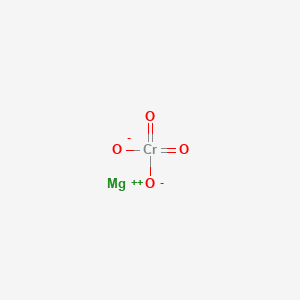
Magnesium Chromate is generally immediately available in most volumes. Hydrate or anhydrous forms may be purchased. High purity, submicron and nanopowder forms may be considered.American Elements produces to many standard grades when applicable, including Mil Spec (military grade); ACS, Reagent and Technical Grade; Food, Agricultural and Pharmaceutical Grade; Optical Grade, USP and EP/BP (European Pharmacopoeia/British Pharmacopoeia)and follows applicable ASTM testing standards.Typical and custom packaging is available. Additional technical, research and safety (MSDS) information is available as is a Reference Calculator for converting relevant units of measurement.
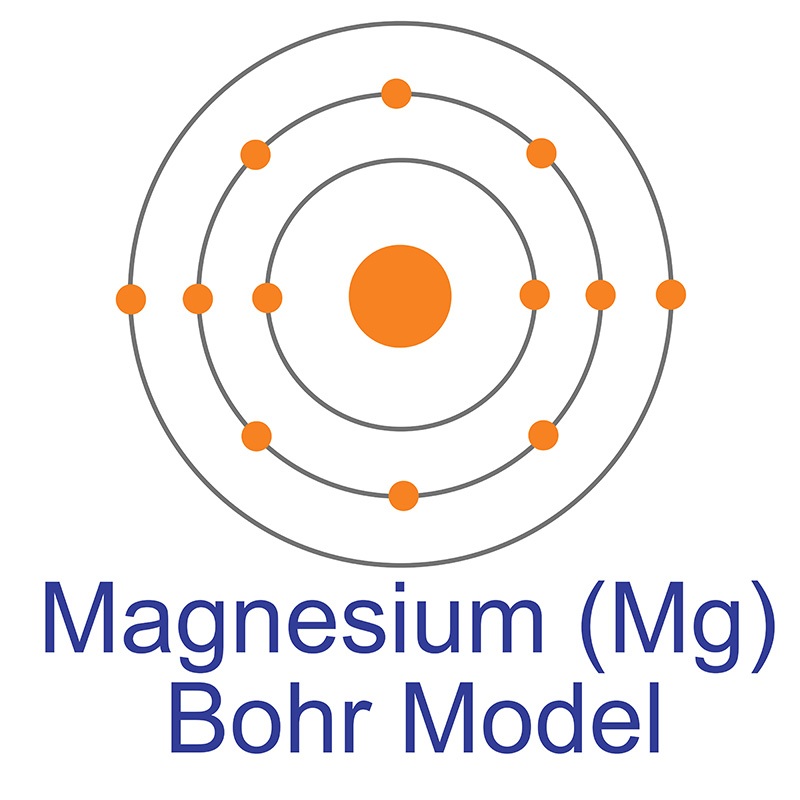
Magnesium is a Block S, Group 2, Period 3 element. The number of electrons in each of Magnesium's shells is 2, 8, 2 and its electronic configuration is [Ne] 3s2. In its elemental form magnesium's CAS number is 7439-95-4. The magnesium atom has a radius of 159.9.pm and it's Van der Waals radius is 173.pm. Magnesium the eighth most abundant element in the earth's crust. It is one third lighter than aluminum, and because of this is used in alloys that are essential for aerospace, satellite and missile construction. The metal improves the mechanical, fabrication, and welding characteristics of aluminum when used as an alloying agent. Uses also include flares and pyrotechnics due to its pyrophoric properties. Magnesium compounds, primarily magnesium oxide, are used mainly as refractory material in furnace linings for producing iron and steel, nonferrous metals, glass, and cement. High purity magnesium is found in dietary supplements. Magnesium was first discovered by Sir Humphrey Davy in 1808. The name Magnesium originates from a Greek district in Thessaly called Magnesia. See Magnesium research below.Magnesium the eighth most abundant element in the earth's crust. It is one third lighter than aluminum, and because of this is used in alloys that are essential for aerospace, satellite and missile construction. The metal improves the mechanical, fabrication, and welding characteristics of aluminum when used as an alloying agent. Uses also include flares and pyrotechnics due to its pyrophoric properties.
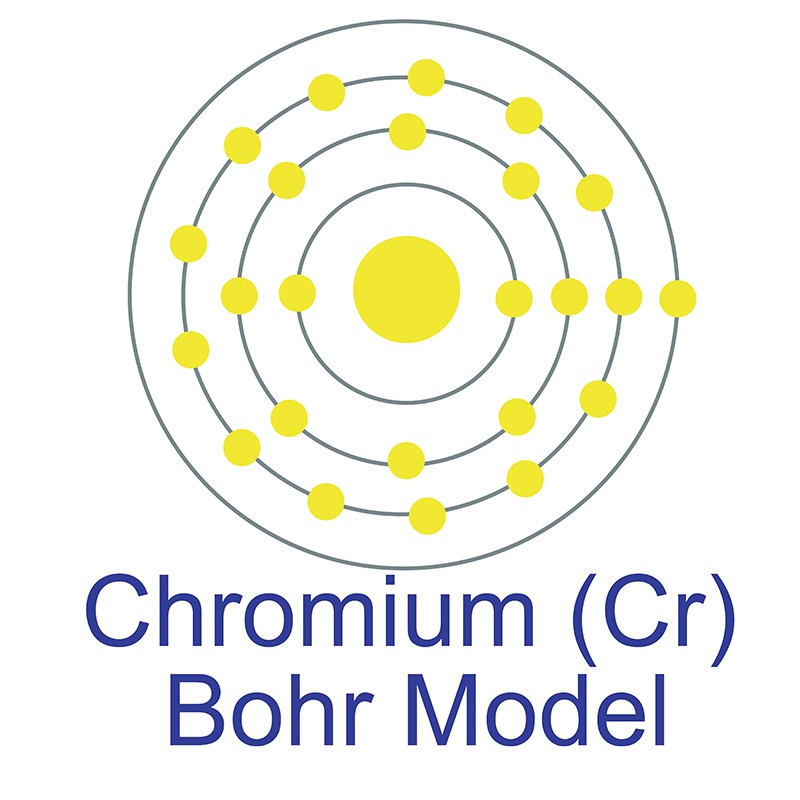
Chromium is a Block D, Group 6, Period 4 element. The number of electrons in each of Chromium's shells is 2, 8, 13, 1 and its electronic configuration is [Ar] 3d5 4s1. In its elemental form chromium's CAS number is 7440-47-3. The chromium atom has a radius of 124.9.pm and it's Van der Waals radius is 200.pm. Hexavalent chromium is toxic. Chromium is highly resistant to corrosion. This has led to its use in numerous alloying and steel producing applications. When chromium is added to glass or ceramic glazes, it produces a brilliant green. Chromium is available as metal and compounds with purities from 99% to 99.999% (ACS grade to ultra-high purity); metals in the form of foil, sputtering target, and rod, and compounds as submicron and nanopowder. It is also used as a paint pigment for this purpose.Although chromium metal is an essential trace element, hexavalent chromium (Cr(VI)) is especially toxic and carcinogenic. Recently, chromites have formed the basis for cathode compositions for oxygen generation and fuel cell applications. Chromium information, including Technical Data, Safety Data and its High Purity properties, research, applications and other useful facts are discussed here. Scientific facts such as the atomic structure, ionization energy, abundance on Earth, conductivity and thermal properties are included. Chromium was first discovered by Anders Ekeberg in 1802. Due to its various colorful compounds, Chromium was named after the Greek word 'chroma' meaning color. See Chromium research below.
PACKAGING SPECIFICATIONS FOR BULK & RESEARCH QUANTITIES
Typical bulk packaging includes palletized plastic 5 gallon/25 kg. pails, fiber and steel drums to 1 ton super sacks in full container (FCL) or truck load (T/L) quantities. Research and sample quantities and hygroscopic, oxidizing or other air sensitive materials may be packaged under argon or vacuum. Shipping documentation includes a Certificate of Analysis and Material Safety Data Sheet (MSDS). Solutions are packaged in polypropylene, plastic or glass jars up to palletized 440 gallon liquid totes.
The application of atomic
absorption spectrometry for the determination of residual active pharmaceutical
ingredients in cleaning validation samples. Bubni X010d Z, Urleb UX, Kreft KX, Veber M. Drug Dev Ind Pharm. 2010 Oct 6. [Epub
ahead of print] PubMed PMID: 20923390.
In vitro and
in vivo evaluation of hydrophilic and hydrophobic polymers-based
nicorandil-loaded peroral tablet compared with its once-daily commercial
sustained-release tablet. Tamilvanan S, Venkatesh Babu R, Nappinai A, Sivaramakrishnan G. Drug Dev Ind Pharm. 2010 Oct 6. [Epub ahead of print]
PubMed PMID: 20923389.
Consumption of whole
grains is associated with improved diet quality and nutrient intake in children
and adolescents: the National Health and Nutrition Examination Survey 1999-2004.
O'Neil CE, Nicklas TA, Zanovec M, Cho SS, Kleinman R. Public Health Nutr. 2010 Oct 6:1-9. [Epub ahead of print] PubMed PMID: 20923597.
Hydralazine and magnesium valproate as epigenetic
treatment for myelodysplastic syndrome. Preliminary results of a phase-II trial.
Candelaria M, Herrera A, Labardini J, González-Fierro A, Trejo-Becerril C,
Taja-Chayeb L, Pérez-Cárdenas E, de la Cruz-Hernández E, Arias-Bofill D, Vidal S,
Cervera E, Dueñas-Gonzalez A. Ann Hematol. 2010 Oct 5. [Epub ahead of print] PubMed PMID: 20922525.
Simulation Tests to Assess
Occupational Exposure to Airborne Asbestos from Artificially Weathered
Asphalt-Based Roofing Products. Sheehan P, Mowat F, Weidling R, Floyd M. Ann Occup Hyg. 2010 Oct 5. [Epub ahead of print]
PubMed PMID: 20923966.
Finding a Needle in the Haystack:
Computational Modeling of Mg2+ Binding in the Active Site of Protein
Farnesyltransferase. Yang Y, Chakravorty DK, Merz KM. Biochemistry. 2010 Oct 5. [Epub ahead of print] PubMed PMID:
20923173.
Chemical and microbiological changes during
vermicomposting of coffee pulp using exotic (Eudrilus eugeniae) and native
earthworm (Perionyx ceylanesis) species. Raphael K, Velmourougane K. Biodegradation. 2010 Oct 5. [Epub ahead
of print] PubMed PMID: 20922463.
Ensemble Modeling Coupled with Six Element Concentrations
in Human Blood for Cancer Diagnosis. Chen H, Tan C, Wu T. Biol Trace Elem Res. 2010 Oct 5. [Epub ahead
of print] PubMed PMID: 20922500.
Magnesium-based composites with improved in vitro
surface biocompatibility. Huan Z, Zhou J, Duszczyk J. J Mater Sci Mater Med. 2010 Oct 5. [Epub ahead of
print] PubMed PMID: 20922559.
Cerium-based triple-stranded helicates as
luminescent chemosensors for the selective sensing of magnesium ions. Zhu X, He C, Dong D, Liu Y, Duan C. Dalton
Trans. 2010 Oct 4. [Epub ahead of print] PubMed PMID: 20922225.
Determination of inorganic ions in
mineral water by gradient elution moving boundary electrophoresis.
Flanigan PM 4th, Ross D, Shackman JG. Electrophoresis. 2010 Oct 4. [Epub ahead of print] PubMed PMID: 20922760.
A Comparison of
Magnesium Sulphate and Sildenafil in the Treatment of the Newborns with
Persistent Pulmonary Hypertension: A Randomized Controlled Trial. Uslu S, Kumtepe S, Bulbul A, Comert S, Bolat F, Nuhoglu A. J Trop Pediatr.
2010 Oct 4. [Epub ahead of print] PubMed PMID: 20923790.
Prevention of malathion-induced depletion
of cardiac cells mitochondrial energy and free radical damage by a magnetic
magnesium-carrying nanoparticle. Shafiee H, Mohammadi H, Rezayat SM, Hosseini A, Baeeri M, Hassani S,
Mohammadirad A, Bayrami Z, Abdollahi M. Toxicol Mech Methods. 2010 Oct 4. [Epub ahead of
print] PubMed PMID: 20919798.
Administration of lithium and magnesium
chloride inhibited tolerance to the anticonvulsant effect of morphine on
pentylenetetrazole-induced seizures in mice. Ghasemi A, Saberi M, Ghasemi M, Shafaroodi H, Moezi L, Bahremand A,
Montaser-Kouhsari L, Ziai P, Dehpour AR. Epilepsy Behav. 2010 Oct 2. [Epub
ahead of print] PubMed PMID: 20920846.
Transplacental nutrient transfer
during gestation in the Andean lizard Mabuya sp. (Squamata, Scincidae). Ramírez-Pinilla MP, Rueda ED, Stashenko E. J Comp
Physiol B. 2010 Oct 2. [Epub ahead of print] PubMed PMID: 20890605.
A New Fluorescent Sensor
Based on 1H-pyrazolo[3,4-b]quinoline Skeleton. Part 2. Mac M, Uchacz T, Danel A, Danel K, Kolek P, Kulig E. J Fluoresc. 2010 Oct 2.
[Epub ahead of print] PubMed PMID: 20890644.
Measuring small
absorptions by exploiting photothermal self-phase modulation. Lastzka N, Steinlechner J, Steinlechner S, Schnabel R. Appl Opt. 2010 Oct
1;49(28):5391-8. doi: 10.1364/AO.49.005391. PubMed PMID: 20885477.
Effects of Aluminum Exposure on Bone
Mineral Density, Mineral, and Trace Elements in Rats. Li X, Hu C, Zhu Y, Sun H, Li Y, Zhang Z. Biol Trace Elem Res. 2010
Oct 1. [Epub ahead of print] PubMed PMID: 20886309.
Enrichment of
polycyclic aromatic hydrocarbons in seawater with magnesium oxide microspheres as
a solid-phase extraction sorbent. Jin J, Zhang Z, Li Y, Qi P, Lu X, Wang J, Chen J, Su F. Anal Chim Acta. 2010 Sep 30;678(2):183-8. Epub
2010 Sep 21. PubMed PMID: 20888450.
Coating of tips for electrochemical scanning tunneling microscopy
by means of silicon, magnesium, and tungsten oxides. Salerno M. Rev Sci Instrum. 2010
Sep;81(9):093703. PubMed PMID: 20886983.
Bioremediation of Cr(VI) and Immobilization as Cr(III) by Ochrobactrum anthropi.
Cheng Y, Yan F, Huang F, Chu W, Pan D, Chen Z, Zheng J, Yu M, Lin Z, Wu Z. Environ Sci Technol. 2010 Jul 7. [Epub ahead of print] PubMed PMID: 20608725.
Proteogenomic and functional analysis of chromate reduction in Acidiphilium
cryptum JF-5, an Fe(III)-respiring acidophile. Magnuson TS, Swenson MW, Paszczynski AJ, Deobald LA, Kerk D, Cummings DE. Biometals. 2010 Jul 1. [Epub ahead
of print] PubMed PMID: 20593301.
Enhanced chromate reduction by
resting Escherichia coli cells in the presence of quinone redox mediators.
Liu G, Yang H, Wang J, Jin R, Zhou J, Lv H. Bioresour Technol. 2010 Jun 26. [Epub ahead of print] PubMed PMID: 20584598.
Tricaesium
tris(oxalato-kappa(2)O(1),O(2))chromate(III) dihydrate. Martin L, Christian A, Akutsu H. Acta Crystallogr C. 2010
Jun;66(Pt 6):m157-9. Epub 2010 May 8. PubMed PMID: 20522938.
Removal of chromate and phosphate anion from
aqueous solutions using calix[4]aren receptors containing proton switchable
units. Ertul S, Bayrakci M, Yilmaz M. J Hazard Mater. 2010 Jun 1. [Epub ahead of print] PubMed PMID: 20579808.
Leucobacter
chromiiresistens sp. nov., a novel chromate-resistant strain in the genus
Leucobacter. Sturm G, Jacobs J, Spröer C, Schumann P, Gescher J. Int J Syst Evol Microbiol. 2010 May 28. [Epub ahead of print] PubMed
PMID: 20511468.
Proteomics reveals a core molecular
response of Pseudomonas putida F1 to acute chromate challenge. Thompson DK, Chourey K, Wickham GS, Thieman SB, VerBerkmoes NC, Zhang B,
McCarthy AT, Rudisill MA, Shah M, Hettich RL. BMC Genomics. 2010
May 19;11:311. PubMed PMID: 20482812.
Microbial products (biosurfactant and extracellular chromate
reductase) of marine microorganism are the potential agents reduce the oxidative
stress induced by toxic heavy metals. Gnanamani A, Kavitha V, Radhakrishnan N, Suseela Rajakumar G, Sekaran G,
Mandal AB. Colloids Surf B Biointerfaces. 2010 Apr 22.
[Epub ahead of print] PubMed PMID: 20483569.
Removal of selected nuisance
anions by Octolig. Martin DF, Lizardi CL, Schulman E, Vo B, Wynn D. J Environ Sci Health A Tox Hazard Subst Environ Eng. 2010
Jan;45(9):1144-9. PubMed PMID: 20560089.
Effects of
physicochemical factors on Cr(VI) removal from leachate by zero-valent iron and
alpha-Fe(2)O(3) nanoparticles. Liu TY, Zhao L, Tan X, Liu SJ, Li JJ, Qi Y, Mao GZ. Water Sci Technol. 2010;61(11):2759-67. PubMed
PMID: 20489248.
Proud sponsors of Aeromat 2012. Please join us and our customers & co-sponsors Boeing and ATI on
June 18-20, 2012
in Charlotte, North Carolina