American Elements specializes in producing high purity Nickel Chromium Molybdenum Boron Alloy Particles with the smallest possible average grain sizes for use in preparation of pressed and bonded sputtering targets and in Chemical Vapor Deposition (CVD) and Physical Vapor Deposition (PVD) processes including Thermal and Electron Beam (E-Beam) Evaporation, Low Temperature Organic Evaporation, Atomic Layer Deposition (ALD), Metallic-Organic and Chemical Vapor Deposition (MOCVD). Metal particle powders are used in a variety of applications including, additives in paint and other coatings, in solid fuels and cements, as pigments in printing and packaging and dietary supplements in food processing. Current trends in particle usage or in development include commercialization of technologies such as rapid solidification and metal injection molding and production of dense powder metallurgy products. Nickel Particles are also available as Nanoparticles (See also Nanotechnology Information and Quantum Dots). Our standard Powder particle sizes average in the range of - 325 mesh, - 100 mesh, 10-50 microns and submicron (< 1 micron). We can also provide many materials in the nanoscale range. See research below. We also produce Nickel as rod, ingot, pieces, pellets, disc, granules, wire, and in compound forms, such as oxide. Other shapes are available by request.
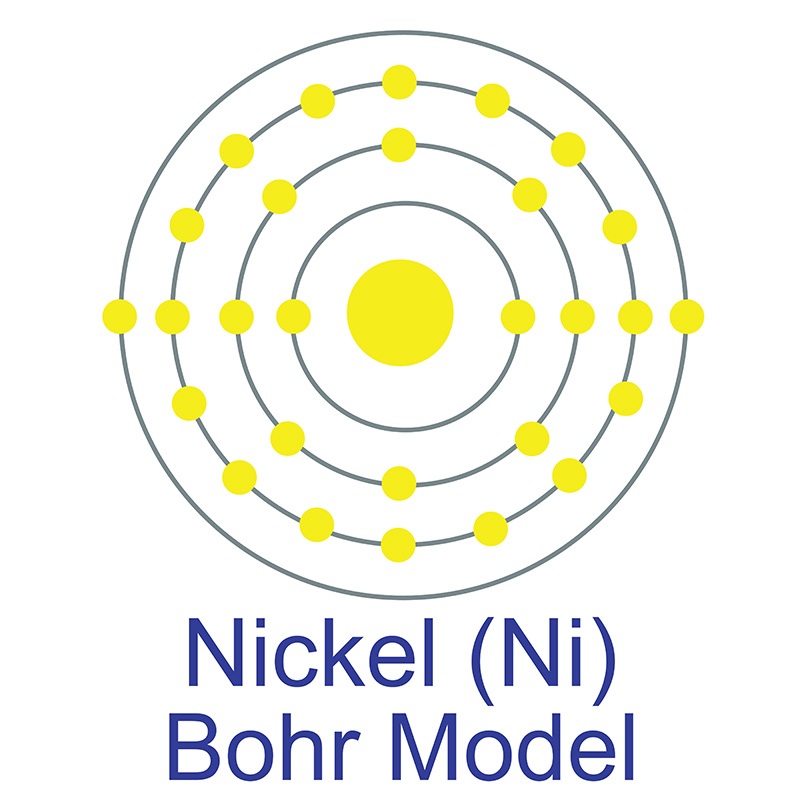
Nickel is a Block D, Group 4, Period 4 element. The number of electrons in each of Nickel's shells is 2, 8, 16, 2 and its electronic configuration is [Ar]3d8 4s2. In its elemental form nickel's CAS number is 7440-02-0. Nickel is sometimes found free in nature but is more commonly found in ores. The nickel atom has a radius of 149.pm and it's Van der Waals radius is 163.pm. Nickel and its compounds are considered to be carcinogenic. Nickel carbonyl is a very toxic gas. It is extensively alloyed with iron, chromium, molybdenum, tungsten and other metals produce stainless and other anti-corrosive steel and other corrosion-resistant alloys. It is highly electronically conductive and has many applications as a result. It is the basis of the nickel hydride battery. Most recently, its conductive properties have made it an ideal component for ceramic anode formulations used in oxygen generation and solid oxide fuel cell applications. Catalytic nickel is used to hydrogenate vegetable oils. Nickel additions to glass and ceramic glazes impart a bright green. It is also used in pigments for this purpose. Nickel information, including Technical Data, Safety Data and its high purity properties, research, applications and other useful facts are discussed below. Scientific facts such as the atomic structure, ionization energy, abundance on Earth, conductivity and thermal properties are included. Nickel was first discovered by Alex Constedt in 1751. The name originates from the German word 'kupfernickel' which means false copper from the illusory copper color of the ore. See Nickel research below.
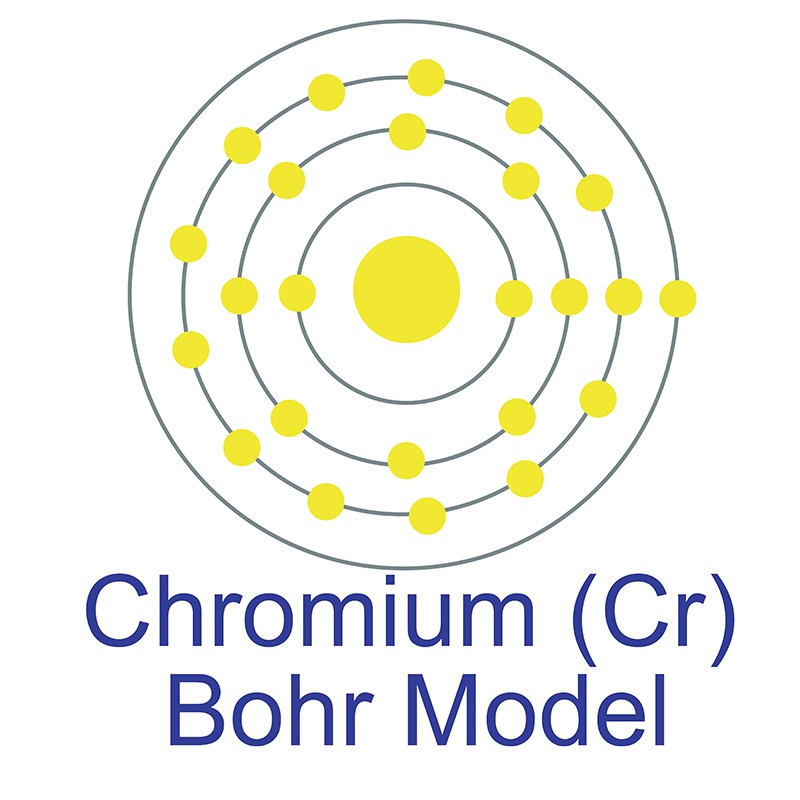
Chromium is a Block D, Group 6, Period 4 element. The number of electrons in each of Chromium's shells is 2, 8, 13, 1 and its electronic configuration is [Ar] 3d5 4s1. In its elemental form chromium's CAS number is 7440-47-3. The chromium atom has a radius of 124.9.pm and it's Van der Waals radius is 200.pm. Hexavalent chromium is toxic. Chromium is highly resistant to corrosion. This has led to its use in numerous alloying and steel producing applications. When chromium is added to glass or ceramic glazes, it produces a brilliant green. Chromium is available as metal and compounds with purities from 99% to 99.999% (ACS grade to ultra-high purity); metals in the form of foil, sputtering target, and rod, and compounds as submicron and nanopowder. It is also used as a paint pigment for this purpose.Although chromium metal is an essential trace element, hexavalent chromium (Cr(VI)) is especially toxic and carcinogenic. Recently, chromites have formed the basis for cathode compositions for oxygen generation and fuel cell applications. Chromium information, including Technical Data, Safety Data and its High Purity properties, research, applications and other useful facts are discussed here. Scientific facts such as the atomic structure, ionization energy, abundance on Earth, conductivity and thermal properties are included. Chromium was first discovered by Anders Ekeberg in 1802. Due to its various colorful compounds, Chromium was named after the Greek word 'chroma' meaning color. See Chromium research below.
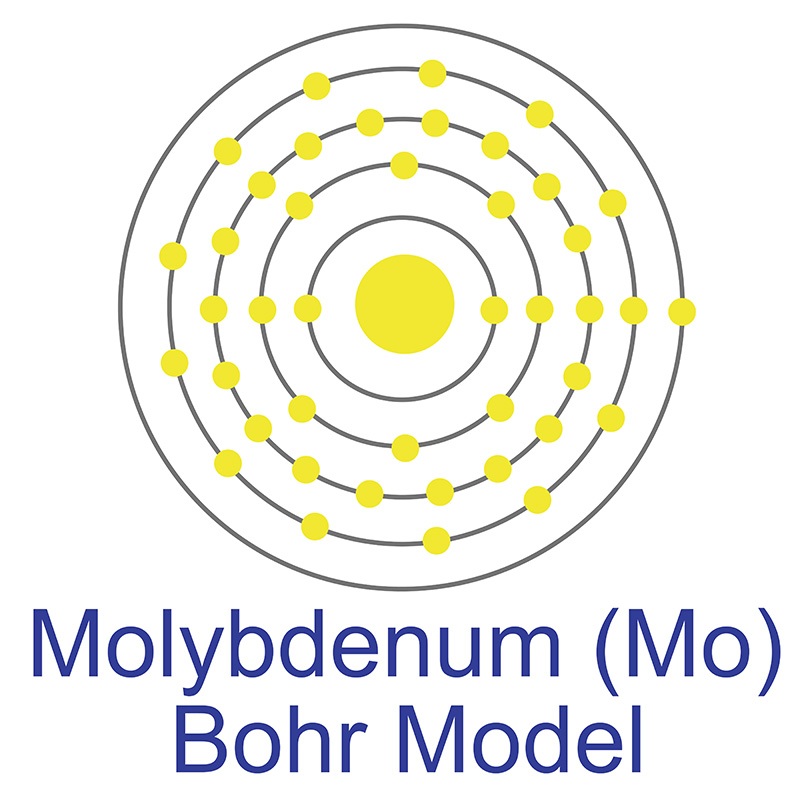
Molybdenum is a Block D, Group 6, Period 5 element. The number of electrons in each of Molybdenum's shells is 2, 8, 18, 13, 1 and its electronic configuration is [Kr] 4d5 5s1. In its elemental form molybdenum's CAS number is 7439-98-7. The molybdenum atom has a radius of 136.3.pm and it's Van der Waals radius is 200.pm. Molybdenum is toxic unless it is in small quantities. Molybdenum has the third highest melting point of any element, exceeded only by tungsten and tantalum. Molybdenum is a catalyst in the oil refining. It has many other applications, including in catalysts, pigments, corrosion inhibitors and lubricants. It has a very high elastic modulus. Molybdenum is available as metal and compounds with purities from 99% to 99.999% (ACS grade to ultra-high purity); metals in the form of foil, sputtering target, and rod, and compounds as submicron and nanopowder. It is used in steel alloys to add hardness and raise melting points. It is a component in Hastelloys brand steel. Molybdenum is used in nuclear reactors and aerospace components. Molybdenum was first discovered by Carl Wilhelm in 1778. The origin of the name Molybdenum comes from the Greek word molubdos meaning lead. See Molybdenum research below.
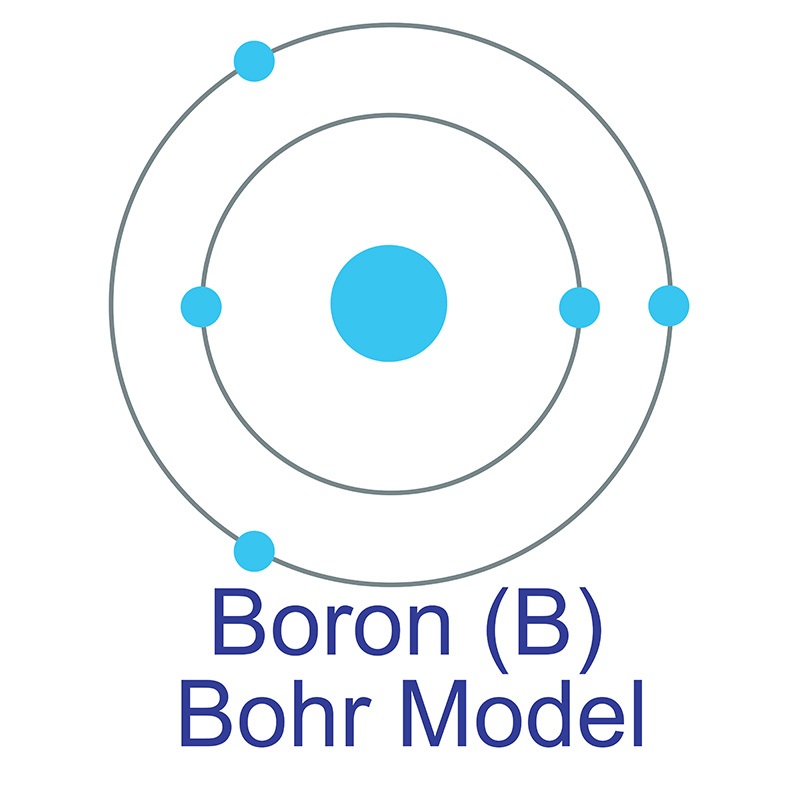
Boron is a Block P, Group 13, Period 2 element. The number of electrons in each of Boron's shells is 2, 3 and its electronic configuration is [He] 2s2 2p1. In its elemental form boron's CAS number is 7440-42-8. The boron atom has a radius of 79.5.pm and it's Van der Waals radius is 200.pm. Boron is not toxic. Boron has an energy band gap of 1.50 to 1.56 eV, which is higher than that of either silicon or germanium. Optical characteristics include transmitting portions of the infrared. Boron is a poor conductor of electricity at room temperature but a good conductor at high temperature. Boron in its elemental form is not toxic. Amorphous boron is used in pyrotechnic flares to provide a distinctive green color, and in rockets as an igniter Boric acid is also an important boron compound with major markets in textile products. Boron compounds are also extensively used in the manufacture of borosilicate glasses. The isotope Boron-10 is used as a control for nuclear reactors, as a shield for nuclear radiation, and in instruments used for detecting neutrons. Boron nitride has remarkable properties and can be used to make a material as hard as diamond. The nitride also behaves like an electrical insulator but conducts heat like a metal. Boron also has lubricating properties similar to graphite. Boron was first discovered by Sir Humphry Davy and J.L Gay-Lussac in 1808. The name Boron originates from a combination of carbon and the Arabic word 'buraqu meaning borax. See Boron research below.
PACKAGING SPECIFICATIONS FOR BULK & RESEARCH QUANTITIES
Typical bulk packaging includes palletized plastic 5 gallon/25 kg. pails, fiber and steel drums to 1 ton super sacks in full container (FCL) or truck load (T/L) quantities. Research and sample quantities and hygroscopic, oxidizing or other air sensitive materials may be packaged under argon or vacuum. Shipping documentation includes a Certificate of Analysis and Material Safety Data Sheet (MSDS). Solutions are packaged in polypropylene, plastic or glass jars up to palletized 440 gallon liquid totes.
Regioselective Cycloaddition of 3-Azetidinones and 3-Oxetanones with Alkynes through Nickel-Catalysed Carbon-Carbon Bond Activation.
Y T Ho K, Aïssa C.
Chemistry. 2012 Feb 22. doi: 10.1002/chem.201200167. [Epub ahead of print]
PMID:
22359347
[PubMed - as supplied by publisher]
The hydrogen evolution reaction in a room temperature ionic liquid: mechanism and electrocatalyst trends.
Meng Y, Aldous L, Belding SR, Compton RG.
Phys Chem Chem Phys. 2012 Feb 22. [Epub ahead of print]
PMID:
22358388
[PubMed - as supplied by publisher]
A cytosolic Ni(II) sensor in a cyanobacterium: Nickel-detection follows nickel-affinity across four families of metal-sensors.
Foster AW, Patterson CJ, Pernil R, Hess CR, Robinson NJ.
J Biol Chem. 2012 Feb 22. [Epub ahead of print]
PMID:
22356910
[PubMed - as supplied by publisher]
Incorporation of metal and color alteration of enamel in the presence of orthodontic appliances.
Gurgel Maia LH, de Lima Filho HL, Araújo MV, de Oliveira Ruellas AC, de Souza Araújo MT.
Angle Orthod. 2012 Feb 23. [Epub ahead of print]
PMID:
22356704
[PubMed - as supplied by publisher]
Nickel(II) and Palladium(II) Thiaethyneporphyrins. Intramolecular Metal(II)-?(2)-CC Interaction inside a Porphyrinoid Frame.
Nojman E, Berlicka A, Szterenberg L, Latos-Grazynski L.
Inorg Chem. 2012 Feb 22. [Epub ahead of print]
PMID:
22356285
[PubMed - as supplied by publisher]
General preparation for Pt-based alloy nanoporous nanoparticles as potential nanocatalysts.
Wang D, Zhao P, Li Y.
Sci Rep. 2011;1:37. Epub 2011 Jul 14.
PMID:
22355556
[PubMed - in process]
Pentacoordinate Ni(II) Complexes: Preparation, Magnetic Measurements, and Ab Initio Calculations of the Magnetic Anisotropy Terms.
Costes JP, Maurice R, Vendier L.
Chemistry. 2012 Feb 22. doi: 10.1002/chem.201103641. [Epub ahead of print]
PMID:
22354459
[PubMed - as supplied by publisher]
[Measurement of carbon dioxide in emergency medicine].
Timmermann A, Brokmann JC, Fitzka R, Nickel EA.
Anaesthesist. 2012 Feb;61(2):148-55. German.
PMID:
22354403
[PubMed - in process]
[Care Counselling - The Client's Expectations.]
Nickel W, Hanns S, Brähler E, Born A.
Gesundheitswesen. 2012 Feb 21. [Epub ahead of print] German.
PMID:
22354362
[PubMed - as supplied by publisher]
Community-based partnered research: new directions in mental health services research.
Alegría M, Wong Y, Mulvaney-Day N, Nillni A, Proctor E, Nickel M, Jones L, Green B, Koegel P, Wright A, Wells KB.
Ethn Dis. 2011 Summer;21(3 Suppl 1):S1-8-16.
PMID:
22352075
[PubMed - in process]
Inverse Suspension Polymerization as a New Tool for the Synthesis of Ion-Imprinted Polymers.
Meouche W, Branger C, Beurroies I, Denoyel R, Margaillan A.
Macromol Rapid Commun. 2012 Feb 21. doi: 10.1002/marc.201200039. [Epub ahead of print]
PMID:
22351426
[PubMed - as supplied by publisher]
Isolation and characterization of Bacillus cereus IST105 from electroplating effluent for detoxification of hexavalent chromium.
Naik UC, Srivastava S, Thakur IS.
Environ Sci Pollut Res Int. 2012 Feb 16. [Epub ahead of print]
PMID:
22351260
[PubMed - as supplied by publisher]
Production of a his-tagged canecystatin in transgenic sugarcane.
Henrique-Silva F, Soares-Costa A.
Methods Mol Biol. 2012;847:437-50.
PMID:
22351027
[PubMed - in process]
Seasonal variation in heavy metal contamination in water and sediments of river Sabarmati and Kharicut canal at Ahmedabad, Gujarat.
Kumar RN, Solanki R, Kumar JI.
Environ Monit Assess. 2012 Feb 21. [Epub ahead of print]
PMID:
22350445
[PubMed - as supplied by publisher]
Dakin-West reaction on 1-thyminyl acetic acid for the synthesis of 1,3-bis(1-thyminyl)-2-propanone, a heteroaromatic compound with nucleopeptide-binding properties.
Roviello GN, Roviello G, Musumeci D, Bucci EM, Pedone C.
Amino Acids. 2012 Feb 15. [Epub ahead of print]
PMID:
22349760
[PubMed - as supplied by publisher]
The chain structure of [Ni(C(4)H(2)O(4))(C(12)H(8)N(2))(H(2)O)](n) with different types of fumarate bridging.
Uhrinová A, Kuchár J, Cernák J.
Acta Crystallogr Sect E Struct Rep Online. 2012 Feb 1;68(Pt 2):m92-3. Epub 2012 Jan 7.
PMID:
22346891
[PubMed - in process]
trans-Tetra-aqua-bis-(isonicotinamide-?N)nickel(II) bis-(3-hy-droxy-benzoate) tetra-hydrate.
Zaman IG, Caylak Delibas N, Necefoglu H, Hökelek T.
Acta Crystallogr Sect E Struct Rep Online. 2012 Feb 1;68(Pt 2):m200-1. Epub 2012 Jan 21.
PMID:
22346867
[PubMed - in process]
{4,4',6,6'-Tetra-chloro-2,2'-[2,2-dimethyl-propane-1,3-diylbis(nitrilo-methanylyl-idene)]}nickel(II).
Kargar H, Kia R, Abbasian S, Tahir MN.
Acta Crystallogr Sect E Struct Rep Online. 2012 Feb 1;68(Pt 2):m193. Epub 2012 Jan 21.
PMID:
22346862
[PubMed - in process]
trans-Tetra-kis(1-allyl-1H-imidazole-?N)bis-(thio-cyanato-?N)nickel(II).
Zheng SM, Jin YL.
Acta Crystallogr Sect E Struct Rep Online. 2012 Feb 1;68(Pt 2):m188-9. Epub 2012 Jan 21.
PMID:
22346859
[PubMed - in process]
Poly[aqua-[?(3)-4-carb-oxy-2-(pyridin-4-yl)-1H-imidazole-5-carboxyl-ato-?N,O:N,O:N]nickel(II)].
Jing XM, Gong SZ, Xiao LW.
Acta Crystallogr Sect E Struct Rep Online. 2012 Feb 1;68(Pt 2):m187. Epub 2012 Jan 21.
PMID:
22346858
[PubMed - in process]
trans-Tetra-carbonyl-bis-[tris-(3-fluoro-phen-yl)phosphane]chromium(0).
Norlidah MN, Yazid MY, Shawkataly OB, Rosli MM, Fun HK.
Acta Crystallogr Sect E Struct Rep Online. 2011 Dec 1;67(Pt 12):m1652-m1653. Epub 2011 Nov 2.
PMID:
22199480
[PubMed - as supplied by publisher]
Preparation and characterization of La(III) encapsulated silica gel/chitosan composite and its metal uptake studies.
Gandhi MR, Meenakshi S.
J Hazard Mater. 2011 Nov 28. [Epub ahead of print]
PMID:
22197561
[PubMed - as supplied by publisher]
Electro-migration of heavy metals in an aged electroplating contaminated soil affected by the coexisting hexavalent chromium.
Zhang W, Zhuang L, Tong L, Lo IM, Qiu R.
Chemosphere. 2011 Dec 23. [Epub ahead of print]
PMID:
22197017
[PubMed - as supplied by publisher]
Angular momentum conservation in dipolar energy transfer.
Guo D, Knight TE, McCusker JK.
Science. 2011 Dec 23;334(6063):1684-7.
PMID:
22194572
[PubMed - in process]
Selected Trace Elements in the Sacramento River, California: Occurrence and Distribution.
Taylor HE, Antweiler RC, Roth DA, Alpers CN, Dileanis P.
Arch Environ Contam Toxicol. 2011 Dec 23. [Epub ahead of print]
PMID:
22193863
[PubMed - as supplied by publisher]
Chromium and genomic stability.
Wise SS, Wise JP Sr.
Mutat Res. 2011 Dec 13. [Epub ahead of print]
PMID:
22192535
[PubMed - as supplied by publisher]
A Theoretical Evaluation of Ethylene Insertion into Chromium Alkyl Bonds of Cp-Donor based Olefin Polymerization Catalysts.
Xu R, Klatt G, Enders M, Koeppel H.
J Phys Chem A. 2011 Dec 22. [Epub ahead of print]
PMID:
22191673
[PubMed - as supplied by publisher]
Adsorption of hexavalent chromium from aqueous solution by modified corn stalk: A fixed-bed column study.
Chen S, Yue Q, Gao B, Li Q, Xu X, Fu K.
Bioresour Technol. 2011 Dec 3. [Epub ahead of print]
PMID:
22189077
[PubMed - as supplied by publisher]
Occurrence of Multidrug-Resistant and Toxic-Metal Tolerant Enterococci in Fresh Feces from Urban Pigeons in Brazil.
da Silva VL, Caçador NC, da Silva CD, Fontes CO, Garcia GD, Nicoli JR, Diniz CG.
Microbes Environ. 2011 Dec 22. [Epub ahead of print]
PMID:
22188908
[PubMed - as supplied by publisher]
Revision of a tibial baseplate using a customized oxinium component in a case of suspected metal allergy. A case report.
Van Opstal N, Verheyden F.
Acta Orthop Belg. 2011 Oct;77(5):691-5.
PMID:
22187849
[PubMed - in process]
Retention Strength of Cobalt-Chromium vs Nickel-Chromium Titanium vs CP Titanium in a Cast Framework Association of Removable Partial Overdenture.
Souza JE, Silva NR, Coelho PG, Zavanelli AC, Ferracioli RC, Zavanelli RA.
J Contemp Dent Pract. 2011 May 1;12(3):179-86.
PMID:
22186813
[PubMed - in process]
Metal analysis, phytotoxic, insecticidal and cytotoxic activities of selected medicinal plants of Khyber Pakhtunkhwa.
Khuda F, Iqbal Z, Zakiullah -, Khan A, Nasir F, Muhammad N, Khan JA, Khan MS.
Pak J Pharm Sci. 2012 Jan;25(1):51-58.
PMID:
22186309
[PubMed - as supplied by publisher]
Correlation between metal allergy and treatment outcomes after ankle fracture fixation.
So S, Harris IA, Naylor JM, Adie S, Mittal R.
J Orthop Surg (Hong Kong). 2011 Dec;19(3):309-13.
PMID:
22184160
[PubMed - in process]
Enhancement of the acute phase response to a lipopolysaccharide challenge in steers supplemented with chromium.
Burdick NC, Bernhard BC, Carroll JA, Rathmann RJ, Johnson BJ.
Innate Immun. 2011 Dec 16. [Epub ahead of print]
PMID:
22180563
[PubMed - as supplied by publisher]
Identification and hexavalent chromium reduction characteristics of Pannonibacter phragmitetus.
Shi Y, Chai L, Yang Z, Jing Q, Chen R, Chen Y.
Bioprocess Biosyst Eng. 2011 Dec 18. [Epub ahead of print]
PMID:
22179413
[PubMed - as supplied by publisher]
Exposure to particulate hexavalent chromium exacerbates allergic asthma pathology.
Schneider BC, Constant SL, Patierno SR, Jurjus RA, Ceryak SM.
Toxicol Appl Pharmacol. 2011 Dec 9. [Epub ahead of print]
PMID:
22178736
[PubMed - as supplied by publisher]
Circulating levels of metals are related to carotid atherosclerosis in elderly.
Lind PM, Olsén L, Lind L.
Sci Total Environ. 2011 Dec 15. [Epub ahead of print]
PMID:
22178028
[PubMed - as supplied by publisher]
Highly active nanoscale zero-valent iron (nZVI)-Fe(3)O(4) nanocomposites for the removal of chromium(VI) from aqueous solutions.
Lv X, Xu J, Jiang G, Tang J, Xu X.
J Colloid Interface Sci. 2011 Dec 1. [Epub ahead of print]
PMID:
22177747
[PubMed - as supplied by publisher]
Airborne concentrations of metals and total dust during solid catalyst loading and unloading operations at a petroleum refinery.
Lewis RC, Gaffney SH, Le MH, Unice KM, Paustenbach DJ.
Int J Hyg Environ Health. 2011 Dec 14. [Epub ahead of print]
PMID:
22177528
[PubMed - as supplied by publisher]
Simultaneous Synthesis of Both Rings of Chromenes via a Benzannulation/o-Quinone Methide Formation/Electrocyclization Cascade.
Majumdar N, Korthals KA, Wulff WD.
J Am Chem Soc. 2011 Dec 16. [Epub ahead of print]
PMID:
22176537
[PubMed - as supplied by publisher]
Process development for the separation and recovery of Mo and Co from chloride leach liquors of petroleum refining catalyst by solvent extraction.
Banda R, Sohn SH, Lee MS.
J Hazard Mater. 2012 Jan 9. [Epub ahead of print]
PMID:
22336581
[PubMed - as supplied by publisher]
Selective cleavage of pepsin by molybdenum metallopeptidase.
Yenjai S, Malaikaew P, Liwporncharoenvong T, Buranaprapuk A.
Biochem Biophys Res Commun. 2012 Feb 5. [Epub ahead of print]
PMID:
22330807
[PubMed - as supplied by publisher]
Iminopyridine Complexes of Manganese, Rhenium, and Molybdenum Derived from Amino Ester Methylserine and Peptides Gly-Gly, Gly-Val, and Gly-Gly-Gly: Self-Assembly of the Peptide Chains.
Alvarez CM, García-Rodríguez R, Miguel D.
Inorg Chem. 2012 Feb 13. [Epub ahead of print]
PMID:
22329711
[PubMed - as supplied by publisher]
Low-Temperature, Solution-Processed MoO(x) for Efficient and Stable Organic Solar Cells.
Zilberberg K, Gharbi H, Behrendt A, Trost S, Riedl T.
ACS Appl Mater Interfaces. 2012 Feb 15. [Epub ahead of print]
PMID:
22324481
[PubMed - as supplied by publisher]
A molecular MoS? edge site mimic for catalytic hydrogen generation.
Karunadasa HI, Montalvo E, Sun Y, Majda M, Long JR, Chang CJ.
Science. 2012 Feb 10;335(6069):698-702.
PMID:
22323816
[PubMed - in process]
The use of total reflectance X-ray fluorescence (TXRF) for the determination of metals in the pharmaceutical industry.
Antosz FJ, Xiang Y, Diaz AR, Jensen AJ.
J Pharm Biomed Anal. 2012 Jan 16. [Epub ahead of print]
PMID:
22316622
[PubMed - as supplied by publisher]
Kinetic Resolution of Planar-Chiral (?(6) -Arene)Chromium Complexes by Molybdenum-Catalyzed Asymmetric Ring-Closing Metathesis.
Ogasawara M, Wu WY, Arae S, Watanabe S, Morita T, Takahashi T, Kamikawa K.
Angew Chem Int Ed Engl. 2012 Feb 3. doi: 10.1002/anie.201108292. [Epub ahead of print]
PMID:
22308166
[PubMed - as supplied by publisher]
Measurement of mass attenuation coefficients of Rhizophora spp. binderless particleboards in the 16.59-25.26keV photon energy range and their density profile using x-ray computed tomography.
Marashdeh MW, Bauk S, Tajuddin AA, Hashim R.
Appl Radiat Isot. 2012 Jan 20. [Epub ahead of print]
PMID:
22304963
[PubMed - as supplied by publisher]
Nitrite and Nitrite Reductases: From Molecular Mechanisms to Significance in Human Health and Disease.
Castiglione N, Rinaldo S, Giardina G, Stelitano V, Cutruzzolà F.
Antioxid Redox Signal. 2012 Feb 5. [Epub ahead of print]
PMID:
22304560
[PubMed - as supplied by publisher]
Molybdenum(vi) catalysts obtained from ?(3)-allyl dicarbonyl precursors: Synthesis, characterization and catalytic performance in cyclooctene epoxidation.
Gamelas CA, Gomes AC, Bruno SM, Almeida Paz FA, Valente AA, Pillinger M, Romão CC, Gonçalves IS.
Dalton Trans. 2012 Feb 2. [Epub ahead of print]
PMID:
22302175
[PubMed - as supplied by publisher]
Field-Effect Tunneling Transistor Based on Vertical Graphene Heterostructures.
Britnell L, Gorbachev RV, Jalil R, Belle BD, Schedin F, Mishchenko A, Georgiou T, Katsnelson MI, Eaves L, Morozov SV, Peres NM, Leist J, Geim AK, Novoselov KS, Ponomarenko LA.
Science. 2012 Feb 2. [Epub ahead of print]
PMID:
22300848
[PubMed - as supplied by publisher]
Spectroscopic reflectometry of mirror surfaces during plasma exposure.
Wisse M, Eren B, Marot L, Steiner R, Meyer E.
Rev Sci Instrum. 2012 Jan;83(1):013509.
PMID:
22299953
[PubMed - in process]
[Absorption characteristics of molybdenum by reed and cattail].
Lian JJ, Xu SG, Han CW.
Huan Jing Ke Xue. 2011 Nov;32(11):3335-40. Chinese.
PMID:
22295632
[PubMed - in process]
Conserved Signal Peptide Recognition Systems across the Prokaryotic Domains.
Coulthurst SJ, Dawson A, Hunter WN, Sargent F.
Biochemistry. 2012 Feb 13. [Epub ahead of print]
PMID:
22289056
[PubMed - as supplied by publisher]
Two methods can simultaneously display both intramuscular nerves and blood vessels.
Yu DZ, Liu AT, Zhang JL, Dang RS, Chen G, Liu BL, Han T, Yi J, Nagasao T, Jiang H.
Plast Reconstr Surg. 2012 Feb;129(2):401-11.
PMID:
22286423
[PubMed - in process]
Synthesis, characterization and biological activities of some new chromium molybdenum and tungsten complexes with 2,6-diaminopyridine.
Soliman AA, Ali SA, Marei AH, Nassar DH.
Spectrochim Acta A Mol Biomol Spectrosc. 2012 Apr;89:329-32. Epub 2011 Dec 30.
PMID:
22286054
[PubMed - in process]
Tuning the Photochromic Properties of Molybdenum Bisphosphonate Polyoxometalates.
El Moll H, Dolbecq A, Mbomekalle IM, Marrot J, Deniard P, Dessapt R, Mialane P.
Inorg Chem. 2012 Jan 27. [Epub ahead of print]
PMID:
22283587
[PubMed - as supplied by publisher]
In vivo evaluation of defined polished titanium surfaces to prevent soft tissue adhesion.
Hayes JS, Welton JL, Wieling R, Richards RG.
J Biomed Mater Res B Appl Biomater. 2012 Jan 27. doi: 10.1002/jbm.b.31967. [Epub ahead of print]
PMID:
22282225
[PubMed - as supplied by publisher]
Reaction dynamics of Mo + O(2) ? MoO + O studied by a crossed-beam velocity map imaging technique.
Honma K, Matsumoto Y.
J Chem Phys. 2012 Jan 21;136(3):034301.
PMID:
22280754
[PubMed - in process]
A new class of electrocatalysts for hydrogen production from water electrolysis: metal monolayers supported on low-cost transition metal carbides.
Esposito DV, Hunt ST, Kimmel YC, Chen JG.
J Am Chem Soc. 2012 Feb 15;134(6):3025-33. Epub 2012 Feb 1.
PMID:
22280370
[PubMed - in process]
Photoluminescence, white light emitting properties and related aspects of ZnO
nanoparticles admixed with graphene and GaN. Kumar P, Panchakarla LS, Venkataprasad Bhat S, Maitra U, Subrahmanyam KS, Rao
CN. Nanotechnology. 2010 Sep
24;21(38):385701. Epub 2010 Aug 26. PubMed PMID: 20739740.
Reactivity of an oxoboryl complex
toward fluorinated aryl boron reagents. Braunschweig H, Radacki K, Schneider A. Chem Commun (Camb). 2010 Sep
21;46(35):6473-5. Epub 2010 Aug 19. PubMed PMID: 20721386.
Direct
separation of boron from Na- and Ca-rich matrices by sublimation for stable
isotope measurement by MC-ICP-MS. Wang BS, You CF, Huang KF, Wu SF, Aggarwal SK, Chung CH, Lin PY. Talanta. 2010 Sep 15;82(4):1378-1384. Epub 2010
Jul 31. PubMed PMID: 20801344.
Synthesis and Reactivity of Boron-, Silicon-, and
Tin-Bridged ansa-Cyclopentadienyl-Cycloheptatrienyl Titanium Complexes
(Troticenophanes). Braunschweig H, Fuß M, Mohapatra SK, Kraft K, Kupfer T, Lang M, Radacki K,
Daniliuc CG, Jones PG, Tamm M. Chemistry. 2010 Aug 27. [Epub ahead of print] PubMed PMID:
20803585.
Cloning and
characterization of a zebrafish homologue of human AQP1: A bifunctional water and
gas channel. Chen LM, Zhao J, Musa-Aziz R, Pelletier MF, Drummond IA, Boron WF. Am J Physiol Regul Integr Comp Physiol. 2010 Aug 25. [Epub ahead of
print] PubMed PMID: 20739606.
Mechanisms of Boron
Tolerance and Accumulation in Plants: A Physiological Comparison of the Extremely
Boron-Tolerant Plant Species, Puccinellia distans, with the Moderately
Boron-Tolerant Gypsophila arrostil. Stiles AR, Bautista D, Atalay E, Babaog?lu M, Terry N. Environ Sci Technol. 2010 Aug 25. [Epub ahead
of print] PubMed PMID: 20738130.
Incorporation of Boron,
Aluminum, and Gallium Derivatives into
[{Ti(eta(5)-C(5)Me(5))(mu-O)}(3)(mu(3)-CR)] (R = H, Me). Herna´n-Go´mez A, Marti´n A, Mena M, Santamari´a C. Inorg Chem. 2010 Aug 25.
[Epub ahead of print] PubMed PMID: 20738137.
Spectroscopic and
Modeling Investigations of the Gas Phase Chemistry and Composition in Microwave
Plasma Activated B(2)H(6)/CH(4)/Ar/H(2) Mixtures. Ma J, Richley JC, Davies DR, Ashfold MN, Mankelevich YA. J Phys Chem A. 2010 Aug 25.
[Epub ahead of print] PubMed PMID: 20735120.
Total
Syntheses of Tubulysins. Shibue T, Hirai T, Okamoto I, Morita N, Masu H, Azumaya I, Tamura O. Chemistry. 2010 Aug 23. [Epub ahead of print] PubMed
PMID: 20734394.
Structure and Bonding of gamma-B(28): Is
the High Pressure Form of Elemental Boron Ionic? Ha¨ussermann U, Mikhaylushkin AS. Inorg Chem. 2010 Aug 23. [Epub
ahead of print] PubMed PMID: 20731410.
Boron nitride substrates for high-quality
graphene electronics. Dean CR, Young AF, Meric I, Lee C, Wang L, Sorgenfrei S, Watanabe K,
Taniguchi T, Kim P, Shepard KL, Hone J. Nat Nanotechnol. 2010 Aug 22. [Epub ahead of print] PubMed
PMID: 20729834.
Synthesis and
formation mechanism of hydrogenated boron clusters B(12)H(n) with controlled
hydrogen content. Ohishi Y, Kimura K, Yamaguchi M, Uchida N, Kanayama T. J Chem Phys. 2010 Aug 21;133(7):074305. PubMed PMID: 20726640.
Tensile Tests on Individual Multi-Walled
Boron Nitride Nanotubes. Wei X, Wang MS, Bando Y, Golberg D. Adv Mater. 2010 Aug 20. [Epub ahead of print] PubMed
PMID: 20730820.
Two
Concise Total Syntheses of (-)-Bitungolide F. Elmarrouni A, Joolakanti SR, Colon A, Heras M, Arseniyadis S, Cossy J. Org Lett. 2010 Aug 20. [Epub ahead
of print] PubMed PMID: 20726574.
Cell Adhesion Properties on Chemically
Micropatterned Boron-Doped Diamond Surfaces. Marcon L, Spriet C, Coffinier Y, Galopin E, Rosnoblet C, Szunerits S, He´liot
L, Angrand PO, Boukherroub R. Langmuir. 2010 Aug 18. [Epub ahead
of print] PubMed PMID: 20715878.
Probing the active-site requirements
of human intestinal N-terminal maltase glucoamylase: The effect of replacing the
sulfate moiety by a methyl ether in ponkoranol, a naturally occurring
alpha-glucosidase inhibitor. Eskandari R, Jones K, Rose DR, Pinto BM. Bioorg Med Chem Lett. 2010 Aug 11. [Epub ahead of
print] PubMed PMID: 20801033.
Porosity calculations using a C/O logging tool with boron-lined
NaI detectors. Metwally WA. Appl Radiat Isot. 2010 Aug 10. [Epub ahead of print] PubMed PMID:
20727774.
Novel
macrocyclic HCV NS3 protease inhibitors derived from alpha-amino cyclic
boronates. Li X, Zhang YK, Liu Y, Ding CZ, Zhou Y, Li Q, Plattner JJ, Baker SJ, Zhang S,
Kazmierski WM, Wright LL, Smith GK, Grimes RM, Crosby RM, Creech KL, Carballo LH,
Slater MJ, Jarvest RL, Thommes P, Hubbard JA, Convery MA, Nassau PM, McDowell W,
Skarzynski TJ, Qian X, Fan D, Liao L, Ni ZJ, Pennicott LE, Zou W, Wright J. Bioorg Med Chem Lett. 2010 Aug 10. [Epub ahead of print] PubMed PMID:
20801653.
[Evaluation of the efficiency of measures to reduce the influence of risk
factors on human health]. Gig Sanit. 2010 May-Jun;(3):7-8. Russian. PubMed PMID:
20734732.
Electrochemical disinfection
of secondary wastewater treatment plant (WWTP) effluent. Pérez G, Gómez P, Ibañez R, Ortiz I, Urtiaga AM. Water Sci Technol.
2010;62(4):892-7. PubMed PMID: 20729593.
Proud sponsors of Aeromat 2012. Please join us and our customers & co-sponsors Boeing and ATI on
June 18-20, 2012
in Charlotte, North Carolina