Osmium Selenide (OsSe) is a crystal grown product generally immediately available in most volumes. Technical, research and safety (MSDS) information is available as is a Reference Calculator for converting relevant units of measurement.
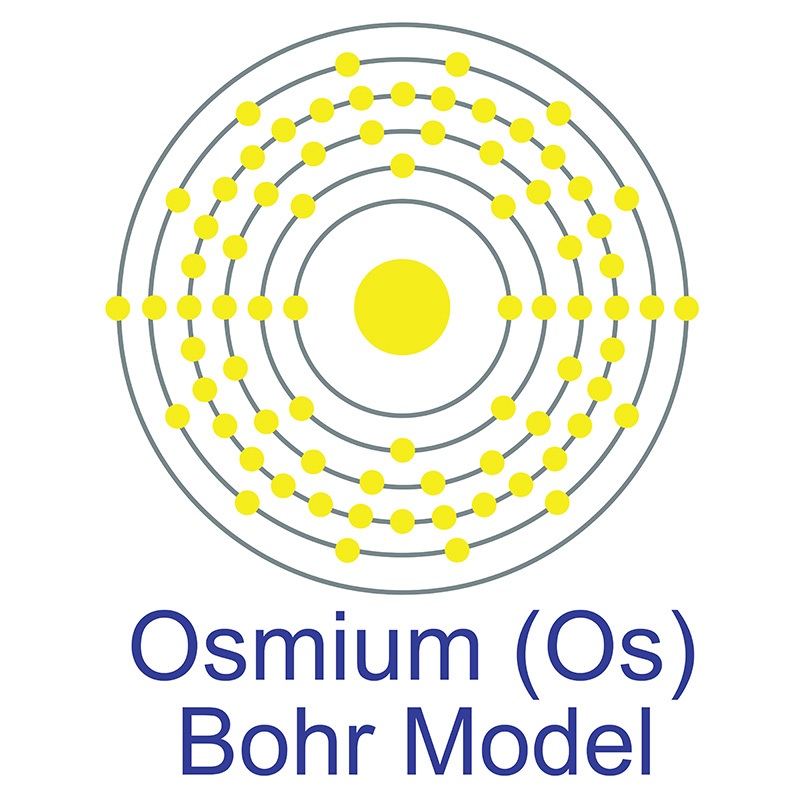
Osmium is a Block D, Group 8, Period 6 element. The number of electrons in each of Osmium's shells is 2, 8, 18, 32, 14, 2 and its electronic configuration is [Xe] 4f14 5d6 6s2. In its elemental form osmium's CAS number is 7440-04-2. The osmium atom has a radius of 133.8.pm and it's Van der Waals radius is 200.pm. Osmium tetroxide (OsO4) can cause eye, lung and skin damage which makes it very toxic. Osmium has the highest melting point and the lowest vapor pressure of any of the platinum group of metals. Osmium tetroxide has recently been used to detect fingerprints and as an aid to stain fatty tissue for microscope slides. The metal is almost entirely used to produce very hard alloys with other metals of the platinum group. Osmium is available as metal and compounds with purities from 99% to 99.999% (ACS grade to ultra-high purity); metals in the form of foil, sputtering target, and rod, and compounds as submicron and nanopowder. Osmium was first discovered by Smithson Tennant in 1803. The origin of the name Osmium comes from the Greek word osme meaning a smell or odor. See Osmium research below.
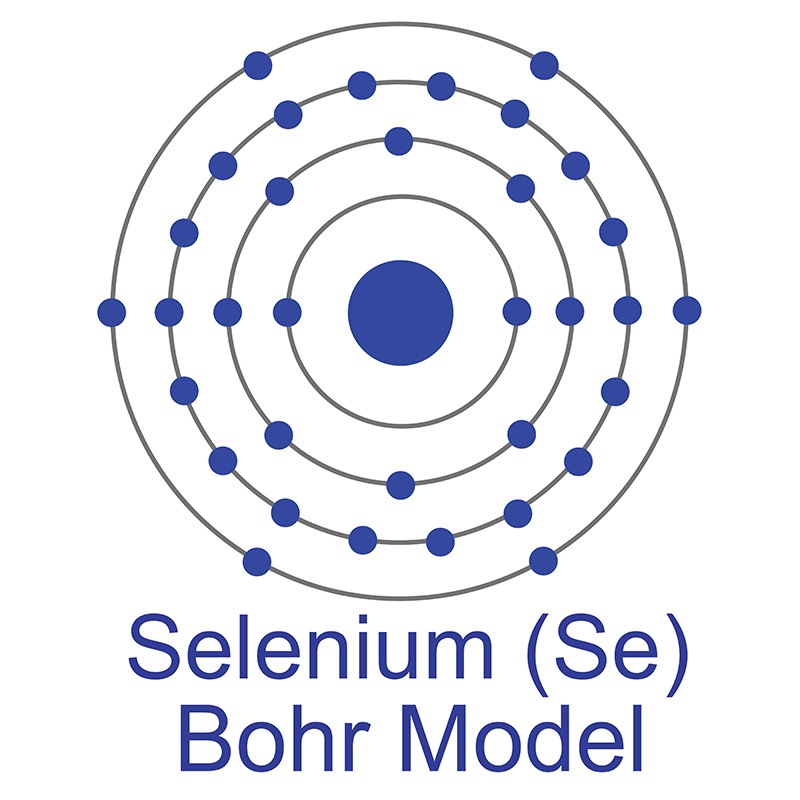
Selenium is a Block P, Group 16, Period 4 element. The number of electrons in each of Selenium's shells is 2, 8, 18, 6 and its electronic configuration is [Ar] 3d10 4s2 4p4. In its elemental form selenium's CAS number is 7782-49-2. The selenium atom has a radius of 116.pm and it's Van der Waals radius is 190.pm. The EPA does not classify selenium as carcinogenic, although selenium sulfide is a probable carcinogen. Selenates and selenites which are compounds of selenium, are highly toxic. Hydrogen selenide gas (SeH2) is the most acutely toxic compound of selenium. Selenium exhibits both photovoltaic action, where light is converted directly into electricity, and photoconductive action, where the electrical resistance decreases with increased illumination. of photocells and exposure meters for photographic use, as well as solar cells. Below its melting point, selenium is a p-type semiconductor and has many uses in electronic and solid-state applications. Selenium is available as metal and compounds with purities from 99% to 99.9999% (ACS grade to ultra-high purity); metals in the form of foil, sputtering target, and rod, and compounds as submicron and nanopowder. Selenium was first discovered by Jons Berzelius in 1817. The origin of the name Selenium comes from the Greek word "Selênê" meaning moon. See selenium research below.
American Elements semi conducting materials are crystal structures produced from ultra high purity starting materials synthesized by our high purity production facility which includes several large electric muffle furnaces, a tube furnace for hydrogen reduction, 50 gallon glass-lined Pfaudler reactors supported by our analytical laboratory containing X-ray diffraction, SEM, AA, BET surface area, and ICP Spectrometry for trace metals analysis. See a discussion of American Elements Ultra High Purity and Analytical capabilities. See Crystal Growth for processes used to fabricate semiconductor materials, which include:
Crystal "pulling" by the Czochaiski method for production of semiconductor materials
Flux growth and gradient freeze
Directional solidification of fluorites using both the Bridgman-Stockbarger and float zoning techniques
PACKAGING SPECIFICATIONS FOR BULK & RESEARCH QUANTITIES
Typical bulk packaging includes palletized plastic 5 gallon/25 kg. pails, fiber and steel drums to 1 ton super sacks in full container (FCL) or truck load (T/L) quantities. Research and sample quantities and hygroscopic, oxidizing or other air sensitive materials may be packaged under argon or vacuum. Shipping documentation includes a Certificate of Analysis and Material Safety Data Sheet (MSDS). Solutions are packaged in polypropylene, plastic or glass jars up to palletized 440 gallon liquid totes.
Ultrastructure of the myotendinous junction of the medial pterygoid muscle of
adult and aged Wistar rats. Ciena AP, Luques IU, Dias FJ, Yokomizo de Almeida SR, Iyomasa MM, Watanabe IS. Micron. 2010 Dec;41(8):1011-4. Epub 2010 Apr 20.
PubMed PMID: 20656496.
A novel oxidative
cyclisation onto vinyl silanes. Donohoe TJ, Winship PC, Pilgrim BS, Walter DS, Callens CK. Chem Commun (Camb). 2010 Oct 21;46(39):7310-2.
Epub 2010 Sep 6. PubMed PMID: 20830333.
Electrochemical and homogeneous electron
transfers to the Alzheimer amyloid-{beta} copper complex follow a preorganization
mechanism. Balland V, Hureau C, Savéant JM. Proc Natl Acad Sci U S A. 2010 Oct 5;107(40):17113-8. Epub 2010 Sep
21. PubMed PMID: 20858730.
Osmium(III) complexes with POP pincer ligands: preparation from commercially
available OsCl(3)·3H(2)O and their X-ray structures. Asensio G, Cuenca AB, Esteruelas MA, Medio-Simón M, Oliván M, Valencia M. Inorg Chem. 2010 Oct
4;49(19):8665-7. PubMed PMID: 20828213.
Multilamellar spherical particles as potential sources of excessive light
scattering in human age-related nuclear cataracts. Costello MJ, Johnsen S, Metlapally S, Gilliland KO, Frame L, Balasubramanian
D. Exp Eye Res. 2010 Sep 30.
[Epub ahead of print] PubMed PMID: 20888812.
DNA photocleavage by an osmium(II)
complex in the PDT window. Sun Y, Joyce LE, Dickson NM, Turro C. Chem Commun (Camb). 2010 Sep 28;46(36):6759-61. Epub
2010 Aug 17. PubMed PMID: 20717583.
Interplay of cysteinyl leukotrienes and
TGF-ß in the activation of hepatic stellate cells from Schistosoma mansoni
granulomas. Paiva LA, Maya-Monteiro CM, Bandeira-Melo C, Silva PM, El-Cheikh MC, Teodoro
AJ, Borojevic R, Perez SA, Bozza PT. Biochim Biophys Acta. 2010 Sep 15. [Epub ahead of print] PubMed PMID:
20817008.
Pulmonary fat embolism after
reamed and unreamed nailing of femoral fractures. Högel F, Gerlach UV, Südkamp NP, Müller CA. Injury. 2010 Sep 15. [Epub
ahead of print] PubMed PMID: 20850117.
Clytostoma callistegioides (Bignoniaceae) wax extract with activity on
aphid settling. Castillo L, Díaz M, González-Coloma A, González A, Alonso-Paz E, Bassagoda MJ,
Rossini C. Phytochemistry. 2010 Sep 7. [Epub ahead of print] PubMed PMID:
20828771.
Synchrotron-based micro-CT imaging of the human lung acinus.
Litzlbauer HD, Korbel K, Kline TL, Jorgensen SM, Eaker DR, Bohle RM, Ritman
EL, Langheinrich AC. Anat Rec (Hoboken). 2010 Sep;293(9):1607-14. PubMed PMID: 20687188.
Cellularity and
adipogenic profile of the abdominal subcutaneous adipose tissue from obese
adolescents: association with insulin resistance and hepatic steatosis. Kursawe R, Eszlinger M, Narayan D, Liu T, Bazuine M, Cali AM, D'Adamo E, Shaw
M, Pierpont B, Shulman GI, Cushman SW, Sherman A, Caprio S. Diabetes.
2010 Sep;59(9):2288-96. PubMed PMID: 20805387; PubMed Central PMCID: PMC2927952.
Low temperature and anhydrous electron microscopy techniques to observe the
infection process of the bacterial pathogen Xanthomonas fragariae on strawberry
leaves. Allan-Wojtas P, Hildebrand PD, Braun PG, Smith-King HL, Carbyn S, Renderos
WE. J Microsc. 2010 Sep 1;239(3):249-58. PubMed PMID: 20701664.
CEMOVIS on
a pathogen: analysis of Bacillus anthracis spores. Couture-Tosi E, Ranck JL, Haustant G, Pehau-Arnaudet G, Sachse M. Biol Cell. 2010 Aug 26. [Epub
ahead of print] PubMed PMID: 20795943.
Layer-by-layer self-assembled osmium polymer-mediated laccase oxygen cathodes for
biofuel cells: the role of hydrogen peroxide. Scodeller P, Carballo R, Szamocki R, Levin L, Forchiassin F, Calvo EJ. J Am Chem Soc. 2010 Aug
18;132(32):11132-40. PubMed PMID: 20698679.
One-chip biosensor for simultaneous disease
marker/calibration substance measurement in human urine by electrochemical
surface plasmon resonance method. Nakamoto K, Kurita R, Niwa O. Biosens Bioelectron. 2010 Aug 4. [Epub ahead of
print] PubMed PMID: 20888212.
Morphology of male
reproductive system of two solitary bee species (Hymenoptera: Apidae). Araújo VA, Freitas FV, Moreira J, Neves CA, Lino-Neto J. Neotrop
Entomol. 2010 Jul-Aug;39(4):595-600. PubMed PMID: 20877997.
Correlative microscopy of densely
labeled projection neurons using neural tracers. Oberti D, Kirschmann MA, Hahnloser RH. Front Neuroanat. 2010 Jun
14;4:24. PubMed PMID: 20676237; PubMed Central PMCID: PMC2912169.
Rapidly excised and cryofixed rat tissue.
Vanhecke D, Graber W, Studer D. Methods Cell Biol. 2010;96:513-27. PubMed PMID: 20869536.
Electron microscopy analysis of skin biopsies in CADASIL
disease. Cotrutz CE, Indrei A, Badescu L, Dacalu C, Neamtu M, Dumitrescu GF,
Stefanache F, Petreus T. Rom J Morphol Embryol. 2010;51(3):455-7. PubMed PMID: 20809020.
Toenail selenium status and the risk of Barrett's esophagus: the Netherlands Cohort Study.
Steevens J, Schouten LJ, Driessen AL, Huysentruyt CJ, Keulemans YC, Goldbohm RA, van den Brandt PA.
Cancer Causes Control. 2010 Oct 10. [Epub ahead of print]PMID: 20936529 [PubMed - as supplied by publisher]Related citations
Promotion of Growth in Mungbean (Phaseolus aureus Roxb.) by Selenium is Associated with Stimulation of Carbohydrate Metabolism.
Malik JA, Kumar S, Thakur P, Sharma S, Kaur N, Kaur R, Pathania D, Bhandhari K, Kaushal N, Singh K, Srivastava A, Nayyar H.
Biol Trace Elem Res. 2010 Oct 9. [Epub ahead of print]PMID: 20936436 [PubMed - as supplied by publisher]Related citations
Transition metal chemistry of cyclodiphosphanes containing phosphine and amide-phosphine functionalities: Formation of a stable dipalladium(II) complex containing a Pd-P s-bond.
Balakrishna MS, Venkateswaran R, Mague JT.
Dalton Trans. 2010 Oct 8. [Epub ahead of print]PMID: 20936211 [PubMed - as supplied by publisher]Related citations
Associations between blood metals and fecundity among women residing in New York State.
Bloom MS, Louis GM, Sundaram R, Kostyniak PJ, Jain J.
Reprod Toxicol. 2010 Oct 6. [Epub ahead of print]PMID: 20933593 [PubMed - as supplied by publisher]Related citations
The protective role of selenium in recalcitrant Acer saccharium L. seeds subjected to desiccation.
Pukacka S, Ratajczak E, Kalemba E.
J Plant Physiol. 2010 Oct 6. [Epub ahead of print]PMID: 20933296 [PubMed - as supplied by publisher]Related citations
Trace element concentrations in nesting flatback turtles (Natator depressus) from Curtis Island, Queensland, Australia.
Ikonomopoulou MP, Olszowy H, Limpus C, Francis R, Whittier J.
Mar Environ Res. 2010 Sep 25. [Epub ahead of print]PMID: 20933265 [PubMed - as supplied by publisher]Related citations
Correlation between serum selenium level and febrile seizures.
Mahyar A, Ayazi P, Fallahi M, Javadi A.
Pediatr Neurol. 2010 Nov;43(5):331-4.PMID: 20933176 [PubMed - in process]Related citations
Anti-Tumor Activity of Aloe vera Against DMBA/Croton Oil-Induced Skin Papillomagenesis in Swiss Albino Mice.
Saini M, Goyal PK, Chaudhary G.
J Environ Pathol Toxicol Oncol. 2010;29(2):127-35.PMID: 20932247 [PubMed - in process]Related citations
Aluminosilicate Relatives: Chalcogenoaluminogermanates Rb(3)(AlQ(2))(3)(GeQ(2))(7) (Q = S, Se).
Rothenberger A, Shafaei-Fallah M, Kanatzidis MG.
Inorg Chem. 2010 Oct 8. [Epub ahead of print]PMID: 20932019 [PubMed - as supplied by publisher]Related citations
A Nutrient Approach to Prostate Cancer Prevention: The Selenium and Vitamin E Cancer Prevention Trial (SELECT).
Dunn BK, Richmond ES, Minasian LM, Ryan AM, Ford LG.
Nutr Cancer. 2010 Oct;62(7):896-918.PMID: 20924966 [PubMed - in process]Related citations
Serum levels of selenium in patients with breast cancer before and after treatment of external beam radiotherapy.
Franca CA, Nogueira CR, Ramalho A, Carvalho AC, Vieira SL, Penna AB.
Ann Oncol. 2010 Oct 5. [Epub ahead of print]PMID: 20924074 [PubMed - as supplied by publisher]Related citations
Kenji Soda--researching enzymes with the spirit of an alpinist.
Yoshimura T, Mihara H, Ohshima T, Tanizawa K.
J Biochem. 2010 Oct;148(4):371-9.PMID: 20924059 [PubMed - in process]Related citations
Inhibitory effect of arsenic on aerobic gut flora in rat.
Choudhry ZK, Misbahuddin M, Hosain AK, Saleh AA.
Bangladesh Med Res Counc Bull. 2009 Dec;35(3):79-83.PMID: 20922909 [PubMed - in process]Related citations
[Endemic and biogeochemical features of the territory of Chuvash Republic]
[No authors listed]
Vestn Ross Akad Med Nauk. 2010;(8):40-6. Russian. PMID: 20922843 [PubMed - in process]Related citations
Interaction of uranyl with Se(IV) and Se(VI) in aqueous acid solutions by means of capillary electrophoresis.
Sladkov V.
Electrophoresis. 2010 Oct 4. [Epub ahead of print]PMID: 20922762 [PubMed - as supplied by publisher]Related citations
Ensemble Modeling Coupled with Six Element Concentrations in Human Blood for Cancer Diagnosis.
Chen H, Tan C, Wu T.
Biol Trace Elem Res. 2010 Oct 5. [Epub ahead of print]PMID: 20922500 [PubMed - as supplied by publisher]Related citations
Use of dietary vitamin E and selenium (Se) to increase the shelf life of modified atmosphere packaged light lamb meat.
Ripoll G, Joy M, Muñoz F.
Meat Sci. 2010 Sep 18. [Epub ahead of print]PMID: 20920835 [PubMed - as supplied by publisher]Related citations
Impacts of maternal selenium and nutritional level on growth, adiposity, and glucose tolerance in female offspring in sheep.
Vonnahme KA, Luther JS, Reynolds LP, Hammer CJ, Carlson DB, Redmer DA, Caton JS.
Domest Anim Endocrinol. 2010 Nov;39(4):240-8. Epub 2010 Jul 25.PMID: 20920781 [PubMed - in process]Related citations
Mutations disrupting selenocysteine formation cause progressive cerebello-cerebral atrophy.
Agamy O, Ben Zeev B, Lev D, Marcus B, Fine D, Su D, Narkis G, Ofir R, Hoffmann C, Leshinsky-Silver E, Flusser H, Sivan S, Söll D, Lerman-Sagie T, Birk OS.
Am J Hum Genet. 2010 Oct 8;87(4):538-44.PMID: 20920667 [PubMed - in process]Related citations
Developmental toxicity of selenium to Dolly Varden char (Salvelinus malma).
McDonald BG, Debruyn AM, Elphick JR, Davies M, Bustard D, Chapman PM.
Environ Toxicol Chem. 2010 Aug 3. [Epub ahead of print]PMID: 20891017 [PubMed - as supplied by publisher]Related citations