American Elements produces to many standard grades when applicable, including Mil Spec (military grade); ACS, Reagent and Technical Grade; Food, Agricultural and Pharmaceutical Grade; Optical Grade, USP and EP/BP (European Pharmacopeia/British Pharmacopeia) and follows applicable ASTM testing standards.See safety data and research below and pricing/lead time above. American Elements specializes in producing high purity Palladium Phosphide Sputtering targets with the highest possible density and smallest possible average grain sizes for use in semiconductor, chemical vapor deposition (CVD) and physical vapor deposition (PVD) display and optical applications. Our standard Sputtering Targets for thin film are available monoblock or bonded with dimensions and configurations up to 820 mm with hole drill locations and threading, beveling, grooves and backing designed to work with both older sputtering devises as well as the latest process equipment, such as large area coating for solar energy or fuel cells and flip-chip applications. Research sized targets are also produced as well as custom sizes and alloys. All targets are analyzed using best demonstrated techniques including X-Ray Fluorescence (XRF), Glow Discharge Mass Spectrometry (GDMS), and Inductively Coupled Plasma (ICP). "Sputtering" allows for thin film deposition of an ultra high purity sputtering metallic or oxide material onto another solid substrate by the controlled removal and conversion of the target material into a directed gaseous/plasma phase through ionic bombardment. "Sputtering" allows for thin film deposition of an ultra high purity sputtering metallic or oxide material onto another solid substrate by the controlled removal and conversion of the target material into a directed gaseous/plasma phase through ionic bombardment. We can also provide targets outside this range in addition to just about any size rectangular, annular, or oval target. Materials are produced using crystallization, solid state and other ultra high purification processes such as sublimation. American Elements specializes in producing custom compositions for commercial and research applications and for new proprietary technologies. American Elements also casts any of the rare earth metals and most other advanced materials into rod, bar or plate form, as well as other machined shapes and through other processes nanoparticles. We also produce Palladium as disc, granules, ingot, pellets, pieces, powder, and rod. Other shapes are available by request.
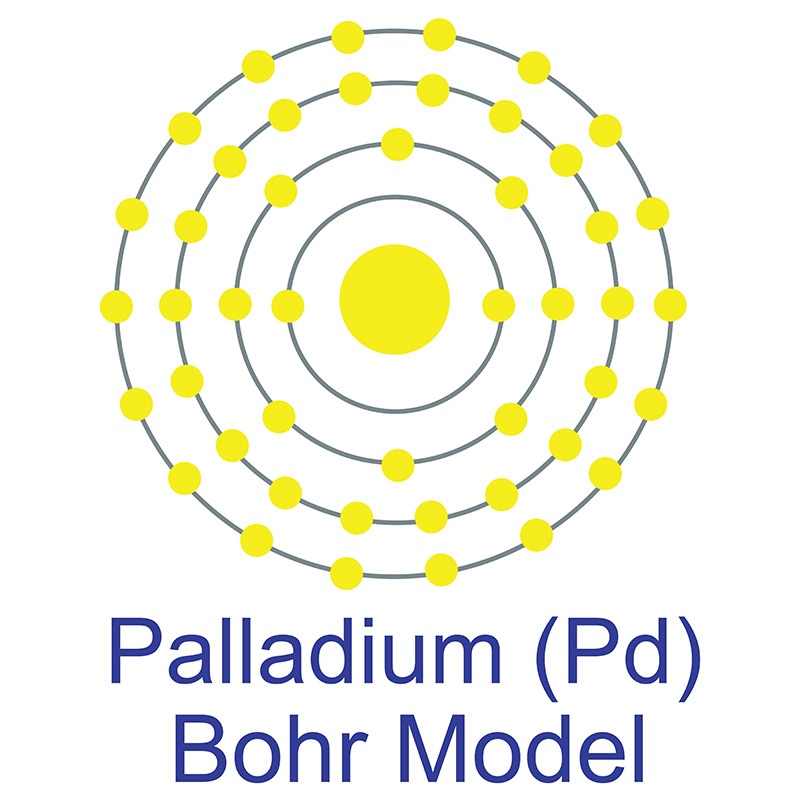
Palladium is a Block D, Group 10, Period 5 element. The number of electrons in each of Palladium's shells is 2, 8, 18, 18 and its electronic configuration is [Kr] 4d10. In its elemental form palladium's CAS number is 7440-05-3. The palladium atom has a radius of 137.6.pm and it's Van der Waals radius is 163.pm. Palladium is a member of the platinum group of metals. It is an excellent hydrogenation and dehydrogenation catalyst and available in many Organo-metallic forms for this purpose. It is alloyed with gold, silver, iridium and other platinum group elements and used in jewelry. The metal is used in dentistry, watch making, and in making surgical instruments and electrical contacts. Platinum is available as metal and compounds with purities from 99% to 99.999% (ACS grade to ultra-high purity); metals in the form of foil, sputtering target, and rod, and compounds as submicron and nanopowder. Palladium was first discovered by William Hyde Wollaston in 1803. See Palladium research below.
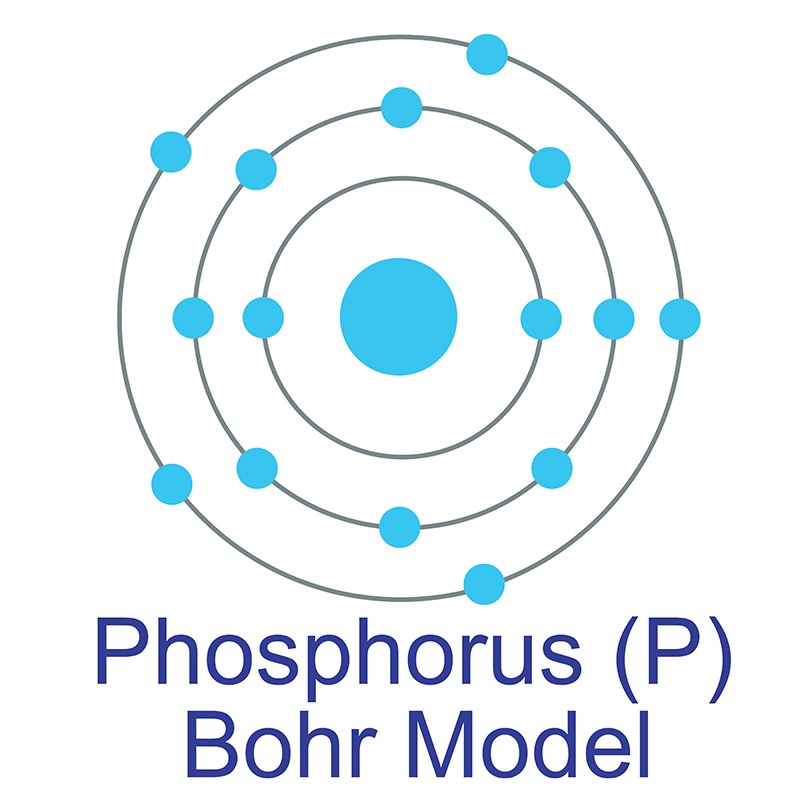
Phosphorus is a Block P, Group 15, Period 3 element. The number of electrons in each of Phosphorus's shells is 2, 8, 5 and its electronic configuration is [Ne] 3s2 3p3. In its elemental form Phosphorus's CAS number is 7723-14-0. The Phosphorus atom has a radius of 110.5.pm and it's Van der Waals radius is 180.pm. Although white phosphorus is very toxic, red phosphorus is not considered toxic. Phosphorus information, including Technical Data, Safety Data and its High Purity properties, research, applications and other useful facts are discussed below. Scientific facts such as the atomic structure, ionization energy, abundance on Earth, conductivity and thermal properties are included.
American Elements semi conducting materials are crystal structures produced from ultra high purity starting materials synthesized by our high purity production facility which includes several large electric muffle furnaces, a tube furnace for hydrogen reduction, 50 gallon glass-lined Pfaudler reactors supported by our analytical laboratory containing X-ray diffraction, SEM, AA, BET surface area, and ICP Spectrometry for trace metals analysis. See a discussion of American Elements Ultra High Purity and Analytical capabilities. See Crystal Growth for processes used to fabricate semiconductor materials, which include:
Crystal "pulling" by the Czochaiski method for production of semiconductor materials
Flux growth and gradient freeze
Directional solidification of fluorites using both the Bridgman-Stockbarger and float zoning techniques
Search by Material, Product Name, Product Code, CAS Number, Formula, Element, Anion, Form, EC Number, MDL Number or PubChem ID.
Complexation and Extraction of PAHs to the Aqueous Phase with a Dinuclear
Pt(II) Diazapyrenium-Based Metallacycle. Blanco V, García MD, Terenzi A, Pía E, Fernández-Mato A, Peinador C, Quintela
JM. Chemistry. 2010 Oct 4. [Epub ahead of
print] PubMed PMID: 20922724.
Electrochemical absorption and
oxidation of hydrogen on palladium alloys with platinum, gold and rhodium. Lukaszewski M, Hubkowska K, Czerwinski A. Phys
Chem Chem Phys. 2010 Oct 4. [Epub ahead of print] PubMed PMID: 20890504.
Palladium sensitization in the
United States: dermatology and dentistry connection. Pigatto PD, Spadari F, Bombeccari G, Guzzi G. Dermatitis. 2010
Oct;21(5):297-8. PubMed PMID: 20920421.
Palladium-Catalyzed
[1,3]-O-to-C Rearrangement of Pyrans toward Functionalized Cyclohexanones. Brioche JC, Barker TA, Whatrup DJ, Barker MD, Harrity JP. Org
Lett. 2010 Oct 1. [Epub ahead of print] PubMed PMID: 20886864.
A General Strategy Toward
Aromatic 1,2-Ambiphilic Synthons: Palladium-Catalyzed ortho-Halogenation of
PyDipSi-Arenes. Dudnik AS, Chernyak N, Huang C, Gevorgyan V. Angew Chem Int Ed Engl. 2010 Sep 30. [Epub ahead of print] PubMed
PMID: 20886495.
Design, synthesis, and subtype selectivity of
3,6-disubstituted ß-carbolines at Bz/GABA(A)ergic receptors. SAR and studies
directed toward agents for treatment of alcohol abuse. Yin W, Majumder S, Clayton T, Petrou S, Vanlinn ML, Namjoshi OA, Ma C, Cromer
BA, Roth BL, Platt DM, Cook JM. Bioorg Med Chem. 2010 Sep
29. [Epub ahead of print] PubMed PMID: 20888240.
Synthesis of a Solid-Phase Amino
Imidazotriazine Library via Palladium Catalyzed Direct Arylation. Maechling S, Good J, Lindell SD. J Comb Chem.
2010 Sep 29. [Epub ahead of print] PubMed PMID: 20879771.
Preparation of a Catalytic Membrane Reactor with
Palladium Nanoparticles Supported by a Packed-Bed Silica Nanosupporter for
Gas-Phase Methanol Oxidation. Lee KJ, Min SH, Jang J. Small. 2010 Sep 29. [Epub ahead of print] PubMed
PMID: 20882558.
Mechanistically Driven Development of Iridium
Catalysts for Asymmetric Allylic Substitution. Hartwig JF, Stanley LM. Acc Chem Res. 2010 Sep 28. [Epub
ahead of print] PubMed PMID: 20873839.
On the Mechanism of
Palladium-Catalyzed Aromatic C-H Oxidation. Powers DC, Xiao DY, Geibel MA, Ritter T. J Am Chem Soc. 2010 Sep 28. [Epub
ahead of print] PubMed PMID: 20873835.
Palladium-Catalyzed
Decarboxylative Couplings of 2-(2-Azaaryl)acetates with Aryl Halides and
Triflates. Shang R, Yang ZW, Wang Y, Zhang SL, Liu L. J Am Chem Soc. 2010 Sep 28. [Epub ahead of print] PubMed PMID:
20873805.
Efficient stochastic
thermostatting of path integral molecular dynamics. Ceriotti M, Parrinello M, Markland TE, Manolopoulos DE. J Chem Phys. 2010 Sep
28;133(12):124104. PubMed PMID: 20886921.
A Reductive-Coupling plus Nazarov Cyclization
Sequence in the Asymmetric Synthesis of Five-Membered Carbocycles. Kerr DJ, White JM, Flynn BL. J Org Chem.
2010 Sep 28. [Epub ahead of print] PubMed PMID: 20873806.
Incorporation of Pd into Au(111): enhanced
electrocatalytic activity for the hydrogen evolution reaction. Schäfer PJ, Kibler LA. Phys Chem Chem
Phys. 2010 Sep 28. [Epub ahead of print] PubMed PMID: 20877870.
Palladium-catalyzed
annulations of arynes with 2-(2-iodophenoxy)-1-substituted ethanones. Li RJ, Pi SF, Liang Y, Wang ZQ, Song RJ, Chen GX, Li JH. Chem Commun
(Camb). 2010 Sep 27. [Epub ahead of print] PubMed PMID: 20871908.
Umpolung Direct Arylation
Reactions: Facile Process Requiring Only Catalytic Palladium and
Substoichiometric Amount of Silver Salts. Mousseau JJ, Valle´e F, Lorion MM, Charette AB. J Am Chem Soc. 2010 Sep 27. [Epub ahead
of print] PubMed PMID: 20873750.
Hydrogen-Induced Reversible Insulator-Metal
Transition in a Palladium Nanosphere Sensor. Zou J, Iyer KS, Raston CL. Small. 2010 Sep 27. [Epub ahead of
print] PubMed PMID: 20878635.
Rapid Assembly of Resorcylic Acid Lactone
Frameworks through Sequential Palladium-Catalyzed Coupling Reactions. Fuse S, Sugiyama S, Takahashi T. Chem Asian
J. 2010 Sep 24. [Epub ahead of print] PubMed PMID: 20872399.
Evaluation of
thiouracil-based adhesive systems for bonding cast silver-palladium-copper-gold
alloy. Yamashita M, Koizumi H, Ishii T, Furuchi M, Matsumura H. J Oral Sci. 2010;52(3):405-10. PubMed PMID: 20881333.
Consumption of whole
grains is associated with improved diet quality and nutrient intake in children
and adolescents: the National Health and Nutrition Examination Survey 1999-2004.
O'Neil CE, Nicklas TA, Zanovec M, Cho SS, Kleinman R. Public Health Nutr. 2010 Oct 6:1-9. [Epub ahead of print] PubMed PMID: 20923597.
Chemical and microbiological changes during
vermicomposting of coffee pulp using exotic (Eudrilus eugeniae) and native
earthworm (Perionyx ceylanesis) species. Raphael K, Velmourougane K. Biodegradation. 2010 Oct 5. [Epub ahead
of print] PubMed PMID: 20922463.
Synthesis, structure,
and reductive elimination in the series Tp'Rh(PR(3))(Ar(F))H; Determination of
rhodium-carbon bond energies of fluoroaryl substituents. Tanabe T, Brennessel WW, Clot E, Eisenstein O, Jones WD. Dalton Trans. 2010 Oct
5. [Epub ahead of print] PubMed PMID: 20924525.
Nutrient concentrations in Maryland non-tidal
streams. Morgan RP 2nd, Kline KM. Environ Monit Assess. 2010 Oct 5. [Epub ahead of print] PubMed PMID:
20890788.
Hereditary disorders of renal
phosphate wasting. Alizadeh Naderi AS, Reilly RF; Medscape. Nat Rev Nephrol. 2010 Oct 5. [Epub ahead of print] PubMed
PMID: 20924400.
New Synthesis of 3-Trifluoromethylpyrroles by
Condensation of Mesoionic 4-Trifluoroacetyl-1,3-oxazolium-5-olates with
Phosphorus Ylides. Saijo R, Hagimoto Y, Kawase M. Org Lett. 2010 Oct 5. [Epub ahead of print] PubMed PMID:
20923166.
Structural and electronic properties of
luminescent copper(i) halide complexes of bis[2-(diphenylphosphano)phenyl] ether
(DPEphos). Crystal structure of [CuCl(DPEphos)(dmpymtH]. Aslanidis P, Cox PJ, Tsipis AC. Dalton Trans. 2010 Oct
4. [Epub ahead of print] PubMed PMID: 20922239.
Changes in
Microbial Community Structure and Function of Drinking Water Treatment
Bioreactors Upon Phosphorus Addition. Li X, Upadhyaya G, Yuen W, Brown J, Morgenroth E, Raskin L. Appl Environ Microbiol. 2010 Oct 1. [Epub
ahead of print] PubMed PMID: 20889793.
Determination of a set
of surrogate parameters to assess urban stormwater quality. Miguntanna NS, Egodawatta P, Kokot S, Goonetilleke A. Sci Total Environ.
2010 Oct 1. [Epub ahead of print] PubMed PMID: 20888615.
A review on the effects of environmental conditions on growth and toxin
production of Ostreopsis ovata. Pistocchi R, Pezzolesi L, Guerrini F, Vanucci S, Dell'aversano C, Fattorusso
E. Toxicon. 2010 Oct 1. [Epub ahead of print] PubMed
PMID: 20920514.
Tenofovir-associated severe bone pain: I cannot walk! Jhaveri MA, Mawad HW, Thornton AC, Mullen NW, Greenberg RN. J Int Assoc Physicians AIDS
Care (Chic Ill). 2010 Sep-Oct;9(5):328-34. PubMed PMID: 20923957.
Characteristics of contaminants in water and
sediment of a constructed wetland treating piggery wastewater effluent. Lee S, Maniquiz MC, Kim LH. J Environ
Sci (China). 2010;22(6):940-5. PubMed PMID: 20923110.
Effect of a seasonal diffuse pollution migration on
natural organic matter behavior in a stratified dam reservoir. Yu SJ, Lee JY, Ha SR. J Environ Sci
(China). 2010;22(6):908-14. PubMed PMID: 20923105.
Water-saving
irrigation of paddy field to reduce nutrient runoff. Hitomi T, Iwamoto Y, Miura A, Hamada K, Takaki K, Shiratani E. J Environ Sci (China).
2010;22(6):885-91. PubMed PMID: 20923101.
Scenario
analysis for reduction of pollutant load discharged from a watershed by recycling
of treated water for irrigation. Shiratani E, Munakata Y, Yoshinaga I, Kubota T, Hamada K, Hitomi T. J Environ Sci (China). 2010;22(6):878-84. PubMed
PMID: 20923100.
Modeling the effects of constructed wetland
on nonpoint source pollution control and reservoir water quality improvement. Ham J, Yoon CG, Kim HJ, Kim HC. J
Environ Sci (China). 2010;22(6):834-9. PubMed PMID: 20923093.
Evaluation of non-point source
pollution reduction by applying best management practices using a SWAT model and
QuickBird high resolution satellite imagery. Lee M, Park G, Park M, Park J, Lee J, Kim S. J Environ Sci (China).
2010;22(6):826-33. PubMed PMID: 20923092.
Understanding nutrient
build-up on urban road surfaces. Miguntanna NP, Goonetilleke A, Egodowatta P, Kokot S. J Environ Sci (China). 2010;22(6):806-12. PubMed
PMID: 20923089.
Monitoring of non-point source pollutants
load from a mixed forest land use. Yoon SW, Chung SW, Oh DG, Lee JW. J Environ Sci (China). 2010;22(6):801-5.
PubMed PMID: 20923088.