American Elements Logo and U.S. Registered Trademark


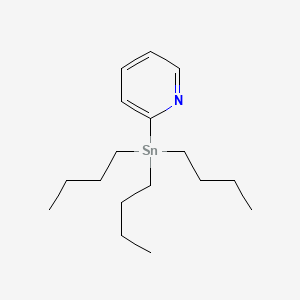
2-(Tributylstannyl)pyridine
C5H4NSn((CH2)3CH3)3
17997-47-6
Product Product Code Order or Specifications
(2N) 99% 2-(Tributylstannyl)pyridine      SN-OM-02 Contact American Elements
(3N) 99.9% 2-(Tributylstannyl)pyridine SN-OM-03 Contact American Elements
(4N) 99.99% 2-(Tributylstannyl)pyridine SN-OM-04 Contact American Elements
(5N) 99.999% 2-(Tributylstannyl)pyridine SN-OM-05 Contact American Elements
2-(Tributylstannyl)pyridine is generally immediately available in most volumes. High purity, submicron and nanopowder forms may be considered.American Elements produces to many standard grades when applicable, including Mil Spec (military grade); ACS, Reagent and Technical Grade; Food, Agricultural and Pharmaceutical Grade; Optical Grade, USP and EP/BP (European Pharmacopoeia/British Pharmacopoeia)and follows applicable ASTM testing standards.Typical and custom packaging is available. Additional technical, research and safety (MSDS) information is available as is a Reference Calculator for converting relevant units of measurement.

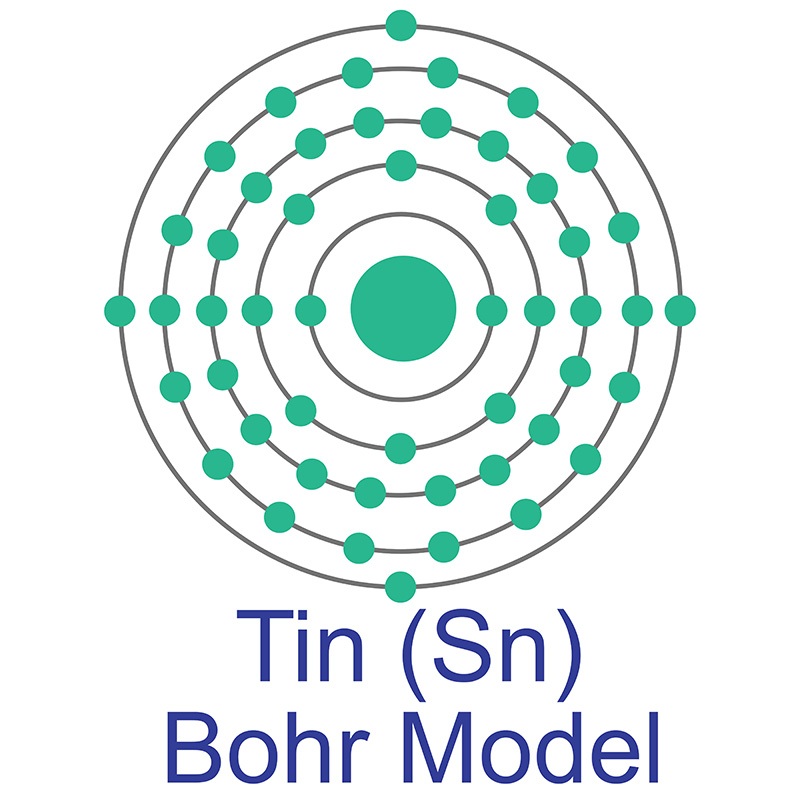
Tin(Sn) atomic and molecular weight, atomic number and elemental symbolTin is a Block P, Group 14, Period 5 element. The number of electrons in each of Tin's shells is 2, 8, 18, 18, 4 and its electronic configuration is [Kr] 4d10 5s2 5p2. In its elemental form tin's CAS number is 7440-31-5. The tin atom has a radius of 140.5.pm and it's Van der Waals radius is 217.pm. Organometallic compounds of tin are very toxic and tin salts are also considered to be toxic. Tin as single atoms or molecules are not toxic. Tin compounds sprayed onto glass are used to produce electrically conductive coatings. These have been used for panel lighting and for frost-free windshields. Most window glass is now made by floating molten glass on molten tin (float glass) to produce a flat surface. Crystalline tin-niobium alloy is superconductive at very low temperatures. This Tin (Sn) Bohr Modelpromises to be important in the construction of superconductive magnets Elemental Tinthat generate enormous field strengths but use practically no power. Tin is the basis for many eutectic alloys and the discovery by early man that copper could be better formed and crafted if tin were added producing the first bronze and launching what we refer to as the "Bronze Age" and the first Neolithic metal tools, cooking utensils, and jewelry produced from rudimentary bronze. An important tin compound is the chloride, which is used as a reducing agent and as a mordant in calico printing. Tin is also used in various metal alloys (See AE Alloys). Tin was first discovered by Early Man.The origin of the word tin comes from the Latin word Stannum which translates to the Anglo-Saxon word tin. See Tin research below.

Formula CAS No. Appearance Molecular Weight
C5H4NSn((CH2)3CH3)3 17997-47-6   368.14
PRODUCT CATALOG Tin Products News Foil Submicron & Nanopowder Tolling Ultra High Purity Sputtering Target Crystal Growth Rod, Plate, Powder, etc. Home

Have a Question? Ask a Chemical Engineer or Material Scientist   Request an MSDS or Certificate of Analysis


Search by Material, Product Name, Product Code, CAS Number, Formula, Element, Anion, Form, EC Number, MDL Number or PubChem ID.


German   Korean   French   Japanese   Spanish   Chinese (Simplified)   Portuguese   Russian   Chinese (Taiwan)   Italian   Turkish   Polish   Dutch   Czech   Swedish   Hungarian   Danish   Hebrew

Production Catalog Available in 36 Countries & Languages

PACKAGING SPECIFICATIONS FOR BULK & RESEARCH QUANTITIES


Typical bulk packaging includes palletized plastic 5 gallon/25 kg. pails, fiber and steel drums to 1 ton super sacks in full container (FCL) or truck load (T/L) quantities. Research and sample quantities and hygroscopic, oxidizing or other air sensitive materials may be packaged under argon or vacuum. Shipping documentation includes a Certificate of Analysis and Material Safety Data Sheet (MSDS). Solutions are packaged in polypropylene, plastic or glass jars up to palletized 440 gallon liquid totes.


Show me more forms of Tin
 
Customers for this product have also looked at:
Bismuth Indium Tin Alloy Tin Acetate Tin Metal Tin Oxide Tin Chloride
Tin Pellets Tin Oxide Pellets Gold Tin Alloy Tin Nitrate Tin Acetylacetonate
Tin Foil Tin Rod Tin Nanoparticles Tin Powder Tin Sputtering Target

Recent Research & Development for Tin

  • Dielectrophoretic capture of E. coli cells at micropatterned nanoelectrode arrays. Syed LU, Liu J, Price AK, Li YF, Culbertson CT, Li J. Electrophoresis. 2011 Aug 8. doi: 10.1002/elps.201100020. [Epub ahead of print] PMID: 21823128 [PubMed - as supplied by publisher]

  • Label-free electrochemical measurement of protein tyrosine kinase activity and inhibition based on electro-catalyzed tyrosine signaling. Yang Y, Guo LH, Qu N, Wei MY, Zhao LX, Wan B. Biosens Bioelectron. 2011 Jul 23. [Epub ahead of print] PMID: 21820892 [PubMed - as supplied by publisher]

  • Role of Methylmercury Exposure (from Fish Consumption) on Growth and Neurodevelopment of Children Under 5 Years of Age Living in a Transitioning (Tin-Mining) Area of the Western Amazon, Brazil. Marques RC, Dórea JG, Leão RS, Dos Santos VG, Bueno L, Marques RC, Brandão KG, Palermo EF, Guimarães JR. Arch Environ Contam Toxicol. 2011 Aug 5. [Epub ahead of print] PMID: 21818617 [PubMed - as supplied by publisher]

  • Synthesis of zinc tin oxide (ZTO) nanocrystallites at room temperature through association with peptide-containing bolaamphiphile molecules. Ahn S, Kwon TG, Lee SY. J Colloid Interface Sci. 2011 Jul 21. [Epub ahead of print] PMID: 21816408 [PubMed - as supplied by publisher]

  • Gold nanoparticles modified ZnO nanorods with improved photocatalytic activity. Sun L, Zhao D, Song Z, Shan C, Zhang Z, Li B, Shen D. J Colloid Interface Sci. 2011 Jul 21. [Epub ahead of print] PMID: 21816407 [PubMed - as supplied by publisher]

  • Optimized low-kV spectrum of dual-energy CT equipped with high-kV tin filtration for electron density measurements. Saito M. Med Phys. 2011 Jun;38(6):2850-8. PMID: 21815360 [PubMed - in process]

  • Electrical properties of (Ba, Sr)TiO(3) thin films with Pt and ITO electrodes: dielectric and rectifying behaviour. Li S, Ghinea C, Bayer TJ, Motzko M, Schafranek R, Klein A. J Phys Condens Matter. 2011 Aug 3;23(33):334202. [Epub ahead of print] PMID: 21813966 [PubMed - as supplied by publisher]

  • Solid state synthesis of tin-doped ZnO at room temperature: Characterization and its enhanced gas sensing and photocatalytic properties. Jia X, Fan H, Afzaal M, Wu X, O'Brien P. J Hazard Mater. 2011 Jul 20. [Epub ahead of print] PMID: 21813237 [PubMed - as supplied by publisher]

  • A comparison of utility measurement using EQ-5D and SF-6D preference-based generic instruments in patients with rheumatoid arthritis. Salaffi F, Carotti M, Ciapetti A, Gasparini S, Grassi W. Clin Exp Rheumatol. 2011 Jul 26. [Epub ahead of print] PMID: 21813061 [PubMed - as supplied by publisher]

  • Highly Active Iridium/Iridium-Tin/Tin Oxide Heterogeneous Nanoparticles as Alternative Electrocatalysts for the Ethanol Oxidation Reaction. Du W, Wang Q, Saxner D, Deskins NA, Su D, Krzanowski JE, Frenkel AI, Teng X. J Am Chem Soc. 2011 Aug 3. [Epub ahead of print] PMID: 21812458 [PubMed - as supplied by publisher]

  • Eight-Coordinated Arsenic in the Zintl Phases RbCd(4)As(3) and RbZn(4)As(3): Synthesis and Structural Characterization. He H, Tyson C, Bobev S. Inorg Chem. 2011 Aug 3. [Epub ahead of print] PMID: 21812395 [PubMed - as supplied by publisher]

  • Effect of tin and lead chlorotriphenyl analogues on selected living cells. Boniewska-Bernacka E, Man D, Slota R, Broda MA. J Biochem Mol Toxicol. 2011 Jul;25(4):231-7. doi: 10.1002/jbt.20380. Epub 2010 Dec 10. PMID: 21812073 [PubMed - in process]

  • SnO(2) nanosheet hollow spheres with improved lithium storage capabilities. Ding S, Wen David Lou X. Nanoscale. 2011 Aug 3. [Epub ahead of print] PMID: 21811740 [PubMed - as supplied by publisher]

  • A Three-State Surface Confined Molecular Switch with Multiple Channel Outputs. Simao C, Mas-Torrent M, Casado-Montenegro J, Oton F, Veciana J, Rovira C. J Am Chem Soc. 2011 Aug 2. [Epub ahead of print] PMID: 21809828 [PubMed - as supplied by publisher]

  • Increased and balanced light emission of transparent organic light-emitting diodes by enhanced microcavity effects. Lee J, Hofmann S, Thomschke M, Furno M, Kim YH, Lüssem B, Leo K. Opt Lett. 2011 Aug 1;36(15):2931-3. doi: 10.1364/OL.36.002931. PMID: 21808362 [PubMed - in process]

  • Regional variations in pedal cyclist injuries in New Zealand: safety in numbers or risk in scarcity? Tin ST, Woodward A, Thornley S, Ameratunga S. Aust N Z J Public Health. 2011 Aug;35(4):357-63. doi: 10.1111/j.1753-6405.2011.00731.x. PMID: 21806731 [PubMed - in process]

  • Determination of Quasi-Fermi Levels Across Illuminated Organic Donor/Acceptor Heterojunctions by Kelvin Probe Force Microscopy. Ellison DJ, Kim JY, Stevens DM, Frisbie CD. J Am Chem Soc. 2011 Aug 1. [Epub ahead of print] PMID: 21806052 [PubMed - as supplied by publisher]

  • Nonvolatile Rewritable Memory Effects in Graphene Oxide Functionalized by Conjugated Polymer Containing Fluorene and Carbazole Units. Zhang B, Liu YL, Chen Y, Neoh KG, Li YX, Zhu CX, Tok ES, Kang ET. Chemistry. 2011 Jul 29. doi: 10.1002/chem.201100807. [Epub ahead of print] PMID: 21805510 [PubMed - as supplied by publisher]

  • Differentiating treatment-induced necrosis from recurrent/progressive brain tumor using nonmodel-based semiquantitative indices derived from dynamic contrast-enhanced T1-weighted MR perfusion. Narang J, Jain R, Arbab AS, Mikkelsen T, Scarpace L, Rosenblum ML, Hearshen D, Babajani-Feremi A. Neuro Oncol. 2011 Jul 29. [Epub ahead of print] PMID: 21803763 [PubMed - as supplied by publisher]

  • Impact of device-guided slow breathing on symptoms of chronic heart failure: a randomized, controlled feasibility study. Ekman I, Kjellström B, Falk K, Norman J, Swedberg K. Eur J Heart Fail. 2011 Jul 28. [Epub ahead of print] PMID: 21803755 [PubMed - as supplied by publisher]


Aeromat 2012 Sponsor
Proud sponsors of Aeromat 2012. Please join us and our customers & co-sponsors Boeing and ATI on June 18-20, 2012
in Charlotte, North Carolina

  Print this Page
Periodic table of the elements science and academic information, elements and advanced materials data, scientific presentations and all pages, designs, concepts, logos, and color schemes herein are the copyrighted proprietary rights and intellectual property of American Elements. American Elements is a U.S. Registered Trademark. © 1998-2012. American Elements. All rights reserved.
Learn Six Sigma


American Elements is a copyrighted U.S. Trademark. All rights reserved.