Potassium Hexabromotellurate(IV) is one of numerous organo-metallic compounds (also known as metalorganic, organo-inorganic and metallo-organic compounds) sold by American Elements under the tradename AE Organo-Metallics™ for uses requiring non-aqueous solubility such as recent solar energy and water treatment applications. Similar results can sometimes also be achieved with Nanoparticles (also see Nanotechnology and Quantum Dots) and by thin film deposition. Note American Elements additionally supplies many materials as solutions. Potassium Hexabromotellurate(IV) is generally immediately available in most volumes. High purity, submicron and nanopowder forms may be considered. Additional technical, research and safety information is available.
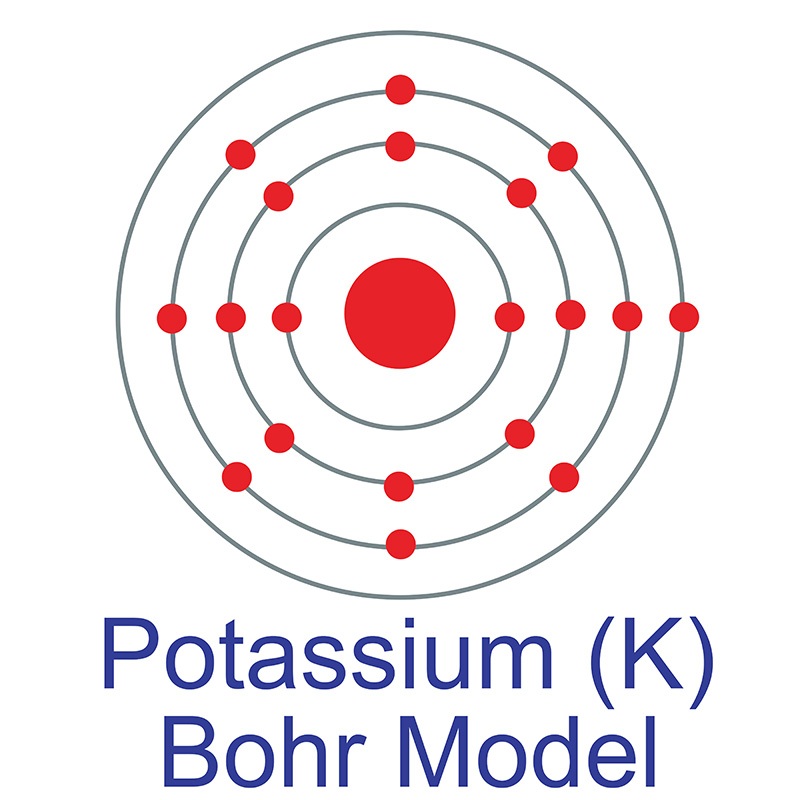
Potassium is a Block S, Group 1, Period 4 element. The number of electrons in each of Potassium's shells is 2, 8, 8, 1 and its electronic configuration is [Ar] 4s1. In its elemental form potassium's CAS number is 7440-09-7. The potassium atom has a radius of 227.2 .pm and it's Van der Waals radius is 275.pm. Potassium is not toxic. Potassium is the seventh most abundant element on earth. In its metallic form it is one of the most reactive and electropositive of all metals and rapidly oxidizes. As with other metals of the alkali group, the metal decomposes in water with the evolution of hydrogen. It catches fire spontaneously in water. In high purity, potassium compounds have numerous pharmacological, medical, and electronics applications. Important compounds include the hydroxide, nitrate, carbonate, chloride, bromide, iodide, and sulfate. Lower purity compounds are used in pyrotechnics for its violet color on ignition and in glass and ceramic glazes to produce this color. Potassium also used as a nutrient in plant growth. Potassium was first discovered by Sir Humphrey Davy in 1807. The origin of the element name comes from the English word 'potash' meaning pot ashes and the Arabic word 'qali' which means alkali. The symbol K originates from the Latin word 'kalium'. See Potassium research below.
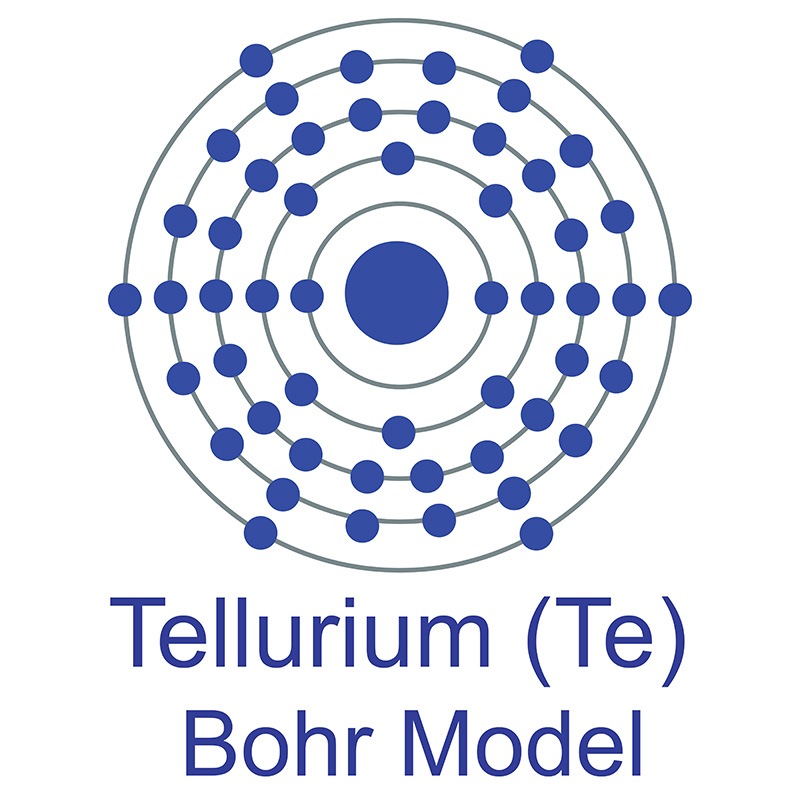
Tellurium is a Block P, Group 16, Period 5 element. The number of electrons in each of Tellurium's shells is 2, 8, 18, 18, 6 and its electronic configuration is [Kr] 4d10 5s2 5p4. In its elemental form tellurium's CAS number is 13494-80-9. The tellurium atom has a radius of 143.2.pm and it's Van der Waals radius is 206.pm. Tellurium is a p-type semiconductor, and shows greater conductivity in certain directions, depending on alignment of the atoms. It is grown in crystalline form with other elements such as indium telluride. Its conductivity increases slightly with exposure to light which makes many tellurides candidates for solar energyapplications. Tellurium improves the machinability of copper and stainless steel, and its addition to lead decreases the corrosive action of sulfuric acid on lead and improves its strength and hardness. Tellurium is used as a basic ingredient in blasting caps, and is added to cast iron for chill control. Tellurium is used in ceramics. Bismuth telluride has been used in thermoelectric devices. Iron is available as metal and compounds with purities from 99% to 99.999% (ACS grade to ultra-high purity); metals in the form of foil, sputtering target, and rod, and compounds as submicron and nanopowder. Tellurium was first discovered by Franz Muller von Reichenstein in 1782. The name Tellurium originates from the Greek word 'Tellus' meaning Earth. See Tellurium research below.. Tellurium was first discovered by Franz Muller von Reichenstein in 1782. The name Tellurium originates from the Greek word 'Tellus' meaning Earth. See Tellurium research below.
PACKAGING SPECIFICATIONS FOR BULK & RESEARCH QUANTITIES
Typical bulk packaging includes palletized plastic 5 gallon/25 kg. pails, fiber and steel drums to 1 ton super sacks in full container (FCL) or truck load (T/L) quantities. Research and sample quantities and hygroscopic, oxidizing or other air sensitive materials may be packaged under argon or vacuum. Shipping documentation includes a Certificate of Analysis and Material Safety Data Sheet (MSDS). Solutions are packaged in polypropylene, plastic or glass jars up to palletized 440 gallon liquid totes.
Aluminum potassium sulfate and tannic Acid injection for hemorrhoids.
Lim SW.
J Korean Soc Coloproctol. 2012 Apr;28(2):73-7. Epub 2012 Apr 30.
PMID:
22606645
[PubMed - in process]
Suppression of Ribosomal Function Triggers Innate Immune Signaling through Activation of the NLRP3 Inflammasome.
Vyleta ML, Wong J, Magun BE.
PLoS One. 2012;7(5):e36044. Epub 2012 May 14.
PMID:
22606244
[PubMed - as supplied by publisher]
Stroke preceding autoimmune encephalitis with neuronal potassium channel antibody.
Simal P, Garcia-García AM, Serna-Candel C, Egido JA.
BMJ Case Rep. 2012 May 8;2012. pii: bcr0820114637. doi: 10.1136/bcr.08.2011.4637.
PMID:
22605845
[PubMed - in process]
Life-threatening hyperkalemia - an overlooked acute kidney injury with a serum creatinine rise in the 'normal' range.
Latus J, Braun N, Alscher MD, Kimmel M.
BMJ Case Rep. 2012 May 8;2012. pii: bcr0120125691. doi: 10.1136/bcr.01.2012.5691.
PMID:
22605836
[PubMed - in process]
Ethylene glycol ingestion masked by concomitant ethanol intoxication.
Head JM.
BMJ Case Rep. 2012 Mar 20;2012. pii: bcr1220115326. doi: 10.1136/bcr.12.2011.5326.
PMID:
22605713
[PubMed - in process]
Neuroanatomy of melanocortin-4 receptor pathway in the lateral hypothalamic area.
Cui H, Sohn JW, Gautron L, Funahashi H, Williams KW, Elmquist JK, Lutter M.
J Comp Neurol. 2012 May 17. doi: 10.1002/cne.23145. [Epub ahead of print]
PMID:
22605619
[PubMed - as supplied by publisher]
Microvascular responses to aldosterone in hamster cheek pouch microcirculation.
Lapi D, Emdin M, Mastantuono T, Sapio D, Santillo M, Colantuoni A.
Clin Hemorheol Microcirc. 2012 May 16. [Epub ahead of print]
PMID:
22596229
[PubMed - as supplied by publisher]
Prevalence and Factors Associated with Hyperkalemia in Predialysis Patients Followed in a Low-Clearance Clinic.
Sarafidis PA, Blacklock R, Wood E, Rumjon A, Simmonds S, Fletcher-Rogers J, Ariyanayagam R, Al-Yassin A, Sharpe C, Vinen K.
Clin J Am Soc Nephrol. 2012 May 17. [Epub ahead of print]
PMID:
22595825
[PubMed - as supplied by publisher]
Chemical punch packed in venoms makes centipedes excellent predators.
Yang S, Liu Z, Xiao Y, Li Y, Rong M, Liang S, Zhang Z, Yu H, King GF, Lai R.
Mol Cell Proteomics. 2012 May 17. [Epub ahead of print]
PMID:
22595790
[PubMed - as supplied by publisher]
21 Days head-down bed rest induces weakening of cell-mediated immunity - Some spaceflight findings confirmed in a ground-based analog.
Kelsen J, Bartels LE, Dige A, Hvas CL, Frings-Meuthen P, Boehme G, Thomsen MK, Fenger-Grøn M, Dahlerup JF.
Cytokine. 2012 May 15. [Epub ahead of print]
PMID:
22595648
[PubMed - as supplied by publisher]
Efficient production of ultrapure manganese oxides via electrodeposition.
Cheney MA, Joo SW, Banerjee A, Min BK.
J Colloid Interface Sci. 2012 Apr 25. [Epub ahead of print]
PMID:
22595552
[PubMed - as supplied by publisher]
Radiolytic formation of non-toxic Cr(III) from toxic Cr(VI) in formate containing aqueous solutions: A system for water treatment.
Djouider F.
J Hazard Mater. 2012 May 3. [Epub ahead of print]
PMID:
22595544
[PubMed - as supplied by publisher]
Comparative effect of angiotensin II type I receptor blockers and calcium channel blockers on laboratory parameters in hypertensive patients with type 2 diabetes.
Nishida Y, Takahashi Y, Nakayama T, Asai S.
Cardiovasc Diabetol. 2012 May 17;11(1):53. [Epub ahead of print]
PMID:
22594344
[PubMed - as supplied by publisher]
Functional significance of M-type potassium channels in nociceptive cutaneous sensory endings.
Passmore GM, Reilly JM, Thakur M, Keasberry VN, Marsh SJ, Dickenson AH, Brown DA.
Front Mol Neurosci. 2012;5:63. Epub 2012 May 14.
PMID:
22593734
[PubMed - in process]
Growth, root formation, and nutrient value of triticale plants fertilized with biosolids.
Rauw WM, Teglas MB, Chandra S, Forister ML.
ScientificWorldJournal. 2012;2012:467052. Epub 2012 Apr 19.
PMID:
22593686
[PubMed - in process]
Electrochemistry/mass spectrometry as a tool in the investigation of the potent skin sensitizer p-phenylenediamine and its reactivity toward nucleophiles.
Jahn S, Faber H, Zazzeroni R, Karst U.
Rapid Commun Mass Spectrom. 2012 Jun 30;26(12):1453-64. doi: 10.1002/rcm.6249.
PMID:
22592989
[PubMed - in process]
One-step sonochemical synthesis of a graphene oxide-manganese oxide nanocomposite for catalytic glycolysis of poly(ethylene terephthalate).
Park G, Bartolome L, Lee KG, Lee SJ, Kim DH, Park TJ.
Nanoscale. 2012 May 16. [Epub ahead of print]
PMID:
22592889
[PubMed - as supplied by publisher]
Interventions for non-oliguric hyperkalaemia in preterm neonates.
Vemgal P, Ohlsson A.
Cochrane Database Syst Rev. 2012 May 16;5:CD005257.
PMID:
22592703
[PubMed - in process]
Ultrasound assisted free radical polymerization of glycidyl methacrylate by a new disite phase-transfer catalyst system: A kinetic study.
Sankar K, Rajendran V.
Ultrason Sonochem. 2012 Feb 22. [Epub ahead of print]
PMID:
22592149
[PubMed - as supplied by publisher]
Comparison of the Effects of Sevoflurane, Isoflurane, and Desflurane on Microcirculation in Coronary Artery Bypass Graft Surgery.
Ozarslan NG, Ayhan B, Kanbak M, Celebiog?lu B, Demircin M, Ince C, Aypar U.
J Cardiothorac Vasc Anesth. 2012 May 14. [Epub ahead of print]
PMID:
22592139
[PubMed - as supplied by publisher]
CsTe(2)O(6-x): Novel Mixed-Valence Tellurium Oxides with Framework-Deficient Pyrochlore-Related Structure.
Siritanon T, Li J, Stalick JK, Macaluso RT, Sleight AW, Subramanian MA.
Inorg Chem. 2011 Jul 27. [Epub ahead of print] No abstract available.
PMID:
21793494
[PubMed - as supplied by publisher]
Isolation and characterization of an environmental cadmium and tellurite resistant Pseudomonas strain.
Chien CC, Jiang MH, Tsai MR, Chien CC.
Environ Toxicol Chem. 2011 Jul 15. doi: 10.1002/etc.620. [Epub ahead of print]
PMID:
21766319
[PubMed - as supplied by publisher]
Procedure-Controlled Selective Synthesis of 5-Acyl-2-iminothiazolines and their Selenium and Tellurium Derivatives by Convergent Tandem Annulation.
Wang Y, Zhang WX, Wang Z, Xi Z.
Angew Chem Int Ed Engl. 2011 Jul 14. doi: 10.1002/anie.201101948. [Epub ahead of print] No abstract available.
PMID:
21761522
[PubMed - as supplied by publisher]
Synthesis, structures and ab initio studies of selenium and tellurium bis(carbodithioates and carbothioates).
Kato S, Tani K, Ishida M, Nonogaki J, Ebihara M, Hayashi S, Nakanishi W, Niyomura O, Ando F, Koketsu J.
Dalton Trans. 2011 Aug 28;40(32):8156-69. Epub 2011 Jul 13.
PMID:
21750832
[PubMed - in process]
Organomercury(ii) and tellurium(ii) compounds with the "pincer" ligand 2,6-[O(CH(2)CH(2))(2)NCH(2)](2)C(6)H(3)- stabilization of an unusual organotellurium(ii) cationic species.
Beleaga A, Bojan VR, Pöllnitz A, Rat CI, Silvestru C.
Dalton Trans. 2011 Jul 11. [Epub ahead of print]
PMID:
21743935
[PubMed - as supplied by publisher]
Tellurium tetrachloride and diphenyl ditelluride cause cytotoxicity in rat hippocampal astrocytes.
Roy S, Hardej D.
Food Chem Toxicol. 2011 Jul 1. [Epub ahead of print]
PMID:
21742007
[PubMed - as supplied by publisher]
Physical Properties of Thallium-Tellurium Based Thermoelectric Compounds Using First-Principles Simulations.
Tao X, Jund P, Viennois R, Te´denac JC.
J Phys Chem A. 2011 Aug 11;115(31):8761-8766. Epub 2011 Jul 21.
PMID:
21736349
[PubMed - as supplied by publisher]
Assembly of a family of mixed metal {Mo?:?V} polyoxometalates templated by TeO(3)(2-): {Mo(12)V(12)Te(3)}, {Mo(12)V(12)Te(2)} and {Mo(17)V(8)Te}.
Corella-Ochoa MN, Miras HN, Kidd A, Long DL, Cronin L.
Chem Commun (Camb). 2011 Aug 21;47(31):8799-801. Epub 2011 Jul 6.
PMID:
21734990
[PubMed - in process]
Direct growth of tellurium nanorod arrays on Pt/FTO/glass through a surfactant-assisted chemical reduction.
Liu H, Zeng B, Jia F.
Nanotechnology. 2011 Jul 29;22(30):305608. Epub 2011 Jul 1.
PMID:
21719969
[PubMed - in process]
Synthesis and structure of A(4)V(6)[Te(2)(4+)Te(6+)]O(24) (A = K, Rb)-two new quaternary mixed-valent tellurium oxides.
Zhu T, Qin J, Halasyamani PS.
Dalton Trans. 2011 Jun 22. [Epub ahead of print]
PMID:
21695319
[PubMed - as supplied by publisher]
Liquid-liquid phase transformations and the shape of the melting curve.
Makov G, Yahel E.
J Chem Phys. 2011 May 28;134(20):204507.
PMID:
21639456
[PubMed - in process]
Optimization of a parallel hole collimator/CdZnTe gamma-camera architecture for scintimammography.
Robert C, Montémont G, Rebuffel V, Verger L, Buvat I.
Med Phys. 2011 Apr;38(4):1806-19.
PMID:
21626915
[PubMed - indexed for MEDLINE]
Aeration Controls the Reduction and Methylation of Tellurium by the Aerobic, Tellurite-Resistant Marine Yeast Rhodotorula mucilaginosa.
Ollivier PR, Bahrou AS, Church TM, Hanson TE.
Appl Environ Microbiol. 2011 Jul;77(13):4610-7. Epub 2011 May 20.
PMID:
21602387
[PubMed - in process]
Poliovirus 3C proteinase inhibition by organotelluranes.
Gouvea IE, Santos JA, Burlandy FM, Tersariol IL, da Silva EE, Juliano MA, Juliano L, Cunha RL.
Biol Chem. 2011 Apr;392(6):587-91. Epub 2011 Apr 27.
PMID:
21521074
[PubMed - in process]
Evaluation of a CdTe semiconductor based compact gamma camera for sentinel lymph node imaging.
Russo P, Curion AS, Mettivier G, Esposito M, Aurilio M, Caracò C, Aloj L, Lastoria S.
Med Phys. 2011 Mar;38(3):1547-60.
PMID:
21520866
[PubMed - indexed for MEDLINE]
Neutral tellurium rings in the coordination polymers [Ru(Te9)](InCl4)2, [Ru(Te8)]Cl2, and [Rh(Te6)]Cl3.
Günther A, Isaeva A, Baranov AI, Ruck M.
Chemistry. 2011 May 27;17(23):6382-8. doi: 10.1002/chem.201003558. Epub 2011 Apr 21.
PMID:
21520305
[PubMed - in process]
Coenzyme Q functionalized CdTe/ZnS quantum dots for reactive oxygen species (ROS) imaging.
Qin LX, Ma W, Li DW, Li Y, Chen X, Kraatz HB, James TD, Long YT.
Chemistry. 2011 May 2;17(19):5262-71. doi: 10.1002/chem.201003749. Epub 2011 Apr 18.
PMID:
21503990
[PubMed - indexed for MEDLINE]
Determination of acrylamide in potato crisps by capillary electrophoresis with quantum dot-mediated LIF detection.
Chen Q, Zhao W, Fung Y.
Electrophoresis. 2011 May;32(10):1252-7. doi: 10.1002/elps.201000683. Epub 2011 Apr 18.
PMID:
21500217
[PubMed - indexed for MEDLINE]
Capillary electrophoresis immunoassays with conjugated quantum dots.
Klepárník K, Vorácová I, Lisková M, Prikryl J, Hezinová V, Foret F.
Electrophoresis. 2011 May;32(10):1217-23. doi: 10.1002/elps.201000652. Epub 2011 Apr 18.
PMID:
21500216
[PubMed - indexed for MEDLINE]
The production of [124I]iodine and [86Y]yttrium.
Schmitz J.
Eur J Nucl Med Mol Imaging. 2011 May;38 Suppl 1:S4-9. Epub 2011 Apr 12. Review.
PMID:
21484376
[PubMed - indexed for MEDLINE]
Material Safety Data Sheet
1 Identification of substance
Product details
Trade name Titanium Ingot
2 Composition/Data on components:
Chemical characterization: Designation: (CAS#)
Titanium (CAS# 7440-45-1); 100%
Identification number(s):
EINECS Number: 231-154-9
3 Hazards identification
Hazard designation: F Highly flammable
Information pertaining to particular dangers for man and environment
R 11 Highly flammable.
R 15 Contact with water liberates extremely flammable gases.
4 First aid measures
After inhalation
Supply fresh air. If required, provide artificial respiration. Keep patient warm. Consult doctor if symptoms persist.
Seek immediate medical advice.
After skin contact
Instantly wash with water and soap and rinse thoroughly.
Seek immediate medical advice.
After eye contact
Rinse opened eye for several minutes under running water. Then consult doctor.
After swallowing Seek immediate medical advice.
5 Fire fighting measures
Suitable extinguishing agents
Special powder for Oxide fires. Do not use water.
For safety reasons unsuitable extinguishing agents
Water.
Carbon dioxide
Protective equipment:
Wear self-contained breathing apparatus.
Wear full protective suit.
Measures for environmental protection:
Do not allow material to be released to the environment without proper governmental permits.
Measures for cleaning/collecting:
Ensure adequate ventilation.
Do not flush with water or aqueous cleansing agents
Keep away from ignition sources.
Additional information:
See Section 7 for information on safe handling
See section 8 for information on personal protection equipment.
See Section 13 for information on disposal.
7 Handling and storage
Handling
Information for safe handling:
Keep containers tightly sealed.
Store in cool, dry place in tightly closed containers.
Ensure good ventilation/exhaustion at the workplace.
Information about protection against explosions and fires:
Keep ignition sources away - Do not smoke.
Protect against electrostatic charges.
Storage
Requirements to be met by storerooms and containers:
Store in cool location.
Information about storage in one common storage facility:
Do not store together with oxidizing and acidic materials.
Store away from water.
Store away from air.
Further information about storage conditions:
Keep container tightly sealed.
Store in cool, dry conditions in well sealed containers.
8 Exposure controls and personal protection
Additional information about design of technical systems:
Properly operating chemical fume hood designed for hazardous chemicals and having an average face velocity of at least 100 feet per minute.
Components with critical values that require monitoring at the workplace:
Not required.
Additional information: No data
Personal protective equipment
General protective and hygienic measures
The usual precautionary measures should be adhered to in handling the chemicals.
Keep away from foodstuffs, beverages and food.
Instantly remove any soiled and impregnated garments.
Wash hands during breaks and at the end of the work.
Breathing equipment: Use breathing protection with high concentrations.
Protection of hands: Impervious gloves
Eye protection:
Safety glasses
Full face protection
Face protection
Body protection: Protective work clothing.
9 Physical and chemical properties:
General Information
Form: Solid.
Colour: Grey
Smell: Odourless
Value/Range Unit Method
Change in condition
Melting point/Melting range: 795 ° C
Boiling point/Boiling range: 3468 ° C
Sublimation temperature / start: Not determined
Flash point: Not applicable
Inflammability (solid, gaseous) Highly flammable.
Contact with water liberates extremely flammable gases.
Ignition temperature: Not determined
Decomposition temperature: Not determined
Critical values for explosion:
Lower: Not determined
Upper: Not determined
Steam pressure: Not determined
Density at 20 ° C 6.67 g/cm³
Solubility in / Miscibility with
Water: Not determined
10 Stability and reactivity
Thermal decomposition / conditions to be avoided:
No decomposition if used and stored according to specifications.
Materials to be avoided:
Water/moisture
Acids
Oxidizing agents
Oxygen
Dangerous reactions:
Contact with water releases flammable gases
Reacts with moist air
Contact with acids releases flammable gases
Reacts with oxidizing agents
Dangerous products of decomposition: Oxide oxide
11 Toxicological information
Acute toxicity:
Primary irritant effect:
on the skin: Irritant for skin and mucous membranes.
on the eye: Irritant effect.
Sensitization: No sensitizing effect known.
Additional toxicological information:
To the best of our knowledge the acute and chronic toxicity of this substance is not fully known.
No classification data on carcinogenic properties of this material is available from the EPA, IARC, NTP, OSHA or ACGIH.
12 Ecological information:
General notes:
Do not allow material to be released to the environment without proper governmental permits.
Water hazard class 1 (Self-assessment): slightly hazardous for water.
Do not allow undiluted product or large quantities of it to reach ground water, water bodies or sewage system.
13 Disposal considerations
Product:
Recommendation
Consult state, local or national regulations for proper disposal.
Hand over to disposers of hazardous waste.
Must be specially treated under adherence to official regulations.
Uncleaned packagings:
Recommendation:
Disposal must be made according to official regulations.
14 Transport information
Land transport ADR/RID and GGVS/GGVE (cross-border/domestic)
ADR/RID-GGVS/E Class: 4.1 (F3) Flammable solids.
Kemler Number: 40
UN-Number: 1333
Packaging group: II
Label 4.1
Designation of goods: 1333 Titanium
Maritime transport IMDG/GGVSea:
IMDG/GGVSea Class: 4.1
UN Number: 1333
Label 4.1
Packaging group: II
Correct technical name: Titanium
Air transport ICAO-TI and IATA-DGR:
ICAO/IATA Class: 4.1
UN/ID Number: 1333
Label 4.1
Packaging group: II
Correct technical name: Titanium
15 Regulatory information
Designation according to EC guidelines:
Code letter and hazard designation of product: F Highly flammable
Risk phrases:
11 Highly flammable.
15 Contact with water liberates extremely flammable gases.
Safety phrases:
7/8 Keep container tightly closed and dry.
43 In case of fire, use Oxidelic extinguishing powder. Never use water.
National regulations
Information about limitation of use:
For use only by technically qualified individuals.
Employment restrictions concerning young persons must be observed.
Water hazard class:
Water hazard class 1 (Self-assessment): slightly hazardous for water.
16 Other information:
Employers should use this information only as a supplement to other information gathered by them, and should make independent judgement of suitability of this information to ensure proper use and protect the health and safety of employees. This information is furnished without warranty, and any use of the product not in conformance with this Material Safety Data Sheet, or in combination with any other product or process, is the responsibility of the user.
Proud sponsors of Aeromat 2012. Please join us and our customers & co-sponsors Boeing and ATI on
June 18-20, 2012
in Charlotte, North Carolina