SECTION 1. IDENTIFICATION
Product Name: Rubidium Oxide Nanoparticles / Nanopowder
Product Number: All applicable American Elements product codes, e.g. RB-OX-02-NP
, RB-OX-03-NP
, RB-OX-04-NP
, RB-OX-05-NP
CAS #: 18088-11-4
Relevant identified uses of the substance: Scientific research and development
Supplier details:
American Elements
10884 Weyburn Ave.
Los Angeles, CA 90024
Tel: +1 310-208-0551
Fax: +1 310-208-0351
Emergency telephone number:
Domestic, North America: +1 800-424-9300
International: +1 703-527-3887
SECTION 2. HAZARDS IDENTIFICATION
Statement of Hazard: Corrosive, Irritant, Respiratory irritant
Acute Health Hazard: Irritant to eyes, skin, mucous membranes and respiratory system.
May be harmful by ingestion, skin absorption and inhalation.
Chronic Health Hazard: Not Available
HMIS Rating: H: 2 F: 0 P: 0
NFPA Rating: H: 2 F: 0 P: 0
To the best of our knowledge, the toxicological properties of this chemical have not been
thoroughly investigated. Use appropriate procedures and precautions to prevent or minimize
exposure.
Pictogram:
GHS05 GHS07
Signal Word: Danger
Hazard Statement(s): H302 Harmful if swallowed.
H312 Harmful in contact with skin.
H314 Causes severe skin burns and eye damage.
H318 Causes serious eye damage.
H332 Harmful if inhaled.
H335 May cause respiratory irritation.
Precautionary Statement(s): P260 Do not breathe dust/fume/gas/mist/vapors/spray.
P280 Wear protective gloves/protective clothing/eye protection/face protection.
P301+P310 IF SWALLOWED: Immediately call a POISON CENTER or doctor/physician.
P301+P330+P331 IF SWALLOWED: Rinse mouth. Do NOT induce vomiting.
P302+P352 IF ON SKIN: wash with plenty of soap and water.
P304+P340 IF INHALED: Remove victim to fresh air and Keep at rest in a position comfortable for breathing.
P305+P351+P338 IF IN EYES: Rinse cautiously with water for several minutes. Remove contact lenses, if present and easy to do. Continue rinsing.
P332+P313 IF SKIN irritation occurs: Get medical advice/attention.
SECTION 3. COMPOSITION/INFORMATION ON INGREDIENTS
Chemical Name: Rubidium oxide
CAS Number: 18088-11-4
MDL Number: MFCD00011189
EINECS Number: 241-993-2
Beilstein Registry Number: Not Available
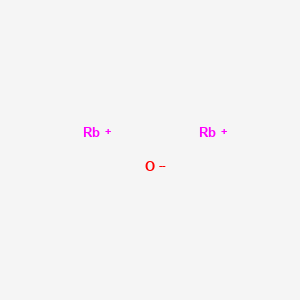
Molecular Formula: Rb₂O
Molecular Weight: 186.93
Content: As specified in product name.
SECTION 4. FIRST AID MEASURES
Eye Contact: Flush eyes with large amounts of water for fifteen minutes. Separate eyelids with fingers. If irritation persists, seek medical attention.
Skin Contact: Wash skin with soap and water. If irritation persists, seek medical attention.
Ingestion: Do not induce vomiting. Seek medical attention.
Inhalation: Move to a fresh air environment. Contact a physician if breathing becomes difficult.
SECTION 5. FIREFIGHTING MEASURES
Flash Point (ºC): Not Available
Explosion Limits: Not Available
Autoignition (ºC): Not Available
Extinguishing Media: Carbon dioxide, dry chemical powder, alcohol-resistant foam, or water spray
Protective Equipment: Wear self-contained respirator and fully protective impervious suit.
Specific Hazards: May emit hazardous fumes under fire conditions.
SECTION 6. ACCIDENTAL RELEASE MEASURES
Personal Protection: Wear a self-contained breathing apparatus, rubber boots and gloves, and disposable coveralls. Dispose of coveralls after use. Remove from ignition sources if safe to do so. Follow emergency response plan and contact proper authorities if needed. Keep unprotected persons away.
Environmental Protection: Keep spills out of sewers and bodies of water. Dike and contain the spill with inert material. Absorb on sand, vermiculite or diatomite. Transfer material to a container for disposal or recovery. Ventilate area and wash spill site after material pickup is complete.
SECTION 7. HANDLING AND STORAGE
Handling and Storage: Avoid breathing dust, vapor, mist or gas. Avoid contact with skin and eyes. Avoid prolonged or repeated exposure. Use only in a chemical fume hood. Open and handle container with care. Keep ignition sources away.
Store in a tightly closed container in a dry, well-ventilated place.
Sensitivities: Not Available
Storage Temperature (ºC): 15 to 30
SECTION 8. EXPOSURE CONTROLS/PERSONAL PROTECTION
Engineering Controls: Use product in a well ventilated area or under a fume hood. Use proper lab equipment while handling this product. Keep away from incompatible materials for possible risk of hazardous reaction.
Eye Protection: Wear appropriate protective eyeglass or chemical safety goggles. Make sure that there is an eyewash station in your vicinity.
Skin Protection: Wear impervious gloves and protective clothing.
Respiratory Protection: Use a NIOSH approved respirator when exposure limits are exceeded or if irritation or other symptoms are experienced.
Exposure Limits:
Country / Source / Type: Value
USA / ACGIH / TWA: Not Available
USA / OSHA / STEL: Not Available
USA / OSHA / PEL: Not Available
SECTION 9. PHYSICAL AND CHEMICAL PROPERTIES
Appearance: Crystalline powder or solid
Odor: Not Available
Odor Threshold: Not Available
Flash Point (ºC): Not Available
Autoignition (ºC): Not Available
UEL % by Volume: Not Available
LEL % by Volume: Not Available
Melting Point (ºC): 400
Boiling Point (ºC): Not Available
Evaporation Rate: Not Available
pH Value: Not Available
Density (g/cm3): 3.72
Refractive Index (n²ºD): Not Available
Viscosity: Not Available
Solubility in Water: Not Available
Solubility in Other: Not Available
Vapor Pressure (mmHg): Not Available
Vapor Density (Air=1): Not Available
SECTION 10. STABILITY AND REACTIVITY
Stability: Stable under normal temperatures and pressures.
Incompatibility: Strong oxidizing agents
Reactivity: Product may react with incompatible materials to release other hazardous substances.
Conditions to Avoid: Heat, flame, sparks, other ignition sources.
Hazardous Decomposition Products: Rubidium oxides
SECTION 11. TOXICOLOGICAL INFORMATION
RTECS Reference: Not Available
Target Organs: Not Available
Toxicity Data: Not Available
Carcinogenicity:
National Toxicology Program (NTP) listed: Not Available
International Agency for Research on Cancer (IARC) listed: Not Available
Potential Symptoms: Not Available
SECTION 12. ECOLOGICAL INFORMATION
Toxicity: Not Available
SECTION 13. DISPOSAL CONSIDERATIONS
Contact a licensed professional waste disposal service. Dispose in a manner consistent with federal, state and local environmental regulations.
SECTION 14. TRANSPORT INFORMATION
DOT Shipping Name: Corrosive Solid, N.O.S.
DOT UN Number: UN1759
DOT Hazard Class: Class 8
DOT Packing Group: PGII
IMDG Shipping Name: Corrosive Solid, N.O.S.
IMDG UN Number: UN1759
IMDG Hazard Class: Class 8
IMDG Packing Group: PGII
Marine Pollutant: No
IATA Shipping Name: Corrosive Solid, N.O.S.
IATA UN Number: UN1759
IATA Hazard Class: Class 8
IATA Packing Group: PGII
SECTION 15. REGULATORY INFORMATION
United States
Toxic Substance Control Act (TSCA) listed: Yes
Superfund Amendments and Reauthorization Act (SARA 302) listed: No
Superfund Amendments and Reauthorization Act (SARA 311/312) listed: No
Superfund Amendments and Reauthorization Act (SARA 313) listed: No
European Union
European Inventory of Existing Chemical Substances (EINECS): 241-993-2
Canada
Canadian Domestic Substances List (DSL) listed: Yes
Canadian Non-Domestic Substances List (NDSL) listed: No
SECTION 16. OTHER INFORMATION
Safety Data Sheet according to Regulation (EC) No. 1907/2006 (REACH). The above information is believed to be correct but does not purport to be all inclusive and shall be used only as a guide. The information in this document is based on the present state of our knowledge and is applicable to the product with regard to appropriate safety precautions. It does not represent any guarantee of the properties of the product. American Elements shall not be held liable for any damage resulting from handling or from contact with the above product. See reverse side of invoice or packing slip for additional terms and conditions of sale. COPYRIGHT 1997-2022 AMERICAN ELEMENTS. LICENSED GRANTED TO MAKE UNLIMITED PAPER COPIES FOR INTERNAL USE ONLY.


 Rubidium Oxide (Rb2O) Nanopowder or Nanoparticles, nanodots or nanocrystals are spherical or faceted high surface area oxide magnetic nanostructured particles. Nanoscale Rubidium Oxide Particles are typically 20-80 nanometers (nm) with specific surface area (SSA) in the 10 - 50 m2/g range and also available with an average particle size of 100 nm range with a specific surface area of approximately 7- 10 m2/g. Nano Rubidium Oxide Particles are also available in
 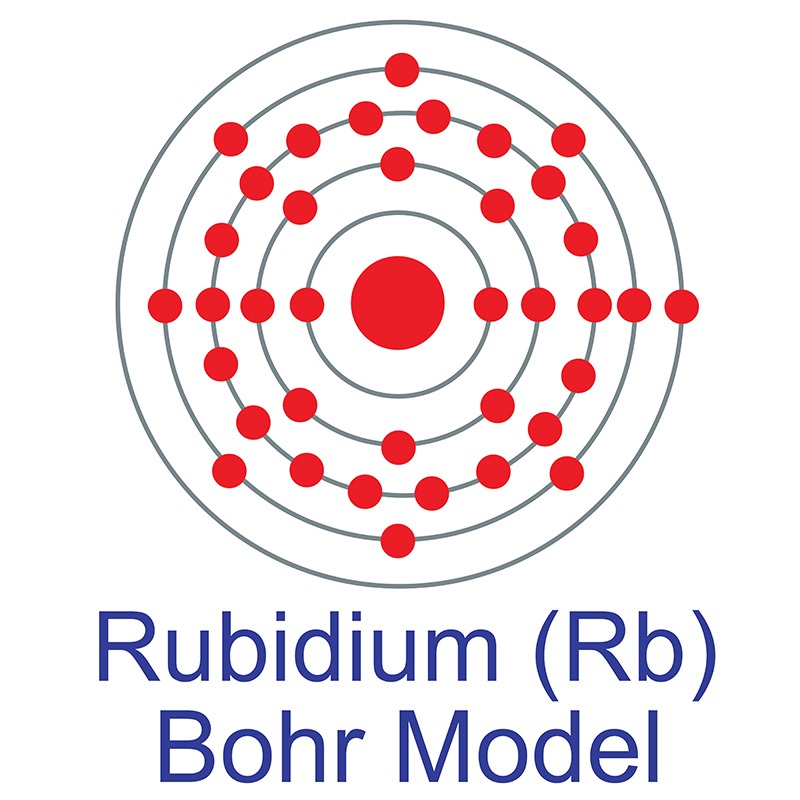 Rubidium is highly reactive, with properties similar to other Group 1 alkali