American Elements Logo and U.S. Registered Trademark
Rhodium Oxide Hydrate
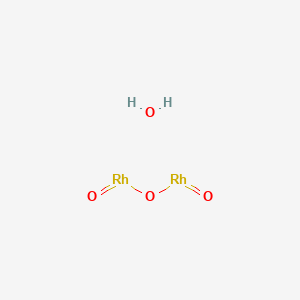
Rh2O3 • xH2O
123542-79-0
Product
Product Code
Order or Specifications
99% Rhodium Oxide Hydrate
RH-OX-02-HY
Contact American Elements
99.9% Rhodium Oxide Hydrate
RH-OX-03-HY
Contact American Elements
99.99% Rhodium Oxide Hydrate
RH-OX-04-HY
Contact American Elements
99.999% Rhodium Oxide Hydrate
RH-OX-05-HY
Contact American Elements
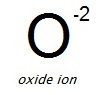
Rhodium Oxide Hydrate is a highly insoluble thermally stable Rhodium source suitable for glass, optic and ceramic applications. Oxide compounds are not conductive to electricity. However, certain perovskite structured oxides are electronically conductive finding application in the cathode of solid oxide fuel cells and oxygen generation systems. They are compounds containing at least one oxygen anion and one metallic cation. They are typically insoluble in aqueous solutions (water) and extremely stable making them useful in ceramic structures as simple as producing clay bowls to advanced electronics and in light weight structural components in aerospace and electrochemical applications such as fuel cells in which they exhibit ionic conductivity. Metal oxide compounds are basic anhydrides and can therefore react with acids and with strong reducing agents in redox reactions. Rhodium Oxide is also available in pellets, pieces, powder, sputtering targets, tablets, and nanopowder (from American Elements' nanoscale production facilities). See Nanotechnology for more nanotechnology applications information. Rhodium Oxide is generally immediately available in most volumes. Ultra high purity and high purity compositions improve both optical quality and usefulness as scientific standards. Nanoscale (See also Nanotechnology Information and Quantum Dots) elemental powders and suspensions, as alternative high surface area forms, may be considered. Additional technical, research and safety (MSDS) information is available.

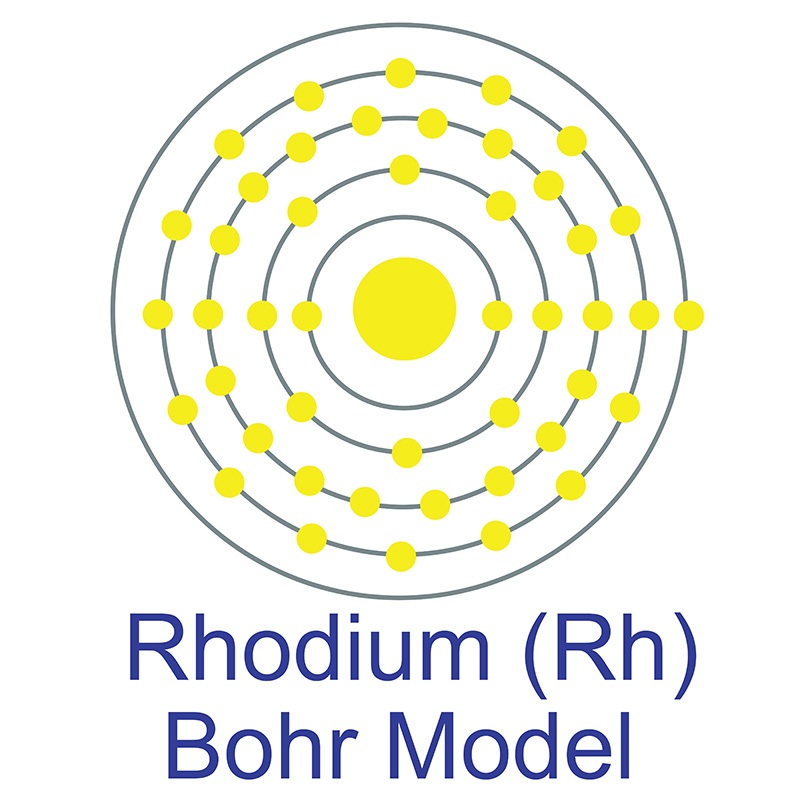
Rhodium is a Block D, Group 9, Period 5 element. The electronic configuration is [Kr] 4d8 5s1. In its elemental form rhodium's CAS number is 7440-16-6. The rhodium atom has a radius of 134.5.pm and it's Van der Waals radius is 200.pm. Rhodium is a member of the platinum group of metals. It has a higher melting point than platinum, but a lower density. It is alloyed with platinum and palladium in electrodes for spark plugs, advanced laboratory equipment and in thermocouples. Rhodium compounds also have catalytic uses in automotive catalytic converters. Rhodium is used as a plating metal in jewelry production to enhance the whiteness of white gold. Rhodium is available as metal and compounds with purities from 99% to 99.999% (ACS grade to ultra-high purity); metals in the form of foil, sputtering target, and rod, and compounds as submicron and nanopowder.

Formula CAS No. Appearance Molecular Weight
Rh2O3 • xH2O 123542-79-0 Black Powder 134.90
PRODUCT CATALOG Submicron & Nanopowder Tolling Ultra High Purity Sputtering Target Crystal Growth Rod, Plate, Powder, etc.
German   Korean   French   Japanese   Spanish   Chinese (Simplified)   Portuguese   Russian   Chinese (Taiwan)   Italian   Turkish   Polish   Dutch   Czech   Swedish   Hungarian   Danish   Hebrew

Production Catalog Available in 32 Countries
 
Periodic table of the elements science and academic information, elements and advanced materials data, scientific presentations and all pages, designs, concepts, logos, and color schemes herein are the copyrighted proprietary rights and intellectual property of American Elements. American Elements is a U.S. Registered Trademark. © 2001-2009. American Elements. All rights reserved.


Recent Research & Development for Rhodium

  • Water-soluble metal nanoparticles with PEG-tagged 15-membered azamacrocycles as stabilizers. Mejías N, Serra-Muns A, Pleixats R, Shafir A, Tristany M. Dalton Trans. 2009 Oct 7;(37):7748-55. Epub 2009 Jul 30. PMID: 19759949 [PubMed - in process]

  • Evidence for heterogeneous Sonogashira coupling of phenylacetylene and iodobenzene catalyzed by well defined rhodium nanoparticles. Kanuru VK, Humphrey SM, Kyffin JM, Jefferson DA, Burton JW, Armbrüster M, Lambert RM. Dalton Trans. 2009 Oct 7;(37):7602-5. Epub 2009 Jul 27. PMID: 19759929 [PubMed - in process]

  • Total synthesis of alkaloid (+/-)-g. B. 13 using a rh(i)-catalyzed ketone hydroarylation and late-stage pyridine reduction. Larson KK, Sarpong R. J Am Chem Soc. 2009 Sep 23;131(37):13244-5. PMID: 19754185 [PubMed - in process]

  • Thermodynamic Studies and Hydride Transfer Reactions from a Rhodium Complex to BX(3) Compounds. Mock MT, Potter RG, Camaioni DM, Li J, Dougherty WG, Kassel WS, Twamley B, Dubois DL. J Am Chem Soc. 2009 Sep 15. [Epub ahead of print] PMID: 19754124 [PubMed - as supplied by publisher]

  • Preparation of Multisubstituted Enamides via Rhodium-Catalyzed Carbozincation and Hydrozincation of Ynamides. Gourdet B, Rudkin ME, Watts CA, Lam HW. J Org Chem. 2009 Sep 15. [Epub ahead of print] PMID: 19754108 [PubMed - as supplied by publisher]

  • Asymmetric Transfer Hydrogenation of Ketones Catalyzed by Amino Acid Derived Rhodium Complexes: On the Origin of Enantioselectivity and Enantioswitchability. Ahlford K, Ekström J, Zaitsev AB, Ryberg P, Eriksson L, Adolfsson H. Chemistry. 2009 Sep 11. [Epub ahead of print] PMID: 19750526 [PubMed - as supplied by publisher]

  • A method for low volume and low Se concentration samples and application to paired cerebrospinal fluid and serum samples. Michalke B, Grill P, Berthele A. J Trace Elem Med Biol. 2009;23(4):243-50. Epub 2009 Aug 6. PMID: 19747619 [PubMed - in process]

  • A role for photoreceptors in retinal oedema and angiogenesis: an additional explanation for laser treatment? Foulds WS, Kaur C, Luu CD, Kek WK. Eye. 2009 Sep 11. [Epub ahead of print] PMID: 19745837 [PubMed - as supplied by publisher]

  • Thermodynamic trends in carbon-hydrogen bond activation in nitriles and chloroalkanes at rhodium. Evans ME, Li T, Vetter AJ, Rieth RD, Jones WD. J Org Chem. 2009 Sep 18;74(18):6907-14. PMID: 19743881 [PubMed - in process]

  • A fast ultrasound-assisted extraction procedure for trace elements determination in hair samples by ICP-MS for forensic analysis. Batista BL, Rodrigues JL, de Oliveira Souza VC, Barbosa F Jr. Forensic Sci Int. 2009 Sep 7. [Epub ahead of print] PMID: 19740615 [PubMed - as supplied by publisher]

  • Steric Tuning of the Amidomonophosphane-Rhodium(I) Catalyst in Asymmetric Addition of Arylboroxines to N-Phosphinoyl Aldimines. Hao X, Kuriyama M, Chen Q, Yamamoto Y, Yamada KI, Tomioka K. Org Lett. 2009 Sep 9. [Epub ahead of print] PMID: 19739616 [PubMed - as supplied by publisher]

  • High-throughput metal screening in pharmaceutical samples by ICP-MS with automated flow injection using a modified HPLC configuration. Tu Q, Wang T, Welch CJ. J Pharm Biomed Anal. 2009 Aug 15. [Epub ahead of print] PMID: 19733025 [PubMed - as supplied by publisher]

  • Rhodium-Catalyzed Ring-Opening Reactions of a 3-Aza-2-oxabicyclo[2.2.1]hept-5-ene with Arylboronic Acids. Machin BP, Ballantine M, Mandel J, Blanchard N, Tam W. J Org Chem. 2009 Sep 4. [Epub ahead of print] PMID: 19731959 [PubMed - as supplied by publisher]

  • Application of a Supramolecular-Ligand Library for the Automated Search for Catalysts for the Asymmetric Hydrogenation of Industrially Relevant Substrates. Meeuwissen J, Kuil M, van der Burg AM, Sandee AJ, Reek JN. Chemistry. 2009 Sep 3. [Epub ahead of print] PMID: 19731274 [PubMed - as supplied by publisher]

  • Sodium Tetraarylborates as Effective Nucleophiles in Rhodium/Diene-Catalyzed 1,4-Addition to beta,beta-Disubstituted alpha,beta-Unsaturated Ketones: Catalytic Asymmetric Construction of Quaternary Carbon Stereocenters. Shintani R, Tsutsumi Y, Nagaosa M, Nishimura T, Hayashi T. J Am Chem Soc. 2009 Sep 3. [Epub ahead of print] PMID: 19728707 [PubMed - as supplied by publisher]

  • Chiral amidophosphane-rhodium(i)-catalyzed asymmetric conjugate arylation of acyclic enones with arylboronic acids. Chen Q, Kuriyama M, Hao X, Soeta T, Yamamoto Y, Yamada K, Tomioka K. Chem Pharm Bull (Tokyo). 2009 Sep;57(9):1024-7. PMID: 19721271 [PubMed - in process]

  • Room-temperature rhodium-catalyzed asymmetric 1,4-addition of potassium trifluoro(organo)borates. Gendrineau T, Genet JP, Darses S. Org Lett. 2009 Aug 6;11(15):3486-9. PMID: 19719192 [PubMed - in process]

  • An Expedient Route to a Potent Gastrin/CCK-B Receptor Antagonist (+)-AG-041R. Sato S, Shibuya M, Kanoh N, Iwabuchi Y. J Org Chem. 2009 Aug 31. [Epub ahead of print] PMID: 19719158 [PubMed - as supplied by publisher]

  • Rhodium-catalyzed cross-coupling of organoboron compounds with vinyl acetate. Yu JY, Kuwano R. Angew Chem Int Ed Engl. 2009;48(39):7217-20. No abstract available. PMID: 19714694 [PubMed - in process]

  • Enantioselective rhodium-catalyzed [4+2+2] cycloaddition of dienyl isocyanates for the synthesis of bicyclic azocine rings. Yu RT, Friedman RK, Rovis T. J Am Chem Soc. 2009 Sep 23;131(37):13250-1. PMID: 19711950 [PubMed - in process]


American Elements Products can also be sourced at these sites:


electronics-ee.com