American Elements Logo and U.S. Registered Trademark


Ultra Dry Antimony Iodide
High Anhydrous SbI3
7790-44-5
Product Product Code Order or Specifications
(2N) 99% Ultra Dry Antimony Iodide SB-I-02-UD Contact American Elements
(3N) 99.9% Ultra Dry Antimony Iodide SB-I-03-UD Contact American Elements
(4N) 99.99% Ultra Dry Antimony Iodide SB-I-04-UD Contact American Elements
(5N) 99.999% Ultra Dry Antimony Iodide SB-I-05-UD Contact American Elements


CHEMICAL
IDENTIFICATION
Formula CAS No. PubChem
SID
PubChem CID MDL No. EC No IUPAC Name Beilstein
Re. No.
SMILES
Identifier
InChI
Identifier
InChI
Key
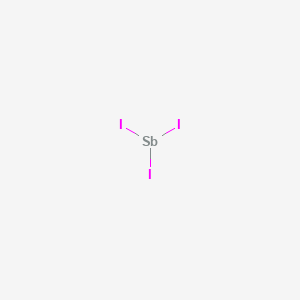
SbI3 7790-44-5 24864991 24630 MFCD00016322 232-205-8 triiodostibane N/A [Sb](I)(I)I InChI=1S/3HI.Sb/h3*1H;/q;;;+3/p-3 KWQLUUQBTAXYCB-UHFFFAOYSA-K

Compound Formula Mol. Wt. Appearance Density

Exact Mass

Monoisotopic Mass Charge MSDS
I3Sb 502.46 White Powder 4.92 g/cm3 501.617222 501.617222 0 Safety Data Sheet


Iodide Ion American Elements specializes in producing Antimony Iodide in an ultra dry form for use as a compound in semiconductors and other high purity applications. Ultra Dry Antimony Iodide is generally immediately available in most volumes. High purity, submicron and nanopowder forms may be considered. Iodide compounds are used in internal medicine. Treating an iodide with manganese dioxide and sulfuric acid sublimes the iodine.American Elements produces to many standard grades when applicable, including Mil Spec (military grade); ACS, Reagent and Technical Grade; Food, Agricultural and Pharmaceutical Grade; Optical Grade, USP and EP/BP (European Pharmacopoeia/British Pharmacopoeia)and follows applicable ASTM testing standards.Typical and custom packaging is available. Additional technical, research and safety (MSDS) information is available as is a Reference Calculator for converting relevant units of measurement.

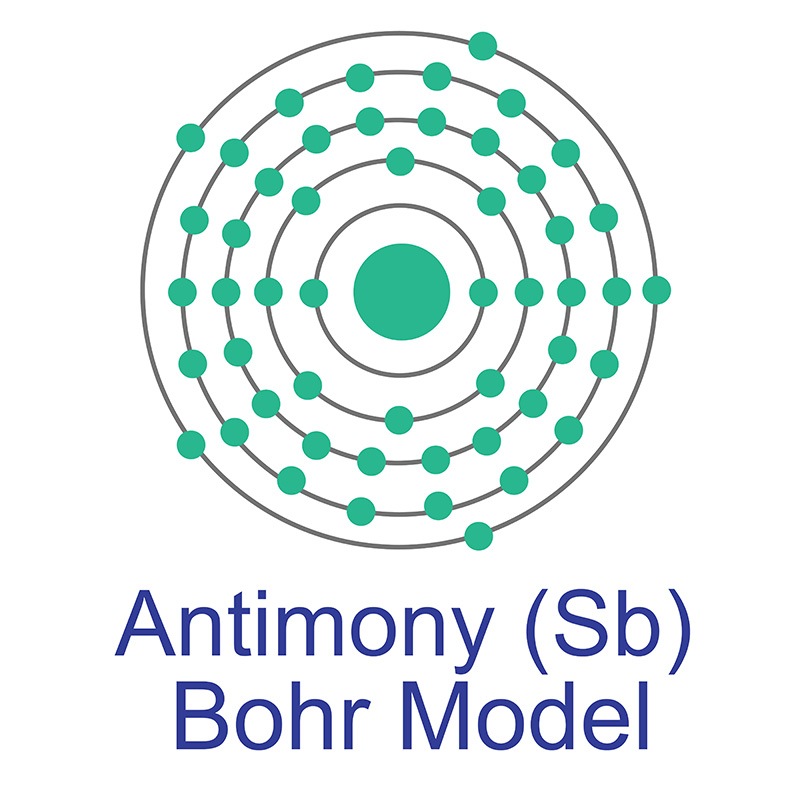
Antimony(Sb)atomic and molecular weight, atomic number and elemental symbolAntimony is a Block P, Group 15, Period 5 element. The number of electrons in each of Antimony's shells is 2, 8, 18, 18, 5 and its electronic configuration is [Kr] 4d10 5s2 5p3. In its elemental form antimony's CAS number is 7440-36-0. The antimony atom has a radius of 145.pm and it's Van der Waals radius is 200.pm. The chemical state of antimony affects the toxicity of the element and itsElemental Antimony compounds. Antimony is finding use in semiconductor technology for making infrared detectors, diodes and Hall-effect devices in crystalline structures, such as antimony telluride and gallium antimonide. Antimony is however a poor conductor of heat and electricity. It greatly increases the hardness and mechanical strength of lead.Antimony Bohr Model This has found applications in batteries, antifriction alloys, small arms and tracer bullets and cable sheathing. Antimony compounds are used in manufacturing flame-proofing compounds, paints, ceramic enamels, glass, and pottery glazes. Antimony is available as metal and compounds with purities from 99% to 99.9999% (ACS grade to ultra-high purity); metals in the form of foil, sputtering target, and rod, and compounds as submicron and nanopowder. See Antimony research below.

Iodine(I) atomic and molecular weight, atomic number and elemental symbol Iodine is a Block P, Group 17, Period 5 element. The number of electrons in each of Iodine's shells is 2, 8, 18, 18, 7 and its electronic configuration is [Kr] 4d10 5s2 5p5. In its elemental form iodine's CAS number is 7553-56-2. The iodine atom has a radius of 133.1.pm and it's Van der Waals radius is 198.pm. Iodine in large amounts is poisonous but in small doses is only slightly toxic. Iodine forms compounds with many elements, but is less active than the other halogens, which displace it from iodides. Iodine exhibits some metallic-like properties. It dissolves readily in chloroform, Iodine Bohr Modelcarbon tetrachloride, or carbonElemental Iodine disulfide to form purple solutions. It is only slightly soluble in water. Iodine compounds are important in organic chemistry and very useful in medicine. Potassium iodide finds use in photography. The deep blue color with starch solution is characteristic of the free element.Iodine is available in compounds with purities from 99% to 99.999% (ACS grade to ultra-high purity). See Iodine research below. Iodine it forms compounds with many elements, but is less active than the other halogens, which displace it from iodides. Iodine exhibits some metallic-like properties. It dissolves readily in chloroform, carbon tetrachloride, or carbon disulfide to form purple solutions. It is only slightly soluble in water. Iodine compounds are important in organic chemistry and very useful in medicine. Iodides, and thyroxine which contains iodine, are used internally in medicine. Potassium iodide finds use in photography. The deep blue color with starch solution is characteristic of the free element.Iodine is available in compounds with purities from 99% to 99.999% (ACS grade to ultra-high purity). See Iodine research below.

Have a Question? Ask a Chemical Engineer or Material Scientist   Request an MSDS or Certificate of Analysis

 
Toxicity
Safety & Handling
  Exclamation Mark-Acute Toxicity Environment-Hazardous to the aquatic environment        
Signal Word Hazard Statements Hazard Codes Risk Codes Safety Precautions RTECS No. Transport Information WGK Germany
Warning H302-H332-H411 Xn,N 20/22-51/53 61 N/A UN 3260 8/PG 2 2


Synonyms for Antimony(III) Iodide Include:


triiodostibane
Antimony triiodide


PACKAGING SPECIFICATIONS FOR BULK & RESEARCH QUANTITIES


Typical bulk packaging includes palletized plastic 5 gallon/25 kg. pails, fiber and steel drums to 1 ton super sacks in full container (FCL) or truck load (T/L) quantities. Research and sample quantities and hygroscopic, oxidizing or other air sensitive materials may be packaged under argon or vacuum. Shipping documentation includes a Certificate of Analysis and Material Safety Data Sheet (MSDS). Solutions are packaged in polypropylene, plastic or glass jars up to palletized 440 gallon liquid totes.


Show me more forms of Antimony
 
Customers for this product have also looked at:


Search by Material, Product Name, Product Code, CAS Number, Formula, Element, Anion, Form, EC Number, MDL Number or PubChem ID.
German   Korean   French   Japanese   Spanish   Chinese (Simplified)   Portuguese   Russian   Chinese (Taiwan)   Italian   Turkish   Polish   Dutch   Czech   Swedish   Hungarian   Danish   Hebrew

Production Catalog Available in 36 Countries & Languages


Recent Research & Development for Antimony

  • Synthesis of four different antimony(III) O,O'-dialkyldithiophosphates: Characterization by (31)P CP/MAS NMR, single-crystal X-ray diffraction, and adsorption at a stibnite surface (Sb(2)S(3)). Larsson AC, Ivanov MA, Gerasimenko AV, Ivanov AV. J Colloid Interface Sci. 2011 Nov 6. [Epub ahead of print] PMID: 22115160 [PubMed - as supplied by publisher]

  • Sensing of Aqueous Fluoride Anions by Cationic Stibine-Palladium Complexes. Wade CR, Ke IS, Gabbaï FP. Angew Chem Int Ed Engl. 2011 Nov 24. doi: 10.1002/anie.201106242. [Epub ahead of print] PMID: 22113959 [PubMed - as supplied by publisher]

  • Electrical characterization of n/p-type nickel silicide/silicon junctions by Sb segregation. Jun M, Park Y, Hyun Y, Choi SJ, Zyung T, Jang M. J Nanosci Nanotechnol. 2011 Aug;11(8):7339-42. PMID: 22103191 [PubMed - in process]

  • Hydride generation in-atomizer collection atomic absorption spectrometry for the determination of antimony in acetic acid leachates from pewter cups. Dessuy MB, Kratzer J, Vale MG, Welz B, Dedina J. Talanta. 2011 Dec 15;87:255-61. Epub 2011 Oct 17. PMID: 22099676 [PubMed - in process]

  • Electrical and optical performance of transparent conducting oxide films deposited by electrostatic spray assisted vapour deposition. Hou X, Choy KL, Liu JP. J Nanosci Nanotechnol. 2011 Sep;11(9):8114-9. PMID: 22097539 [PubMed - in process]

  • Biomolecule-assisted green route to Sb2S3 crystals with three-dimensional dandelionlike patterns. Xiang W, Ji G, Wei J, Yang Y, Yuan H, Liu X. J Nanosci Nanotechnol. 2011 Sep;11(9):7820-32. PMID: 22097493 [PubMed - in process]

  • Use of antimony in the treatment of leishmaniasis: current status and future directions. Haldar AK, Sen P, Roy S. Mol Biol Int. 2011;2011:571242. Epub 2011 Jun 8. PMID: 22091408 [PubMed - in process]

  • Comparison between one day and two days protocols for sentinel node mapping of breast cancer patients. Ali J, Alireza R, Mostafa M, Naser FM, Bahram M, Ramin S. Hell J Nucl Med. 2011 Sep;14(3):313-5. PMID: 22087458 [PubMed - in process]

  • Identification of Gunshot Residues in Fabric Targets Using Sector Field Inductively Coupled Plasma Mass Spectrometry Technique and Ternary Graphs* Freitas JC, Sarkis JE, Neto ON, Viebig SB. J Forensic Sci. 2011 Nov 10. doi: 10.1111/j.1556-4029.2011.01956.x. [Epub ahead of print] PMID: 22074259 [PubMed - as supplied by publisher]

  • MAP Kinase1 of Leishmania Donovani: Down Regulation Associates With Antimony Resistance in Field Isolates. Ashutosh, Garg M, Sundar S, Duncan R, Nakhasi HL, Goyal N. Antimicrob Agents Chemother. 2011 Nov 7. [Epub ahead of print] PMID: 22064540 [PubMed - as supplied by publisher]

  • Use of carbon nanotubes and electrothermal atomic absorption spectrometry for the speciation of very low amounts of arsenic and antimony in waters. López-García I, Rivas RE, Hernández-Córdoba M. Talanta. 2011 Oct 30;86:52-7. Epub 2011 Aug 27. PMID: 22063510 [PubMed - in process]

  • Frequency of use controls chemical leaching from drinking-water containers subject to disinfection. Andra SS, Makris KC, Shine JP. Water Res. 2011 Dec 15;45(20):6677-87. Epub 2011 Oct 12. PMID: 22040714 [PubMed - in process]

  • Antimony leaching from MSWI bottom ash: Modelling of the effect of pH and carbonation. Cornelis G, Gerven TV, Vandecasteele C. Waste Manag. 2011 Oct 27. [Epub ahead of print] PMID: 22035902 [PubMed - as supplied by publisher]

  • Discovery of Safe and Orally Effective 4-Aminoquinaldine Analogues as Apoptotic Inducers with Activity against Experimental Visceral Leishmaniasis. Palit P, Hazra A, Maity A, Vijayan RS, Manoharan P, Banerjee S, Mondal NB, Ghoshal N, Ali N. Antimicrob Agents Chemother. 2011 Oct 24. [Epub ahead of print] PMID: 22024817 [PubMed - as supplied by publisher]

  • Bone marrow leishmaniasis: a review of situation in Thailand. Wiwanitkit V. Asian Pac J Trop Med. 2011 Oct;4(10):757-9. PMID: 22014727 [PubMed - in process]

  • Spectroelectrochemistry of cytochrome c and azurin immobilized in nanoporous antimony-doped tin oxide. Kwan P, Schmitt D, Volosin AM, McIntosh CL, Seo DK, Jones AK. Chem Commun (Camb). 2011 Dec 7;47(45):12367-9. Epub 2011 Oct 20. PMID: 22011849 [PubMed - in process]

  • Structural diversity for phosphine complexes of stibenium and stibinidenium cations. Chitnis SS, Peters B, Conrad E, Burford N, McDonald R, Ferguson MJ. Chem Commun (Camb). 2011 Nov 8;47(45):12331-3. Epub 2011 Oct 20. PMID: 22011846 [PubMed - in process]

  • Pressure-induced disordered substitution alloy in sb(2)te(3). Zhao J, Liu H, Ehm L, Chen Z, Sinogeikin S, Zhao Y, Gu G. Inorg Chem. 2011 Nov 21;50(22):11291-3. Epub 2011 Oct 18. PMID: 22007692 [PubMed - in process]

  • Electrospun antimony doped tin oxide (ATO) nanofibers as a versatile conducting matrix. Ostermann R, Zieba R, Rudolph M, Schlettwein D, Smarsly BM. Chem Commun (Camb). 2011 Nov 28;47(44):12119-21. Epub 2011 Oct 14. PMID: 22003493 [PubMed - in process]

  • Multi-metal(loid) methylation in methanoarchaea is linked to central intermediates of methanogenesis. Thomas F, Diaz-Bone RA, Wuerfel O, Huber B, Weidenbach K, Schmitz RA, Hensel R. Appl Environ Microbiol. 2011 Oct 14. [Epub ahead of print] PMID: 22003009 [PubMed - as supplied by publisher]
Recent Research & Development for Iodide

  • The role of striatal dopamine D2 receptors in the occurrence of extrapyramidal side effects: Iodine-123-iodobenzamide single photon emission computed tomography study. Corripio I, Ferreira A, Portella MJ, Pérez V, Escartí MJ, Del Valle Camacho M, Sauras RB, Alonso A, Grasa EM, Carrió I, Catafau AM, Alvarez E. Psychiatry Res. 2012 Jan 24. [Epub ahead of print] PMID: 22281201 [PubMed - as supplied by publisher]

  • Adjuvant therapy options following curative treatment of hepatocellular carcinoma: A systematic review of randomized trials. Zhong JH, Li H, Li LQ, You XM, Zhang Y, Zhao YN, Liu JY, Xiang BD, Wu GB. Eur J Surg Oncol. 2012 Jan 24. [Epub ahead of print] PMID: 22281155 [PubMed - as supplied by publisher]

  • Mercury and thyroid autoantibodies in U.S. women, NHANES 2007-2008. Gallagher CM, Meliker JR. Environ Int. 2012 Apr;40:39-43. Epub 2011 Dec 27. PMID: 22280926 [PubMed - in process]

  • Dietary Iodine and Thyroid Cancer Risk in French Polynesia: A Case-Control Study. Cléro E, Doyon F, Chungue V, Rachédi F, Boissin JL, Sebbag J, Shan L, Bost-Bezeaud F, Petitdidier P, Dewailly E, Rubino C, de Vathaire F. Thyroid. 2012 Jan 26. [Epub ahead of print] PMID: 22280227 [PubMed - as supplied by publisher]

  • Highly Enantioselective Copper-Catalyzed Alkylation of ß-Ketoesters and Subsequent Cyclization to Spirolactones/ bi-Spirolactones. Deng QH, Wadepohl H, Gade LH. J Am Chem Soc. 2012 Jan 26. [Epub ahead of print] PMID: 22280225 [PubMed - as supplied by publisher]

  • Mediastinal goiter diagnosed by functional imaging. Michels G, Dietlein M, Kobe C, Pfister R. Libyan J Med. 2012;7. doi: 10.3402/ljm.v7i0.15693. Epub 2012 Jan 19. PMID: 22279494 [PubMed - in process]

  • An Approach to the Regioselective Diamination of Conjugated Di- and Trienes. Lishchynskyi A, Muñiz K. Chemistry. 2012 Jan 25. doi: 10.1002/chem.201103435. [Epub ahead of print] PMID: 22279008 [PubMed - as supplied by publisher]

  • Highly Stereoselective Metal-Free Oxyaminations Using Chiral Hypervalent Iodine Reagents. Farid U, Wirth T. Angew Chem Int Ed Engl. 2012 Jan 25. doi: 10.1002/anie.201107703. [Epub ahead of print] PMID: 22278888 [PubMed - as supplied by publisher]

  • Scintigraphic Detection of Benign Ovarian Teratoma after Total Thyroidectomy and Radioactive Iodine for Differentiated Thyroid Cancer. van Wijk JP, Broekhuizen-de Gast HS, Smits AJ, Schipper ME, Zelissen PM. J Clin Endocrinol Metab. 2012 Jan 25. [Epub ahead of print] PMID: 22278431 [PubMed - as supplied by publisher]

  • An Operational Study on Implementation of Mobile Primary Healthcare Services for Seasonal Migratory Farmworkers, Turkey. Simsek Z, Koruk I, Doni NY. Matern Child Health J. 2012 Jan 26. [Epub ahead of print] PMID: 22278354 [PubMed - as supplied by publisher]

  • BMI, Diet and Female Reproductive Factors as Risks for Thyroid Cancer: A Systematic Review. Peterson E, De P, Nuttall R. PLoS One. 2012;7(1):e29177. Epub 2012 Jan 19. PMID: 22276106 [PubMed - in process]

  • Report on a cryotherapy service for women with cervical intraepithelial neoplasia in a district hospital in western Kenya. Lewis K, Sellors J, Dawa A, Tsu V, Kidula N. Afr Health Sci. 2011 Sep;11(3):370-6. PMID: 22275926 [PubMed - in process]

  • A comparison of triage methods for Kenyan women who screen positive for cervical intraepithelial neoplasia by visual inspection of the cervix with acetic acid. Lewis K, Tsu V, Dawa A, Kidula N, Chami I, Sellors J. Afr Health Sci. 2011 Sep;11(3):362-9. PMID: 22275925 [PubMed - in process]

  • Coupled simulation of chemical lasers based on intracavity partially coherent light model and 3D CFD model. Wu K, Huai Y, Jia S, Jin Y. Opt Express. 2011 Dec 19;19(27):26295-307. doi: 10.1364/OE.19.026295. PMID: 22274214 [PubMed - in process]

  • Surgical Treatment for Thyrotoxic Hypokalemic Periodic Paralysis: Case Report. Lin YC, Wu CW, Chen HC, Chen HY, Lu IC, Tsai CJ, Kuo WR, Chiang FY. World J Surg Oncol. 2012 Jan 24;10(1):21. [Epub ahead of print] PMID: 22273473 [PubMed - as supplied by publisher]

  • Hofmann-Type Rearrangement of Imides by in Situ Generation of Imide-Hypervalent Iodines(III) from Iodoarenes. Moriyama K, Ishida K, Togo H. Org Lett. 2012 Jan 24. [Epub ahead of print] PMID: 22273472 [PubMed - as supplied by publisher]

  • Recent advances on radionuclide labeled hypoxia-imaging agents. Li Z, Chu T. Curr Pharm Des. 2012 Jan 17. [Epub ahead of print] PMID: 22272826 [PubMed - as supplied by publisher]

  • Predictive modelling of interventions to improve iodine intake in New Zealand. Schiess S, Cressey PJ, Thomson BM. Public Health Nutr. 2012 Jan 25:1-9. [Epub ahead of print] PMID: 22272731 [PubMed - as supplied by publisher]

  • Goiter prevalence and urinary iodine levels. Ozsoylu S. Turk J Pediatr. 2011 Sep-Oct;53(5):595. No abstract available. PMID: 22272468 [PubMed - in process]

  • Collaboration to optimize dietary intakes of salt and iodine: a critical but overlooked public health issue. Campbell N, Dary O, Cappuccio FP, Neufeld LM, Harding KB, Zimmermann MB. Bull World Health Organ. 2012 Jan 1;90(1):73-4. No abstract available. PMID: 22271970 [PubMed - in process]


Aeromat 2012 Sponsor
Proud sponsors of Aeromat 2012. Please join us and our customers & co-sponsors Boeing and ATI on June 18-20, 2012
in Charlotte, North Carolina

PRODUCT CATALOG Iodide Products News Foil Submicron & Nanopowder Tolling Ultra High Purity Sputtering Target Crystal Growth Rod, Plate, Powder, etc. Home

  Print this Page
Periodic table of the elements science and academic information, elements and advanced materials data, scientific presentations and all pages, designs, concepts, logos, and color schemes herein are the copyrighted proprietary rights and intellectual property of American Elements. American Elements is a U.S. Registered Trademark. © 1998-2012. American Elements. All rights reserved.
Learn Six Sigma


American Elements is a copyrighted U.S. Trademark. All rights reserved.