SECTION 1. IDENTIFICATION
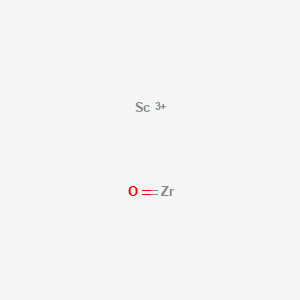
Product Name: Scandia Stabilized Zirconium Oxide
Product Number: All applicable American Elements product codes, e.g. ZRO-SC10-01-P
, ZRO-SC06-01-P
CAS #: 151575-30-3
Relevant identified uses of the substance: Scientific research and development
Supplier details:
American Elements
10884 Weyburn Ave.
Los Angeles, CA 90024
Tel: +1 310-208-0551
Fax: +1 310-208-0351
Emergency telephone number:
Domestic, North America: +1 800-424-9300
International: +1 703-527-3887
SECTION 2. HAZARDS IDENTIFICATION
2.1 Classification of the substance or mixture
Not a hazardous substance or mixture.
2.2 GHS Label elements, including precautionary statements
Not a hazardous substance or mixture.
2.3 Hazards not otherwise classified (HNOC) or not covered by GHS - none
SECTION 3. COMPOSITION/INFORMATION ON INGREDIENTS
3.2 Mixtures
Synonyms : Scandia-stabilized zirconia, Scandium zirconium oxide, ScSZ, Sc6SZ
Hazardous components
Component Classification Concentration
Zirconium dioxide
CAS-No.
EC-No.
1314-23-4
215-227-2
>= 90 - <= 100
%
Hafnium dioxide
CAS-No.
EC-No.
12055-23-1
235-013-2
>= 1 - < 5 %
Aluminum oxide
CAS-No. 1344-28-1 >= 1 - < 5 %
EC-No.
215-691-6
SECTION 4. FIRST AID MEASURES
4.1 Description of first aid measures
General advice
Move out of dangerous area.
If inhaled
If breathed in, move person into fresh air. If not breathing, give artificial respiration.
In case of skin contact
Wash off with soap and plenty of water.
In case of eye contact
Flush eyes with water as a precaution.
If swallowed
Never give anything by mouth to an unconscious person. Rinse mouth with water.
4.2 Most important symptoms and effects, both acute and delayed
The most important known symptoms and effects are described in the labelling (see section 2.2) and/or in section 11
4.3 Indication of any immediate medical attention and special treatment needed
No data available
SECTION 5. FIREFIGHTING MEASURES
5.1 Extinguishing media
Suitable extinguishing media
Use water spray, alcohol-resistant foam, dry chemical or carbon dioxide.
5.2 Special hazards arising from the substance or mixture
No data available
5.3 Advice for firefighters
Wear self-contained breathing apparatus for firefighting if necessary.
5.4 Further information
No data available
SECTION 6. ACCIDENTAL RELEASE MEASURES
6.1 Personal precautions, protective equipment and emergency procedures
Avoid dust formation. Avoid breathing Vapors, mist or gas.
For personal protection see section 8.
6.2 Environmental precautions
No special environmental precautions required.
6.3 Methods and materials for containment and cleaning up
Sweep up and shovel. Keep in suitable, closed containers for disposal.
6.4 Reference to other sections
For disposal see section 13.
SECTION 7. HANDLING AND STORAGE
7.1 Precautions for safe handling
Further processing of solid materials may result in the formation of combustible dusts. The potential for combustible
dust formation should be taken into consideration before additional processing occurs.
Provide appropriate exhaust ventilation at places where dust is formed.
For precautions see section 2.2.
7.2 Conditions for safe storage, including any incompatibilities
Keep container tightly closed in a dry and well-ventilated place.
Hygroscopic. Keep in a dry place.
Storage class (TRGS 510): Non Combustible Solids
7.3 Specific end use(s)
Apart from the uses mentioned in section 1.2 no other specific uses are stipulated
SECTION 8. EXPOSURE CONTROLS/PERSONAL PROTECTION
8.1 Control parameters
Components with workplace control parameters
Component CAS-No. Value Control
parameters
Basis
Zirconium dioxide 1314-23-4 TWA 5.000000
mg/m3
USA. Occupational Exposure Limits
(OSHA) - Table Z-1 Limits for Air
Contaminants
TWA 5.000000
mg/m3
USA. Occupational Exposure Limits
(OSHA) - Table Z-1 Limits for Air
Contaminants
TWA 5.000000
mg/m3
USA. ACGIH Threshold Limit Values
(TLV)
Remarks Not classifiable as a human carcinogen
STEL 10.000000
mg/m3
USA. ACGIH Threshold Limit Values
(TLV)
Not classifiable as a human carcinogen
TWA 5.000000
mg/m3
USA. NIOSH Recommended
Exposure Limits
ST 10.000000
mg/m3
USA. NIOSH Recommended
Exposure Limits
TWA 5 mg/m3 USA. Occupational Exposure Limits
(OSHA) - Table Z-1 Limits for Air
Contaminants
TWA 5 mg/m3 USA. ACGIH Threshold Limit Values
(TLV)
Not classifiable as a human carcinogen
STEL 10 mg/m3 USA. ACGIH Threshold Limit Values
(TLV)
Not classifiable as a human carcinogen
TWA 5 mg/m3 USA. NIOSH Recommended
Exposure Limits
ST 10 mg/m3 USA. NIOSH Recommended
Exposure Limits
PEL 5 mg/m3 California permissible exposure
limits for chemical contaminants
(Title 8, Article 107)
STEL 10 mg/m3 California permissible exposure
limits for chemical contaminants
(Title 8, Article 107)
Hafnium dioxide 12055-23-1 TWA 0.500000
mg/m3
USA. ACGIH Threshold Limit Values
(TLV)
Upper Respiratory Tract irritation
Eye irritation
Liver damage
TWA 0.500000
mg/m3
USA. NIOSH Recommended
Exposure Limits
TWA 0.5 mg/m3 USA. ACGIH Threshold Limit Values
(TLV)
Upper Respiratory Tract irritation
Eye irritation
Liver damage
TWA 0.5 mg/m3 USA. NIOSH Recommended
Exposure Limits
alpha-Alumina is the main component of technical grade alumina.
Corundum is natural Al2O3. Emery is an impure crystalline variety of
Al2O3.
See Appendix D - Substances with No Established RELs
Aluminum oxide 1344-28-1 TWA 15.000000
mg/m3
USA. Occupational Exposure Limits
(OSHA) - Table Z-1 Limits for Air
Contaminants
TWA 5.000000
mg/m3
USA. Occupational Exposure Limits
(OSHA) - Table Z-1 Limits for Air
Contaminants
TWA 15.000000
mg/m3
USA. Occupational Exposure Limits
(OSHA) - Table Z-1 Limits for Air
Contaminants
TWA 5.000000
mg/m3
USA. Occupational Exposure Limits
(OSHA) - Table Z-1 Limits for Air
Contaminants
TWA 1.000000
mg/m3
USA. ACGIH Threshold Limit Values
(TLV)
Lower Respiratory Tract irritation
Pneumoconiosis
Neurotoxicity
Not classifiable as a human carcinogen
varies
TWA 1.000000
mg/m3
USA. ACGIH Threshold Limit Values
(TLV)
Lower Respiratory Tract irritation
Pneumoconiosis
Neurotoxicity
Not classifiable as a human carcinogen
varies
TWA 1 mg/m3 USA. ACGIH Threshold Limit Values
(TLV)
Lower Respiratory Tract irritation
Pneumoconiosis
Neurotoxicity
Not classifiable as a human carcinogen
varies
PEL 10 mg/m3 California permissible exposure
limits for chemical contaminants
(Title 8, Article 107)
PEL 5 mg/m3 California permissible exposure
limits for chemical contaminants
(Title 8, Article 107)
Appropriate engineering controls
General industrial hygiene practice.
Personal protective equipment
Eye/face protection
Use equipment for eye protection tested and approved under appropriate government standards such as
NIOSH (US) or EN 166(EU).
Skin protection
Handle with gloves. Gloves must be inspected prior to use. Use proper glove removal technique (without
touching glove's outer surface) to avoid skin contact with this product. Dispose of contaminated gloves after
use in accordance with applicable laws and good laboratory practices. Wash and dry hands.
Body Protection
Choose body protection in relation to its type, to the concentration and amount of dangerous substances, and
to the specific work-place., The type of protective equipment must be selected according to the concentration
and amount of the dangerous substance at the specific workplace.
Respiratory protection
Respiratory protection is not required. Where protection from nuisance levels of dusts are desired, use type
N95 (US) or type P1 (EN 143) dust masks. Use respirators and components tested and approved under
appropriate government standards such as NIOSH (US) or CEN (EU).
Control of environmental exposure
No special environmental precautions required.
SECTION 9. PHYSICAL AND CHEMICAL PROPERTIES
9.1 Information on basic physical and chemical properties
a) Appearance Form: powder
b) Odor No data available
c) Odor Threshold No data available
d) pH No data available
e) Melting point/freezing
point
No data available
f) Initial boiling point and
boiling range
No data available
g) Flash point No data available
h) Evaporation rate No data available
i) Flammability (solid, gas) No data available
j) Upper/lower
flammability or
explosive limits
No data available
k) Vapor pressure No data available
l) Vapor density No data available
m) Relative density No data available
n) Water solubility No data available
o) Partition coefficient: noctanol/
water
No data available
p) Auto-ignition
temperature
No data available
q) Decomposition
temperature
No data available
r) Viscosity No data available
s) Explosive properties No data available
t) Oxidizing properties No data available
9.2 Other safety information
No data available
SECTION 10. STABILITY AND REACTIVITY
10.1 Reactivity
No data available
10.2 Chemical stability
Stable under recommended storage conditions.
10.3 Possibility of hazardous reactions
No data available
10.4 Conditions to avoid
No data available
10.5 Incompatible materials
No data available
10.6 Hazardous decomposition products
Other decomposition products - No data available
Hazardous decomposition products formed under fire conditions. - Aluminum oxide, Zirconium oxides, Scandium oxide,
Hafnium oxide
In the event of fire: see section 5
SECTION 11. TOXICOLOGICAL INFORMATION
11.1 Information on toxicological effects
Acute toxicity
No data available
Inhalation: No data available
Dermal: No data available
No data available
Skin corrosion/irritation
No data available
Serious eye damage/eye irritation
No data available
Respiratory or skin sensitisation
No data available
Germ cell mutagenicity
No data available
Carcinogenicity
IARC: No component of this product present at levels greater than or equal to 0.1% is identified as
probable, possible or confirmed human carcinogen by IARC.
NTP: No component of this product present at levels greater than or equal to 0.1% is identified as a
known or anticipated carcinogen by NTP.
OSHA: No component of this product present at levels greater than or equal to 0.1% is identified as a
carcinogen or potential carcinogen by OSHA.
Reproductive toxicity
No data available
No data available
Specific target organ toxicity - single exposure
No data available
Specific target organ toxicity - repeated exposure
No data available
Aspiration hazard
No data available
Additional Information
RTECS: Not available
To the best of our knowledge, the chemical, physical, and toxicological properties have not been thoroughly
investigated.
Liver - Irregularities - Based on Human Evidence
SECTION 12. ECOLOGICAL INFORMATION
12.1 Toxicity
No data available
12.2 Persistence and degradability
No data available
12.3 Bioaccumulative potential
No data available
12.4 Mobility in soil
No data available
12.5 Results of PBT and vPvB assessment
PBT/vPvB assessment not available as chemical safety assessment not required/not conducted
12.6 Other adverse effects
No data available
SECTION 13. DISPOSAL CONSIDERATIONS
13.1 Waste treatment methods
Product
Offer surplus and non-recyclable solutions to a licensed disposal company. Contact a licensed professional waste
disposal service to dispose of this material.
Contaminated packaging
Dispose of as unused product.
SECTION 14. TRANSPORT INFORMATION
DOT (US)
Not dangerous goods
IMDG
Not dangerous goods
IATA
Not dangerous goods
SECTION 15. REGULATORY INFORMATION
SARA 302 Components
No chemicals in this material are subject to the reporting requirements of SARA Title III, Section 302.
SARA 313 Components
The following components are subject to reporting levels established by SARA Title III, Section 313:
Aluminum oxide
CAS-No.
1344-28-1
Revision Date
1994-04-01
SARA 311/312 Hazards
Chronic Health Hazard
Massachusetts Right To Know Components
Zirconium dioxide
CAS-No.
1314-23-4
Revision Date
1993-04-24
Aluminum oxide 1344-28-1 1994-04-01
Pennsylvania Right To Know Components
Zirconium dioxide
CAS-No.
1314-23-4
Revision Date
1993-04-24
Scandium oxide 12060-08-1
Aluminum oxide 1344-28-1 1994-04-01
New Jersey Right To Know Components
Zirconium dioxide
CAS-No.
1314-23-4
Revision Date
1993-04-24
Scandium oxide 12060-08-1
Hafnium dioxide 12055-23-1
Aluminum oxide 1344-28-1 1994-04-01
California Prop. 65 Components
This product does not contain any chemicals known to State of California to cause cancer, birth defects, or any other
reproductive harm.
SECTION 16. OTHER INFORMATION
Safety Data Sheet according to Regulation (EC) No. 1907/2006 (REACH). The above information is believed to be correct but does not purport to be all inclusive and shall be used only as a guide. The information in this document is based on the present state of our knowledge and is applicable to the product with regard to appropriate safety precautions. It does not represent any guarantee of the properties of the product. American Elements shall not be held liable for any damage resulting from handling or from contact with the above product. See reverse side of invoice or packing slip for additional terms and conditions of sale. COPYRIGHT 1997-2022 AMERICAN ELEMENTS. LICENSED GRANTED TO MAKE UNLIMITED PAPER COPIES FOR INTERNAL USE ONLY.
 levels of
 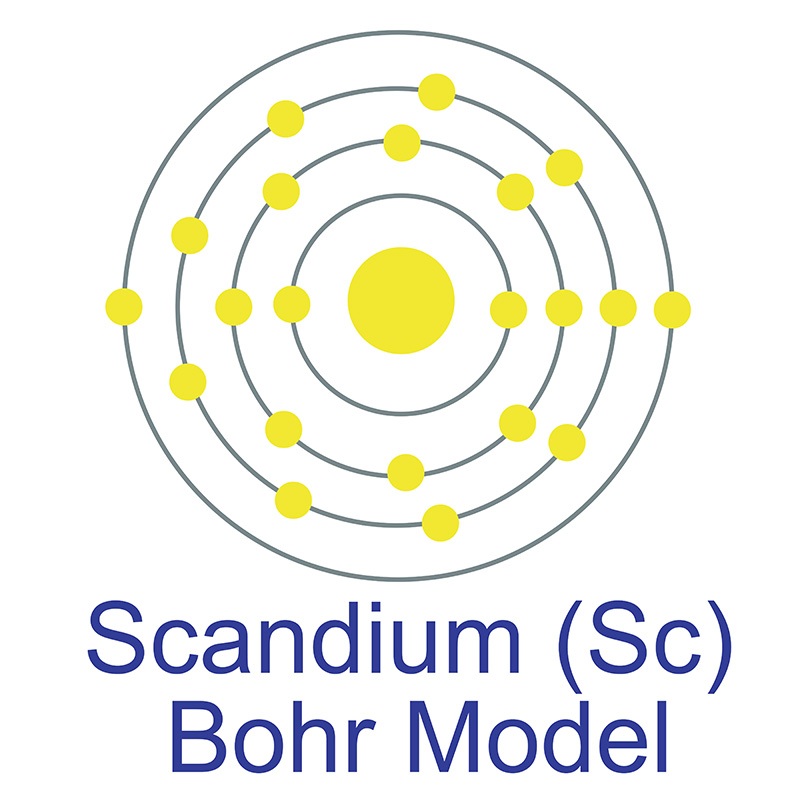 The scandium atom has a radius of 162 pm and a Van der Waals radius of 216 pm.Scandium was predicted by Dmitri Mendeleev in 1871 and actually discovered and isolated by Lars Nilson in 1879. One of the transition metals, scandium has a silvery-white appearance in its elemental form which oxidizes to yellow or pinkish upon contact with air.
  It is occasionally included in the classification of the rare earth elements. Scandium is found in concentrated amounts in the minerals euxenite, gadolinite and thortveitite however, due to the difficulties in the preparation of metallic scandium, global trade of the pure metal is very limited. The origin of the name scandium comes from the Latin word 'scandia' meaning Scandinavia.
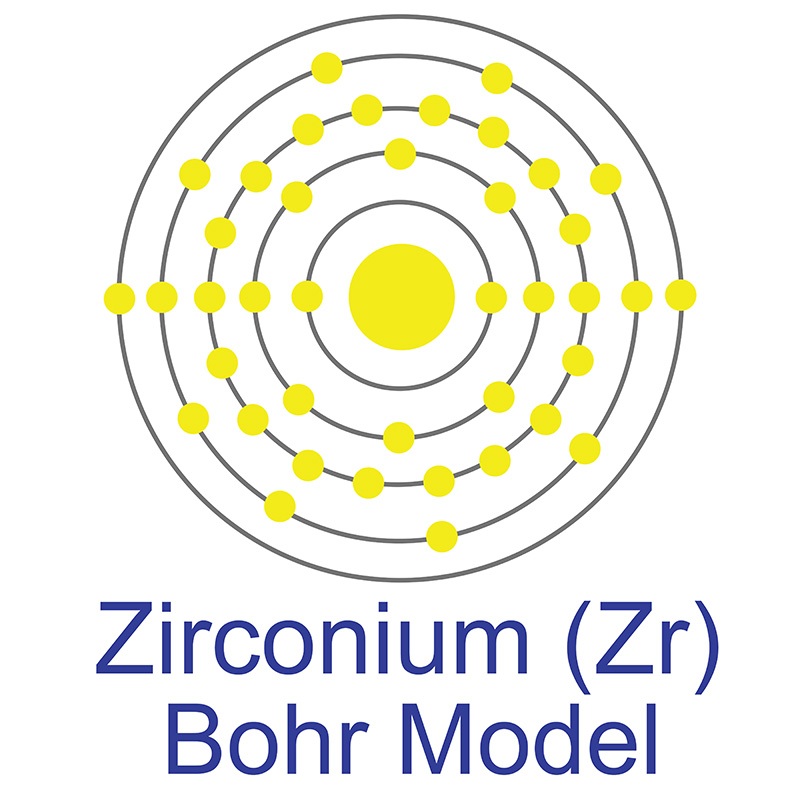 The number of electrons in each of Zirconium's shells is 2, 8, 18, 10, 2 and its electron configuration is [Kr]4d2 5s2. The zirconium atom has a radius of 160 pm and a Van der Waals radius of 186 pm. Zirconium was discovered by Martin Heinrich Klaproth in 1789 and first isolated by Jöns Jakob Berzelius in 1824. In its elemental form, zirconium has a silvery white appearance that is similar to titanium. Zirconium's principal mineral is zircon (zirconium
  Zirconium is commercially produced as a byproduct of