American Elements produces to many standard grades when applicable, including Mil Spec (military grade); ACS, Reagent and Technical Grade; Food, Agricultural and Pharmaceutical Grade; Optical Grade, USP and EP/BP (European Pharmacopeia/British Pharmacopeia) and follows applicable ASTM testing standards.See safety data and research below and pricing/lead time above. American Elements specializes in producing high purity Selenium Phosphide Sputtering targets with the highest possible density and smallest possible average grain sizes for use in semiconductor, chemical vapor deposition (CVD) and physical vapor deposition (PVD) display and optical applications. Our standard Sputtering Targets for thin film are available monoblock or bonded with dimensions and configurations up to 820 mm with hole drill locations and threading, beveling, grooves and backing designed to work with both older sputtering devises as well as the latest process equipment, such as large area coating for solar energy or fuel cells and flip-chip applications. Research sized targets are also produced as well as custom sizes and alloys. All targets are analyzed using best demonstrated techniques including X-Ray Fluorescence (XRF), Glow Discharge Mass Spectrometry (GDMS), and Inductively Coupled Plasma (ICP). "Sputtering" allows for thin film deposition of an ultra high purity sputtering metallic or oxide material onto another solid substrate by the controlled removal and conversion of the target material into a directed gaseous/plasma phase through ionic bombardment. "Sputtering" allows for thin film deposition of an ultra high purity sputtering metallic or oxide material onto another solid substrate by the controlled removal and conversion of the target material into a directed gaseous/plasma phase through ionic bombardment. We can also provide targets outside this range in addition to just about any size rectangular, annular, or oval target. Materials are produced using crystallization, solid state and other ultra high purification processes such as sublimation. American Elements specializes in producing custom compositions for commercial and research applications and for new proprietary technologies. American Elements also casts any of the rare earth metals and most other advanced materials into rod, bar or plate form, as well as other machined shapes and through other processes nanoparticles. We also produce Selenium as disc, granules, ingot, pellets, pieces, powder, and rod. Other shapes are available by request.
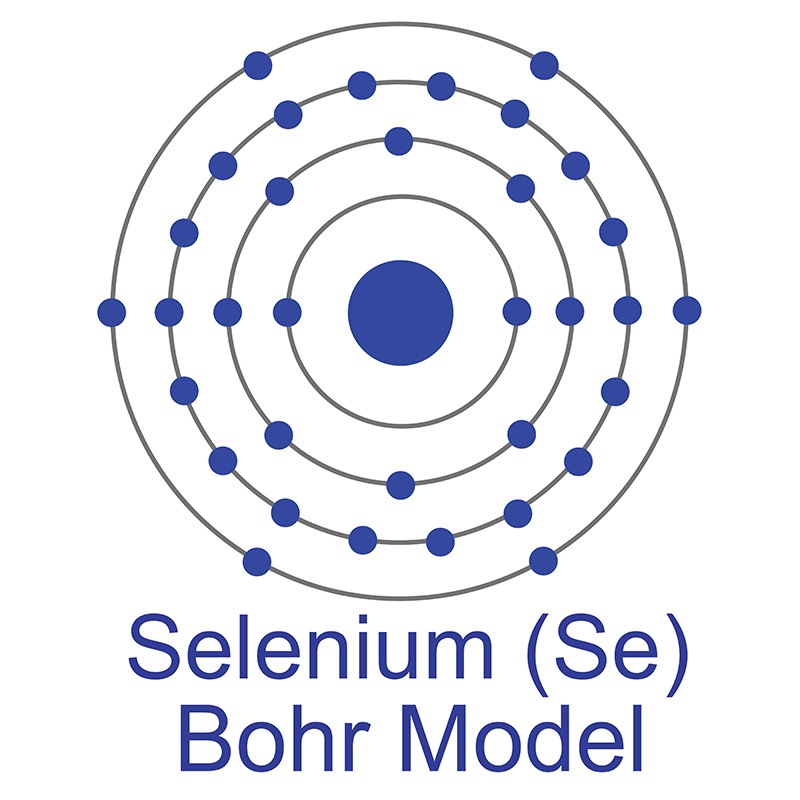
Selenium is a Block P, Group 16, Period 4 element. The number of electrons in each of Selenium's shells is 2, 8, 18, 6 and its electronic configuration is [Ar] 3d10 4s2 4p4. In its elemental form selenium's CAS number is 7782-49-2. The selenium atom has a radius of 116.pm and it's Van der Waals radius is 190.pm. The EPA does not classify selenium as carcinogenic, although selenium sulfide is a probable carcinogen. Selenates and selenites which are compounds of selenium, are highly toxic. Hydrogen selenide gas (SeH2) is the most acutely toxic compound of selenium. Selenium exhibits both photovoltaic action, where light is converted directly into electricity, and photoconductive action, where the electrical resistance decreases with increased illumination. of photocells and exposure meters for photographic use, as well as solar cells. Below its melting point, selenium is a p-type semiconductor and has many uses in electronic and solid-state applications. Selenium is available as metal and compounds with purities from 99% to 99.9999% (ACS grade to ultra-high purity); metals in the form of foil, sputtering target, and rod, and compounds as submicron and nanopowder. Selenium was first discovered by Jons Berzelius in 1817. The origin of the name Selenium comes from the Greek word "Selênê" meaning moon. See selenium research below.
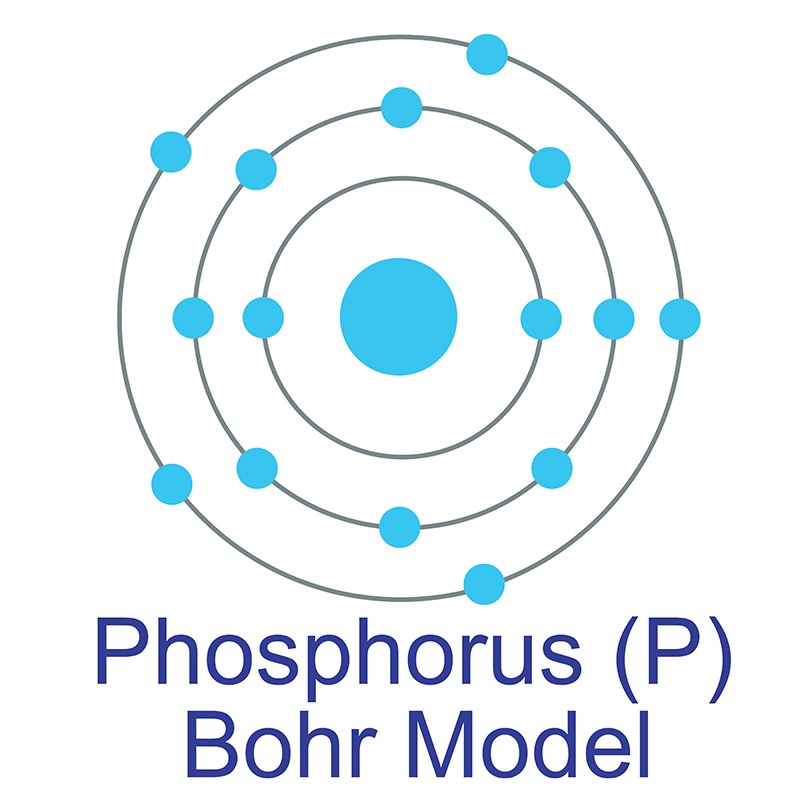
Phosphorus is a Block P, Group 15, Period 3 element. The number of electrons in each of Phosphorus's shells is 2, 8, 5 and its electronic configuration is [Ne] 3s2 3p3. In its elemental form Phosphorus's CAS number is 7723-14-0. The Phosphorus atom has a radius of 110.5.pm and it's Van der Waals radius is 180.pm. Although white phosphorus is very toxic, red phosphorus is not considered toxic. Phosphorus information, including Technical Data, Safety Data and its High Purity properties, research, applications and other useful facts are discussed below. Scientific facts such as the atomic structure, ionization energy, abundance on Earth, conductivity and thermal properties are included.
American Elements semi conducting materials are crystal structures produced from ultra high purity starting materials synthesized by our high purity production facility which includes several large electric muffle furnaces, a tube furnace for hydrogen reduction, 50 gallon glass-lined Pfaudler reactors supported by our analytical laboratory containing X-ray diffraction, SEM, AA, BET surface area, and ICP Spectrometry for trace metals analysis. See a discussion of American Elements Ultra High Purity and Analytical capabilities. See Crystal Growth for processes used to fabricate semiconductor materials, which include:
Crystal "pulling" by the Czochaiski method for production of semiconductor materials
Flux growth and gradient freeze
Directional solidification of fluorites using both the Bridgman-Stockbarger and float zoning techniques
Search by Material, Product Name, Product Code, CAS Number, Formula, Element, Anion, Form, EC Number, MDL Number or PubChem ID.
Toenail selenium status and the risk of Barrett's esophagus: the Netherlands Cohort Study.
Steevens J, Schouten LJ, Driessen AL, Huysentruyt CJ, Keulemans YC, Goldbohm RA, van den Brandt PA.
Cancer Causes Control. 2010 Oct 10. [Epub ahead of print]PMID: 20936529 [PubMed - as supplied by publisher]Related citations
Promotion of Growth in Mungbean (Phaseolus aureus Roxb.) by Selenium is Associated with Stimulation of Carbohydrate Metabolism.
Malik JA, Kumar S, Thakur P, Sharma S, Kaur N, Kaur R, Pathania D, Bhandhari K, Kaushal N, Singh K, Srivastava A, Nayyar H.
Biol Trace Elem Res. 2010 Oct 9. [Epub ahead of print]PMID: 20936436 [PubMed - as supplied by publisher]Related citations
Transition metal chemistry of cyclodiphosphanes containing phosphine and amide-phosphine functionalities: Formation of a stable dipalladium(II) complex containing a Pd-P s-bond.
Balakrishna MS, Venkateswaran R, Mague JT.
Dalton Trans. 2010 Oct 8. [Epub ahead of print]PMID: 20936211 [PubMed - as supplied by publisher]Related citations
Associations between blood metals and fecundity among women residing in New York State.
Bloom MS, Louis GM, Sundaram R, Kostyniak PJ, Jain J.
Reprod Toxicol. 2010 Oct 6. [Epub ahead of print]PMID: 20933593 [PubMed - as supplied by publisher]Related citations
The protective role of selenium in recalcitrant Acer saccharium L. seeds subjected to desiccation.
Pukacka S, Ratajczak E, Kalemba E.
J Plant Physiol. 2010 Oct 6. [Epub ahead of print]PMID: 20933296 [PubMed - as supplied by publisher]Related citations
Trace element concentrations in nesting flatback turtles (Natator depressus) from Curtis Island, Queensland, Australia.
Ikonomopoulou MP, Olszowy H, Limpus C, Francis R, Whittier J.
Mar Environ Res. 2010 Sep 25. [Epub ahead of print]PMID: 20933265 [PubMed - as supplied by publisher]Related citations
Correlation between serum selenium level and febrile seizures.
Mahyar A, Ayazi P, Fallahi M, Javadi A.
Pediatr Neurol. 2010 Nov;43(5):331-4.PMID: 20933176 [PubMed - in process]Related citations
Anti-Tumor Activity of Aloe vera Against DMBA/Croton Oil-Induced Skin Papillomagenesis in Swiss Albino Mice.
Saini M, Goyal PK, Chaudhary G.
J Environ Pathol Toxicol Oncol. 2010;29(2):127-35.PMID: 20932247 [PubMed - in process]Related citations
Aluminosilicate Relatives: Chalcogenoaluminogermanates Rb(3)(AlQ(2))(3)(GeQ(2))(7) (Q = S, Se).
Rothenberger A, Shafaei-Fallah M, Kanatzidis MG.
Inorg Chem. 2010 Oct 8. [Epub ahead of print]PMID: 20932019 [PubMed - as supplied by publisher]Related citations
A Nutrient Approach to Prostate Cancer Prevention: The Selenium and Vitamin E Cancer Prevention Trial (SELECT).
Dunn BK, Richmond ES, Minasian LM, Ryan AM, Ford LG.
Nutr Cancer. 2010 Oct;62(7):896-918.PMID: 20924966 [PubMed - in process]Related citations
Serum levels of selenium in patients with breast cancer before and after treatment of external beam radiotherapy.
Franca CA, Nogueira CR, Ramalho A, Carvalho AC, Vieira SL, Penna AB.
Ann Oncol. 2010 Oct 5. [Epub ahead of print]PMID: 20924074 [PubMed - as supplied by publisher]Related citations
Kenji Soda--researching enzymes with the spirit of an alpinist.
Yoshimura T, Mihara H, Ohshima T, Tanizawa K.
J Biochem. 2010 Oct;148(4):371-9.PMID: 20924059 [PubMed - in process]Related citations
Inhibitory effect of arsenic on aerobic gut flora in rat.
Choudhry ZK, Misbahuddin M, Hosain AK, Saleh AA.
Bangladesh Med Res Counc Bull. 2009 Dec;35(3):79-83.PMID: 20922909 [PubMed - in process]Related citations
[Endemic and biogeochemical features of the territory of Chuvash Republic]
[No authors listed]
Vestn Ross Akad Med Nauk. 2010;(8):40-6. Russian. PMID: 20922843 [PubMed - in process]Related citations
Interaction of uranyl with Se(IV) and Se(VI) in aqueous acid solutions by means of capillary electrophoresis.
Sladkov V.
Electrophoresis. 2010 Oct 4. [Epub ahead of print]PMID: 20922762 [PubMed - as supplied by publisher]Related citations
Ensemble Modeling Coupled with Six Element Concentrations in Human Blood for Cancer Diagnosis.
Chen H, Tan C, Wu T.
Biol Trace Elem Res. 2010 Oct 5. [Epub ahead of print]PMID: 20922500 [PubMed - as supplied by publisher]Related citations
Use of dietary vitamin E and selenium (Se) to increase the shelf life of modified atmosphere packaged light lamb meat.
Ripoll G, Joy M, Muñoz F.
Meat Sci. 2010 Sep 18. [Epub ahead of print]PMID: 20920835 [PubMed - as supplied by publisher]Related citations
Impacts of maternal selenium and nutritional level on growth, adiposity, and glucose tolerance in female offspring in sheep.
Vonnahme KA, Luther JS, Reynolds LP, Hammer CJ, Carlson DB, Redmer DA, Caton JS.
Domest Anim Endocrinol. 2010 Nov;39(4):240-8. Epub 2010 Jul 25.PMID: 20920781 [PubMed - in process]Related citations
Mutations disrupting selenocysteine formation cause progressive cerebello-cerebral atrophy.
Agamy O, Ben Zeev B, Lev D, Marcus B, Fine D, Su D, Narkis G, Ofir R, Hoffmann C, Leshinsky-Silver E, Flusser H, Sivan S, Söll D, Lerman-Sagie T, Birk OS.
Am J Hum Genet. 2010 Oct 8;87(4):538-44.PMID: 20920667 [PubMed - in process]Related citations
Developmental toxicity of selenium to Dolly Varden char (Salvelinus malma).
McDonald BG, Debruyn AM, Elphick JR, Davies M, Bustard D, Chapman PM.
Environ Toxicol Chem. 2010 Aug 3. [Epub ahead of print]PMID: 20891017 [PubMed - as supplied by publisher]Related citations
Recent Research & Development for Phosphorus
Consumption of whole
grains is associated with improved diet quality and nutrient intake in children
and adolescents: the National Health and Nutrition Examination Survey 1999-2004.
O'Neil CE, Nicklas TA, Zanovec M, Cho SS, Kleinman R. Public Health Nutr. 2010 Oct 6:1-9. [Epub ahead of print] PubMed PMID: 20923597.
Chemical and microbiological changes during
vermicomposting of coffee pulp using exotic (Eudrilus eugeniae) and native
earthworm (Perionyx ceylanesis) species. Raphael K, Velmourougane K. Biodegradation. 2010 Oct 5. [Epub ahead
of print] PubMed PMID: 20922463.
Synthesis, structure,
and reductive elimination in the series Tp'Rh(PR(3))(Ar(F))H; Determination of
rhodium-carbon bond energies of fluoroaryl substituents. Tanabe T, Brennessel WW, Clot E, Eisenstein O, Jones WD. Dalton Trans. 2010 Oct
5. [Epub ahead of print] PubMed PMID: 20924525.
Nutrient concentrations in Maryland non-tidal
streams. Morgan RP 2nd, Kline KM. Environ Monit Assess. 2010 Oct 5. [Epub ahead of print] PubMed PMID:
20890788.
Hereditary disorders of renal
phosphate wasting. Alizadeh Naderi AS, Reilly RF; Medscape. Nat Rev Nephrol. 2010 Oct 5. [Epub ahead of print] PubMed
PMID: 20924400.
New Synthesis of 3-Trifluoromethylpyrroles by
Condensation of Mesoionic 4-Trifluoroacetyl-1,3-oxazolium-5-olates with
Phosphorus Ylides. Saijo R, Hagimoto Y, Kawase M. Org Lett. 2010 Oct 5. [Epub ahead of print] PubMed PMID:
20923166.
Structural and electronic properties of
luminescent copper(i) halide complexes of bis[2-(diphenylphosphano)phenyl] ether
(DPEphos). Crystal structure of [CuCl(DPEphos)(dmpymtH]. Aslanidis P, Cox PJ, Tsipis AC. Dalton Trans. 2010 Oct
4. [Epub ahead of print] PubMed PMID: 20922239.
Changes in
Microbial Community Structure and Function of Drinking Water Treatment
Bioreactors Upon Phosphorus Addition. Li X, Upadhyaya G, Yuen W, Brown J, Morgenroth E, Raskin L. Appl Environ Microbiol. 2010 Oct 1. [Epub
ahead of print] PubMed PMID: 20889793.
Determination of a set
of surrogate parameters to assess urban stormwater quality. Miguntanna NS, Egodawatta P, Kokot S, Goonetilleke A. Sci Total Environ.
2010 Oct 1. [Epub ahead of print] PubMed PMID: 20888615.
A review on the effects of environmental conditions on growth and toxin
production of Ostreopsis ovata. Pistocchi R, Pezzolesi L, Guerrini F, Vanucci S, Dell'aversano C, Fattorusso
E. Toxicon. 2010 Oct 1. [Epub ahead of print] PubMed
PMID: 20920514.
Tenofovir-associated severe bone pain: I cannot walk! Jhaveri MA, Mawad HW, Thornton AC, Mullen NW, Greenberg RN. J Int Assoc Physicians AIDS
Care (Chic Ill). 2010 Sep-Oct;9(5):328-34. PubMed PMID: 20923957.
Characteristics of contaminants in water and
sediment of a constructed wetland treating piggery wastewater effluent. Lee S, Maniquiz MC, Kim LH. J Environ
Sci (China). 2010;22(6):940-5. PubMed PMID: 20923110.
Effect of a seasonal diffuse pollution migration on
natural organic matter behavior in a stratified dam reservoir. Yu SJ, Lee JY, Ha SR. J Environ Sci
(China). 2010;22(6):908-14. PubMed PMID: 20923105.
Water-saving
irrigation of paddy field to reduce nutrient runoff. Hitomi T, Iwamoto Y, Miura A, Hamada K, Takaki K, Shiratani E. J Environ Sci (China).
2010;22(6):885-91. PubMed PMID: 20923101.
Scenario
analysis for reduction of pollutant load discharged from a watershed by recycling
of treated water for irrigation. Shiratani E, Munakata Y, Yoshinaga I, Kubota T, Hamada K, Hitomi T. J Environ Sci (China). 2010;22(6):878-84. PubMed
PMID: 20923100.
Modeling the effects of constructed wetland
on nonpoint source pollution control and reservoir water quality improvement. Ham J, Yoon CG, Kim HJ, Kim HC. J
Environ Sci (China). 2010;22(6):834-9. PubMed PMID: 20923093.
Evaluation of non-point source
pollution reduction by applying best management practices using a SWAT model and
QuickBird high resolution satellite imagery. Lee M, Park G, Park M, Park J, Lee J, Kim S. J Environ Sci (China).
2010;22(6):826-33. PubMed PMID: 20923092.
Understanding nutrient
build-up on urban road surfaces. Miguntanna NP, Goonetilleke A, Egodowatta P, Kokot S. J Environ Sci (China). 2010;22(6):806-12. PubMed
PMID: 20923089.
Monitoring of non-point source pollutants
load from a mixed forest land use. Yoon SW, Chung SW, Oh DG, Lee JW. J Environ Sci (China). 2010;22(6):801-5.
PubMed PMID: 20923088.