wpe6.gif (6819 bytes)
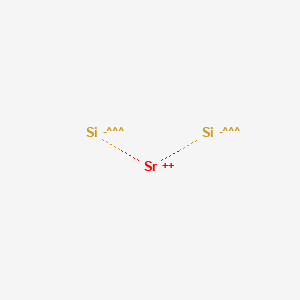
Strontium Silicide SrSi2
SrSi2

12138-28-2
Product Product Code Order or Specifications
(5N) 99.999% Strontium Silicide Powder SR-SID-05-P Contact American Elements
(5N) 99.999% Strontium Silicide Ingot SR-SID-05-I Contact American Elements
(5N) 99.999% Strontium Silicide Chunk SR-SID-05-CK Contact American Elements
(5N) 99.999% Strontium Silicide Sputtering Target SR-SID-05-ST Contact American Elements
(5N) 99.999% Strontium Silicide Lump SR-SID-05-L Contact American Elements


CHEMICAL
IDENTIFICATION
Formula CAS No. PubChem
SID
PubChem CID MDL No. EC No IUPAC Name Beilstein
Re. No.
SMILES
Identifier
InChI
Identifier
InChI
Key
SrSi2 12138-28-2 43526798 6914528 N/A 235-248-0 strontium silicon(1-) N/A N/A N/A N/A

Compound Formula Mol. Wt. Appearance Density

Exact Mass

Monoisotopic Mass Charge MSDS
SrSi2 143.79 N/A N/A 143.859467 143.859467 0 Safety Data Sheet


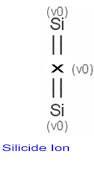
Silicide IonStrontium Silicide is generally immediately available in most volumes. High purity, submicron and nanopowder forms may be considered.American Elements produces to many standard grades when applicable, including Mil Spec (military grade); ACS, Reagent and Technical Grade; Food, Agricultural and Pharmaceutical Grade; Optical Grade, USP and EP/BP (European Pharmacopoeia/British Pharmacopoeia)and follows applicable ASTM testing standards.Typical and custom packaging is available. Additional technical, research and safety (MSDS) information is available as is a Reference Calculator for converting relevant units of measurement.

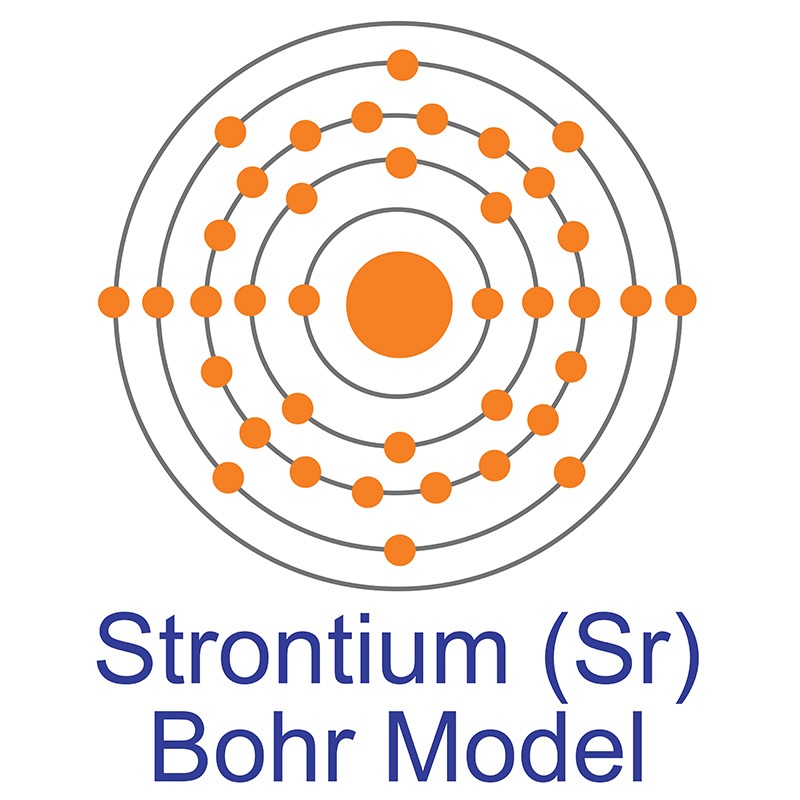
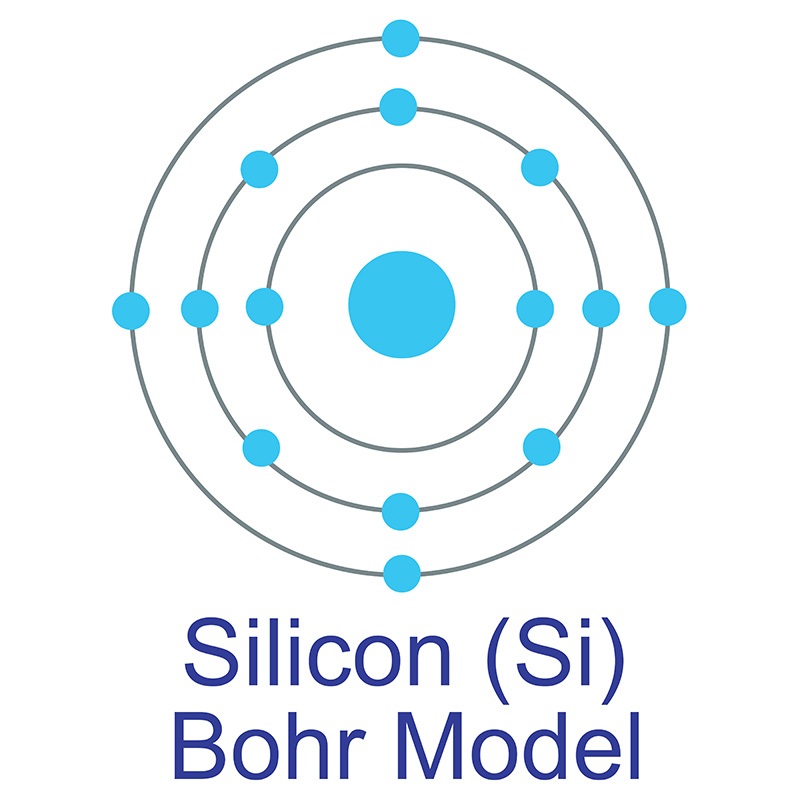
Strontium is a Block S, Group 2, Period 5 element. The number of electrons in each of Strontium's shells is 2, 8, 18, 8, 2 and its electronic configuration is [Kr] 5s2. In its elemental form strontium's CAS number is 7440-24-6. The strontium atom has a radius of 215.1.pm and it's Van der Waals radius is 200.pm. The non-radioactive isotopes of Strontium are not toxic. Strontium has low tech applications as an additive to flares and pyrotechnics because of the bright crimson flame produced by its salts. Strontium is available as metal and compounds with purities from 99% to 99.999% (ACS grade to ultra-high purity); metals in the form of foil, sputtering target, and rod, and compounds as submicron and nanopowder. It also has many high technology applications because of its high refractive index as a titanate in glass, as a "getter" in electron tubes and as a dopant for numerous perovskite formulations to produce cathodes for oxygen generation or solid oxide fuel cells. Historically the primary use of strontium was to produce CRT glass for color television and computer tubes. Strontium was first discovered by A. Crawford in 1790. Strontium was named after the Scottish town it was discovered in, Strontian. See Strontium research below.p align="justify">Silicon(Si) atomic and molecular weight, atomic number and elemental symbolSilicon is a Block P, Group 14, Period 3 element. The number of electrons in each of Silicon's shells is 2, 8, 4 and its electronic configuration is [Ne] 3s2 3p2. In its elemental form silicon's CAS number is 7440-21-3. The silicon atom has a radius of 117.6.pm and it's Van der Waals radius is 210.pm. Silicon is not toxic but can cause chronic respiratory problems if inhaled as a fine silica or silicate dust. Asbestos silicates are carcinogenic. Silicon isElemental Silicon one of man's most useful elements. It makes up 25.7% of the earth's crust, by weight, and is the second most abundant element, being exceeded only by oxygen. The Czochralski process is commonly used to produce single crystals of silicon used for solid-state or semiconductor devices. Silica, as sand, is a principal ingredient of glass, one of the most inexpensive of materials with excellent mechanical, optical, thermal, and electrical properties. Silicon is available as metal and compounds with purities from 99% to 99.9999% (ACS grade to ultra-high purity); metals in the form of foil, sputtering target, and rod, and compounds as submicron and nanopowder. Ultra high purity silicon can be doped with boron, gallium, phosphorus , or arsenic to produce silicon for use in Silicon Bohr Moleculetransistors, solar cells, rectifiers, and other solid-state devices which are used extensively in the electronics and space-age industries. Hydrogenated amorphous silicon has shown promise in producing economical cells for converting solar energy into electricity. Silcones are important products of silicon. They range from liquids to hard, glasslike solids with many useful properties. Silicon was first discovered by Jons Berzelius in 1823. The name Silicon originates from the Latin word "silex" which means flint or hard stone. See Silicon research below.


Have a Question? Ask a Chemical Engineer or Material Scientist   Request an MSDS or Certificate of Analysis

 
Toxicity
Safety & Handling
 
Signal Word Hazard Statements Hazard Codes Risk Codes Safety Precautions RTECS No. Transport Information WGK Germany
N/A N/A N/A N/A N/A N/A N/A N/A


Synonyms for Strontium Silicide Include:


Strontium disilicide


PACKAGING SPECIFICATIONS FOR BULK & RESEARCH QUANTITIES


Typical bulk packaging includes palletized plastic 5 gallon/25 kg. pails, fiber and steel drums to 1 ton super sacks in full container (FCL) or truck load (T/L) quantities. Research and sample quantities and hygroscopic, oxidizing or other air sensitive materials may be packaged under argon or vacuum. Shipping documentation includes a Certificate of Analysis and Material Safety Data Sheet (MSDS). Solutions are packaged in polypropylene, plastic or glass jars up to palletized 440 gallon liquid totes.


Show me more forms of Strontium
 
Customers for this product have also looked at:
Strontium Acetylacetonate Strontium Oxide Nanopowder Strontium Wire Strontium Powder Strontium Acetate
Strontium Nitrate Strontium Sputtering Target Strontium Chloride Strontium Foil Strontium Metal
Strondium Oxide Pellet Lanthanum Strontium Chromite Aluminum Strontium Alloy Strontium Pellets Strontium Oxide


Search by Material, Product Name, Product Code, CAS Number, Formula, Element, Anion, Form, EC Number, MDL Number or PubChem ID.


German   Korean   French   Japanese   Spanish   Chinese (Simplified)   Portuguese   Russian   Chinese (Taiwan)   Italian   Turkish   Polish   Dutch   Czech   Swedish   Hungarian   Danish   Hebrew

Production Catalog Available in 36 Countries & Languages

Recent Research & Development for Strontium

  • The effect of frequency of calcium hydroxide dressing change and various pre- and inter-operative factors on the endodontic treatment of traumatized immature permanent incisors. Yassen GH, Chin J, Mohammedsharif AG, Alsoufy SS, Othman SS, Eckert G. Dent Traumatol. 2011 Nov 16. doi: 10.1111/j.1600-9657.2011.01089.x. [Epub ahead of print] PMID: 22136164 [PubMed - as supplied by publisher]

  • Thirteen Years' Experience of Diaphragmatic Injury in Children from the Post Graduate Institute of Medical Sciences (PGIMS), Rohtak, India. Rattan KN, Narang R, Rohilla S, Maggu S, Dhaulakhandi DB. Malays J Med Sci. 2011 Jan;18(1):45-51. PMID: 22135573 [PubMed - in process]

  • Requirement of Potassium for the Action of Anti-Diuretic Hormone (ADH) on Frog Skin. Jared SR, Rao JP. Zoolog Sci. 2011 Dec;28(12):916-21. PMID: 22132789 [PubMed - in process]

  • Removal efficiency of water purifier and adsorbent for iodine, cesium, strontium, barium and zirconium in drinking water. Sato I, Kudo H, Tsuda S. J Toxicol Sci. 2011;36(6):829-34. PMID: 22129747 [PubMed - in process]

  • Compact pulse forming line using barium titanate ceramic material. Kumar Sharma S, Deb P, Shukla R, Prabaharan T, Shyam A. Rev Sci Instrum. 2011 Nov;82(11):115102. PMID: 22129008 [PubMed - in process]

  • Barium enema and diagnosis of colorectal cancer. Claridge LC. BMJ. 2011 Nov 29;343:d7704. doi: 10.1136/bmj.d7704. No abstract available. PMID: 22127450 [PubMed - in process]

  • Preparation methods and thermal stability of Ba-Mn-Ce oxide catalyst for NO(x)-assisted soot oxidation. Wu X, Lin F, Wang L, Weng D, Zhou Z. J Environ Sci (China). 2011;23(7):1205-10. PMID: 22125916 [PubMed - in process]

  • Mechanisms of the cerebral vasodilator actions of isoflavonoids of Gegen on rat isolated basilar artery. Deng Y, Ng ES, Yeung JH, Kwan YW, Lau CB, Koon JC, Zhou L, Zuo Z, Leung PC, Fung KP, Lam FF. J Ethnopharmacol. 2011 Nov 20. [Epub ahead of print] PMID: 22120017 [PubMed - as supplied by publisher]

  • [A new retrievable nitinol alloy stents for treatment of refractory benign esophageal strictures]. Li XH, Hu Y, Yang H, Bella AE, Fu JH. Zhonghua Wei Chang Wai Ke Za Zhi. 2011 Nov;14(11):875-8. Chinese. PMID: 22116724 [PubMed - in process]

  • Long-term follow-up of autologous hematopoietic stem cell transplantation for severe refractory Crohn's disease. Hommes DW, Duijvestein M, Zelinkova Z, Stokkers PC, Ley MH, Stoker J, Voermans C, van Oers MH, Kersten MJ. J Crohns Colitis. 2011 Dec;5(6):543-9. Epub 2011 Jun 12. PMID: 22115372 [PubMed - in process]

  • A novel multipass scheme for enhancement of second harmonic generation. Harimoto T, Yo B, Uchida K. Opt Express. 2011 Nov 7;19(23):22692-7. doi: 10.1364/OE.19.022692. PMID: 22109150 [PubMed - in process]

  • Insight into the local structure of barium indate oxide-ion conductors: An X-ray total scattering study. Mancini A, Shin JF, Orera A, Slater PR, Tealdi C, Ren Y, Page KL, Malavasi L. Dalton Trans. 2011 Nov 22. [Epub ahead of print] PMID: 22105971 [PubMed - as supplied by publisher]

  • Hiatal hernias. Dean C, Etienne D, Carpentier B, Gielecki J, Tubbs RS, Loukas M. Surg Radiol Anat. 2011 Nov 22. [Epub ahead of print] PMID: 22105688 [PubMed - as supplied by publisher]

  • New Volatile Strontium and Barium Imidazolate Complexes for the Deposition of Group 2 Metal Oxides. Norman JA, Perez M, Kim MS, Lei X, Ivanov S, Derecskei-Kovacs A, Matz L, Buchanan I, Rheingold AL. Inorg Chem. 2011 Nov 21. [Epub ahead of print] PMID: 22103761 [PubMed - as supplied by publisher]

  • INDIVIDUAL-SPECIFIC TRANSGENERATIONAL MARKING OF FISH POPULATIONS BASED ON A BARIUM DUAL-ISOTOPE PROCEDURE. Huelga-Suarez G, Moldovan M, Garcia-Valiente A, Garcia-Vazquez E, Alonso JI. Anal Chem. 2011 Nov 21. [Epub ahead of print] PMID: 22103693 [PubMed - as supplied by publisher]

  • Ileorectal fistula due to a rectal cancer-A case report. Takahashi M, Fukuda T. Int J Surg Case Rep. 2011;2(2):20-1. Epub 2010 Nov 27. PMID: 22096678 [PubMed - in process]

  • Pilot study: a randomised, double blind, placebo controlled trial of pancrealipase for the treatment of postprandial irritable bowel syndrome-diarrhoea. Money ME, Walkowiak J, Virgilio C, Talley NJ. Frontline Gastroenterol. 2011 Jan;2(1):48-56. Epub 2010 Nov 3. PMID: 22095308 [PubMed]

  • Functional antagonism of amphetamine versus ethanol on adrenergic neurotransmission in vas deferens of adolescent rats. Silva Júnior ED, Caricati-Neto A, Jurkiewicz NH, Jurkiewicz A. Eur J Pharmacol. 2011 Nov 7. [Epub ahead of print] PMID: 22094068 [PubMed - as supplied by publisher]

  • Esophageal inlet patch. Behrens C, Yen PP. Radiol Res Pract. 2011;2011:460890. Epub 2011 Mar 30. PMID: 22091379 [PubMed - in process]

  • C-A5-02: Is Tailored Screening for Colorectal Cancer based on Gender and Race Cost-Effective? Flottemesch T; the Prevention Priorities Study Team. Clin Med Res. 2011 Nov;9(3-4):174. PMID: 22090618 [PubMed - as supplied by publisher]

Recent Research & Development for Silicide

  • RECONSTRUCTION OF THE THUMB WITH A MODIFIED WRAP-AROUND FLAP IN A PATIENT SUFFERING FROM ?-THALASSEMIA MINOR. Galeano M, Checcucci G, Ceruso M. Hand Surg. 2011;16(3):361-5. PMID: 22072476 [PubMed - in process]

  • Isolated complete volar dislocation of the capitate: a case report. Checcucci G, Bigazzi P, Zucchini M, Ceruso M. Hand Surg. 2011;16(3):353-6. PMID: 22072474 [PubMed - in process]

  • Dielectrophoretic chip with multilayer electrodes and micro-cavity array for trapping and programmably releasing single cells. Chuang CH, Huang YW, Wu YT. Biomed Microdevices. 2011 Nov 10. [Epub ahead of print] PMID: 22072154 [PubMed - as supplied by publisher]

  • Structures of medium sized tin cluster anions. Wiesel A, Drebov N, Rapps T, Ahlrichs R, Schwarz U, Kelting R, Weis P, Kappes MM, Schooss D. Phys Chem Chem Phys. 2011 Nov 9. [Epub ahead of print] PMID: 22071636 [PubMed - as supplied by publisher]

  • Discrimination task reveals differences in neural bases of tinnitus and hearing impairment. Husain FT, Pajor NM, Smith JF, Kim HJ, Rudy S, Zalewski C, Brewer C, Horwitz B. PLoS One. 2011;6(10):e26639. Epub 2011 Oct 31. PMID: 22066003 [PubMed - in process]

  • A suggested technique for the application of the cone beam computed tomography periapical index. Esposito S, Cardaropoli M, Cotti E. Dentomaxillofac Radiol. 2011 Dec;40(8):506-12. PMID: 22065800 [PubMed - in process]

  • (4-Chloro-3-nitro-benzoato)triphenyl-tin(IV). Win YF, Choong CS, Teoh SG, Quah CK, Fun HK. Acta Crystallogr E Struct Rep Online. 2011 Sep 1;67(Pt 9):m1270-1. Epub 2011 Aug 27. PMID: 22065496 [PubMed]

  • Bis{2-[(E)-(5-tert-butyl-2-hy-droxy-phen-yl)diazen-yl]benzoato}dimethyl-tin(IV). Basu Baul TS, Paul A, Tiekink ER. Acta Crystallogr E Struct Rep Online. 2011 Oct 1;67(Pt 10):m1383-4. Epub 2011 Sep 14. PMID: 22065466 [PubMed]

  • Chloridodiphen-yl{[1-(1,3-thia-zol-2-yl-?N)ethyl-idene]-4-phenyl-thio-semicarbazidato-?N,S}tin(IV) methanol monosolvate. Arumugam SR, Dasary SS, Venkatraman R, Yu H, Fronczek FR. Acta Crystallogr E Struct Rep Online. 2011 Oct 1;67(Pt 10):m1409-10. Epub 2011 Sep 30. PMID: 22065366 [PubMed]

  • catena-Poly[[triphenyl-tin(IV)]-?-5-amino-2-nitro-benzoato-?O:O]. Win YF, Choong CS, Teoh SG, Quah CK, Fun HK. Acta Crystallogr E Struct Rep Online. 2011 Sep 1;67(Pt 9):m1276-7. Epub 2011 Aug 27. PMID: 22064934 [PubMed]

  • Dual detection strategy for electrochemical analysis of glucose and nitrite using a partitionally modified electrode. Wang J, Diao P, Zhang Q. Analyst. 2011 Nov 7. [Epub ahead of print] PMID: 22064849 [PubMed - as supplied by publisher]

  • fac-(2-Amido-ethyl-?C,O)trichlorido(urea-?O)tin(IV). Howie RA, de Lima GM, Tiekink ER, Wardell JL, Wardell SM. Acta Crystallogr E Struct Rep Online. 2011 Oct 1;67(Pt 10):m1420-1. Epub 2011 Sep 30. PMID: 22064619 [PubMed]

  • Highly sensitive nonenzymatic glucose sensor based on electrospun copper oxide-doped nickel oxide composite microfibers. Cao F, Guo S, Ma H, Yang G, Yang S, Gong J. Talanta. 2011 Oct 30;86:214-20. Epub 2011 Sep 8. PMID: 22063533 [PubMed - in process]

  • Cross-Linked Perylene Diimide-Based n-Type Interfacial Layer for Inverted Organic Photovoltaic Devices. Hains AW, Chen HY, Reilly TH, Gregg BA. ACS Appl Mater Interfaces. 2011 Nov 7. [Epub ahead of print] PMID: 22059439 [PubMed - as supplied by publisher]

  • Bis-(chloro-acetato-?O)bis(trimethyl-silylmethyl)tin(IV). Ding RF, Wang QB. Acta Crystallogr E Struct Rep Online. 2011 Sep 1;67(Pt 9):m1190. Epub 2011 Aug 2. PMID: 22058841 [PubMed]

  • A new langbeinite-type phosphate: K(2)AlSn(PO(4))(3). Li HY, Zhao D. Acta Crystallogr E Struct Rep Online. 2011 Oct 1;67(Pt 10):i56. Epub 2011 Sep 20. PMID: 22058680 [PubMed]

  • Enhanced resistance of yeast mutants deficient in low-affinity iron and zinc transporters to stannous-induced toxicity. Viau CM, Cardone JM, Guecheva TN, Yoneama ML, Dias JF, Pungartnik C, Brendel M, Saffi J, Henriques JA. Chemosphere. 2011 Nov 2. [Epub ahead of print] PMID: 22055569 [PubMed - as supplied by publisher]

  • Allylsilanes in "Tin-free" Oximation, Alkenylation, and Allylation of Alkyl Halides. Rouquet G, Robert F, Méreau R, Castet F, Landais Y. Chemistry. 2011 Nov 3. doi: 10.1002/chem.201101842. [Epub ahead of print] PMID: 22052660 [PubMed - as supplied by publisher]

  • Surface Modification of Indium-Tin-Oxide Via Self-Assembly of a Donor-Acceptor Complex: A Density Functional Theory Study. Li H, Winget P, Bredas JL. Adv Mater. 2011 Nov 3. doi: 10.1002/adma.201103009. [Epub ahead of print] No abstract available. PMID: 22052626 [PubMed - as supplied by publisher]

  • Minimally invasive video-assisted cardiac surgery: operative techniques, application fields and clinical outcomes. Vistarini N, Aiello M, Viganň M. Future Cardiol. 2011 Nov;7(6):775-87. PMID: 22050064 [PubMed - in process]


PRODUCT CATALOG Silicide Products Foil Submicron & Nanopowder Tolling Ultra High Purity Sputtering Target Crystal Growth Rod, Plate, Powder, etc. Home

  Print this Page
Periodic table of the elements science and academic information, elements and advanced materials data, scientific presentations and all pages, designs, concepts, logos, and color schemes herein are the copyrighted proprietary rights and intellectual property of American Elements. American Elements is a U.S. Registered Trademark. © 1998-2012. American Elements. All rights reserved.
Learn Six Sigma


American Elements is a copyrighted U.S. Trademark. All rights reserved.