American Elements Logo and U.S. Registered Trademark
Lead Selenide Quantum Dots
PbSe Quantum Dots
Product
Product Code
Order or Specifications
Lead Selenide Quantum Dot
PBSE-QD
Contact American Elements
American Elements is a manufacturer and supplier specializing in producing Lead Selenide (PbSe) Quantum Dots. PbSe Quantum Dots are finding important application in solar energy due to their extremely wide band gap in which it absorbs light. American Elements manufactures quantum dots from several semiconductor materials, including Cadmium Telluride (CdTe), Cadmium Selenide/Zinc Sulfide (CdSe/ZnS), Lead Selenide (PbSe) and Zinc Cadmium Selenide/Zinc Sulfide (ZnCdSe/ZnS) nanoparticles with well-defined peak emission frequencies.

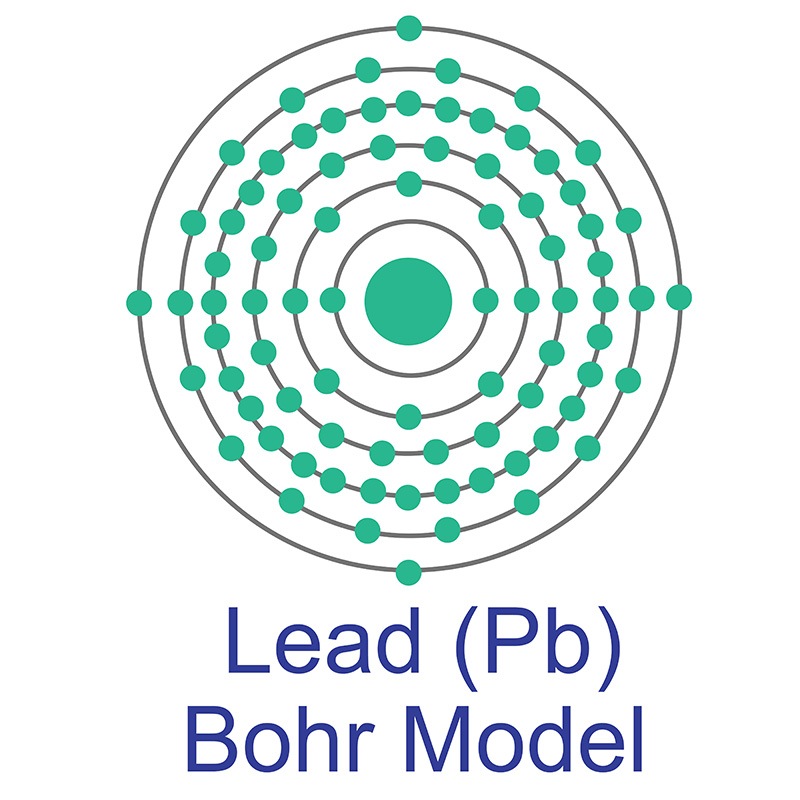
Lead is a Block P, Group 14, Period 6 element. The electronic configuration is [Xe] 4f14 5d10 6s2 6p2. In its elemental form lead's CAS number is 7439-92-1. The lead atom has a radius of 175.pm and it's Van der Waals radius is 202.pm. Lead is a bluish-white metal of bright luster, naturally occurring as a mixture of four stable isotopes: 204Pb (1.48%), 206Pb (23.6%), 207Pb (22.6%), and 208Pb (52.3%). It is highly resistant to corrosion and can be used to contain corrosive liquids such as sulfuric acid. Great quantities of Lead, both as the dioxide and the metal, are used in batteries, cable covering, plumbing, and ammunition. Alloys include solder, type metal, and various antifriction metals and compounds. Lead is extremely effective at absorbing sound and vibration. It is also used as radiation shielding for X-ray equipment and nuclear reactors. Oxides of Lead are used in producing fine "crystal glass" and "flint glass" of a high index of refraction for achromatic lenses. Lead ceramics and crystalline material have a wide range of industrial and optical applications, including infrared detection and imaging. Lead-based semiconductors, such as lead telluride, lead selenide and lead antimonide are finding application in photovoltaic (solar energy) cells and infra red detectors.

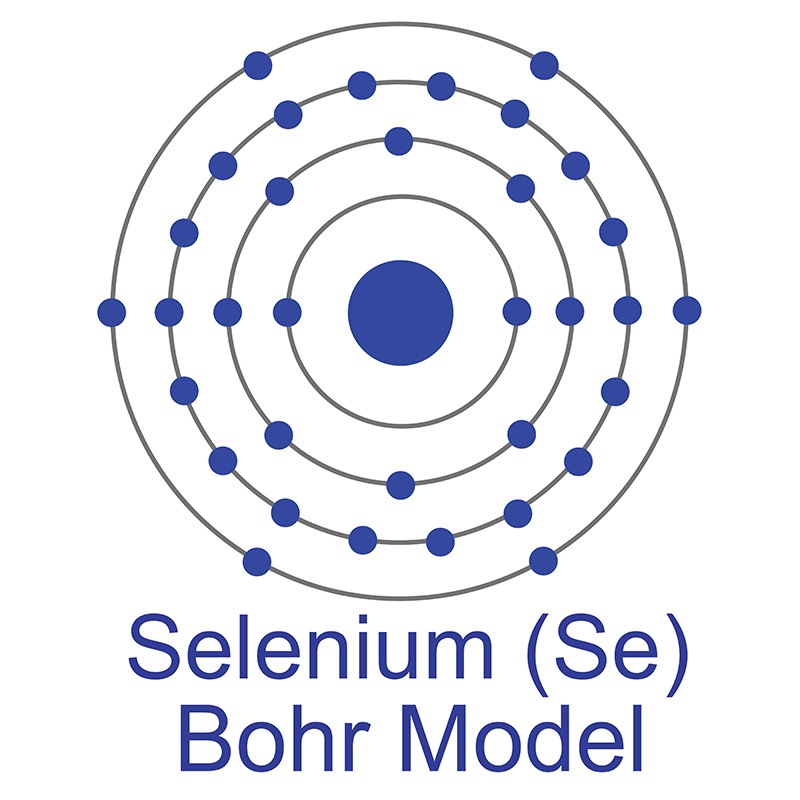
Selenium is a Block P, Group 16, Period 4 element. The electronic configuration is [Ar] 3d10 4s2 4p4. In its elemental form selenium's CAS number is 7782-49-2. The selenium atom has a radius of 116.pm and it's Van der Waals radius is 190.pm. Selenium exhibits both photovoltaic action, where light is converted directly into electricity, and photoconductive action, where the electrical resistance decreases with increased illumination. These properties make selenium useful in the production of photocells and exposure meters for photographic use, as well as solar cells. Below its melting point, selenium is a p-type semiconductor and has many uses in electronic and solid-state applications. Selenium is available as metal and compounds with purities from 99% to 99.9999% (ACS grade to ultra-high purity); metals in the form of foil, sputtering target, and rod, and compounds as submicron and nanopowder. Selenium was first discovered by Jons Berzelius in 1817.

Formula CAS No. Appearance Molecular Weight Density Melting Point Boiling Point
PbSe
PRODUCT CATALOG Submicron & Nanopowder Tolling Ultra High Purity Sputtering Target Crystal Growth Rod, Plate, Powder, etc.
 
 
© 2001-2009. American Elements is a U.S. Registered Trademark. All rights reserved. This website, the Periodic Table of the Elements information, Element and Materials Science presentations and all pages, designs, concepts, logos, and color schemes herein are the copyrighted proprietary rights and intellectual property of American Elements.


Recent Research & Development for Tellurium

  • Expression of Aeromonas caviae ST pyruvate dehydrogenase complex components mediate tellurite resistance in Escherichia coli. Castro ME, Molina RC, Díaz WA, Pradenas GA, Vásquez CC. Biochem Biophys Res Commun. 2009 Jan 22. [Epub ahead of print] PMID: 19168030 [PubMed - as supplied by publisher]

  • Chlorine gas sensors using one-dimensional tellurium nanostructures. Sen S, Sharma M, Kumar V, Muthe KP, Satyam PV, Bhatta UM, Roy M, Gaur NK, Gupta SK, Yakhmi JV. Talanta. 2009 Mar 15;77(5):1567-72. Epub 2008 Oct 17. PMID: 19159765 [PubMed - in process]

  • Cloning, purification and characterization of Geobacillus stearothermophilus V uroporphyrinogen-III C-methyltransferase: evaluation of its role in resistance to potassium tellurite in Escherichia coli. Araya MA, Tantaleán JC, Pérez JM, Fuentes DE, Calderón IL, Saavedra CP, Burra R, Chasteen TG, Vásquez CC. Res Microbiol. 2009 Jan 3. [Epub ahead of print] PMID: 19154787 [PubMed - as supplied by publisher]

  • Reversible switching between p- and n-type conduction in the semiconductor Ag10Te4Br3. Nilges T, Lange S, Bawohl M, Deckwart JM, Janssen M, Wiemhöfer HD, Decourt R, Chevalier B, Vannahme J, Eckert H, Weihrich R. Nat Mater. 2009 Feb;8(2):101-8. Epub 2009 Jan 18. PMID: 19151704 [PubMed - in process]

  • New vanadium(IV) and titanium(IV) oxyfluorotellurates(IV): V2Te2O7F2 and TiTeO3F2. Laval JP, Boukharrata NJ. Acta Crystallogr C. 2009 Jan;65(Pt 1):i1-6. Epub 2008 Dec 13. PMID: 19129587 [PubMed]

  • Atomic Layer Deposition of Metal Tellurides and Selenides Using Alkylsilyl Compounds of Tellurium and Selenium. Pore V, Hatanpa¨a¨ T, Ritala M, Leskela¨ M. J Am Chem Soc. 2009 Jan 5. [Epub ahead of print] PMID: 19123860 [PubMed - as supplied by publisher]

  • A convenient alignment approach for x-ray imaging experiments based on laser positioning devices. Da Z, Donovan M, Wu X, Liu H. Med Phys. 2008 Nov;35(11):4907-10. PMID: 19070224 [PubMed - indexed for MEDLINE]

  • CdTe nanocrystals sensitized chemiluminescence and the analytical application. Wang Z, Li J, Liu B, Li J. Talanta. 2009 Jan 15;77(3):1050-6. Epub 2008 Aug 22. PMID: 19064090 [PubMed - indexed for MEDLINE]

  • Synthesis of CdTe nanocrystals with mercaptosuccinic acid as stabilizer. Wang C, Ma Q, Su X. J Nanosci Nanotechnol. 2008 Sep;8(9):4408-14. PMID: 19049034 [PubMed - indexed for MEDLINE]

  • Well-defined stibonic and tellurinic acids. Beckmann J, Finke P, Hesse M, Wettig B. Angew Chem Int Ed Engl. 2008;47(51):9982-4. No abstract available. PMID: 19006136 [PubMed - indexed for MEDLINE]

  • A temperature-driven reversible phase transfer of 2-(diethylamino)ethanethiol-stabilized CdTe nanoparticles. Qin B, Zhao Z, Song R, Shanbhag S, Tang Z. Angew Chem Int Ed Engl. 2008;47(51):9875-8. No abstract available. PMID: 19003838 [PubMed - indexed for MEDLINE]

  • Sonication treatment of CdTe/CdS semiconductor nanocrystals and their bio-application. Lee SJ, Kim KN, Bae PK, Chang HJ, Kim YR, Park JK. Chem Commun (Camb). 2008 Nov 21;(43):5574-6. Epub 2008 Sep 24. PMID: 18997956 [PubMed - indexed for MEDLINE]

  • Synthesis, characterization and oxidizing properties of a diorgano tellurone carrying bulky aromatic substituents. Oba M, Okada Y, Nishiyama K, Shimada S, Ando W. Chem Commun (Camb). 2008 Nov 14;(42):5378-80. Epub 2008 Sep 17. PMID: 18985216 [PubMed - indexed for MEDLINE]

  • Human erythrocyte hemolysis induced by selenium and tellurium compounds increased by GSH or glucose: a possible involvement of reactive oxygen species. Schiar VP, Dos Santos DB, Paixão MW, Nogueira CW, Rocha JB, Zeni G. Chem Biol Interact. 2009 Jan 15;177(1):28-33. Epub 2008 Oct 15. PMID: 18983990 [PubMed - indexed for MEDLINE]

  • Thermal stabilization of tellurium in mineral acids solutions: Use of permanent modifiers for its determination in sulfur by GFAAS. Pedro J, Stripekis J, Bonivardi A, Tudino M. Talanta. 2006 Mar 15;69(1):199-203. Epub 2005 Oct 27. PMID: 18970554 [PubMed - in process]

  • Coprecipitation with yttrium phosphate as a separation technique for iron(III), lead, and bismuth from cobalt, nickel, and copper matrices. Kagaya S, Araki Y, Hirai N, Hasegawa K. Talanta. 2005 Jul 15;67(1):90-7. Epub 2005 Mar 23. PMID: 18970141 [PubMed - in process]

  • The importance of cerium substituted phosphates as cation exchanger-some unique properties and related application potentials. Nilchi A, Khanchi A, Ghanadi Maragheh M. Talanta. 2002 Mar 4;56(3):383-93. PMID: 18968510 [PubMed - in process]

  • Liquid-liquid extraction study of tellurium(IV) with N-n-octylaniline in halide medium and its separation from real samples. Sargar BM, Anuse MA. Talanta. 2001 Sep 13;55(3):469-78. PMID: 18968391 [PubMed - in process]

  • Simultaneous determination of arsenic, antimony, selenium and tin by gas phase molecular absorption spectrometry after two step hydride generation and preconcentration in a cold trap system. Cabredo S, Galbán J, Sanz J. Talanta. 1998 Aug;46(4):631-8. PMID: 18967186 [PubMed - in process]

  • Multielemental speciation of As, Se, Sb and Te by HPLC-ICP-MS. Guerin T, Astruc M, Batel A, Borsier M. Talanta. 1997 Dec 1;44(12):2201-8. PMID: 18966969 [PubMed - in process]


American Elements Products can also be sourced at these sites:


electronics-ee.com