American Elements Logo and U.S. Registered Trademark


Praseodymium Telluride
High Purity PrTe
Product
Product Code
Order or Specifications
(5N) 99.999% Praseodymium Telluride Powder
PR-TE-05-P
Contact American Elements
(5N) 99.999% Praseodymium Telluride Ingot
PR-TE-05-I
Contact American Elements
(5N) 99.999% Praseodymium Telluride Chunk
PR-TE-05-CK
Contact American Elements
(5N) 99.999% Praseodymium Telluride Lump
PR-TE-05-L
Contact American Elements
(5N) 99.999% Praseodymium Telluride Sputtering Target
PR-TE-05-ST
Contact American Elements
(5N) 99.999% Praseodymium Telluride Wafer
PR-TE-05-WSX
Contact American Elements


CHEMICAL
IDENTIFICATION
Formula CAS No. PubChem
SID
PubChem CID MDL No. EC No IUPAC Name Beilstein
Re. No.
SMILES
Identifier
InChI
Identifier
InChI
Key
PrTe 12038-12-9                

Compound Formula Mol. Wt. Appearance Density

Exact Mass

Monoisotopic Mass Charge MSDS
  664.6 g/mol   g/cm3       Safety Data Sheet


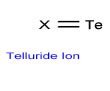
Telluride IonPraseodymium Telluride (PrTe) is a crystal grown product generally immediately available in most volumes. Technical, research and safety (MSDS) information is available as is a Reference Calculator for converting relevant units of measurement.

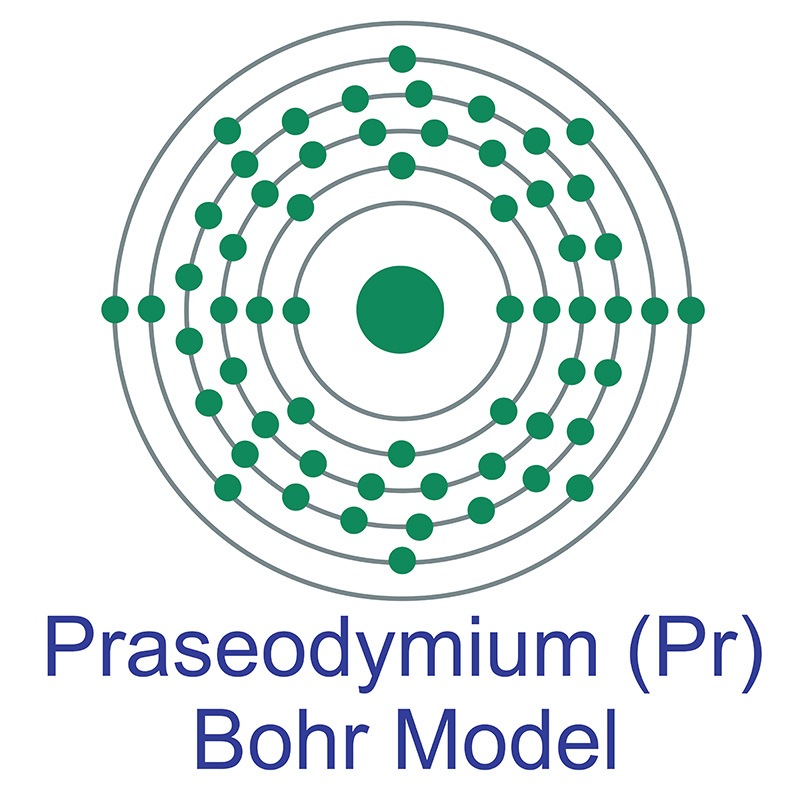
Praseodymium(Pr) atomic and molecular weight, atomic number and elemental symbol Praseodymium is a Block F, Group 3, Period 6 element. The number of electrons in each of Praseodymium's shells is 2, 8, 18, 21, 8, 2 and its electronic configuration is [Xe]4f3 6s2. In its elemental form praseodymium's CAS number is 7440-10-0. The praseodymium atom has a radius of 182.pm and it's Van der Waals radius is is unknown. Praseodymium is somewhat toxic. Praseodymium resembles the typical trivalent rare earths, however, it willPraseodymium Bohr Model exhibit a +4 state when stabilized in a zirconia host. Praseodymium is available as metal and compounds with purities from 99% to 99.999% (ACS grade to ultra-high purity); metals in the form Elemental Praseodymiumof foil, sputtering target, and rod, and compounds as submicron and nanopowder. The element is found in most all light rare earth derivatives. It is highly valued in glass and ceramic production as a bright yellow pigment because of its optimum reflectance at 560 nm. Much research is being done on its optical properties for use in amplification of telecommunication systems, including as a doping agent in fluoride fibers. The origin of the element name comes from the Greek words 'prasios didymos' meaning green twin. See Praseodymium research below.

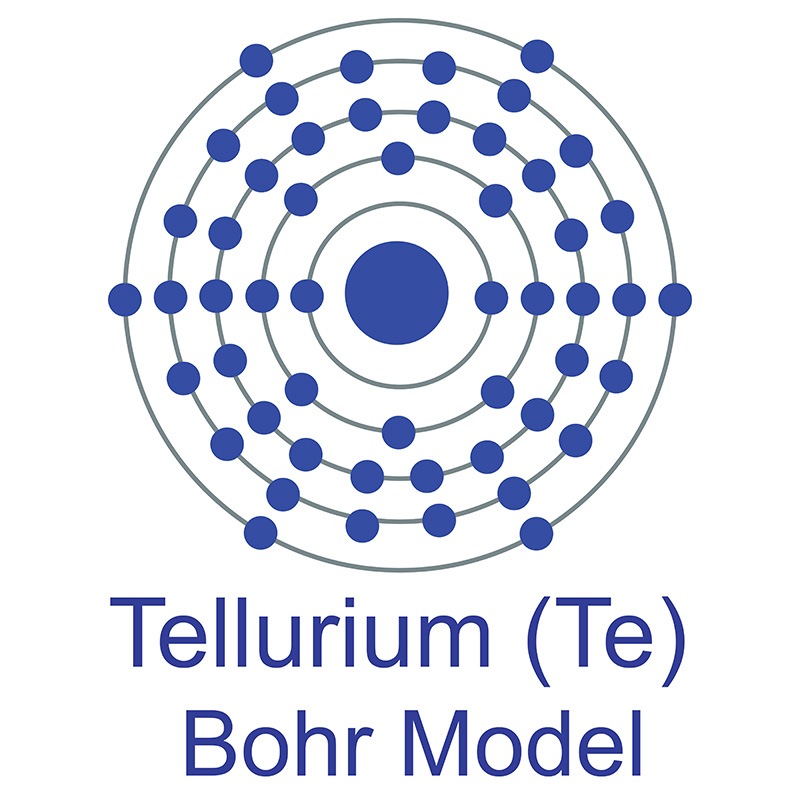
Tellurium(Te)atomic and molecular weight, atomic number and elemental symbolTellurium is a Block P, Group 16, Period 5 element. The number of electrons in each of Tellurium's shells is 2, 8, 18, 18, 6 and its electronic configuration is [Kr] 4d10 5s2 5p4. In its elemental form tellurium's CAS number is 13494-80-9. The tellurium atom has a radius of 143.2.pm and it's Van der Waals radius is 206.pm. Tellurium is a p-type semiconductor, and shows greater conductivity in certain directions, depending on alignment of the atoms. It is grown in crystalline form with other elements such as indium telluride. Its conductivity increases slightly with exposure to light which makes many tellurides candidates for solar energyapplications. Tellurium improves the machinability of copper and stainless steel, and its addition to lead decreases the corrosive action of sulfuric acid on lead and improves its strength and hardness. Elemental TelluriumTellurium is used as Tellurium Bohr Modela basic ingredient in blasting caps, and is added to cast iron for chill control. Tellurium is used in ceramics. Bismuth telluride has been used in thermoelectric devices. Iron is available as metal and compounds with purities from 99% to 99.999% (ACS grade to ultra-high purity); metals in the form of foil, sputtering target, and rod, and compounds as submicron and nanopowder. Tellurium was first discovered by Franz Muller von Reichenstein in 1782. The name Tellurium originates from the Greek word 'Tellus' meaning Earth. See Tellurium research below.

American Elements semi conducting materials are crystal structures produced from ultra high purity starting materials synthesized by our high purity production facility which includes several large electric muffle furnaces, a tube furnace for hydrogen reduction, 50 gallon glass-lined Pfaudler reactors supported by our analytical laboratory containing X-ray diffraction, SEM, AA, BET surface area, and ICP Spectrometry for trace metals analysis. See a discussion of American Elements Ultra High Purity and Analytical capabilities. See Crystal Growth for processes used to fabricate semiconductor materials, which include:

  • Crystal "pulling" by the Czochaiski method for production of semiconductor materials
  • Flux growth and gradient freeze
  • Directional solidification of fluorites using both the Bridgman-Stockbarger and float zoning techniques

Have a Question? Ask a Chemical Engineer or Material Scientist   Request an MSDS or Certificate of Analysis

 
Safety &
Handling
             
Signal Word Hazard Statements Hazard Codes Risk Codes Safety Precautions RTECS No. Transport Information WGK Germany
N/A N/A N/A N/A N/A N/A N/A N/A


Synonyms for Praseodymium Telluride Include:


Praseodymium(III) Telluride


PACKAGING SPECIFICATIONS FOR BULK & RESEARCH QUANTITIES


Typical bulk packaging includes palletized plastic 5 gallon/25 kg. pails, fiber and steel drums to 1 ton super sacks in full container (FCL) or truck load (T/L) quantities. Research and sample quantities and hygroscopic, oxidizing or other air sensitive materials may be packaged under argon or vacuum. Shipping documentation includes a Certificate of Analysis and Material Safety Data Sheet (MSDS). Solutions are packaged in polypropylene, plastic or glass jars up to palletized 440 gallon liquid totes.


Show me more forms of Praseodymium
 
Customers for this product have also looked at:
Praseodymium Sheet Praseodymium Telluride Praseodymium Acetate Praseodymium Foil Praseodymium Pellets
Mischmetal Nickel Alloy Praseodymium Powder Praseodymium Nanoparticles Praseodymium Chloride Praseodymium Oxide Pellets
Praseodymium Sputtering Target
Praseodymium Fluoride Praseodymium Metal Praseodymium Nitrate Praseodymium Acetylacetonate


Search by Material, Product Name, Product Code, CAS Number, Formula, Element, Anion, Form, EC Number, MDL Number or PubChem ID.
German   Korean   French   Japanese   Spanish   Chinese (Simplified)   Portuguese   Russian   Chinese (Taiwan)   Italian   Turkish   Polish   Dutch   Czech   Swedish   Hungarian   Danish   Hebrew

Production Catalog Available in 36 Countries & Languages


Recent Research & Development for Praseodymium

  • Autogenic Synthesis of Green- and Red-Emitting Single-Phase Pr(2)O(2)CO(3) and PrO(1.833) Luminescent Nanopowders. Calderon Moreno JM, Pol VG, Suh SH, Popa M. Inorg Chem. 2010 Oct 5. [Epub ahead of print] PubMed PMID: 20923161.

  • Cationic rare-earth-metal methyl complexes: a new preparative access exemplified for Y and Pr. Nieland A, Mix A, Neumann B, Stammler HG, Mitzel NW. Dalton Trans. 2010 Aug 7;39(29):6753-60. Epub 2010 May 4. PubMed PMID: 20442946.

  • Conversion of orange light into blue light. Rai N, Jha Y, Kamal KP, Kumar S, Rai VK. Spectrochim Acta A Mol Biomol Spectrosc. 2010 Aug;76(3-4):311-4. Epub 2010 Mar 6. PubMed PMID: 20430692.

  • Efficient green continuous-wave lasing of blue-diode-pumped solid-state lasers based on praseodymium-doped LiYF4. Hansen NO, Bellancourt AR, Weichmann U, Huber G. Appl Opt. 2010 Jul 10;49(20):3864-8. doi: 10.1364/AO.49.003864. PubMed PMID: 20648158.

  • Praseodymium(III)-based bis-metallacalix[4]arene with host-guest behaviour. Xu GF, Gamez P, Teat SJ, Tang J. Dalton Trans. 2010 May 14;39(18):4353-7. Epub 2010 Mar 24. PubMed PMID: 20422093.

  • Evaluation of short-term effects of rare earth and other elements used in magnesium alloys on primary cells and cell lines. Feyerabend F, Fischer J, Holtz J, Witte F, Willumeit R, Drücker H, Vogt C, Hort N. Acta Biomater. 2010 May;6(5):1834-42. Epub 2009 Oct 1. PubMed PMID: 19800429.

  • Carboxymethylated cyclodextrins and their complexes with Pr(III) and Yb(III) as water-soluble chiral NMR solvating agents for cationic compounds. Provencher KA, Weber MA, Randall LA, Cunningham PR, Dignam CF, Wenzel TJ. Chirality. 2010 Mar;22(3):336-46. PubMed PMID: 19544350.

  • Crystal structure, diffusion path, and oxygen permeability of a Pr(2)NiO(4)-based mixed conductor (Pr(0.9)La(0.1))(2)(Ni(0.74)Cu(0.21)Ga(0.05))O(4+delta). Yashima M, Sirikanda N, Ishihara T. J Am Chem Soc. 2010 Feb 24;132(7):2385-92. PubMed PMID: 20121092.

  • Crystal structure and optical and magnetic properties of Pr(2)(MoO(4))(3). Logvinovich D, Arakcheeva A, Pattison P, Eliseeva S, Tomes P, Marozau I, Chapuis G. Inorg Chem. 2010 Feb 15;49(4):1587-94. PubMed PMID: 20067248.

  • Morphological and Electrochemical Properties of Crystalline Praseodymium Oxide Nanorods. Shamshi Hassan M, Shaheer Akhtar M, Shim KB, Yang OB. Nanoscale Res Lett. 2010 Feb 5;5(4):735-740. PubMed PMID: 20672103; PubMed Central PMCID: PMC2894094.

  • Demonstration of atomic frequency comb memory for light with spin-wave storage. Afzelius M, Usmani I, Amari A, Lauritzen B, Walther A, Simon C, Sangouard N, Minár J, de Riedmatten H, Gisin N, Kröll S. Phys Rev Lett. 2010 Jan 29;104(4):040503. Epub 2010 Jan 27. PubMed PMID: 20366694.

  • Triggered instability of liposomes bound to hydrophobically modified core-shell PNIPAM hydrogel beads. MacKinnon N, Guérin G, Liu B, Gradinaru CC, Rubinstein JL, Macdonald PM. Langmuir. 2010 Jan 19;26(2):1081-9. PubMed PMID: 19754070.

  • Templated assembly of mu(5)-CO3(2-) decanuclear praseodymium and neodymium clusters through spontaneous fixation of atmospheric carbon dioxide. Ke H, Zhao L, Xu GF, Guo YN, Tang J, Zhang XY, Zhang HJ. Dalton Trans. 2009 Dec 21;(47):10609-13. Epub 2009 Nov 2. PubMed PMID: 20023886.

  • Efficacy and safety of lanthanoids as X-ray contrast agents. Pietsch H, Jost G, Frenzel T, Raschke M, Walter J, Schirmer H, Hütter J, Sieber MA. Eur J Radiol. [Epub ahead of print] PubMed PMID: 20006455.

  • The permanent electric dipole moments and magnetic g(e)-factors of praseodymium monoxide (PrO). Wang H, Linton C, Ma T, Steimle TC. J Phys Chem A. 2009 Nov 26;113(47):13372-8. PubMed PMID: 19921945.

  • Pr3+-doped fluoro-oxide lithium glass as scintillator for nuclear fusion diagnostics. Arikawa Y, Yamanoi K, Nakazato T, Estacio ES, Shimizu T, Sarukura N, Nakai M, Norimatsu T, Azechi H, Murata T, Fujino S, Yoshida H, Kamada K, Usuki Y, Suyama T, Yoshikawa A, Sato N, Kan H. Rev Sci Instrum. 2009 Nov;80(11):113504. PubMed PMID: 19947728.

  • Comparative studies of praseodymium(III) selective sensors based on newly synthesized Schiff's bases. Gupta VK, Goyal RN, Pal MK, Sharma RA. Anal Chim Acta. 2009 Oct 27;653(2):161-6. Epub 2009 Sep 9. PubMed PMID: 19808108.

  • Ethanol electrooxidation on Pt/C catalysts promoted with praseodymium oxide nanorods. Wang Y, Nguyen TS, Wang C, Wang X. Dalton Trans. 2009 Oct 7;(37):7606-9. Epub 2009 Jul 27. PubMed PMID: 19759930.

  • Computation of energy interaction parameters as well as electric dipole intensity parameters for the absorption spectral study of the interaction of Pr(III) with l-phenylalanine, l-glycine, l-alanine and l-aspartic acid in the presence and absence of Ca2+ in organic solvents. Moaienla T, Singh TD, Singh NR, Devi MI. Spectrochim Acta A Mol Biomol Spectrosc. 2009 Oct 1;74(2):434-40. Epub 2009 Jun 24. PubMed PMID: 19615935.

  • High dielectric constant PrY(x)O(y) sensing films electrolyte-insulator-semiconductor pH-sensor for the detection of urea. Wu MH, Lee CD, Pan TM. Anal Chim Acta. 2009 Sep 28;651(1):36-41. Epub 2009 Aug 18. PubMed PMID: 19733732.


Customers for this product have also looked at:
Thulium Telluride Tellurium 2-Ethylhexanoate Tellurium Fluoride Tellurium Oxide Tellurium Bars
Tellurium Chloride Tellurium Pellets Tellurium Sputtering Target Tellurium Oxide Nanopowder Tellurium Nitrate
Antimony Telluride Tellurium Foil Tellurium Powder Tellurium Meta Tellurium Oxide Pellets

Recent Research & Development for Tellurium

  • Multi-metal(loid) methylation in methanoarchaea is linked to central intermediates of methanogenesis. Thomas F, Diaz-Bone RA, Wuerfel O, Huber B, Weidenbach K, Schmitz RA, Hensel R. Appl Environ Microbiol. 2011 Oct 14. [Epub ahead of print] PMID: 22003009 [PubMed - as supplied by publisher]

  • Synthesis, structure, and bonding of orthorhombic r(5)au(2)te(2) (R = lu, ho, dy, y). Electronic structure of the binary parent valence compound eu(5)as(4). Chai P, Corbett JD. Inorg Chem. 2011 Nov 7;50(21):10949-55. Epub 2011 Oct 12. PMID: 21991925 [PubMed - in process]

  • Glucose-6-Phosphate Dehydrogenase Protects Escherichia coli from Tellurite-Mediated Oxidative Stress. Sandoval JM, Arenas FA, Vásquez CC. PLoS One. 2011;6(9):e25573. Epub 2011 Sep 30. PMID: 21984934 [PubMed - in process]

  • Microbial processing of tellurium as a tool in biotechnology. Turner RJ, Borghese R, Zannoni D. Biotechnol Adv. 2011 Sep 1. [Epub ahead of print] PMID: 21907273 [PubMed - as supplied by publisher]

  • Measurement of the ?? Decay Half-Life of ^{130}Te with the NEMO-3 Detector. Arnold R, Augier C, Baker J, Barabash AS, Basharina-Freshville A, Blondel S, Bongrand M, Broudin-Bay G, Brudanin V, Caffrey AJ, Chapon A, Chauveau E, Durand D, Egorov V, Flack R, Garrido X, Grozier J, Guillon B, Hubert P, Hugon C, Jackson CM, Jullian S, Kauer M, Klimenko A, Kochetov O, Konovalov SI, Kovalenko V, Lalanne D, Lamhamdi T, Lang K, Liptak Z, Lutter G, Mamedov F, Marquet Ch, Martin-Albo J, Mauger F, Mott J, Nachab A, Nemchenok I, Nguyen CH, Nova F, Novella P, Ohsumi H, Pahlka RB, Perrot F, Piquemal F, Reyss JL, Richards B, Ricol JS, Saakyan R, Sarazin X, Simard L, Simkovic F, Shitov Y, Smolnikov A, Söldner-Rembold S, Stekl I, Suhonen J, Sutton CS, Szklarz G, Thomas J, Timkin V, Torre S, Tretyak VI, Umatov V, Vála L, Vanyushin I, Vasiliev V, Vorobel V, Vylov Ts, Zukauskas A; NEMO-3 Collaboration. Phys Rev Lett. 2011 Aug 5;107(6):062504. Epub 2011 Aug 4. PMID: 21902318 [PubMed - in process]

  • Synthesis and characterization of wurtzite ZnTe nanorods with controllable aspect ratios. Zhang J, Jin S, Fry HC, Peng S, Shevchenko E, Wiederrecht GP, Rajh T. J Am Chem Soc. 2011 Oct 5;133(39):15324-7. Epub 2011 Sep 12. PMID: 21899348 [PubMed - in process]

  • A homometallic tricapped cubane cluster: [(Cp*Mo)4B4H4(?4-BH)3] (Cp* = ?5-C5Me5). Thakur A, Sahoo S, Ghosh S. Inorg Chem. 2011 Sep 5;50(17):7940-2. Epub 2011 Aug 11. PMID: 21834507 [PubMed - in process]

  • Selective antimicrobial activity associated with sulfur nanoparticles. Schneider T, Baldauf A, Ba LA, Jamier V, Khairan K, Sarakbi MB, Reum N, Schneider M, Röseler A, Becker K, Burkholz T, Winyard PG, Kelkel M, Diederich M, Jacob C. J Biomed Nanotechnol. 2011 Jun;7(3):395-405. PMID: 21830480 [PubMed - indexed for MEDLINE]

  • Semiconductor detectors allow low-dose-low-dose 1-day SPECT myocardial perfusion imaging. Nkoulou R, Pazhenkottil AP, Kuest SM, Ghadri JR, Wolfrum M, Husmann L, Fiechter M, Buechel RR, Herzog BA, Koepfli P, Burger C, Gaemperli O, Kaufmann PA. J Nucl Med. 2011 Aug;52(8):1204-9. PMID: 21810589 [PubMed - indexed for MEDLINE]

  • CsTe2O(6-x): novel mixed-valence tellurium oxides with framework-deficient pyrochlore-related structure. Siritanon T, Li J, Stalick JK, Macaluso RT, Sleight AW, Subramanian MA. Inorg Chem. 2011 Sep 5;50(17):8494-501. Epub 2011 Jul 27. PMID: 21793494 [PubMed - in process]

  • Bioactivity of the conjugation of green-emitting CdTe quantum dots with a carborane complex. Wu C, Shi L, Li Q, Zhao J, Selke M, Yan H, Wang X. J Nanosci Nanotechnol. 2011 Apr;11(4):3091-9. PMID: 21776675 [PubMed - indexed for MEDLINE]

  • Isolation and characterization of an environmental cadmium- and tellurite-resistant Pseudomonas strain. Chien CC, Jiang MH, Tsai MR, Chien CC. Environ Toxicol Chem. 2011 Oct;30(10):2202-7. doi: 10.1002/etc.620. Epub 2011 Aug 10. PMID: 21766319 [PubMed - in process]

  • An ultrasensitive hydrogen peroxide biosensor based on electrocatalytic synergy of graphene-gold nanocomposite, CdTe-CdS core-shell quantum dots and gold nanoparticles. Gu Z, Yang S, Li Z, Sun X, Wang G, Fang Y, Liu J. Anal Chim Acta. 2011 Sep 2;701(1):75-80. Epub 2011 Jul 4. PMID: 21763811 [PubMed - indexed for MEDLINE]

  • Synchronous determination of mercury (II) and copper (II) based on quantum dots-multilayer film. Ma Q, Ha E, Yang F, Su X. Anal Chim Acta. 2011 Sep 2;701(1):60-5. Epub 2011 Jun 17. PMID: 21763809 [PubMed - indexed for MEDLINE]

  • Procedure-Controlled Selective Synthesis of 5-Acyl-2-iminothiazolines and their Selenium and Tellurium Derivatives by Convergent Tandem Annulation. Wang Y, Zhang WX, Wang Z, Xi Z. Angew Chem Int Ed Engl. 2011 Jul 14. doi: 10.1002/anie.201101948. [Epub ahead of print] No abstract available. PMID: 21761522 [PubMed - as supplied by publisher]

  • Synthesis, structures and ab initio studies of selenium and tellurium bis(carbodithioates and carbothioates). Kato S, Tani K, Ishida M, Nonogaki J, Ebihara M, Hayashi S, Nakanishi W, Niyomura O, Ando F, Koketsu J. Dalton Trans. 2011 Aug 28;40(32):8156-69. Epub 2011 Jul 13. PMID: 21750832 [PubMed - in process]

  • Electrical bistability in self-assembled hybrid multilayers of phospholipid and nanoparticles. Yuan B, Hu SX, Lu NY, Xu F, Zhou K, Ma YQ, Li M. Nanotechnology. 2011 Aug 5;22(31):315303. Epub 2011 Jul 12. PMID: 21747161 [PubMed - indexed for MEDLINE]

  • Organomercury(II) and tellurium(II) compounds with the "pincer" ligand 2,6-[O(CH2CH2)2NCH2]2C6H3--stabilization of an unusual organotellurium(II) cationic species. Beleaga A, Bojan VR, Pöllnitz A, Rat CI, Silvestru C. Dalton Trans. 2011 Sep 21;40(35):8830-8. Epub 2011 Jul 11. PMID: 21743935 [PubMed - in process]

  • Differentiation between the motor and sensory fascicles of the peripheral nerves from adult rats using annexin V-CdTe-conjugated polymer. Meng X, Lu L, Wang H, Liu B. Neurol India. 2011 May-Jun;59(3):333-8. PMID: 21743158 [PubMed - indexed for MEDLINE]

  • Tellurium tetrachloride and diphenyl ditelluride cause cytotoxicity in rat hippocampal astrocytes. Roy S, Hardej D. Food Chem Toxicol. 2011 Oct;49(10):2564-74. Epub 2011 Jul 1. PMID: 21742007 [PubMed - in process]


USA Science & Engineering FestivalSponsors of the United States Science & Engineering Festival on April 28, 2012 in Washington D.C. Please join us and our customers & co-sponsors NASA, Lockheed Martin and the Department of Defense inspiring the next generation of scientists and engineers.


PRODUCT CATALOG News Foil Submicron & Nanopowder Tolling Ultra High Purity Sputtering Target Crystal Growth Rod, Plate, Powder, etc. Home

  Print this Page
Periodic table of the elements science and academic information, elements and advanced materials data, scientific presentations and all pages, designs, concepts, logos, and color schemes herein are the copyrighted proprietary rights and intellectual property of American Elements. American Elements is a U.S. Registered Trademark. © 2001-2012. American Elements. All rights reserved.
Learn Six Sigma


American Elements is a copyrighted U.S. Trademark. All rights reserved.