American Elements


Titanium Phosphide Sputtering Target
High Purity TiP Sputtering Target
Product Product Code Order or Specifications
(2N) 99% Titanium Phosphide Sputtering Target TI-P-02-ST Contact American Elements
(2N5) 99.5% Titanium Phosphide Sputtering Target TI-P-025-ST Contact American Elements
(3N) 99.9% Titanium Phosphide Sputtering Target TI-P-03-ST Contact American Elements
(3N5) 99.95% Titanium Phosphide Sputtering Target TI-P-035-ST Contact American Elements
(4N) 99.99% Titanium Phosphide Sputtering Target TI-P-04-ST Contact American Elements
(5N) 99.999% Titanium Phosphide Sputtering Target TI-P-05-ST Contact American Elements


CHEMICAL
IDENTIFICATION
Formula CAS No. PubChem
SID
PubChem CID MDL No. EC No IUPAC Name Beilstein
Re. No.
SMILES
Identifier
InChI
Identifier
InChI
Key
TiP 12037-65-9 43137932 82856 N/A 234-862-6 phosphanylidynetitanium N/A P#[Ti] InChI=1S/P.Ti ADDWXBZCQABCGO-UHFFFAOYSA-N

Compound Formula Mol. Wt. Appearance Density

Exact Mass

Monoisotopic Mass Charge MSDS
PTi 78.84 N/A N/A 78.921709 78.921709 0 Safety Data Sheet


Phosphide IonAmerican Elements produces to many standard grades when applicable, including Mil Spec (military grade); ACS, Reagent and Technical Grade; Food, Agricultural and Pharmaceutical Grade; Optical Grade, USP and EP/BP (European Pharmacopeia/British Pharmacopeia) and follows applicable ASTM testing standards.See safety data and research below and pricing/lead time above. American Elements specializes in producing high purity Titanium Phosphide Sputtering targets with the highest possible density High Purity (99.99%) Metallic Sputtering Targetand smallest possible average grain sizes for use in semiconductor, chemical vapor deposition (CVD) and physical vapor deposition (PVD) display and optical applications. Our standard Sputtering Targets for thin film are available monoblock or bonded with dimensions and configurations up to 820 mm with hole drill locations and threading, beveling, grooves and backing designed to work with both older sputtering devises as well as the latest process equipment, such as large area coating for solar energy or fuel cells and flip-chip applications. Research sized targets are also produced as well as custom sizes and alloys. All targets are analyzed using best demonstrated techniques including X-Ray Fluorescence (XRF), Glow Discharge Mass Spectrometry (GDMS), and Inductively Coupled Plasma (ICP). "Sputtering" allows for thin film deposition of an ultra high purity sputtering metallic or oxide material onto another solid substrate by the controlled removal and conversion of the target material into a directed gaseous/plasma phase through ionic bombardment. "Sputtering" allows for thin film deposition of an ultra high purity sputtering metallic or oxide material onto another solid substrate by the controlled removal and conversion of the target material into a directed gaseous/plasma phase through ionic bombardment. We can also provide targets outside this range in addition to just about any size rectangular, annular, or oval target. Materials are produced using crystallization, solid state and other ultra high purification processes such as sublimation. American Elements specializes in producing custom compositions for commercial and research applications and for new proprietary technologies. American Elements also casts any of the rare earth metals and most other advanced materials into rod, bar or plate form, as well as other machined shapes and through other processes nanoparticles. We also produce Titanium as disc, granules, ingot, pellets, pieces, powder, and rod. Other shapes are available by request.

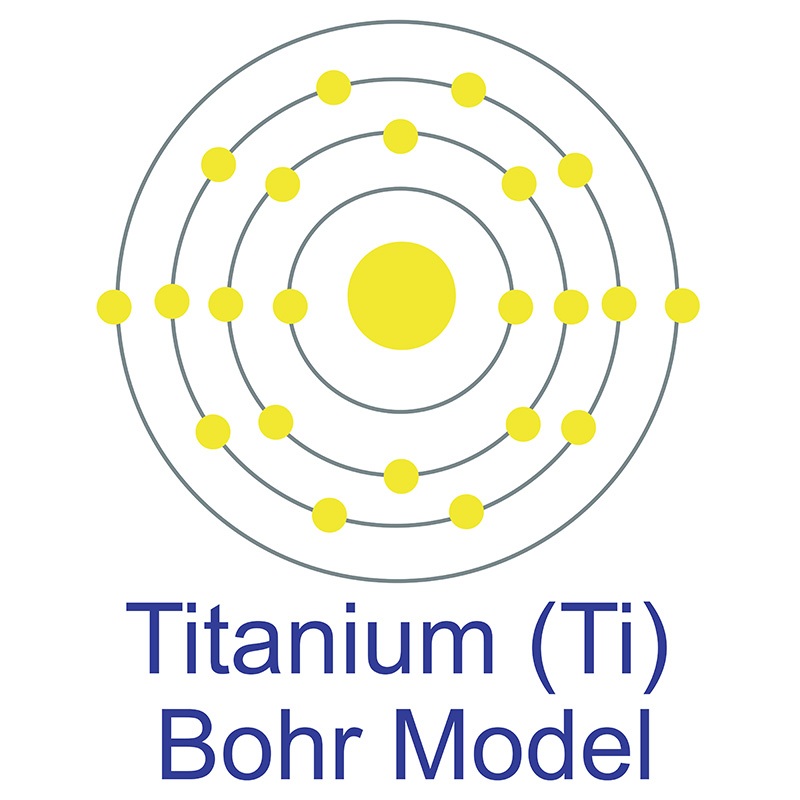
Titanium(Ti) atomic and molecular weight, atomic number and elemental symbolTitanium is a Block D, Group 4, Period 4 element. The number of electrons in each of Titanium's shells is 2, 8, 10, 2 and its electronic configuration is [Ar] 3d2 4s2. In its elemental form titanium's CAS number is 7440-32-6. The titanium atom has a radius of 144.8.pm and it's Van der Waals radius is 200.pm. Titanium metal is not considered to be toxic although titanium as metal shavings or powder is considered a fire hazard. In its metallic form it is not only very strong and light weight, but also highly resistant to corrosion. Thus it can be found in Elemental Titaniumnumerous aerospace and military applications. In its oxide form it used in low grades to produce a white pigment. Titanium is the bases for numerous commercially essential compound groups, such as Titanium Bohr Modeltitanium titanates in electronic and di-electric formulations and in crystal growth for ruby and sapphire lasers. Titanium information, including Technical Data, Safety Data and its high purity properties, research, applications and other useful facts are discussed here. Scientific facts such as the atomic structure, ionization energy , abundance on Earth, conductivity and thermal properties are included. Titanium was first discovered by William Gregor in 1791. Titanium was named after the word Titanos which is Greek for Titans. See Titanium research below.

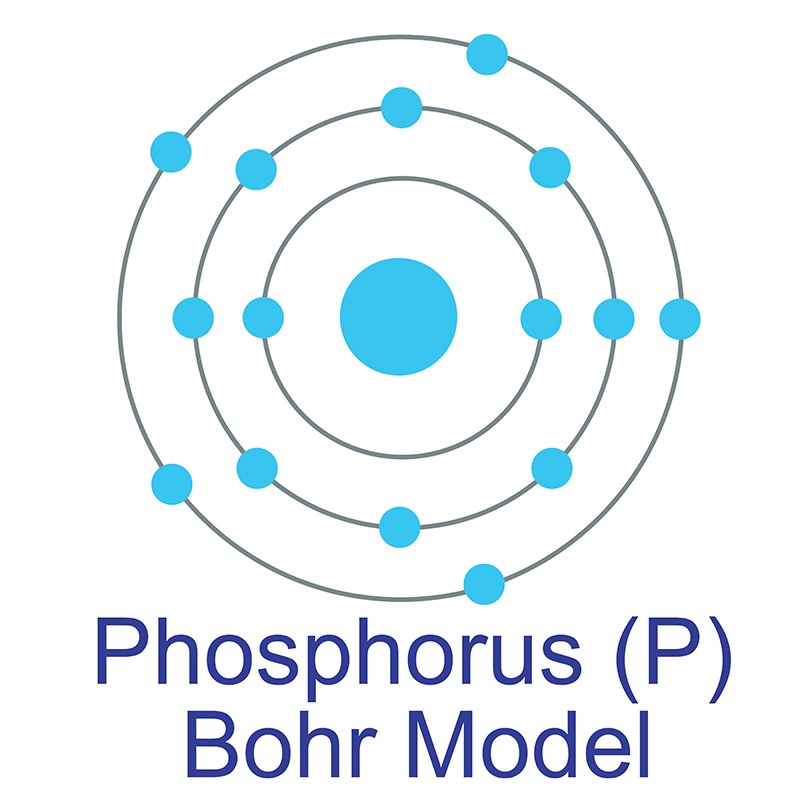
Phosphorus(P) atomic and molecular weight, atomic number and elemental symbolPhosphorus Bohr ModelPhosphorus is a Block P, Group 15, Period 3 element. The number of electrons in each of Phosphorus's shells is 2, 8, 5 and its electronic configuration is [Ne] 3s2 3p3. In its elemental form Phosphorus's CAS number is 7723-14-0. The Phosphorus atom has a radius of 110.5.pm and it's Van der Waals radius is 180.pm. Although white phosphorus is very toxic, red phosphorus is not considered toxic. Phosphorus information, including Technical Data, Safety Data and its High Purity properties, research, applications and other useful facts are discussed below. Scientific facts such as the atomic structure, ionization energy, abundance on Earth, conductivity and thermal properties are included.


Have a Question? Ask a Chemical Engineer or Material Scientist   Request an MSDS or Certificate of Analysis

 
Toxicity
Safety & Handling
 
Signal Word Hazard Statements Hazard Codes Risk Codes Safety Precautions RTECS No. Transport Information WGK Germany
N/A N/A N/A N/A N/A N/A N/A N/A


Synonyms for Titanium Phosphide Include:


phosphanylidynetitanium


PACKAGING SPECIFICATIONS FOR BULK & RESEARCH QUANTITIES


Typical bulk packaging includes palletized plastic 5 gallon/25 kg. pails, fiber and steel drums to 1 ton super sacks in full container (FCL) or truck load (T/L) quantities. Research and sample quantities and hygroscopic, oxidizing or other air sensitive materials may be packaged under argon or vacuum. Shipping documentation includes a Certificate of Analysis and Material Safety Data Sheet (MSDS). Solutions are packaged in polypropylene, plastic or glass jars up to palletized 440 gallon liquid totes.


Show me more forms of Titanium
 
Customers for this product have also looked at:
Titanium Nanoparticles Titanium Pellets Titanium Sputtering Target Titanium(IV) Oxide Acetylacetonate Titanium Fluoride
Titanium Oxide Titanium Powder Titanium Bars Titanium Chloride Titanium Nickel Copper
Titanium Molybdenum Alloy Titanium Foil Titanium Oxide Pellets Titanium Metal Titanium Acetate


Search by Material, Product Name, Product Code, CAS Number, Formula, Element, Anion, Form, EC Number, MDL Number or PubChem ID.


German   Korean   French   Japanese   Spanish   Chinese (Simplified)   Portuguese   Russian   Chinese (Taiwan)   Italian   Turkish   Polish   Dutch   Czech   Swedish   Hungarian   Danish   Hebrew

Production Catalog Available in 36 Countries & Languages

Recent Research & Development for Titanium

  • Anticancer efficacy enhancement and attenuation of side effects of doxorubicin with titanium dioxide nanoparticles. Chen Y, Wan Y, Wang Y, Zhang H, Jiao Z. Int J Nanomedicine. 2011;6:2321-6. Epub 2011 Oct 18. PMID: 22072869 [PubMed - in process]

  • Keyhole Cochlear Implantation: Current Status. Black B. Otol Neurotol. 2011 Nov 8. [Epub ahead of print] PMID: 22072266 [PubMed - as supplied by publisher]

  • Characterization of a hydroxyapatite sputtered film subject to hydrothermal treatment using FE-SEM and STEM. Ozeki K, Aoki H, Masuzawa T. Biomed Mater Eng. 2011 Jan 1;21(3):179-89. PMID: 22072082 [PubMed - in process]

  • In vitro evaluation of cytotoxicity of permanent prosthetic materials. Sabaliauskas V, Juciute R, Bukelskiene V, Rutkunas V, Trumpaite-Vanagiene R, Puriene A. Stomatologija. 2011;13(3):75-80. PMID: 22071414 [PubMed - in process]

  • Effect of ionic products of dicalcium silicate coating on osteoblast differentiation and collagen production via TGF-ß1 pathway. Li J, Wei L, Sun J, Guan G. J Biomater Appl. 2011 Nov 9. [Epub ahead of print] PMID: 22071351 [PubMed - as supplied by publisher]

  • Reconstruction of defects of maxillary sinus wall after removal of a huge odontogenic lesion using prebended 3D titanium-mesh and CAD/CAM technique - Methodology article - Stoetzer M, Rana M, Von See C, Eckardt AM, Gellrich NC. Head Face Med. 2011 Nov 9;7(1):21. [Epub ahead of print] PMID: 22070833 [PubMed - as supplied by publisher]

  • Total Synthesis of (-)-Virginiamycin M2: Application of Crotylsilanes Accessed by Enantioselective Rh(II) or Cu(I) Promoted Carbenoid Si-H Insertion. Wu J, Panek JS. J Org Chem. 2011 Nov 9. [Epub ahead of print] PMID: 22070230 [PubMed - as supplied by publisher]

  • Reduced stress shielding with limited micromotions using a carbon fibre composite biomimetic hip stem: a finite element model. Caouette C, Yahia LH, Bureau MN. Proc Inst Mech Eng H. 2011 Sep;225(9):907-19. PMID: 22070028 [PubMed - in process]

  • Numerical simulation of bone remodelling around dental implants. Ojeda J, Martínez-Reina J, García-Aznar JM, Domínguez J, Doblaré M. Proc Inst Mech Eng H. 2011 Sep;225(9):897-906. PMID: 22070027 [PubMed - in process]

  • [Application of titanium plate and Teflon patch in chest wall reconstruction after sternal. tumor resection]. Wu X, Chen M, Yu F. Zhongguo Xiu Fu Chong Jian Wai Ke Za Zhi. 2011 Oct;25(10):1224-6. Chinese. PMID: 22069979 [PubMed - in process]

  • Pediatric bony craniovertebral junction abnormalities: Institutional experience of 10 years. Kale SS, Ailawadhi P, Yerramneni VK, Chandra PS, Kumar R, Sharma BS, Mahapatra AK. J Pediatr Neurosci. 2011 Oct;6(Suppl 1):S91-5. PMID: 22069436 [PubMed]

  • Dietary Exposure Estimates of 14 Trace Elements in Xuanwei and Fuyuan, Two High Lung Cancer Incidence Areas in China. Zhang L, Lv J, Liao C. Biol Trace Elem Res. 2011 Nov 9. [Epub ahead of print] PMID: 22068732 [PubMed - as supplied by publisher]

  • Comparative approach to capture bacterial diversity of coastal waters. Na H, Kim OS, Yoon SH, Kim Y, Chun J. J Microbiol. 2011 Oct;49(5):729-40. Epub 2011 Nov 9. PMID: 22068488 [PubMed - in process]

  • Combined Use of Titanium Mesh and Resorbable PLLA-PGA Implant in the Treatment of Large Orbital Floor Fractures. Magana FG, Arzac RM, De Hilario Aviles L. J Craniofac Surg. 2011 Nov 5. [Epub ahead of print] PMID: 22067850 [PubMed - as supplied by publisher]

  • No improvement in long-term wear and revision rates with the second-generation Biomet cup (RingLoc) in young patients. Boesenach B, van der Heide HJ, Nelissen RG. Acta Orthop. 2011 Nov 9. [Epub ahead of print] PMID: 22066563 [PubMed - as supplied by publisher]

  • Clinical outcomes of TS-1 chemotherapy for advanced and recurrent gastric cancer. Lee SR, Kim HO, Yoo CH. J Korean Surg Soc. 2011 Sep;81(3):163-8. Epub 2011 Sep 26. PMID: 22066117 [PubMed]

  • Melanosis ilei induced by prolonged charcoal ingestion. Kim GM, Jun EJ, Kim YC, Park JM, Hong SI, Cheung DY, Kim JI, Lee YS. J Korean Surg Soc. 2011 Jul;81(1):66-9. Epub 2011 Jul 11. PMID: 22066103 [PubMed]

  • The mixed-valent titanium phosphate, Li(2)Ti(2)(PO(4))(3), dilithium dititanium(III/IV) tris-(orthophosphate). Kee Y, Lee SS, Yun H. Acta Crystallogr E Struct Rep Online. 2011 Sep 1;67(Pt 9):i49. Epub 2011 Aug 17. PMID: 22065701 [PubMed]

  • Transition from Anodic Titania Nanotubes to Nanowires: Arising from Nanotube Growth to Application in Dye-Sensitized Solar Cells. Sun L, Zhang S, Wang X, Sun XW, Ong DY, Wang X, Zhao D. Chemphyschem. 2011 Nov 7. doi: 10.1002/cphc.201100450. [Epub ahead of print] PMID: 22065460 [PubMed - as supplied by publisher]

  • Influence of metal ions on human lymphocytes and the generation of titanium-specific T-lymphocytes. Chan E, Cadosch D, Gautschi OP, Sprengel K, Filgueira L. J Appl Biomater Biomech. 2011 May-Aug;9(2):137-43. doi: 10.5301/JABB.2011.8567. PMID: 22065391 [PubMed - in process]

Recent Research & Development for Phosphorus

  • Consumption of whole grains is associated with improved diet quality and nutrient intake in children and adolescents: the National Health and Nutrition Examination Survey 1999-2004. O'Neil CE, Nicklas TA, Zanovec M, Cho SS, Kleinman R. Public Health Nutr. 2010 Oct 6:1-9. [Epub ahead of print] PubMed PMID: 20923597.

  • Chemical and microbiological changes during vermicomposting of coffee pulp using exotic (Eudrilus eugeniae) and native earthworm (Perionyx ceylanesis) species. Raphael K, Velmourougane K. Biodegradation. 2010 Oct 5. [Epub ahead of print] PubMed PMID: 20922463.

  • Synthesis, structure, and reductive elimination in the series Tp'Rh(PR(3))(Ar(F))H; Determination of rhodium-carbon bond energies of fluoroaryl substituents. Tanabe T, Brennessel WW, Clot E, Eisenstein O, Jones WD. Dalton Trans. 2010 Oct 5. [Epub ahead of print] PubMed PMID: 20924525.

  • Nutrient concentrations in Maryland non-tidal streams. Morgan RP 2nd, Kline KM. Environ Monit Assess. 2010 Oct 5. [Epub ahead of print] PubMed PMID: 20890788.

  • Hereditary disorders of renal phosphate wasting. Alizadeh Naderi AS, Reilly RF; Medscape. Nat Rev Nephrol. 2010 Oct 5. [Epub ahead of print] PubMed PMID: 20924400.

  • New Synthesis of 3-Trifluoromethylpyrroles by Condensation of Mesoionic 4-Trifluoroacetyl-1,3-oxazolium-5-olates with Phosphorus Ylides. Saijo R, Hagimoto Y, Kawase M. Org Lett. 2010 Oct 5. [Epub ahead of print] PubMed PMID: 20923166.

  • Structural and electronic properties of luminescent copper(i) halide complexes of bis[2-(diphenylphosphano)phenyl] ether (DPEphos). Crystal structure of [CuCl(DPEphos)(dmpymtH]. Aslanidis P, Cox PJ, Tsipis AC. Dalton Trans. 2010 Oct 4. [Epub ahead of print] PubMed PMID: 20922239.

  • Changes in Microbial Community Structure and Function of Drinking Water Treatment Bioreactors Upon Phosphorus Addition. Li X, Upadhyaya G, Yuen W, Brown J, Morgenroth E, Raskin L. Appl Environ Microbiol. 2010 Oct 1. [Epub ahead of print] PubMed PMID: 20889793.

  • Determination of a set of surrogate parameters to assess urban stormwater quality. Miguntanna NS, Egodawatta P, Kokot S, Goonetilleke A. Sci Total Environ. 2010 Oct 1. [Epub ahead of print] PubMed PMID: 20888615.

  • A review on the effects of environmental conditions on growth and toxin production of Ostreopsis ovata. Pistocchi R, Pezzolesi L, Guerrini F, Vanucci S, Dell'aversano C, Fattorusso E. Toxicon. 2010 Oct 1. [Epub ahead of print] PubMed PMID: 20920514.

  • Tenofovir-associated severe bone pain: I cannot walk! Jhaveri MA, Mawad HW, Thornton AC, Mullen NW, Greenberg RN. J Int Assoc Physicians AIDS Care (Chic Ill). 2010 Sep-Oct;9(5):328-34. PubMed PMID: 20923957.

  • Characteristics of contaminants in water and sediment of a constructed wetland treating piggery wastewater effluent. Lee S, Maniquiz MC, Kim LH. J Environ Sci (China). 2010;22(6):940-5. PubMed PMID: 20923110.

  • Effect of a seasonal diffuse pollution migration on natural organic matter behavior in a stratified dam reservoir. Yu SJ, Lee JY, Ha SR. J Environ Sci (China). 2010;22(6):908-14. PubMed PMID: 20923105.

  • Water-saving irrigation of paddy field to reduce nutrient runoff. Hitomi T, Iwamoto Y, Miura A, Hamada K, Takaki K, Shiratani E. J Environ Sci (China). 2010;22(6):885-91. PubMed PMID: 20923101.

  • Scenario analysis for reduction of pollutant load discharged from a watershed by recycling of treated water for irrigation. Shiratani E, Munakata Y, Yoshinaga I, Kubota T, Hamada K, Hitomi T. J Environ Sci (China). 2010;22(6):878-84. PubMed PMID: 20923100.

  • Modeling the effects of constructed wetland on nonpoint source pollution control and reservoir water quality improvement. Ham J, Yoon CG, Kim HJ, Kim HC. J Environ Sci (China). 2010;22(6):834-9. PubMed PMID: 20923093.

  • Evaluation of non-point source pollution reduction by applying best management practices using a SWAT model and QuickBird high resolution satellite imagery. Lee M, Park G, Park M, Park J, Lee J, Kim S. J Environ Sci (China). 2010;22(6):826-33. PubMed PMID: 20923092.

  • Understanding nutrient build-up on urban road surfaces. Miguntanna NP, Goonetilleke A, Egodowatta P, Kokot S. J Environ Sci (China). 2010;22(6):806-12. PubMed PMID: 20923089.

  • Monitoring of non-point source pollutants load from a mixed forest land use. Yoon SW, Chung SW, Oh DG, Lee JW. J Environ Sci (China). 2010;22(6):801-5. PubMed PMID: 20923088.

  • [Primary hyperparathyroidism: Postoperative long-term evolution.]. Spivacow FR, Martínez C, Polonsky A. Medicina (B Aires). 2010;70(5):408-14. Spanish. PubMed PMID: 20920956.


Aeromat 2012 Sponsor
Proud sponsors of Aeromat 2012. Please join us and our customers & co-sponsors Boeing and ATI on June 18-20, 2012
in Charlotte, North Carolina

PRODUCT CATALOG Titanium Products News Foil Submicron & Nanopowder Tolling Ultra High Purity Sputtering Target Crystal Growth Rod, Plate, Powder, etc. Home

  Print this Page
Periodic table of the elements science and academic information, elements and advanced materials data, scientific presentations and all pages, designs, concepts, logos, and color schemes herein are the copyrighted proprietary rights and intellectual property of American Elements. American Elements is a U.S. Registered Trademark. © 1998-2012. American Elements. All rights reserved.
Learn Six Sigma


American Elements is a copyrighted U.S. Trademark. All rights reserved.