American Elements Logo and U.S. Registered Trademark


Thulium Acetate
Tm(O2C2H3)3.x H2O
Product Product Code Order or Specifications
(2N) 99% Thulium Acetate TM-AC-02 Contact American Elements
(3N) 99.9% Thulium Acetate TM-AC-03 Contact American Elements
(4N) 99.99% Thulium Acetate TM-AC-04 Contact American Elements
(5N) 99.999% Thulium Acetate TM-AC-05 Contact American Elements


CHEMICAL
IDENTIFICATION
Formula CAS No. PubChem
SID
PubChem CID MDL No. EC No IUPAC Name Beilstein
Re. No.
SMILES
Identifier
InChI
Identifier
InChI
Key
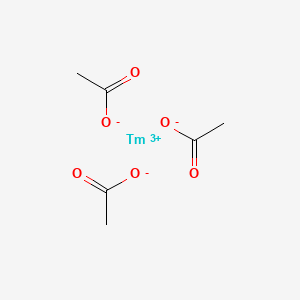
Tm(O2C2H3)3.x H2O 314041-04-8 24862825 1621363 MFCD00150125   Thulium(3+) triacetate   [Tm+3].O=C([O-])C.[O-]C(=O)C.[O-]C(=O)C InChI=1S/3C2H4O2.Tm/c3*1-2(3)4;/h3*1H3,(H,3,4);/q;;;+3/p-3 SNMVVAHJCCXTQR-UHFFFAOYSA-K

Compound Formula Mol. Wt. Appearance Density

Exact Mass

Monoisotopic Mass Charge MSDS
C6H9O6Tm 346.07 White g/cm3 345.974 g/mol 345.974113 Da 0 Safety Data Sheet


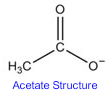
Acetate Formula StructureThulium Acetate is a moderately water soluble crystalline Thulium source that decomposes to Thulium oxide on heating. It is generally immediately available in most volumes. Acetates are excellent precursors for production of ultra high purity compounds and certain catalyst and nanoscale(nanoparticles and nanopowders) materials. All metallic acetates are inorganic salts of a metal cation and the acetate anion. The acetate anion is a univalent (-1 charge) polyatomic ion composed of two carbon atoms ionically bound to three hydrogen and two oxygen atoms (Symbol: CH3COO) for a total formula weight of 59.05. High purity, submicron and nanopowder forms may be considered. Thulium emits blue upon excitation in flat panel screens and under X-ray bombardment emits both the 375 nm (ultra violet) and 465 (visible blue) wave lengths giving it useful applications in low radiation detection for detection badges and similar uses. We also produce Thulium Acetate Solution.American Elements produces to many standard grades when applicable, including Mil Spec (military grade); ACS, Reagent and Technical Grade; Food, Agricultural and Pharmaceutical Grade; Optical Grade, USP and EP/BP (European Pharmacopoeia/British Pharmacopoeia)and follows applicable ASTM testing standards.Typical and custom packaging is available. Additional technical, research and safety (MSDS) information is available as is a Reference Calculator for converting relevant units of measurement.

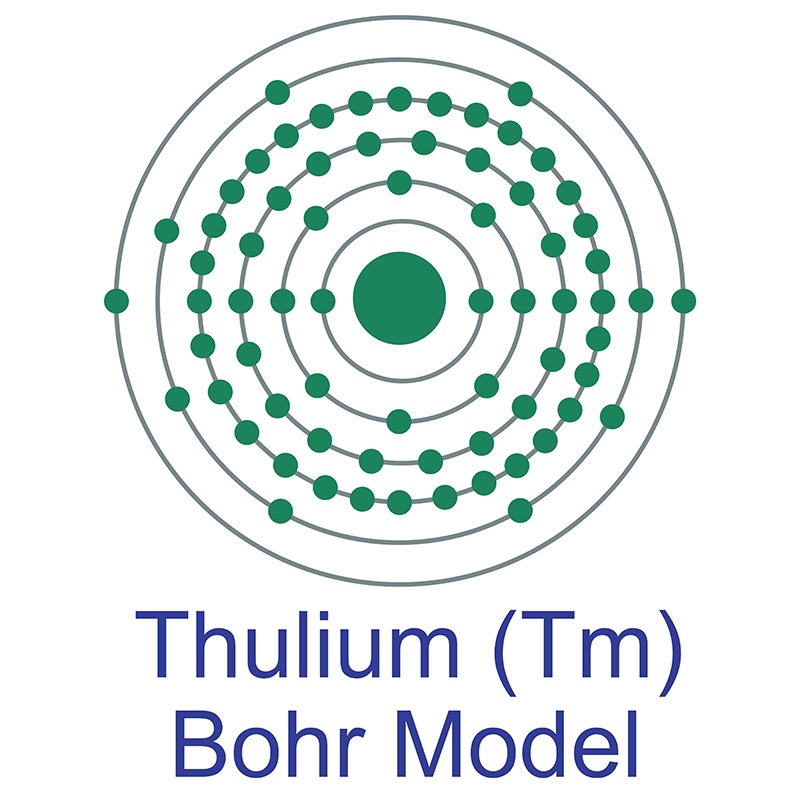
Thulium(Tm) atomic and molecular weight, atomic number and elemental symbolThulium is a Block F, Group 3, Period 6 element. The number of electrons in each of Thulium's shells is 2, 8, 18, 31, 8, 2 and its electronic configuration is [Xe]4f136s2. In its elemental form thulium's CAS number is 7440-30-4. The thulium atom has a radius of 172.4.pm and it's Van der Waals radius is unknown. Thulium is not toxic. Thulium is representative of the other lanthanides (rare earths) similar in chemistry to Yttrium. Thulium is available as metal and compounds with purities from 99% to 99.999% (ACS grade to ultra-high purity); metals in the form of foil, sputtering target, and rod, and compounds as submicron and nanopowder. Thulium Elemental Thuliumemits blueThulium Bohr Model upon excitation. Flat panel screens depend critically on bright blue emitters. Also, under X-ray bombardment emissions are in both the 375 nm (ultra violet) and 465 (visible blue) wave lengths. This gives the material useful applications in low radiation detection for detection badges and similar uses. It is also used in other luminescence applications, such as halide discharge lamps. Thulium was first discovered by Theodore Cleve in 1879. Thulium is named after "Thule", which is the ancient name of Scandinavia. See Thulium research below.

Acetate is an anion used as a ligand in metal complexes. The formula is CH3CO2-, C2H3O2-, or CH3COO-. Metal acetates are used in biology, printing, vinyl acetate in plastic production, volatile organic esters as solvents and cellulose acetate in photographic films and textiles. Cellulose acetate, one of the first synthetic fibers, is often called acetate.

Have a Question? Ask a Chemical Engineer or Material Scientist   Request an MSDS or Certificate of Analysis

 
Safety &
Handling
 
Signal Word Hazard Statements Hazard Codes Risk Codes Safety Precautions RTECS No. Transport Information WGK Germany
N/A N/A Xi 36/37/38 26-37/39 N/A N/A 3


Synonyms for Thulium Acetate Include:


Thulium triacetate
Thulium(3+) acetate
Thuliumtriacetat


PACKAGING SPECIFICATIONS FOR BULK & RESEARCH QUANTITIES


Typical bulk packaging includes palletized plastic 5 gallon/25 kg. pails, fiber and steel drums to 1 ton super sacks in full container (FCL) or truck load (T/L) quantities. Research and sample quantities and hygroscopic, oxidizing or other air sensitive materials may be packaged under argon or vacuum. Shipping documentation includes a Certificate of Analysis and Material Safety Data Sheet (MSDS). Solutions are packaged in polypropylene, plastic or glass jars up to palletized 440 gallon liquid totes.


Show me more forms of Thulium
 
Customers for this product have also looked at:
Yttrium Aluminum Garnet doped Thulium Thulium Foil Thulium Nanoparticles Thulium Powder Thulium Metal
Thulium Acetylacetonate Thulium Oxide Pellets Thulium Chloride Thulium Acetate Thulium Wire
Tm:YVO4 Thulium Sulfate Thulium Pellets Thulium Sputtering Target Thulium Oxide


Search by Material, Product Name, Product Code, CAS Number, Formula, Element, Anion, Form, EC Number, MDL Number or PubChem ID.
German   Korean   French   Japanese   Spanish   Chinese (Simplified)   Portuguese   Russian   Chinese (Taiwan)   Italian   Turkish   Polish   Dutch   Czech   Swedish   Hungarian   Danish   Hebrew

Production Catalog Available in 36 Countries & Languages

Recent Research & Development for Thulium

  • Comparison of holmium:YAG and thulium fiber laser lithotripsy: ablation thresholds, ablation rates, and retropulsion effects. Blackmon RL, Irby PB, Fried NM. J Biomed Opt. 2011 Jul;16(7):071403. PMID: 21806249 [PubMed - in process]

  • Poly[[triaqua-(µ(3)-4-oxidopyridine-2,6-dicarboxyl-ato)thulium(III)] monohydrate]. Gao ZQ, Lv DY, Gu JZ, Li HJ. Acta Crystallogr Sect E Struct Rep Online. 2011 Apr 1;67(Pt 4):m409. Epub 2011 Mar 9. PMID: 21753941 [PubMed]

  • Natural orifice (NOTES) transurethral sutureless radical prostatectomy with thulium laser support: first patient report. Nagele U, Anastasiadis AG, Walcher U, Nicklas AP, Merseburger AS, Herrmann TR. World J Urol. 2011 Jul 8. [Epub ahead of print] PMID: 21739124 [PubMed - as supplied by publisher]

  • A highly selective fluorescent probe for pyrophosphate detection in aqueous solutions. Ganjali MR, Hosseini M, Aboufazeli F, Faridbod F, Goldooz H, Badiei AR. Luminescence. 2011 Jul 7. doi: 10.1002/bio.1316. [Epub ahead of print] PMID: 21735538 [PubMed - as supplied by publisher]

  • Novel technique for mode selection in a multimode fiber laser. Daniel JM, Chan JS, Kim JW, Sahu JK, Ibsen M, Clarkson WA. Opt Express. 2011 Jun 20;19(13):12434-9. doi: 10.1364/OE.19.012434. PMID: 21716482 [PubMed - in process]

  • 13.1 W, high-beam-quality, narrow-linewidth continuous-wave fiber-based source at 970 nm. Devi K, Kumar SC, Ebrahim-Zadeh M. Opt Express. 2011 Jun 6;19(12):11631-7. doi: 10.1364/OE.19.011631. PMID: 21716396 [PubMed - in process]

  • Plasmonic enhanced emissions from cubic NaYF(4):Yb: Er/Tm nanophosphors. Sudheendra L, Ortalan V, Dey S, Browning ND, Kennedy IM. Chem Mater. 2011 Jun 14;23(11):2987-2993. PMID: 21709812 [PubMed]

  • Theoretical Treatment of Redox Processes Involving Lanthanide(II) Compounds: Reactivity of Organosamarium(II) and Organothulium(II) Complexes with CO(2) and Pyridine. Labouille S, Nief F, Maron L. J Phys Chem A. 2011 Jul 28;115(29):8295-8301. Epub 2011 Jul 6. PMID: 21675778 [PubMed - as supplied by publisher]

  • [170Tm]-Labeled ethylenediamine tetramethylene phosphonic acid. Chopra A. Molecular Imaging and Contrast Agent Database (MICAD) [Internet]. Bethesda (MD): National Center for Biotechnology Information (US); 2004-2011. 2011 Apr 27 [updated 2011 May 26]. PMID: 21656985 [PubMed]

  • Determination of rare earth elements and other trace elements (Y, Mn, Co, Cr) in seawater using Tm addition and Mg(OH)2 co-precipitation. Freslon N, Bayon G, Birot D, Bollinger C, Barrat JA. Talanta. 2011 Jul 15;85(1):582-7. Epub 2011 May 5. PMID: 21645745 [PubMed - in process]

  • Tm:YAG laser en bloc mucosectomy for accurate staging of primary bladder cancer: early experience. Wolters M, Kramer MW, Becker JU, Christgen M, Nagele U, Imkamp F, Burchardt M, Merseburger AS, Kuczyk MA, Bach T, Gross AJ, Herrmann TR. World J Urol. 2011 Aug;29(4):429-32. Epub 2011 May 8. PMID: 21553277 [PubMed - in process]

  • Current evidence for transurethral laser therapy of non-muscle invasive bladder cancer. Kramer MW, Bach T, Wolters M, Imkamp F, Gross AJ, Kuczyk MA, Merseburger AS, Herrmann TR. World J Urol. 2011 Aug;29(4):433-42. Epub 2011 May 5. PMID: 21544662 [PubMed - in process]

  • Development of a thulium (Tm:YAP) laser system for brain tissue ablation. Bilici T, Mutlu S, Kalaycioglu H, Kurt A, Sennaroglu A, Gulsoy M. Lasers Med Sci. 2011 Sep;26(5):699-706. Epub 2011 Apr 12. PMID: 21484452 [PubMed - in process]

  • Delayed presentation of a detached resectoscope beak and treatment with thulium laser. Davis NF, McGuire BB, Flood HD. Can Urol Assoc J. 2011 Apr;5(2):E17-8. doi: 10.5489/cuaj.10048. PMID: 21470544 [PubMed]

  • High-pressure phase transitions in rare earth metal thulium to 195 GPa. Montgomery JM, Samudrala GK, Tsoi GM, Vohra YK. J Phys Condens Matter. 2011 Apr 20;23(15):155701. Epub 2011 Apr 1. PMID: 21460429 [PubMed - in process]

  • Superbroadband near-infrared emission in Tm-Bi codoped sodium-germanium-gallate glasses. Zhou B, Lin H, Chen B, Pun EY. Opt Express. 2011 Mar 28;19(7):6514-23. doi: 10.1364/OE.19.006514. PMID: 21451680 [PubMed - indexed for MEDLINE]

  • Critical review of lasers in benign prostatic hyperplasia (BPH). Gravas S, Bachmann A, Reich O, Roehrborn CG, Gilling PJ, De La Rosette J. BJU Int. 2011 Apr;107(7):1030-43. doi: 10.1111/j.1464-410X.2010.09954.x. Review. PMID: 21438974 [PubMed - indexed for MEDLINE]

  • Determination of some heavy metals in food and environmental samples by flame atomic absorption spectrometry after coprecipitation. Soylak M, Aydin A. Food Chem Toxicol. 2011 Jun;49(6):1242-8. Epub 2011 Mar 22. PMID: 21419188 [PubMed - in process]

  • Efficient diode-pumped laser operation of Tm:Lu2O3 around 2?µm. Koopmann P, Lamrini S, Scholle K, Fuhrberg P, Petermann K, Huber G. Opt Lett. 2011 Mar 15;36(6):948-50. doi: 10.1364/OL.36.000948. PMID: 21403738 [PubMed - indexed for MEDLINE]

  • Comparison of high-dose rate prostate brachytherapy dose distributions with iridium-192, ytterbium-169, and thulium-170 sources. Krishnamurthy D, Weinberg V, Cunha JA, Hsu IC, Pouliot J. Brachytherapy. 2011 Mar 10. [Epub ahead of print] PMID: 21397569 [PubMed - as supplied by publisher]


Material Safety Data Sheet
  • 1 Identification of substance

    • Product details

    • Trade name Thulium (III) acetate
  • 2 Composition/Data on components:

    • Chemical characterization:
                 Designation: (CAS#)                                        
      Thulium (III) acetate, hydrate (CAS# ?); 100%
  • 3 Hazards identification

    • Hazard designation: · void
    • Information pertaining to particular dangers for man and environment
      Not applicable
  • 4 First aid measures

    • After inhalation
      Supply fresh air. If required, provide artificial respiration. Keep patient warm. Consult doctor if symptoms persist.
      Seek immediate medical advice.
    • After skin contact
      Instantly wash with water and soap and rinse thoroughly.
      Seek immediate medical advice.
    • After eye contact
      Rinse opened eye for several minutes under running water. Then consult doctor.
    • After swallowing Seek medical treatment.
  • 5 Fire fighting measures

    • Suitable extinguishing agents
      CO2, extinguishing powder or water jet. Fight larger fires with water jet or alcohol-resistant foam.
    • Special hazards caused by the material, its products of combustion or
        flue gases:
      Can be released in case of fire:
      Carbon monoxide and carbon dioxide
      Metal oxide
    • Protective equipment:
      Wear self-contained breathing apparatus.
      Wear full protective suit.
  • 6 Accidental release measures

    • Person-related safety precautions:
      Wear protective equipment. Keep unprotected persons away.
      Ensure adequate ventilation
    • Measures for environmental protection:
      Do not allow material to be released to the environment without proper governmental permits.
    • Measures for cleaning/collecting: Collect mechanically.
    • Additional information:
      See Section 7 for information on safe handling
      See section 8 for information on personal protection equipment.
      See Section 13 for information on disposal.
  • 7 Handling and storage


    • Handling
    • Information for safe handling:
      Keep containers tightly sealed.
      Store in cool, dry place in tightly closed containers.
      No special precautions necessary if used correctly.
    • Information about protection against explosions and fires:
      No special measures required.

    • Storage
    • Requirements to be met by storerooms and containers:
      No special requirements.
    • Information about storage in one common storage facility:
      Store away from oxidizing agents.
    • Further information about storage conditions:
      Keep container tightly sealed.
      Store in cool, dry conditions in well sealed containers.
  • 8 Exposure controls and personal protection

    • Additional information about design of technical systems:
      Properly operating chemical fume hood designed for hazardous chemicals and having an average face velocity of at least 100 feet per minute.

    • Components with critical values that require monitoring at the
      workplace:                                                             
      Not required.
    • Additional information: No data

    • Personal protective equipment
    • General protective and hygienic measures
      The usual precautionary measures should be adhered to in handling the chemicals.
      Keep away from foodstuffs, beverages and food.
      Instantly remove any soiled and impregnated garments.
      Wash hands during breaks and at the end of the work.
    • Breathing equipment: Use breathing protection with high concentrations.
    • Protection of hands: Impervious gloves
    • Eye protection: Safety glasses
    • Body protection: Protective work clothing.
  • 9 Physical and chemical properties:

    • General Information

    • Form: Crystalline aggregates
    • Colour: Whitish
    • Smell: Not determined
    •   Value/Range  Unit    Method      
    • Change in condition
    • Melting point/Melting range:       Not determined
    • Boiling point/Boiling range:       Not determined
    • Sublimation temperature / start:   Not determined

    • Flash point:                       Not applicable

    • Inflammability (solid, gaseous)    Product is not inflammable.

    • Ignition temperature:              Not determined

    • Decomposition temperature:         Not determined

    • Danger of explosion:               Product is not explosive.

    • Critical values for explosion:
    • Lower:                             Not determined
    • Upper:                             Not determined

    • Steam pressure:                    Not determined

    • Density                            Not determined

    • Solubility in / Miscibility with
    • Water:                             Soluble
  • 10 Stability and reactivity

    • Thermal decomposition / conditions to be avoided:
      No decomposition if used and stored according to specifications.
    • Materials to be avoided: Oxidizing agents
    • Dangerous reactions: No dangerous reactions known
    • Dangerous products of decomposition:
      Carbon monoxide and carbon dioxide
      Metal oxide
  • 11 Toxicological information

    • Acute toxicity:
    • Primary irritant effect:
    • on the skin: May cause irritation
    • on the eye: May cause irritation
    • Sensitization: No sensitizing effect known.
    • Additional toxicological information:
      To the best of our knowledge the acute and chronic toxicity of this substance is not fully known.
      No classification data on carcinogenic properties of this material is available from the EPA, IARC, NTP, OSHA or ACGIH.
  • 12 Ecological information:

    • General notes:
      Do not allow material to be released to the environment without proper governmental permits.
      Water hazard class 1 (Self-assessment): slightly hazardous for water.
      Do not allow undiluted product or large quantities of it to reach ground water, water bodies or sewage system.
  • 13 Disposal considerations


    • Product:
    • Recommendation
      Consult state, local or national regulations for proper disposal.
      Hand over to disposers of hazardous waste.
      Must be specially treated under adherence to official regulations.

    • Uncleaned packagings:
    • Recommendation:
      Disposal must be made according to official regulations.
    • Recommended cleaning agent: Water, if necessary with cleaning agent.
  • 14 Transport information


    • Land transport ADR/RID and GGVS/GGVE (cross-border/domestic)
    • ADR/RID-GGVS/E Class:         None

    • Maritime transport IMDG/GGVSea:
    • IMDG/GGVSea Class:        None

    • Air transport ICAO-TI and IATA-DGR:
    • ICAO/IATA Class:          None

    • Transport/Additional information:
      Not dangerous according to the above specifications.
  • 15 Regulatory information


    • Designation according to EC guidelines:
      Observe the normal safety regulations when handling chemicals
      The product is not subject to identification regulations under EC Directives and the Ordinance on Hazardous Materials (GefStoffV).

    • National regulations

    • Information about limitation of use:
      For use only by technically qualified individuals.

    • Water hazard class:
      Water hazard class 1 (Self-assessment): slightly hazardous for water.
  • 16 Other information:

      Employers should use this information only as a supplement to other information gathered by them, and should make independent judgement of suitability of this information to ensure proper use and protect the health and safety of employees.  This information is furnished without warranty, and any use of the product not in conformance with this Material Safety Data Sheet, or in combination with any other product or process, is the responsibility of the user.

  •      

    USA Science & Engineering FestivalSponsors of the United States Science & Engineering Festival on April 28, 2012 in Washington D.C. Please join us and our customers & co-sponsors NASA, Lockheed Martin and the Department of Defense inspiring the next generation of scientists and engineers.


    PRODUCT CATALOG Thulium Products News Foil Submicron & Nanopowder Tolling Ultra High Purity Sputtering Target Crystal Growth Rod, Plate, Powder, etc. MSDS Home

      Print this Page
    Periodic table of the elements science and academic information, elements and advanced materials data, scientific presentations and all pages, designs, concepts, logos, and color schemes herein are the copyrighted proprietary rights and intellectual property of American Elements. American Elements is a U.S. Registered Trademark. © 2001-2012. American Elements. All rights reserved.
    Learn Six Sigma


    American Elements is a copyrighted U.S. Trademark. All rights reserved.