Uranium
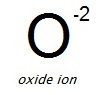
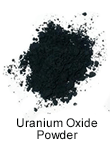
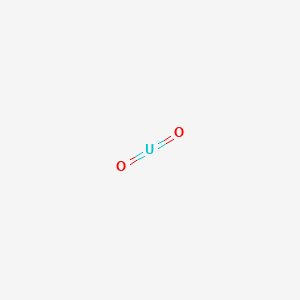
Oxide is a highly insoluble thermally stable Uranium source suitable for glass, optic and ceramic applications. Oxide compounds are not conductive to electricity. However, certain perovskite structured oxides are electronically conductive finding application in the cathode of solid oxide fuel cells and oxygen generation systems.
Rare Earth oxide compounds are basic anhydrides and can therefore react with acids and with strong reducing agents in redox reactions. They are compounds containing at least one oxygen anion and one metallic cation. They are typically insoluble in aqueous solutions (water) and extremely stable making them useful in ceramic structures as simple as producing clay bowls to advanced electronics and in light weight structural components in aerospace and electrochemical applications such as fuel cells in which they exhibit ionic conductivity. Uranium Oxide is also available in pellets, pieces, sputtering targets, tablets, and nanopowder (from American Elements' nanoscale production facilities).
See Nanotechnology for more nanotechnology applications information. Uranium Oxide is generally immediately available in most volumes. High purity, submicron and nanopowder forms may be considered. Additional technical, research and safety (MSDS) information is available as is a Reference Calculator for converting relevant units of measurement.
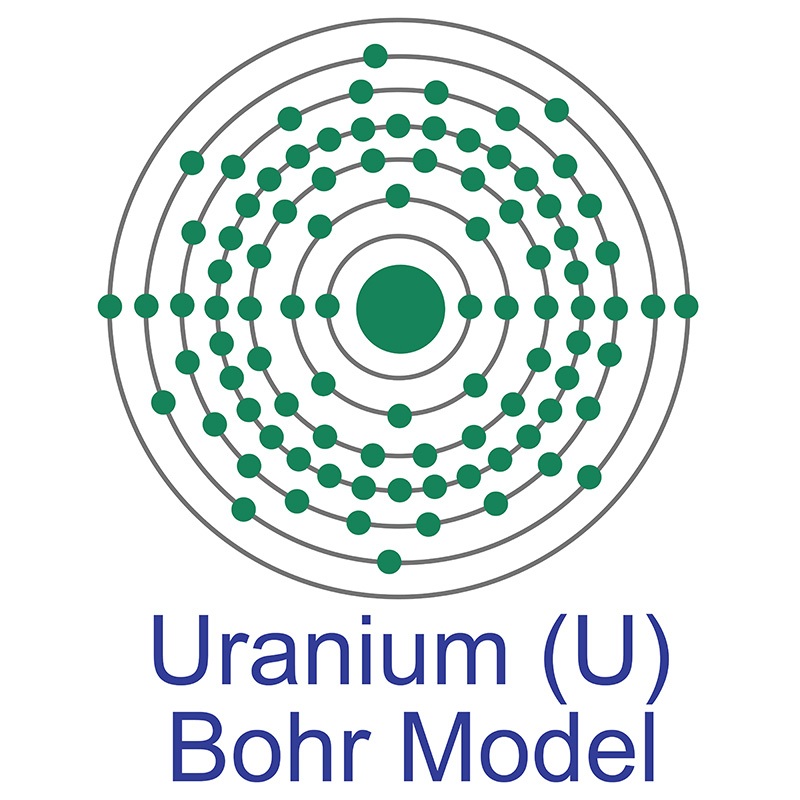
Uranium is a Block F, Group 3, Period 7 element. The electronic configuration is [Rn] 5f3 6d1 7s2. In its elemental form uranium's CAS number is 7440-61-1. The uranium atom has a radius of 138.5.pm and it's Van der Waals radius is 186.pm. Uranium in its depleted and unenriched forms has numerous commercial applications due to its great density and its bright yellow-green color in glass and ceramics. Its great density has found military applications in armor piercing armaments and in protective shielding. It is added to ceramic frits, glazes and to color bar for glass production because of its bright yellow shade. Uranyl Nitrate and Uranyl Acetate are used in medical and analytical laboratories. Uranium information, including Technical Data, Safety Data and its high purity properties , research , applications and other useful facts are discussed here . Scientific facts such as the atomic structure, ionization energy , abundance on Earth , conductivity and thermal properties are included. Uranium was discovered by Martin Heinrich Klaproth
|
| |
Periodic table of the elements science and academic information, elements and advanced materials data, scientific presentations and all pages, designs, concepts, logos, and color schemes herein are the copyrighted proprietary rights and intellectual property of American Elements. American Elements is a U.S. Registered Trademark. © 2001-2009. American Elements. All rights reserved. |
 |
|
Recent Research & Development for Uranium
-
Natural radioactivity in underground water from the Outer Carpathians in Poland with the use of nuclear spectrometry techniques.
Walencik A, Kozlowska B, Dorda J, Zipper W.
Appl Radiat Isot. 2009 Sep 23. [Epub ahead of print]
PMID: 19864151 [PubMed - as supplied by publisher]
- Nitrate and Perchlorate Complexes of Uranium(IV).
Crawford MJ, Ellern A, Karaghiosoff K, Mayer P.
Inorg Chem. 2009 Oct 27. [Epub ahead of print]
PMID: 19860377 [PubMed - as supplied by publisher]
- Crown and Bowl-Shaped Clusters of Uranyl Polyhedra.
Sigmon GE, Weaver B, Kubatko KA, Burns PC.
Inorg Chem. 2009 Oct 26. [Epub ahead of print]
PMID: 19856900 [PubMed - as supplied by publisher]
- Radon and risk of death from cancer and cardiovascular diseases in the German uranium miners cohort study: follow-up 1946-2003.
Kreuzer M, Grosche B, Schnelzer M, Tschense A, Dufey F, Walsh L.
Radiat Environ Biophys. 2009 Oct 24. [Epub ahead of print]
PMID: 19855993 [PubMed - as supplied by publisher]
- The distribution of depleted uranium contamination in Colonie, NY, USA.
Lloyd NS, Chenery SR, Parrish RR.
Sci Total Environ. 2009 Oct 21. [Epub ahead of print]
PMID: 19853279 [PubMed - as supplied by publisher]
- Sequestering uranium and technetium through co-precipitation with aluminum in a contaminated acidic environment.
Luo W, Kelly SD, Kemner KM, Watson D, Zhou J, Jardine PM, Gu B.
Environ Sci Technol. 2009 Oct 1;43(19):7516-22.
PMID: 19848170 [PubMed - in process]
- Thermodynamic properties of autunite, uranyl hydrogen phosphate, and uranyl orthophosphate from solubility and calorimetric measurements.
Gorman-Lewis D, Shvareva T, Kubatko KA, Burns PC, Wellman DM, Mcnamara B, Szymanowski JE, Navrotsky A, Fein JB.
Environ Sci Technol. 2009 Oct 1;43(19):7416-22.
PMID: 19848155 [PubMed - in process]
- Incorporation of oxidized uranium into Fe (hydr)oxides during Fe(II) catalyzed remineralization.
Nico PS, Stewart BD, Fendorf S.
Environ Sci Technol. 2009 Oct 1;43(19):7391-6.
PMID: 19848151 [PubMed - in process]
- Reaction Sequence and Kinetics of Uranium Nitride Decomposition.
Silva GW, Yeamans CB, Sattelberger AP, Hartmann T, Cerefice GS, Czerwinski KR.
Inorg Chem. 2009 Oct 21. [Epub ahead of print]
PMID: 19845318 [PubMed - as supplied by publisher]
- Linear polarization scans for resonant X-ray diffraction with a double-phase-plate configuration.
Scagnoli V, Mazzoli C, Detlefs C, Bernard P, Fondacaro A, Paolasini L, Fabrizi F, de Bergevin F.
J Synchrotron Radiat. 2009 Nov;16(Pt 6):778-87. Epub 2009 Sep 29.
PMID: 19844014 [PubMed - in process]
- RADON MONITORING IN WATER SOURCES OF BALAKOT AND MANSEHRA CITIES LYING ON A GEOLOGICAL FAULT LINE.
Khan F, Ali N, Khan EU, Khattak NU, Khan K.
Radiat Prot Dosimetry. 2009 Oct 19. [Epub ahead of print]
PMID: 19841014 [PubMed - as supplied by publisher]
- A sequential method for the determination of (210)Pb, (226)Ra, and uranium and thorium radioisotopes by LSC and alpha-spectrometry.
Lozano JC, Tomé FV, Rodríguez PB, Prieto C.
Appl Radiat Isot. 2009 Sep 23. [Epub ahead of print]
PMID: 19833528 [PubMed - as supplied by publisher]
- Application of lead and strontium isotope ratio measurements for the origin assessment of uranium ore concentrates.
Varga Z, Wallenius M, Mayer K, Keegan E, Millet S.
Anal Chem. 2009 Oct 15;81(20):8327-34.
PMID: 19824713 [PubMed - in process]
- Diffusive gradient in thin FILMS (DGT) compared with soil solution and labile uranium fraction for predicting uranium bioavailability to ryegrass.
Duquène L, Vandenhove H, Tack F, Van Hees M, Wannijn J.
J Environ Radioact. 2009 Oct 10. [Epub ahead of print]
PMID: 19822385 [PubMed - as supplied by publisher]
- Verifying the presence of low levels of neptunium in a uranium matrix with electron energy-loss spectroscopy.
Buck EC, Douglas M, Wittman RS.
Micron. 2009 Aug 27. [Epub ahead of print]
PMID: 19819708 [PubMed - as supplied by publisher]
- Challenge assay: A functional biomarker for exposure-induced DNA repair deficiency and for risk of cancer.
Au WW, Giri AK, Ruchirawat M.
Int J Hyg Environ Health. 2009 Oct 7. [Epub ahead of print]
PMID: 19818682 [PubMed - as supplied by publisher]
- Isoflavones with unusually modified B-rings and their evaluation as antiproliferative agents.
Ndejouong Ble S, Sattler I, Dahse HM, Kothe E, Hertweck C.
Bioorg Med Chem Lett. 2009 Nov 15;19(22):6473-6. Epub 2009 Aug 28.
PMID: 19818612 [PubMed - in process]
- Cs(2)K(UO)(2)Si(4)O(12): A Mixed-Valence Uranium(IV,V) Silicate.
Lee CS, Wang SL, Lii KH.
J Am Chem Soc. 2009 Oct 6. [Epub ahead of print]
PMID: 19807080 [PubMed - as supplied by publisher]
- [Occurrence of radon 222Rn in curative waters]
Pachocki KA, Wieprzowski K, Bekas M, Rózycki Z.
Rocz Panstw Zakl Hig. 2009;60(2):129-36. Polish.
PMID: 19803442 [PubMed - in process]
- [New and revised reference values for antimony, arsenic and metals (lead, cadmium, nickel, mercury, thallium and uranium) in blood of children in Germany. Position of the "Human Biomonitoring" Council of the Environmental Office]
[No authors listed]
Bundesgesundheitsblatt Gesundheitsforschung Gesundheitsschutz. 2009 Oct;52(10):977-82. German. No abstract available.
PMID: 19802622 [PubMed - indexed for MEDLINE]
|
|