American Elements Logo and U.S. Registered Trademark


Zinc Carbide Foam
High Purity ZnC Foam
Product Product Code Order or Specifications
(2N) 99% Zinc Carbide Foam ZN-FM-02 Contact American Elements
(2N5) 99.5% Zinc Carbide Foam ZN-FM-025 Contact American Elements
(3N) 99.9% Zinc Carbide Foam ZN-FM-03 Contact American Elements
(3N5) 99.95% Zinc Carbide Foam ZN-FM-035 Contact American Elements
(4N) 99.99% Zinc Carbide Foam ZN-FM-04 Contact American Elements
(5N) 99.999% Zinc Carbide Foam ZN-FM-05 Contact American Elements
Zinc Carbide Foam is low density permeable material with numerous applications. The defining characteristic of these foams is a very high porosity, typically 75-95% of the volume consisting of void spaces. Metallic foams have found a wide variety of applications in heat exchangers, energy absorption, flow diffusion and lightweight optics. Ceramic foam is often used for thermal insulation, acoustic insulation, adsorption of environmental pollutants, filtration of molten metal alloys, and as substrate for catalysts requiring large internal surface area. Zinc Carbide Foam is generally immediately available in most volumes. Additional technical, research and safety (MSDS) information is available.

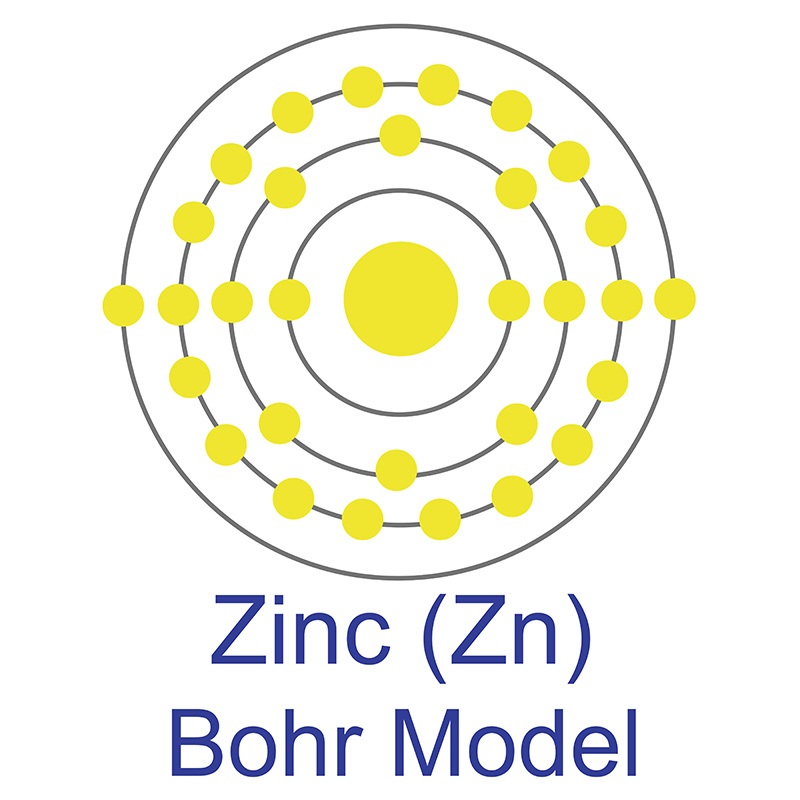
Zinc(Zn) atomic and molecular weight, atomic number and elemental symbolZinc is a Block D, Group 12, Period 4 element. The number of electrons in each of Zinc's shells is 2, 8, 18, 2, and its electronic configuration is [Ar] 3d10 4s2. In its elemental form zinc's CAS number is 7440-66-6. The zinc atom has a radius of 133.5.pm and it's Van der Waals radius is 139.pm. Combined with other elements as ores, Zinc is found in nature. Zinc is considered non-toxicin healthy doses but can cause nausea if taken in excess. Zinc is a bluish-white, lustrous metal. It is brittle at ordinary temperatures but malleable at 100 to 150 o C. It is a fair conductor of electricity, and burns in air at high red heat with evolution of white clouds of the oxide. It has unusual electrical, thermal, optical, and solid-state properties that have not been fully investigated. The metal is employed to form numerous alloys with other metals. Brass, nickel, silver, commercial bronze, soft solder, and aluminum solder are some of the more important alloys. Large quantities of zinc are used to produce die castings, which are used extensively by the automotive, electrical, and hardware industries. Zinc is also used extensively to galvanize other metals such as iron to prevent corrosion. Zinc oxide is widely used in the manufacture of paints, rubber products, cosmetics, pharmaceuticals, floor coverings, plastics, printing inks, soap, storage batteries, textiles, electrical equipment, and other products. Zinc sulfide is used in making luminous dials, X-ray and TV screens, and fluorescent lights The chloride and chromate are also important compounds. Zinc is available as metal and compounds with purities from 99% to 99.9999% (ACS grade to ultra-high purity); metals in the form of foil, sputtering target, and rod, and compounds as submicron and nanopowder. Zinc was first discovered by Andreas Marggraf in 1746. The element name Zinc originates from the German word 'zin" meaning tin.

Formula CAS No. Appearance Molecular Weight
Zn 7440-66-6    
PRODUCT CATALOG Zinc Products News Metal Submicron & Nanopowder Tolling Ultra High Purity Sputtering Target Crystal Growth Rod, Plate, Powder, etc. Home


German   Korean   French   Japanese   Spanish   Chinese (Simplified)   Portuguese   Russian   Chinese (Taiwan)   Italian   Turkish   Polish   Dutch   Czech   Swedish   Hungarian   Danish   Hebrew

Production Catalog Available in 36 Countries & Languages

Recent Research & Development for Metal Foam

  • Automatic biodetector of water toxicity (ABTOW) as a tool for examination of phenol and cyanide contaminated water. Woznica A, Nowak A, Karczewski J, Klis C, Bernas T. Chemosphere. 2010 Aug 5. [Epub ahead of print] PubMed PMID: 20692008.

  • Removal of trace Cd(2+) using continuous multistage ion foam fractionation: Part I-The effect of feed SDS/Cd molar ratio. Rujirawanich V, Chavadej S, O'Haver JH, Rujiravanit R. J Hazard Mater. 2010 Jul 25. [Epub ahead of print] PubMed PMID: 20667426.

  • Initial evaluation of bone ingrowth into a novel porous titanium coating. Wazen RM, Lefebvre LP, Baril E, Nanci A. J Biomed Mater Res B Appl Biomater. 2010 Jul;94(1):64-71. PubMed PMID: 20336725.

  • Hierarchically structured titanium foams for tissue scaffold applications. Singh R, Lee PD, Jones JR, Poologasundarampillai G, Post T, Lindley TC, Dashwood RJ. Acta Biomater. 2010 Jun 30. [Epub ahead of print] PubMed PMID: 20601241.

  • Automotive shredder residue (ASR) characterization for a valuable management. Morselli L, Santini A, Passarini F, Vassura I. Waste Manag. 2010 Jun 19. [Epub ahead of print] PubMed PMID: 20566277.

  • Synthesis and application of alizarin complexone functionalized polyurethane foam: Preconcentration/separation of metal ions from tap water and human urine. Azeem SM, Arafa WA, El-Shahat MF. J Hazard Mater. 2010 Jun 12. [Epub ahead of print] PubMed PMID: 20619967.

  • Characterization of the deformation behavior of intermediate porosity interconnected Ti foams using micro-computed tomography and direct finite element modeling. Singh R, Lee PD, Lindley TC, Kohlhauser C, Hellmich C, Bram M, Imwinkelried T, Dashwood RJ. Acta Biomater. 2010 Jun;6(6):2342-51. Epub 2009 Dec 2. PubMed PMID: 19961958.

  • SUltrasound-driven design of metal surface nanofoams. korb EV, Shchukin DG, Möhwald H, Andreeva DV. Nanoscale. 2010 May 11;2(5):722-7. Epub 2010 Apr 19. PubMed PMID: 20644741.

  • Release and fate of fluorocarbons in a shredder residue landfill cell: 2. Field investigations. Scheutz C, Fredenslund AM, Nedenskov J, Kjeldsen P. Waste Manag. 2010 May 3. [Epub ahead of print] PubMed PMID: 20444588.

  • Release and fate of fluorocarbons in a shredder residue landfill cell: 1. Laboratory experiments. Scheutz C, Fredenslund AM, Nedenskov J, Kjeldsen P. Waste Manag. 2010 Apr 30. [Epub ahead of print] PubMed PMID: 20435458.

  • Next-generation biomedical implants using additive manufacturing of complex, cellular and functional mesh arrays. Murr LE, Gaytan SM, Medina F, Lopez H, Martinez E, Machado BI, Hernandez DH, Martinez L, Lopez MI, Wicker RB, Bracke J. Philos Transact A Math Phys Eng Sci. 2010 Apr 28;368(1917):1999-2032. PubMed PMID: 20308113.

  • Functionality and antioxidant properties of tilapia (Oreochromis niloticus) as influenced by the degree of hydrolysis. Foh MB, Amadou I, Foh BM, Kamara MT, Xia W. Int J Mol Sci. 2010 Apr 26;11(4):1851-69. PubMed PMID: 20480046; PubMed Central PMCID: PMC2871142.

  • Design of an electro-Fenton system with a novel sandwich film cathode for wastewater treatment. Fan Y, Ai Z, Zhang L. J Hazard Mater. 2010 Apr 15;176(1-3):678-84. Epub 2009 Dec 11. PubMed PMID: 20005037.

  • Hyperlipidemia induces endothelial-derived foam cells in culture. Ivan L, Antohe F. J Recept Signal Transduct Res. 2010 Apr;30(2):106-14. PubMed PMID: 20196626.

  • Detection of vulnerable coronary plaques by color fluorescent angioscopy. Uchida Y, Uchida Y, Kawai S, Kanamaru R, Sugiyama Y, Tomaru T, Maezawa Y, Kameda N. JACC Cardiovasc Imaging. 2010 Apr;3(4):398-408. PubMed PMID: 20394902.

  • Potential use of gypsum and lime rich industrial by-products for induced reduction of Pb, Zn and Ni leachability in an acid soil. Rodríguez-Jordá MP, Garrido F, García-González MT. J Hazard Mater. 2010 Mar 15;175(1-3):762-9. Epub 2009 Oct 30. PubMed PMID: 19932561.

  • [Determination of trace metals in atmospheric dry deposition with a heavy matrix of PUF by inductively coupled plasma mass spectroscopy after microwave digestion]. Pan YP, Wang YS, Yang YJ, Wu D, Xin JY, Fan WY. Huan Jing Ke Xue. 2010 Mar;31(3):553-9. Chinese. PubMed PMID: 20358807.

  • Use of a foam spatula for sampling surfaces after bioaerosol deposition. Lewandowski R, Kozlowska K, Szpakowska M, Stepinska M, Trafny EA. Appl Environ Microbiol. 2010 Feb;76(3):688-94. Epub 2009 Dec 18. PubMed PMID: 20023101; PubMed Central PMCID: PMC2813024.

  • Osseointegration into a novel titanium foam implant in the distal femur of a rabbit. Willie BM, Yang X, Kelly NH, Merkow J, Gagne S, Ware R, Wright TM, Bostrom MP. J Biomed Mater Res B Appl Biomater. 2010 Feb;92(2):479-88. PubMed PMID: 20024964; PubMed Central PMCID: PMC2860654.

  • Potential/charge induced nanoporous metal actuators. Viswanath RN. Conf Proc IEEE Eng Med Biol Soc. 2009;2009:6838-41. PubMed PMID: 19964917.


Aeromat 2012 Sponsor
Proud sponsors of Aeromat 2012. Please join us and our customers & co-sponsors Boeing and ATI on June 18-20, 2012
in Charlotte, North Carolina

  Print this Page
Periodic table of the elements science and academic information, elements and advanced materials data, scientific presentations and all pages, designs, concepts, logos, and color schemes herein are the copyrighted proprietary rights and intellectual property of American Elements. American Elements is a U.S. Registered Trademark. © 1998-2012. American Elements. All rights reserved.
Learn Six Sigma


American Elements is a copyrighted U.S. Trademark. All rights reserved.