SECTION 1. IDENTIFICATION
Product Name: Zirconium Phosphide Sputtering Target
Product Number: All applicable American Elements product codes, e.g. ZR-P-02-ST
, ZR-P-025-ST
, ZR-P-03-ST
, ZR-P-035-ST
, ZR-P-04-ST
, ZR-P-05-ST
CAS #: 12037-72-8
Relevant identified uses of the substance: Scientific research and development
Supplier details:
American Elements
10884 Weyburn Ave.
Los Angeles, CA 90024
Tel: +1 310-208-0551
Fax: +1 310-208-0351
Emergency telephone number:
Domestic, North America: +1 800-424-9300
International: +1 703-527-3887
SECTION 2. HAZARDS IDENTIFICATION
Classification of the substance or mixture
GHS Classification in accordance with 29 CFR 1910 (OSHA HCS)
Corrosive to metals(Category 1), H290
Acute toxicity, Oral(Category 3), H301
Acute toxicity, Inhalation(Category 4), H332
Skin corrosion(Category 1A), H314
Serious eye damage(Category 1), H318
Acute aquatic toxicity(Category 1), H400
GHS Label elements, including precautionary statements
Pictogram
Signal word
Danger
Hazard statement(s)
H290
May be corrosive to metals.
H301
Toxic if swallowed.
H314
Causes severe skin burns and eye damage.
H332
Harmful if inhaled.
H400
Very toxic to aquatic life.
Precautionary statement(s)
P234
Keep only in original container.
P260
Do not breathe dust or mist.
P264
Wash skin thoroughly after handling.
P270
Do not eat, drink or smoke when using this product.
P271
Use only outdoors or in a well-ventilated area.
P273
Avoid release to the environment.
P280
Wear protective gloves/ protective clothing/ eye protection/ face protection.
P301 + P310
IF SWALLOWED: Immediately call a POISON CENTER or doctor/ physician.
P301 + P330 + P331
IF SWALLOWED: Rinse mouth. Do NOT induce vomiting.
P303 + P361 + P353
IF ON SKIN (or hair): Remove/ Take off immediately all contaminated
clothing. Rinse skin with water/ shower.
P304 + P340
IF INHALED: Remove victim to fresh air and keep at rest in a position comfortable for breathing.
P305 + P351 + P338
IF IN EYES: Rinse cautiously with water for several minutes. Remove contact lenses, if present and easy to do. Continue rinsing.
P310
Immediately call a POISON CENTER or doctor/ physician.
P321
Specific treatment (see supplemental first aid instructions on this label).
P363
Wash contaminated clothing before reuse.
P390
Absorb spillage to prevent material damage.
P391
Collect spillage.
P405
Store locked up.
P406
Store in corrosive resistant stainless steel container with a resistant inner liner.
P501
Dispose of contents/ container to an approved waste disposal plant.
Hazards not otherwise classified (HNOC) or not covered by GHS
Contact with acids liberates toxic gas.
SECTION 3. COMPOSITION/INFORMATION ON INGREDIENTS
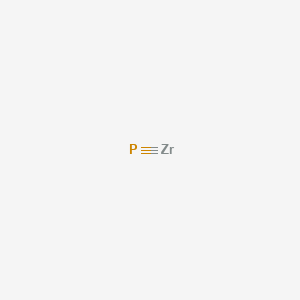
CHEMICAL FAMILY: Metal phosphide
CAS NUMBER: 12037-72-8
FORMULA: ZrP
MOLECULAR WEIGHT: 122.19
SECTION 4. FIRST AID MEASURES
EMERGENCY AND FIRST AID PROCEDURES
INHALATION: Remove victim to fresh air; keep warm and quiet; give oxygen if breathing is difficult and seek medical attention immediatley.
INGESTION: Give 1-2 glasses of milk or water and induce vomiting; seek medical attention immediatley. Never induce vomiting or give anything by mouth to an unconscious person.
SKIN: Remove contaminated clothing; brush material off skin; wash affected area with mild soap and water; seek medical attention.
EYE: Flush eyes with lukewarm water, lifting upper and lower eyelids, for at least 15 minutes. Seek medical attention.
SECTION 5. FIREFIGHTING MEASURES
FLASH PT: N.A. Method Used: Unknown
EXPLOSIVE LIMITS: LEL: NE UEL: NE
EXTINGUISHING MEDIA
USE: Class D or other extinguishing agent for metal fires.
SPECIAL FIRE FIGHTING PROCEDURES
Firefighters must wear full face, self-contained breathing apparatus with full protective clothing to prevent contact with skin and eyes. Fumes from fire are hazardous. Isolate runoff to prevent environmental pollution.
UNUSUAL FIRE AND EXPLOSION HAZARDS
DANGEROUS WHEN WET.
When heated to decomposition, zirconium phosphide may emit toxic oxides of phosphorus.
On contact with water, steam, moisture or alkali, it may slowely yield spontaneously flammable, phosphine gas.
SECTION 6. ACCIDENTAL RELEASE MEASURES
STEPS TO BE TAKEN IN CASE MATERIAL IS RELEASED OR SPILLED
Wear appropriate respiratory and protective equipment specified in section VIII-control measures. Isolate spill area, provide ventilation and extinguish sources of ignition. Vacuum up spill using a high efficiency particulate absolute (HEPA) air filter and place in a closed container for proper disposal. Take care not to raise dust. Use non-sparking tools.
SECTION 7. HANDLING AND STORAGE
HAZARD LABEL INFORMATION:
Store in cool, dry area Store in tightly sealed container Wash thoroughly after handling
PRECAUTIONS TO BE TAKEN IN HANDLING
Reacts with water, steam and moisture. Handle in a controlled environment and under an inert gas such as argon.
OTHER PRECAUTIONS
None
SECTION 8. EXPOSURE CONTROLS/PERSONAL PROTECTION
PROTECTIVE EQUIPMENT SUMMARY - HAZARD LABEL INFORMATION:
NIOSH approved respirator Impervious gloves Safety goggles Clothes to prevent skin contact
RESPIRATORY EQUIPMENT (SPECIFY TYPE)
NIOSH - approved respirator
EYE PROTECTION
Safety goggles
PROTECTIVE GLOVES
Impervious gloves
OTHER PROTECTIVE CLOTHING
Protective gear suitable to prevent contamination
VENTILATION
Local Exhaust: Local exhaust ventilation may be necessary to control any air contaminants to within their PELs or TLVs during the use of this product.
Special: Handle in a controlled environment
Mechanical (Gen): Not recommended
Other: Handle and store in an inert gas such as argon
WORK/HYGIENIC/MAINTENANCE PRACTICES
Implement engineering and work practice controls to reduce and maintain concentration of exposure at low levels. Use good housekeeping and sanitation practices. Do not use tobacco or food in work area. Wash thoroughly before eating and smoking. Do not blow dust off clothing or skin with compressed air.
SECTION 9. PHYSICAL AND CHEMICAL PROPERTIES
PHYSICAL STATES: [ ] Gas [ ] Liquid [ X ] Solid
MELTING POINT: N.A.
BOILING POINT: N.A.
SPECIFIC GRAVITY (WATER = 1): 4.77
BULK DENSITY: No data.
VAPOR PRESSURE (VS. AIR OR MM HG): No data.
VAPOR DENSITY (VS. AIR = 1): No data.
EVAPORATION RATE (VS BUTYL ACETATE=1): No data.
SOLUBILITY IN WATER: No data.
PERCENT VOLATILE: N.A.
CORROSION RATE: No data.
APPEARANCE AND ODOR
Grey powder and pieces; no odor
SECTION 10. STABILITY AND REACTIVITY
STABILITY: Unstable [ X ] Stable [ ]
CONDITIONS TO AVOID - INSTABILITY
Protect from moisture and water.
INCOMPATIBILITY - MATERIALS TO AVOID
Water, steam, moisture
HAZARDOUS DECOMPOSITION OR BYPRODUCTS
Oxides of phosphorus and phosphine
HAZARDOUS POLYMERIZATION: Will occur [ ] Will not occur [ X ]
CONDITIONS TO AVOID - HAZARDOUS POLYMERIZATION
None
SECTION 11. TOXICOLOGICAL INFORMATION
INHALATION: May cause a red, dry, throat and coughing. Phosphine may cause thirst, chest pressure, shortness of breath, muscle pain, chills and stupor.
INGESTION: May cause nausea, vomiting, abdominal pain and diarrhea.
SKIN: May cause red, itching and burning.
EYE: May cause red, itching and watering.
MEDICAL CONDITIONS GENERALLY AGGRAVATED BY EXPOSURE
Pre-existing respiratory disorders.
TARGET ORGANS: May affect the skin, respiratory and central nervous system.
CARCINOGENICITY: NTP? No IARC Monographs? No OSHA Regulated? No
RECOMMENDED EXPOSURE LIMITS
See "Section II"
LD 50 / LC 50
No toxicity data recorded
SECTION 12. ECOLOGICAL INFORMATION
GENERAL NOTES
Do not allow material to be released to the environment without official permits.
SECTION 13. DISPOSAL CONSIDERATIONS
WASTE DISPOSAL METHOD
Dispose of in accordance with local, state and federal regulations.
SECTION 14. TRANSPORT INFORMATION
DOT regulations:
Hazard class: 4.3
Identification number: UN2813
Packing group: III
Proper shipping name (technical name): Water-reactive solid, n.o.s. (Zirconium phosphide)
Land transport ADR/RID (cross-border)
ADR/RID class: 4.3 Substances which, in contact with water, emit flammable gases
Danger code (Kemler): 423
UN-Number: 2813
Description of goods: Water-reactive solid, n.o.s. (Zirconium phosphide)
Maritime transport IMDG:
IMDG Class: 4.3
UN Number: 2813
Packaging group: III
Proper shipping name: Water-reactive solid, n.o.s. (Zirconium phosphide)
Air transport ICAO-TI and IATA-DGR:
ICAO/IATA Class: 4.3
UN/ID Number: 2813
Packaging group: III
Proper shipping name: Water-reactive solid, n.o.s. (Zirconium phosphide)
SECTION 15. REGULATORY INFORMATION
CAS No. 7440-00-8 EINECS No. 2311093 EEC No. UN No. 2813 RTECS No. QO8575000
Hazard Indication FLAMMABLE SOLID ~ IRRITANT
Risk & Safety Phrases Highly flammable.
Irritating to eyes, respiratory system and skin.
Keep away from sources of ignition - No Smoking.
In case of contact with eyes, rinse immediately with plenty of water and seek medical advice.
Take precautionary measures against static discharges.
Wear suitable protective clothing, gloves and eye/face protection.
TSCA Listed substance
SECTION 16. OTHER INFORMATION
Safety Data Sheet according to Regulation (EC) No. 1907/2006 (REACH). The above information is believed to be correct but does not purport to be all inclusive and shall be used only as a guide. The information in this document is based on the present state of our knowledge and is applicable to the product with regard to appropriate safety precautions. It does not represent any guarantee of the properties of the product. American Elements shall not be held liable for any damage resulting from handling or from contact with the above product. See reverse side of invoice or packing slip for additional terms and conditions of sale. COPYRIGHT 1997-2022 AMERICAN ELEMENTS. LICENSED GRANTED TO MAKE UNLIMITED PAPER COPIES FOR INTERNAL USE ONLY.


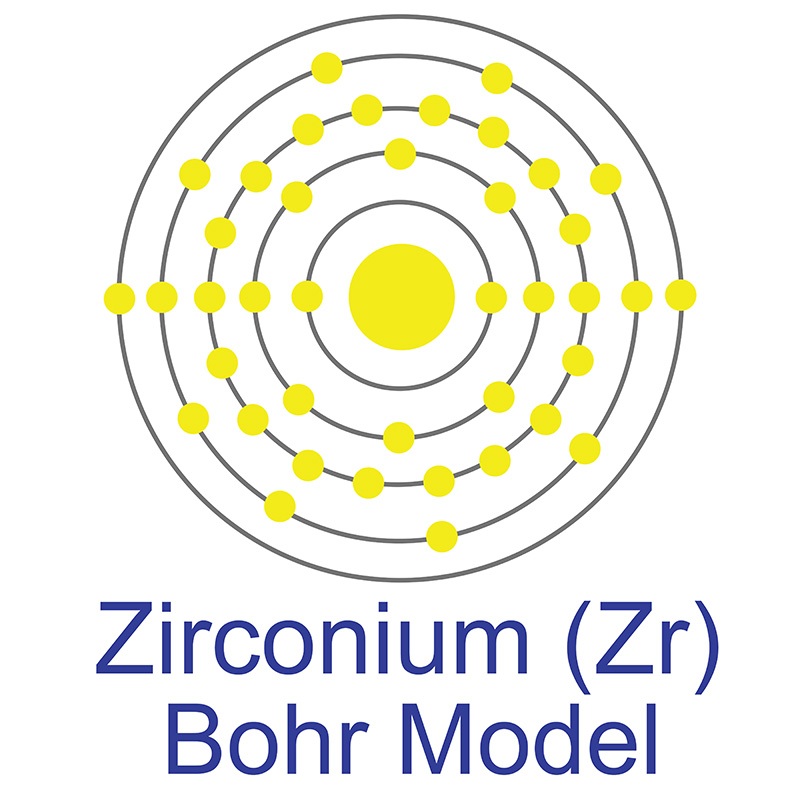 The number of electrons in each of Zirconium's shells is 2, 8, 18, 10, 2 and its electron configuration is [Kr]4d2 5s2. The zirconium atom has a radius of 160 pm and a Van der Waals radius of 186 pm. Zirconium was discovered by Martin Heinrich Klaproth in 1789 and first isolated by Jöns Jakob Berzelius in 1824. In its elemental form, zirconium has a silvery white appearance that is similar to titanium. Zirconium's principal mineral is zircon (zirconium
  Zirconium is commercially produced as a byproduct of
 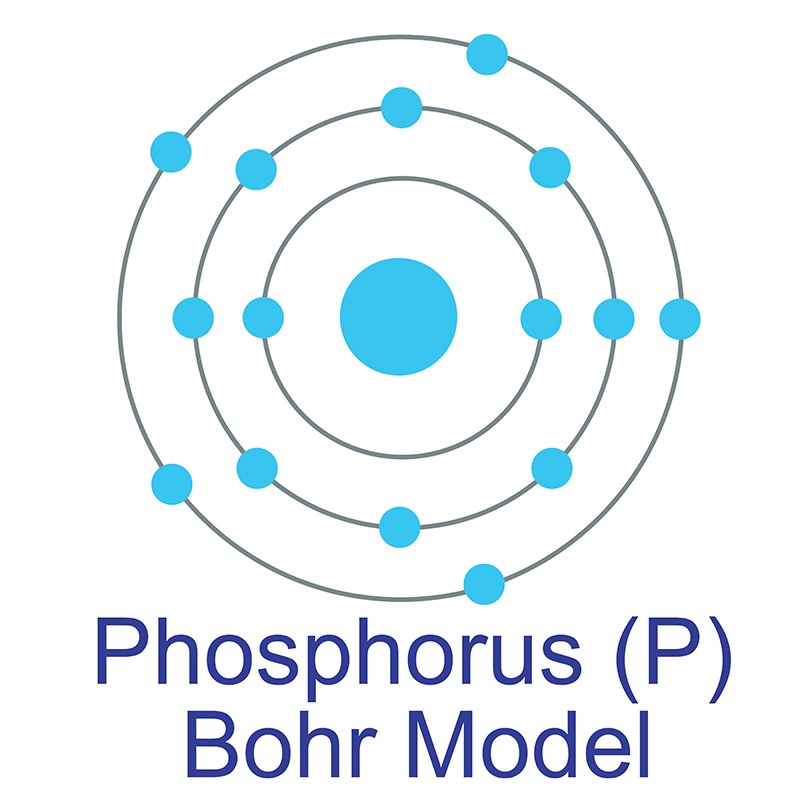 See more Phosphorus products.