American Elements Logo and U.S. Registered Trademark


Rubidium Chromate
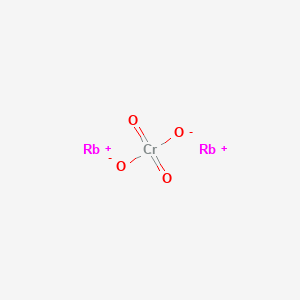
Rb2CrO4

13446-72-5
Product Product Code Order or Specifications
(2N) 99% Rubidium Chromate RB-CRAT-02 Contact American Elements
(3N) 99.9% Rubidium Chromate RB-CRAT-03 Contact American Elements
(4N) 99.99% Rubidium Chromate RB-CRAT-04 Contact American Elements
(5N) 99.999% Rubidium Chromate RB-CRAT-05 Contact American Elements


CHEMICAL
IDENTIFICATION
Formula CAS No. PubChem
SID
PubChem CID MDL No. EC No IUPAC Name Beilstein
Re. No.
SMILES
Identifier
InChI
Identifier
InChI
Key
Rb2CrO4 13446-72-5 24864932 61605 MFCD00016295 236-601-1 dioxido(dioxo)chromium; rubidium(1+) N/A [Rb+].[Rb+].[O-][Cr]([O-])(=O)=O InChI=1S/Cr.4O.2Rb/q;;;2*-1;2*+1 WXLJFWCCZKCVSQ-UHFFFAOYSA-N

Compound Formula Mol. Wt. Appearance Density

Exact Mass

Monoisotopic Mass Charge MSDS
CrO4Rb2 286.93 Yellow to Yellow Green Powder or Crystals 3.518 g/cm3 285.743749 285.743749 0 Safety Data Sheet


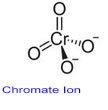
Chromate IonRubidium Chromate is generally immediately available in most volumes. High purity, submicron and nanopowder forms may be considered.American Elements produces to many standard grades when applicable, including Mil Spec (military grade); ACS, Reagent and Technical Grade; Food, Agricultural and Pharmaceutical Grade; Optical Grade, USP and EP/BP (European Pharmacopoeia/British Pharmacopoeia)and follows applicable ASTM testing standards.Typical and custom packaging is available. Additional technical, research and safety (MSDS) information is available as is a Reference Calculator for converting relevant units of measurement.

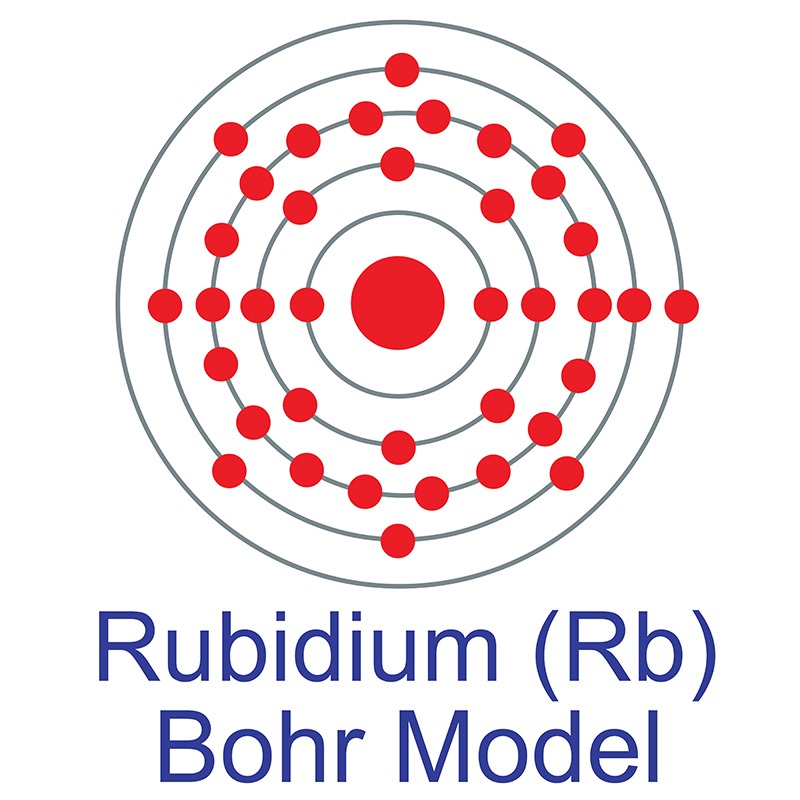
Rubidium(Rb) atomic and molecular weight, atomic number and elemental symbol Rubidium is a Block S, Group 1, Period 5 element. The number of electrons in each of Rubidium's shells is 2, 8, 18, 8, 1 and its electronic configuration is [Kr] 5s1. In its elemental form rubidium 's CAS number is 7440-17-7. The rubidium atom has a radius of 247.5.pm and it's Van der Waals radius is 200.pm. Rubidium is not toxic. Rubidium has various applications in medicine and in Rubidium Bohr Modelphotoelectronics. Rubidium is available as metal and compounds with purities from 99% to 99.999% (ACS grade to ultra-high purity); metals in the form of foil, sputtering target, and rod, and compounds as submicron and nanopowder. It is used in photo and detection cells production. Rubidium glass compositions have the highest room temperature conductivity. It has been used as a "getter" in vacuum tubes. Rubidium was first discovered by Robert Wilhem Bunsen and Gustav Robert Kirchhoff in 1861. The name Rubidium, originates from the Latin word 'Rubidius' which means dark or deepest red. See Rubidium research below.

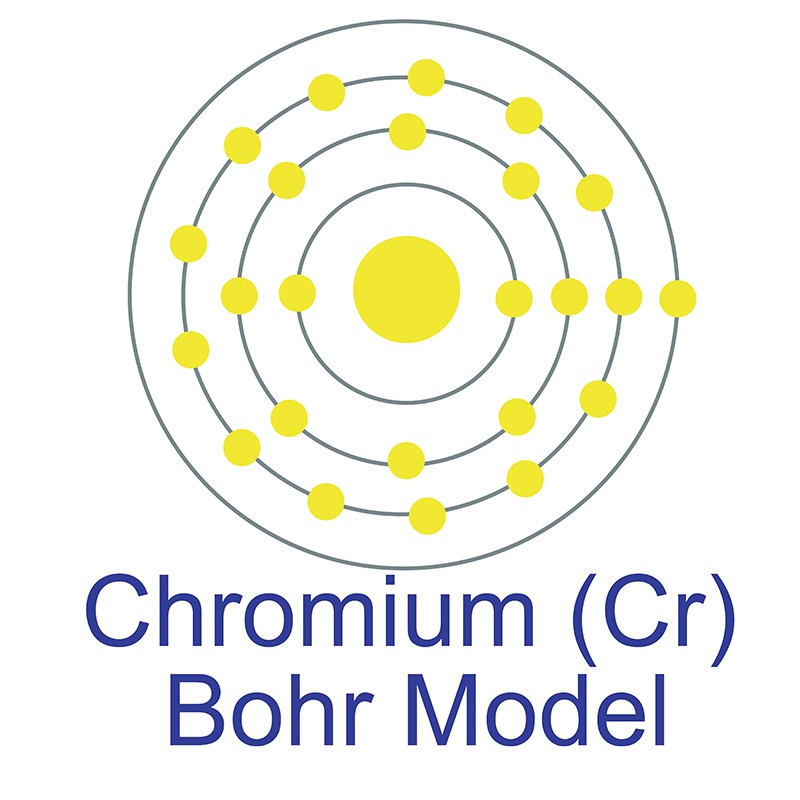
Chromium(Cr) atomic and molecular weight, atomic number and elemental symbolChromium is a Block D, Group 6, Period 4 element. The number of electrons in each of Chromium's shells is 2, 8, 13, 1 and its electronic configuration is [Ar] 3d5 4s1. In its elemental form chromium's CAS number is 7440-47-3. The chromium atom has a radius of 124.9.pm and it's Van der Waals radius is 200.pm. Hexavalent chromium is toxic. Chromium is highly resistant to corrosion. This has led to its use in numerous alloying and steel producing applications. When chromium is added to glass or ceramic glazes, it produces a brilliant green. Chromium is available as metal and compounds with purities from 99% to 99.999% (ACS grade to ultra-high purity); metals in the form of foil, sputtering target, and rod, and compounds as submicron and nanopowder. It is also used as a paint pigment for this purpose.Although chromium metal is an essential trace element, hexavalent Elemental Chromiumchromium (Cr(VI)) is especially toxic and carcinogenic. Recently, chromites have formed the basis for cathode compositions Chromium Bohr Modelfor oxygen generation and fuel cell applications. Chromium information, including Technical Data, Safety Data and its High Purity properties, research, applications and other useful facts are discussed here. Scientific facts such as the atomic structure, ionization energy, abundance on Earth, conductivity and thermal properties are included. Chromium was first discovered by Anders Ekeberg in 1802. Due to its various colorful compounds, Chromium was named after the Greek word 'chroma' meaning color. See Chromium research below.

Have a Question? Ask a Chemical Engineer or Material Scientist   Request an MSDS or Certificate of Analysis

 
Toxicity
Safety & Handling
  Exclamation Mark-Acute Toxicity Health Hazard Environment-Hazardous to the aquatic environment Flame Over Circle-Oxidizing gases and liquids
Signal Word Hazard Statements Hazard Codes Risk Codes Safety Precautions RTECS No. Transport Information WGK Germany
Danger H272-H317-H350i-H410 O,T,N 49-8-43-50/53 53-45-60-61 N/A UN 1479 5.1/PG 2 3


Synonyms for Rubidium Chromate Include:


chromicacid(h2cro4),dirubidiumsalt
Rubidiumchromateyellowxtl
Chromicacid,(H2CrO4),dirubidiumsalt
RUBIDIUM CHROMATE
Chromicacid,dirubidiumsalt
dioxido(dioxo)chromium; rubidium(1+)


PACKAGING SPECIFICATIONS FOR BULK & RESEARCH QUANTITIES


Typical bulk packaging includes palletized plastic 5 gallon/25 kg. pails, fiber and steel drums to 1 ton super sacks in full container (FCL) or truck load (T/L) quantities. Research and sample quantities and hygroscopic, oxidizing or other air sensitive materials may be packaged under argon or vacuum. Shipping documentation includes a Certificate of Analysis and Material Safety Data Sheet (MSDS). Solutions are packaged in polypropylene, plastic or glass jars up to palletized 440 gallon liquid totes.


Show me more forms of Rubidium


Search by Material, Product Name, Product Code, CAS Number, Formula, Element, Anion, Form, EC Number, MDL Number or PubChem ID.


German   Korean   French   Japanese   Spanish   Chinese (Simplified)   Portuguese   Russian   Chinese (Taiwan)   Italian   Turkish   Polish   Dutch   Czech   Swedish   Hungarian   Danish   Hebrew

Production Catalog Available in 36 Countries & Languages


Recent Research & Development for Rubidium

  • Quantitative relationship between the extent and morphology of coronary atherosclerotic plaque and downstream myocardial perfusion. Naya M, Murthy VL, Blankstein R, Sitek A, Hainer J, Foster C, Gaber M, Fantony JM, Dorbala S, Di Carli MF. J Am Coll Cardiol. 2011 Oct 18;58(17):1807-16. PMID: 21996395 [PubMed - in process]

  • The fate of minor alkali elements in the chemical evolution of salt lakes. Witherow RA, Lyons WB. Saline Systems. 2011 Oct 12;7(1):2. [Epub ahead of print] PMID: 21992434 [PubMed - as supplied by publisher]

  • A high-pressure single-crystal synchrotron diffraction study of NH(4)RbTe(4)O(9)·2H(2)O: stability of three different TeO(x) coordination polyhedra. Friese K, Halasyamani PS, Tolkiehn M, Grzechnik A. Acta Crystallogr C. 2011 Oct;67(Pt 10):i45-i49. Epub 2011 Sep 2. PMID: 21979964 [PubMed - in process]

  • Noise reduction in spectral CT: Reducing dose and breaking the trade-off between image noise and energy bin selection. Leng S, Yu L, Wang J, Fletcher JG, Mistretta CA, McCollough CH. Med Phys. 2011 Sep;38(9):4946. PMID: 21978039 [PubMed - in process]

  • All-optical switching in an N-type foul-level atom-cavity system. Sheng J, Yang X, Khadka U, Xiao M. Opt Express. 2011 Aug 29;19(18):17059-64. doi: 10.1364/OE.19.017059. PMID: 21935066 [PubMed - in process]

  • Excitation of Rydberg states in rubidium with near infrared diode lasers. Fahey DP, Noel MW. Opt Express. 2011 Aug 29;19(18):17002-12. doi: 10.1364/OE.19.017002. PMID: 21935060 [PubMed - in process]

  • Photon statistics and polarization correlations at telecommunications wavelengths from a warm atomic ensemble. Willis RT, Becerra FE, Orozco LA, Rolston SL. Opt Express. 2011 Jul 18;19(15):14632-41. doi: 10.1364/OE.19.014632. PMID: 21934825 [PubMed - in process]

  • Urinary rubidium in breast cancers. Su Y, Chen LJ, He JR, Yuan XJ, Cen YL, Su FX, Tang LY, Zhang AH, Chen WQ, Lin Y, Wang SM, Ren ZF. Clin Chim Acta. 2011 Nov 20;412(23-24):2305-9. Epub 2011 Sep 2. PMID: 21910977 [PubMed - in process]

  • Rydberg excitations in bose-einstein condensates in quasi-one-dimensional potentials and optical lattices. Viteau M, Bason MG, Radogostowicz J, Malossi N, Ciampini D, Morsch O, Arimondo E. Phys Rev Lett. 2011 Aug 5;107(6):060402. Epub 2011 Aug 2. PMID: 21902300 [PubMed - in process]

  • Rubidium-82 uptake in metastases from pheochromocytoma on PET myocardial perfusion images. Gupta A, DiFilippo FP, Brunken RC. Clin Nucl Med. 2011 Oct;36(10):930-1. No abstract available. PMID: 21892051 [PubMed - in process]

  • Methods and evaluation of frequency aging in distributed-feedback laser diodes for rubidium atomic clocks. Matthey R, Affolderbach C, Mileti G. Opt Lett. 2011 Sep 1;36(17):3311-3. doi: 10.1364/OL.36.003311. PMID: 21886194 [PubMed - in process]

  • Incremental Diagnostic Value of Regional Myocardial Blood Flow Quantification Over Relative Perfusion Imaging With Generator-Produced Rubidium-82 PET. Yoshinaga K, Katoh C, Manabe O, Klein R, Naya M, Sakakibara M, Yamada S, Dekemp RA, Tsutsui H, Tamaki N. Circ J. 2011 Aug 27. [Epub ahead of print] PMID: 21873801 [PubMed - as supplied by publisher]

  • Homo- and heteronuclear alkali metal trimers formed on helium nanodroplets. Part I. Vibronic spectra simulations based on ab initio calculations. Hauser AW, Ernst WE. Phys Chem Chem Phys. 2011 Aug 25. [Epub ahead of print] PMID: 21869966 [PubMed - as supplied by publisher]

  • Relationship between chemical structure and biological activity of alkali metal o-, m- and p-anisates. FT-IR and microbiological studies. Kalinowska M, Piekut J, Lewandowski W. Spectrochim Acta A Mol Biomol Spectrosc. 2011 Nov;82(1):432-6. Epub 2011 Jul 28. PMID: 21852187 [PubMed - in process]

  • [The evaluation of uncertainty in the results for elements rubidium, strontium, yttrium and zirconium in silicate geological samples by polarized energy dispersive X-ray fluorescence spectrometry]. Wang YY, Zhan XC, Yuan JH, Fan XT. Guang Pu Xue Yu Guang Pu Fen Xi. 2011 Jun;31(6):1707-11. Chinese. PMID: 21847963 [PubMed - in process]

  • Structure of the alkali-metal-atom + strontium molecular ions: towards photoassociation and formation of cold molecular ions. Aymar M, Guérout R, Dulieu O. J Chem Phys. 2011 Aug 14;135(6):064305. PMID: 21842931 [PubMed - in process]

  • Poly[(µ(5)-3,5-dinitro-benzoato)rubidium]. Miao Y, Zhang X, Liu C. Acta Crystallogr Sect E Struct Rep Online. 2011 Jul 1;67(Pt 7):m1002. Epub 2011 Jun 30. PMID: 21836829 [PubMed - in process]

  • A young source for the Hawaiian plume. Sobolev AV, Hofmann AW, Jochum KP, Kuzmin DV, Stoll B. Nature. 2011 Aug 10;476(7361):434-7. doi: 10.1038/nature10321. PMID: 21832996 [PubMed]

  • Leaving relativity behind: quantitative clinical perfusion imaging. Bengel FM. J Am Coll Cardiol. 2011 Aug 9;58(7):749-51. No abstract available. PMID: 21816312 [PubMed - indexed for MEDLINE]

  • Impaired myocardial flow reserve on rubidium-82 positron emission tomography imaging predicts adverse outcomes in patients assessed for myocardial ischemia. Ziadi MC, Dekemp RA, Williams KA, Guo A, Chow BJ, Renaud JM, Ruddy TD, Sarveswaran N, Tee RE, Beanlands RS. J Am Coll Cardiol. 2011 Aug 9;58(7):740-8. PMID: 21816311 [PubMed - indexed for MEDLINE]

Recent Research & Development for Chromate

  • Bioremediation of Cr(VI) and Immobilization as Cr(III) by Ochrobactrum anthropi. Cheng Y, Yan F, Huang F, Chu W, Pan D, Chen Z, Zheng J, Yu M, Lin Z, Wu Z. Environ Sci Technol. 2010 Jul 7. [Epub ahead of print] PubMed PMID: 20608725.

  • Proteogenomic and functional analysis of chromate reduction in Acidiphilium cryptum JF-5, an Fe(III)-respiring acidophile. Magnuson TS, Swenson MW, Paszczynski AJ, Deobald LA, Kerk D, Cummings DE. Biometals. 2010 Jul 1. [Epub ahead of print] PubMed PMID: 20593301.

  • Enhanced chromate reduction by resting Escherichia coli cells in the presence of quinone redox mediators. Liu G, Yang H, Wang J, Jin R, Zhou J, Lv H. Bioresour Technol. 2010 Jun 26. [Epub ahead of print] PubMed PMID: 20584598.

  • Tricaesium tris(oxalato-kappa(2)O(1),O(2))chromate(III) dihydrate. Martin L, Christian A, Akutsu H. Acta Crystallogr C. 2010 Jun;66(Pt 6):m157-9. Epub 2010 May 8. PubMed PMID: 20522938.

  • Removal of chromate and phosphate anion from aqueous solutions using calix[4]aren receptors containing proton switchable units. Ertul S, Bayrakci M, Yilmaz M. J Hazard Mater. 2010 Jun 1. [Epub ahead of print] PubMed PMID: 20579808.

  • Leucobacter chromiiresistens sp. nov., a novel chromate-resistant strain in the genus Leucobacter. Sturm G, Jacobs J, Spröer C, Schumann P, Gescher J. Int J Syst Evol Microbiol. 2010 May 28. [Epub ahead of print] PubMed PMID: 20511468.

  • Proteomics reveals a core molecular response of Pseudomonas putida F1 to acute chromate challenge. Thompson DK, Chourey K, Wickham GS, Thieman SB, VerBerkmoes NC, Zhang B, McCarthy AT, Rudisill MA, Shah M, Hettich RL. BMC Genomics. 2010 May 19;11:311. PubMed PMID: 20482812.

  • Microbial products (biosurfactant and extracellular chromate reductase) of marine microorganism are the potential agents reduce the oxidative stress induced by toxic heavy metals. Gnanamani A, Kavitha V, Radhakrishnan N, Suseela Rajakumar G, Sekaran G, Mandal AB. Colloids Surf B Biointerfaces. 2010 Apr 22. [Epub ahead of print] PubMed PMID: 20483569.

  • Removal of selected nuisance anions by Octolig. Martin DF, Lizardi CL, Schulman E, Vo B, Wynn D. J Environ Sci Health A Tox Hazard Subst Environ Eng. 2010 Jan;45(9):1144-9. PubMed PMID: 20560089.

  • Effects of physicochemical factors on Cr(VI) removal from leachate by zero-valent iron and alpha-Fe(2)O(3) nanoparticles. Liu TY, Zhao L, Tan X, Liu SJ, Li JJ, Qi Y, Mao GZ. Water Sci Technol. 2010;61(11):2759-67. PubMed PMID: 20489248.


Aeromat 2012 Sponsor
Proud sponsors of Aeromat 2012. Please join us and our customers & co-sponsors Boeing and ATI on June 18-20, 2012
in Charlotte, North Carolina

PRODUCT CATALOG Chromate Products Foil Submicron & Nanopowder Tolling Ultra High Purity Sputtering Target Crystal Growth Rod, Plate, Powder, etc. Home

  Print this Page
Periodic table of the elements science and academic information, elements and advanced materials data, scientific presentations and all pages, designs, concepts, logos, and color schemes herein are the copyrighted proprietary rights and intellectual property of American Elements. American Elements is a U.S. Registered Trademark. © 1998-2012. American Elements. All rights reserved.
Learn Six Sigma


American Elements is a copyrighted U.S. Trademark. All rights reserved.