American Elements
Chromium Selenide
Product
Product Code
Order or Specifications
99.999% Chromium Selenide Powder
CR-SE-05-P
Contact American Elements
99.999% Chromium Selenide Ingot
CR-SE-05-I
Contact American Elements
99.999% Chromium Selenide Chunk
CR-SE-05-CK
Contact American Elements
99.999% Chromium Selenide Lump
CR-SE-05-L
Contact American Elements
99.999% Chromium Selenide Sputtering Target
CR-SE-05-ST
Contact American Elements
Chromium Selenide is generally immediately available in most volumes. High purity, submicron and nanopowder forms may be considered. Additional technical, research and safety (MSDS) information is available as is a Reference Calculator for converting relevant units of measurement.

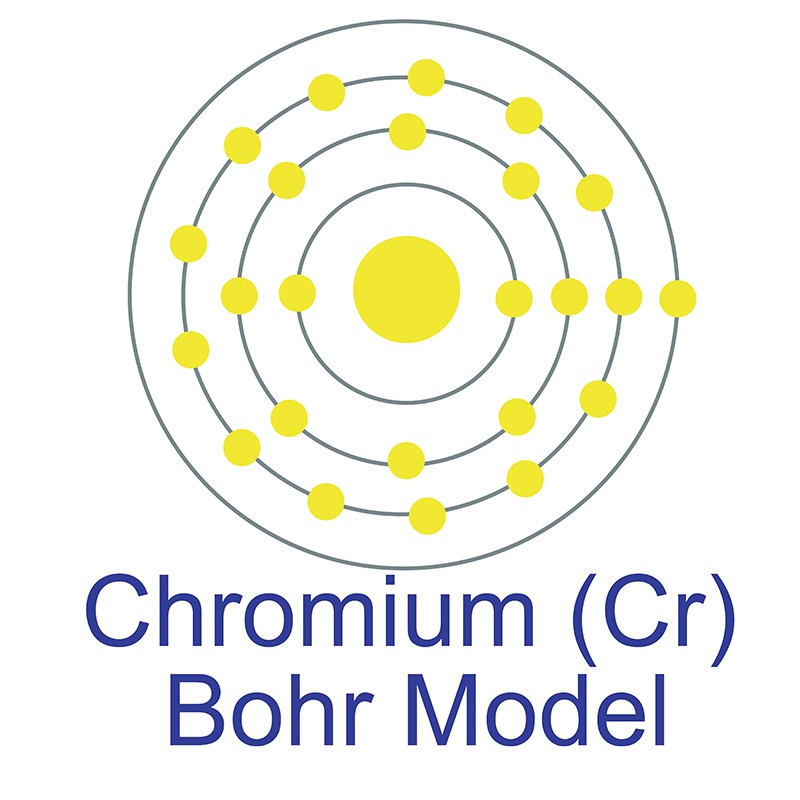
Chromium is a Block D, Group 6, Period 4 element. The electronic configuration is [Ar] 3d5 4s1. In its elemental form chromium's CAS number is 7440-47-3. The chromium atom has a radius of 124.9.pm and it's Van der Waals radius is 200.pm. Chromium is highly resistant to corrosion. This has led to its use in numerous alloying and steel producing applications. When chromium is added to glass or ceramic glazes, it produces a brilliant green. Chromium is available as metal and compounds with purities from 99% to 99.999% (ACS grade to ultra-high purity); metals in the form of foil, sputtering target, and rod, and compounds as submicron and nanopowder. It is also used as a paint pigment for this purpose. Recently, chromites have formed the basis for cathode compositions for oxygen generation and fuel cell applications. Chromium was first discovered by Anders Ekeberg in 1802.

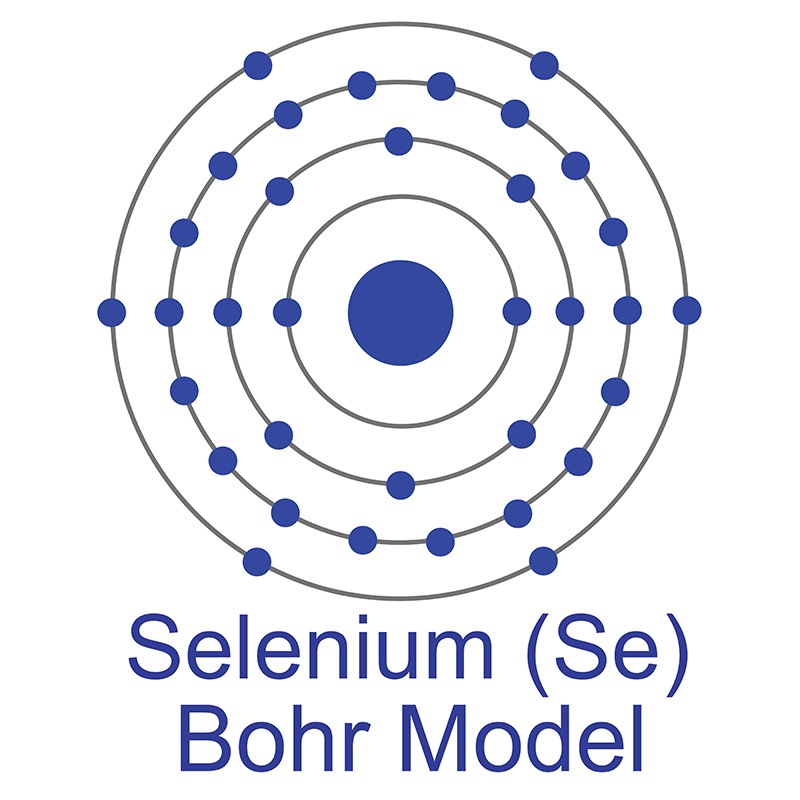
Selenium is a Block P, Group 16, Period 4 element. The electronic configuration is [Ar] 3d10 4s2 4p4. In its elemental form selenium's CAS number is 7782-49-2. The selenium atom has a radius of 116.pm and it's Van der Waals radius is 190.pm. Selenium exhibits both photovoltaic action, where light is converted directly into electricity, and photoconductive action, where the electrical resistance decreases with increased illumination. These properties make selenium useful in the production of photocells and exposure meters for photographic use, as well as solar cells. Below its melting point, selenium is a p-type semiconductor and has many uses in electronic and solid-state applications. Selenium is available as metal and compounds with purities from 99% to 99.9999% (ACS grade to ultra-high purity); metals in the form of foil, sputtering target, and rod, and compounds as submicron and nanopowder. Selenium was first discovered by Jons Berzelius in 1817.

American Elements semi conducting materials are crystal structures produced from ultra high purity starting materials synthesized by our high purity production facility which includes several large electric muffle furnaces, a tube furnace for hydrogen reduction, 50 gallon glass-lined Pfaudler reactors supported by our analytical laboratory containing X-ray diffraction, SEM, AA, BET surface area, and ICP Spectrometry for trace metals analysis. See a discussion of American Elements Ultra High Purity and Analytical capabilities. See Crystal Growth for processes used to fabricate semiconductor materials, which include:

  • Crystal "pulling" by the Czochaiski method for production of semiconductor materials
  • Flux growth and gradient freeze
  • Directional solidification of fluorites using both the Bridgman-Stockbarger and float zoning techniques
 
PRODUCT CATALOG Submicron & Nanopowder Tolling Ultra High Purity Sputtering Target Crystal Growth Rod, Plate, Powder, etc.

© 2001-2009. American Elements is a U.S. Registered Trademark. All rights reserved.
This website and all pages, designs, concepts, logos, and color schemes herein are
the copyrighted proprietary rights and intellectual property of American Elements.

Recent Research & Development for Chromium

  • Age-dependent degradation of the protein adsorption capacity of titanium. Hori N, Att W, Ueno T, Sato N, Yamada M, Saruwatari L, Suzuki T, Ogawa T. J Dent Res. 2009 Jul;88(7):663-7. PMID: 19641155 [PubMed - in process]

  • Evaluation of Effectiveness of Er,Cr:YSGG Laser For Root Canal Disinfection: Theoretical Simulation of Temperature Elevations in Root Dentin. Zhu L, Tolba M, Arola D, Salloum M, Meza F. J Biomech Eng. 2009 Jul;131(7):071004. PMID: 19640129 [PubMed - in process]

  • Implant abutment deformation during prosthetic cylinder screw tightening: an in vitro study. Neto RT, Moura MS, Souza EA, Rubo JH. Int J Prosthodont. 2009 Jul-Aug;22(4):391-5. PMID: 19639078 [PubMed - in process]

  • In vitro investigation of intra-canal dentine-laser beam interaction aspects: I. Evaluation of ablation capability (ablation rate and efficiency). Minas NH, Meister J, Franzen R, Gutknecht N, Lampert F. Lasers Med Sci. 2009 Jul 28. [Epub ahead of print] PMID: 19636663 [PubMed - as supplied by publisher]

  • Sonoassisted Microbial Reduction of Chromium. Kathiravan MN, Karthick R, Muthu N, Muthukumar K, Velan M. Appl Biochem Biotechnol. 2009 Jul 29. [Epub ahead of print] PMID: 19636521 [PubMed - as supplied by publisher]

  • Comment on "Adsorption of Supranol Yellow 4 GL from aqueous solution by surfactant-treated aluminum/chromium-intercalated bentonite" Lin JX, Wang L. J Hazard Mater. 2009 Jul 5. [Epub ahead of print] No abstract available. PMID: 19635643 [PubMed - as supplied by publisher]

  • Different survival of chromium-exposed Oxya chinensis among allozyme genotypes. Li L, Lu F, Zhang M, Guo Y, Ma E. J Environ Sci (China). 2009;21(4):509-13. PMID: 19634427 [PubMed - in process]

  • Tannery wastewater pre-treatment. Elsheikh MA. Water Sci Technol. 2009;60(2):433-40. PMID: 19633385 [PubMed - in process]

  • Microbial culture dynamics and chromium (VI) removal in packed-column microcosm reactors. Molokwane PE, Nkhalambayausi-Chirwa EM. Water Sci Technol. 2009;60(2):381-8. PMID: 19633380 [PubMed - in process]

  • Bare-metal stents versus drug-eluting stents in large (>/=3.5mm) single coronary artery: Angiographic and clinical outcomes at 6 months. Na JO, Kim JW, Choi CU, Choi UJ, Shin SY, Lim HE, Kim EJ, Rha SW, Park CG, Seo HS, Oh DJ. J Cardiol. 2009 Aug;54(1):108-14. Epub 2009 Jun 13. PMID: 19632529 [PubMed - in process]

  • Cytotoxicity and genotoxicity of hexavalent chromium in human and North Atlantic right whale (Eubalaena glacialis) lung cells. Chen TL, Wise SS, Holmes A, Shaffiey F, Wise JP Jr, Thompson WD, Kraus S, Wise JP Sr. Comp Biochem Physiol C Toxicol Pharmacol. 2009 Jul 23. [Epub ahead of print] PMID: 19632355 [PubMed - as supplied by publisher]

  • Speciation and separation of Cr(VI) and Cr(III) using coprecipitation with Ni[2+]/2-Nitroso-1-naphthol-4-sulfonic acid and determination by FAAS in water and food samples. Uluozlu OD, Tuzen M, Soylak M. Food Chem Toxicol. 2009 Jul 23. [Epub ahead of print] PMID: 19632291 [PubMed - as supplied by publisher]

  • Solid partitioning and solid-liquid distribution of (210)Po and (210)Pb in marine anoxic sediments: roads of Cherbourg at the northwestern France. Connan O, Boust D, Billon G, Solier L, Rozet M, Bouderbala S. J Environ Radioact. 2009 Jul 22. [Epub ahead of print] PMID: 19631425 [PubMed - as supplied by publisher]

  • Validation of an in vitro cytotoxicity test for four heavy metals using cell lines derived from a green sea turtle (Chelonia mydas). Tan F, Wang M, Wang W, Alonso Aguirre A, Lu Y. Cell Biol Toxicol. 2009 Jul 22. [Epub ahead of print] PMID: 19629729 [PubMed - as supplied by publisher]

  • Comparative proteomical and metalloproteomical analyses of human plasma from patients with laryngeal cancer. Gomes CP, Freire MS, Pires BR, Vasconcelos EA, Rocha TL, de Fátima Grossi-de-Sá M, Rezende TM, Mehta A, Pereira RW, Petriz BA, da Cruz AD, Pescara IC, Franco OL. Cancer Immunol Immunother. 2009 Jul 23. [Epub ahead of print] PMID: 19629479 [PubMed - as supplied by publisher]

  • Screening of Cyanobacteria for Phycobiliproteins and Effect of Different Environmental Stress on Its Yield. Hemlata, Fatma T. Bull Environ Contam Toxicol. 2009 Jul 24. [Epub ahead of print] PMID: 19629363 [PubMed - as supplied by publisher]

  • Subsurface changes of a MoM hip implant below different contact zones. Pourzal R, Theissmann R, Williams S, Gleising B, Fisher J, Fischer A. J Mech Behav Biomed Mater. 2009 Apr;2(2):186-91. Epub 2008 Aug 23. PMID: 19627822 [PubMed - in process]

  • The Short-Term Effect on Restenosis and Thrombosis of a Cobalt-Chromium Stent Eluting Two Drugs in a Porcine Coronary Artery Model. Huang Y, Venkatraman SS, Boey FY, Umashankar PR, Mohanty M, Arumugam S. J Interv Cardiol. 2009 Jul 13. [Epub ahead of print] PMID: 19627432 [PubMed - as supplied by publisher]

  • Effect of highways and local activities on the quality of underground water in Ogun State, Nigeria : A case study of three districts in Ogun State, Nigeria. Odukoya OO, Onianwa PC, Sanusi OI. Environ Monit Assess. 2009 Jul 22. [Epub ahead of print] PMID: 19626447 [PubMed - as supplied by publisher]

  • Chromium III Exposure Inhibits Brain Na(+)K (+)ATPase Activity of Clarias batrachus L. Involving Lipid Peroxidation and Deficient Mitochondrial Electron Transport Chain Activity. Maiti AK, Paul G, Maity B, Mazumdar D, Saha NC. Bull Environ Contam Toxicol. 2009 Jul 22. [Epub ahead of print] PMID: 19626263 [PubMed - as supplied by publisher]
American Elements Products can also be sourced at these sites:


electronics-ee.com