American Elements Logo and U.S. Registered Trademark
Gadolinium Nitrate
Gd(NO3)3.xH2O
Product
Product Code
Order or Specifications
99% Gadolinium Nitrate
GD-N-01
Contact American Elements
99.9% Gadolinium Nitrate
GD-N-03
Contact American Elements
99.99% Gadolinium Nitrate
GD-N-04
Contact American Elements
99.999% Gadolinium Nitrate
GD-N-05
Contact American Elements
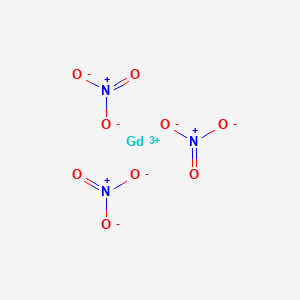
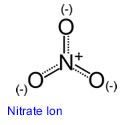
Gadolinium Nitrate is a highly water soluble crystalline Gadolinium source for uses compatible with nitrates and lower (acidic) pH. Nitrate compounds are generally soluble in water. Nitrate materials are also oxidizing agents. When mixed with hydrocarbons, nitrate compounds can form a flammable mixture. Nitrates are excellent precursors for production of ultra high purity compounds and certain catalyst and nanoscale(nanoparticles and nanopowders) materials. All metallic nitrates are inorganic salts of a given metal cation and the nitrate anion. The nitrate anion is a univalent (-1 charge) polyatomic ion composed of a single nitrogen atom ionically bound to three oxygen atoms (Symbol: NO3) for a total formula weight of 62.05. Gadolinium is utilized for both its high magnetic moment (7.94 µB) and in phosphors and scintillators. When complexed with EDTA ligands, it is used as an injectable contrast agent for patients undergoing magnetic resonance imaging. Gadolinium Nitrate is generally immediately available in most volumes. Ultra high purity and high purity compositions improve both optical quality and usefulness as scientific standards. Nanoscale (See also Nanotechnology Information and Quantum Dots) elemental powders and suspensions, as alternative high surface area forms, may be considered. We also produce Gadolinium Nitrate Solution. Additional technical, research and safety (MSDS) information is available as is a Reference Calculator for converting relevant units of measurement.

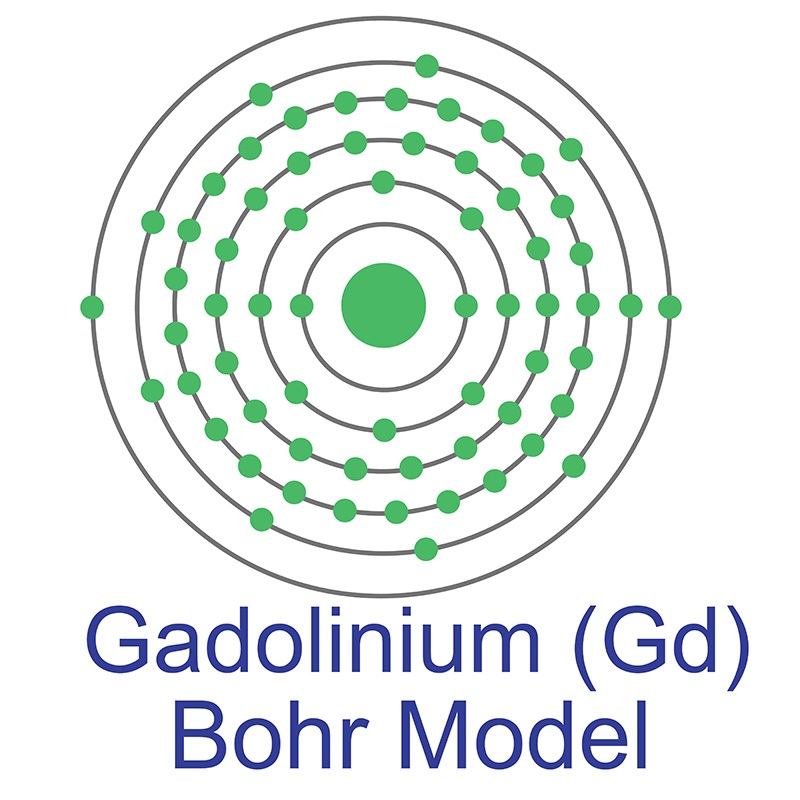
Gadolinium is a Block F, Group 3, Period 6 element. The electronic configuration is [Xe]4f75d16s2. In its elemental form gadolinium's CAS number is 7440-54-2. The gadolinium atom has a radius of 178.7.pm and it's Van der Waals radius is unknown. Gadolinium is utilized for both its high magnetic moment (7.94µB) and in phosphors and scintillator material. When complexed with EDTA ligands, it is used as an injectable contrast agent for patients undergoing magnetic resonance imaging. Gadolinium is available as metal and compounds with purities from 99% to 99.999% (ACS grade to ultra-high purity); metals in the form of foil, sputtering target, and rod, and compounds as submicron and nanopowder.

Formula CAS No. Appearance Molecular Weight Solubility Stability
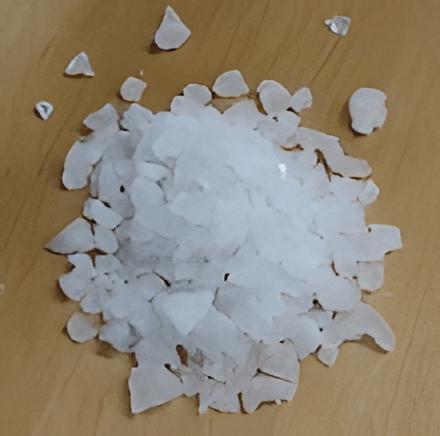
Gd(NO3)3.xH2O 52788-53-1 White 343.26 Soluble in water, moderately soluble in strong mineral acids Slightly hygroscopic
PRODUCT CATALOG Gadolinium Research, Properties, & Information Submicron & Nanopowder Tolling Ultra High Purity Sputtering Target Crystal Growth Rod, Plate, Powder, etc. MSDS
© 2001-2008. American Elements is a U.S. Registered Trademark. All rights reserved.
This website and all pages, designs, concepts, logos, and color schemes herein are
the copyrighted proprietary rights and intellectual property of American Elements.


Recent Research & Development for Gadolinium

  • Combined SPIO-gadolinium magnetic resonance imaging in cirrhotic patients: negative predictive value and role in screening for hepatocellular carcinoma. Abdom Imaging. 2007 Oct 3; [Epub ahead of print]

  • In vivo Imaging of the Systemic Recruitment of Fibroblasts to the Angiogenic Rim of Ovarian Carcinoma Tumors. Cancer Res. 2007 Oct 1;67(19):9180-9.

  • Evidence for a different anatomic basis for joint disease localization in polymyalgia rheumatica in comparison with rheumatoid arthritis. Arthritis Rheum. 2007 Sep 28;56(10):3496-3501 [Epub ahead of print]

  • Nephrogenic systemic fibrosis and gadolinium exposure: Association and lessons for idiopathic fibrosing disorders. Arthritis Rheum. 2007 Sep 28;56(10):3173-3175 [Epub ahead of print] No abstract available.

  • Cutaneous changes of nephrogenic systemic fibrosis: Predictor of early mortality and association with gadolinium exposure. Arthritis Rheum. 2007 Sep 28;56(10):3433-3441 [Epub ahead of print]

  • Gadolinium:Nonionic Contrast Media (1:1) Coronary Angiography in Patients With Impaired Renal Function. Angiology. 2007 Sep 28; [Epub ahead of print]

  • Nephrogenic systemic fibrosis (NSF): a late adverse reaction to some of the gadolinium based contrast agents. Cancer Imaging. 2007 Sep 24;7(1):130-137.

  • 3-Dimensional magnetic resonance genitography: a different look at cloacal malformations. J Urol. 2007 Oct;178(4 Pt 2):1675-8; discussion 1678-9. Epub 2007 Aug 17.

  • Spontaneous intracranial hypotension: a cause of severe acute headache. Emerg Med J. 2007 Oct;24(10):739-41.

  • Influence of Kupffer cell inactivation on cycloheximide-induced hepatic injury. Toxicology. 2007 Aug 25; [Epub ahead of print]

  • Intraosseous pilomatricoma: a possible rare skeletal manifestation of Gardner syndrome.
    Skeletal Radiol. 2007 Jan 18; [Epub ahead of print]

  • Cavernous hemangioma of the internal auditory canal.
    Eur Arch Otorhinolaryngol. 2007 Jan 18; [Epub ahead of print]

  • Nanosuspensions of alendronate with gallium or gadolinium attenuate neointimal hyperplasia in rats.
    J Control Release. 2006 Nov 11; [Epub ahead of print]

  • Receptor-mediated internalization of chelator-PNA-peptide hybridization probes for radioimaging or magnetic resonance imaging of oncogene mRNAs in tumours.
    Biochem Soc Trans. 2007 Feb;35(Pt 1):72-6.

  • Gadolinium periconceptional exposure: pregnancy and neonatal outcome.
    Acta Obstet Gynecol Scand. 2007;86(1):99-101.

  • MRI contrast agents may pose risk for patients with kidney disease.
    JAMA. 2007 Jan 17;297(3):252-3. No abstract available.

  • Clear Cell Sarcoma of Tendons and Aponeuroses: A Review.
    Arch Pathol Lab Med. 2007 Jan 1;131(1):152 [Epub ahead of print]

  • On the role of the counter-ion in defining water structure and dynamics: order, structure and dynamics in hydrophilic and hydrophobic gadolinium salt complexes.
    Dalton Trans. 2006 Dec 21;(47):5605-16. Epub 2006 Aug 25.

  • Magnetic resonance imaging findings associated with surgically proven rotator interval lesions.
    Skeletal Radiol. 2007 Jan 16; [Epub ahead of print]

  • Inflammatory synovitis due to underlying lipoma arborescens (gadolinium-enhanced MRI features): report of two cases.
    Clin Rheumatol. 2007 Jan 16; [Epub ahead of print]
Material Safety Data Sheet
  • 1 Identification of substance

    • Product details

    • Trade name Gadolinium nitrate
  • 2 Composition/Data on components:

    • Chemical characterization:
                 Designation: (CAS#)                                        
      Gadolinium nitrate, hydrate (CAS# ?), 100%
  • 3 Hazards identification

    • Hazard designation:
      Xi Irritant
      O  Oxidising
    • Information pertaining to particular dangers for man and environment
      R 8        Contact with combustible material may cause fire.
      R 36/37/38 Irritating to eyes, respiratory system and skin.
  • 4 First aid measures

    • After inhalation
      Supply fresh air. If required, provide artificial respiration. Keep patient warm. Consult doctor if symptoms persist.
      Seek immediate medical advice.
    • After skin contact
      Instantly wash with water and soap and rinse thoroughly.
      Seek immediate medical advice.
    • After eye contact
      Rinse opened eye for several minutes under running water. Then consult doctor.
    • After swallowing Seek immediate medical advice.
    • Information for doctor
    • The following symptoms may occur:
      Gastric or intestinal trouble
      Cramp
      Dazed
  • 5 Fire fighting measures

    • Suitable extinguishing agents
      Use fire fighting measures that suit the environment.
    • Special hazards caused by the material, its products of combustion or
        flue gases:
      Can be released in case of fire:
      Nitrogen oxides (NOx)
    • Protective equipment:
      Wear self-contained breathing apparatus.
      Wear full protective suit.
  • 6 Accidental release measures

    • Person-related safety precautions:
      Wear protective equipment. Keep unprotected persons away.
      Ensure adequate ventilation
    • Measures for environmental protection:
      Do not allow material to be released to the environment without proper governmental permits.
    • Measures for cleaning/collecting: Ensure adequate ventilation.
    • Additional information:
      See Section 7 for information on safe handling
      See section 8 for information on personal protection equipment.
      See Section 13 for information on disposal.
  • 7 Handling and storage


    • Handling
    • Information for safe handling:
      Keep containers tightly sealed.
      Store in cool, dry place in tightly closed containers.
      Ensure good ventilation/exhaustion at the workplace.
    • Information about protection against explosions and fires:
      Substance/product can reduce the ignition temperature of flammable substances.
      This substance is an oxidizer and its heat of reaction with reducing agents or combustibles may cause ignition.

    • Storage
    • Requirements to be met by storerooms and containers:
      No special requirements.
    • Information about storage in one common storage facility:
      Store away from flammable substances.
      Store away from reducing agents.
      Do not store together with acids.
    • Further information about storage conditions:
      Keep container tightly sealed.
      Store in cool, dry conditions in well sealed containers.
  • 8 Exposure controls and personal protection

    • Additional information about design of technical systems:
      Properly operating chemical fume hood designed for hazardous chemicals and having an average face velocity of at least 100 feet per minute.

    • Components with critical values that require monitoring at the
      workplace:                                                             
      Not required.
    • Additional information: No data

    • Personal protective equipment
    • General protective and hygienic measures
      The usual precautionary measures should be adhered to in handling the chemicals.
      Keep away from foodstuffs, beverages and food.
      Instantly remove any soiled and impregnated garments.
      Wash hands during breaks and at the end of the work.
      Avoid contact with the eyes and skin.
    • Breathing equipment: Use breathing protection with high concentrations.
    • Protection of hands: Impervious gloves
    • Eye protection:
      Safety glasses
      Face protection
    • Body protection: Protective work clothing.
  • 9 Physical and chemical properties:

    • General Information

    • Form: Crystalline
    • Colour: White
    • Smell: Odourless
    •   Value/Range  Unit    Method      
    • Change in condition
    • Melting point/Melting range:       Not determined
    • Boiling point/Boiling range:       Not determined
    • Sublimation temperature / start:   Not determined

    • Flash point:                       Not applicable

    • Inflammability (solid, gaseous)
      Contact with combustible material may cause fire.

    • Ignition temperature:              Not determined

    • Decomposition temperature:         Not determined

    • Critical values for explosion:
    • Lower:                             Not determined
    • Upper:                             Not determined

    • Steam pressure:                    Not determined

    • Density                            Not determined

    • Solubility in / Miscibility with
    • Water:                             Soluble
      Not determined
  • 10 Stability and reactivity

    • Thermal decomposition / conditions to be avoided:
      No decomposition if used and stored according to specifications.
    • Materials to be avoided:
      Reducing agents, easily oxidized materials
      Organic materials
      Metal powders
      Acids
    • Dangerous reactions:
      Reacts with reducing agents
      Reacts with flammable substances
    • Dangerous products of decomposition: Nitrous vitriol gases
  • 11 Toxicological information

    • Acute toxicity:
    • Primary irritant effect:
    • on the skin: Irritant for skin and mucous membranes.
    • on the eye: Irritant effect.
    • Sensitization: No sensitizing effect known.
    • Additional toxicological information:
      To the best of our knowledge the acute and chronic toxicity of this substance is not fully known.
      No classification data on carcinogenic properties of this material is available from the EPA, IARC, NTP, OSHA or ACGIH.
  • 12 Ecological information:

    • General notes:
      Do not allow material to be released to the environment without proper governmental permits.
      Water hazard class 1 (Self-assessment): slightly hazardous for water.
      Do not allow undiluted product or large quantities of it to reach ground water, water bodies or sewage system.
  • 13 Disposal considerations


    • Product:
    • Recommendation
      Consult state, local or national regulations for proper disposal.
      Hand over to disposers of hazardous waste.
      Must be specially treated under adherence to official regulations.

    • Uncleaned packagings:
    • Recommendation:
      Disposal must be made according to official regulations.
  • 14 Transport information


    • Land transport ADR/RID and GGVS/GGVE (cross-border/domestic)
    • ADR/RID-GGVS/E Class:     5.1 (O2) Oxidizing substances.
    • Kemler Number:            50
    • UN-Number:                1477
    • Packaging group:          III
    • Label                     5.1
    • Designation of goods:     1477 NITRATES, INORGANIC, N.O.S. (Gadolinium
                                 nitrate)

    • Maritime transport IMDG/GGVSea:
    • IMDG/GGVSea Class:        5.1
    • UN Number:                1477
    • Label                     5.1
    • Packaging group:          III
    • Correct technical name:   NITRATES, INORGANIC, N.O.S.

    • Air transport ICAO-TI and IATA-DGR:
    • ICAO/IATA Class:          5.1
    • UN/ID Number:             1477
    • Label                     5.1
    • Packaging group:          III
    • Correct technical name:   NITRATES, INORGANIC, N.O.S.
  • 15 Regulatory information


    • Designation according to EC guidelines:

    • Code letter and hazard designation of product:
      Xi Irritant O Oxidising

    • Risk phrases:
      8        Contact with combustible material may cause fire.
      36/37/38 Irritating to eyes, respiratory system and skin.

    • Safety phrases:
      17       Keep away from combustible material.
      26       In case of contact with eyes, rinse immediately with plenty of water and seek medical advice.

    • National regulations

    • Information about limitation of use:
      For use only by technically qualified individuals.
      Employment restrictions concerning young persons must be observed.

    • Water hazard class:
      Water hazard class 1 (Self-assessment): slightly hazardous for water.
  • 16 Other information:

      Employers should use this information only as a supplement to other information gathered by them, and should make independent judgement of suitability of this information to ensure proper use and protect the health and safety of employees.  This information is furnished without warranty, and any use of the product not in conformance with this Material Safety Data Sheet, or in combination with any other product or process, is the responsibility of the user.
  •  

    American Elements Products can also be sourced at these sites: