| |
© 2001-2008. American Elements is a U.S. Registered Trademark. All rights reserved. This website, the Periodic Table of the Elements information, Element and Materials Science presentations and all pages, designs, concepts, logos, and color schemes herein are the copyrighted proprietary rights and intellectual property of American Elements. |
 |
|
Recent Research & Development for Neodymium
-
Ion-implanted optical channel waveguides in neodymium-doped yttrium aluminum garnet transparent ceramics for integrated laser generation.
Chen F, Tan Y, Jaque D.
Opt Lett. 2009 Jan 1;34(1):28-30.
PMID: 19109629 [PubMed - as supplied by publisher]
- [Optical coherence tomography: a reliable tool for localisation of macular hemorrhage. Two case reports.]
Errera MH, Barale PO, Danan-Husson A, Scheer S, Girmens JF, De Monchy I, Sahel JA.
J Fr Ophtalmol. 2008 Nov;31(9):e20. French.
PMID: 19107054 [PubMed - in process]
- Cellulite: a new treatment approach combining subdermal Nd: YAG laser lipolysis and autologous fat transplantation.
Goldman A, Gotkin RH, Sarnoff DS, Prati C, Rossato F.
Aesthet Surg J. 2008 Nov-Dec;28(6):656-62.
PMID: 19083594 [PubMed - in process]
- Relationship between periodontal parameters and Behçet's disease and evaluation of different treatments for oral recurrent aphthous stomatitis.
Arabaci T, Kara C, Ciçek Y.
J Periodontal Res. 2008 Dec 11. [Epub ahead of print]
PMID: 19076988 [PubMed - as supplied by publisher]
- Treatment of Angiokeratoma of Fordyce with Long-Pulse Neodymium-Doped Yttrium Aluminium Garnet Laser.
Ozdemir M, Baysal I, Engin B, Ozdemir S.
Dermatol Surg. 2008 Dec 8. [Epub ahead of print]
PMID: 19076189 [PubMed - as supplied by publisher]
- Low-Fluence 1,064-nm Laser Hair Reduction for Pseudofolliculitis Barbae in Skin Types IV, V, and VI.
Schulze R, Meehan KJ, Lopez A, Sweeney K, Winstanley D, Apruzzese W, Victor Ross E.
Dermatol Surg. 2008 Dec 8. [Epub ahead of print]
PMID: 19076188 [PubMed - as supplied by publisher]
- Defluoridation of water using neodymium-modified chitosan.
Yao R, Meng F, Zhang L, Ma D, Wang M.
J Hazard Mater. 2008 Nov 1. [Epub ahead of print]
PMID: 19046805 [PubMed - as supplied by publisher]
- The permanent electric dipole moments and magnetic g(e) factors of neodymium monoxide.
Linton C, Ma T, Wang H, Steimle TC.
J Chem Phys. 2008 Sep 28;129(12):124310.
PMID: 19045026 [PubMed - in process]
- Microstructuration induced differences in the thermo-optical and luminescence properties of Nd:YAG fine grain ceramics and crystals.
Jacinto C, Benayas A, Catunda T, García-Solé J, Kaminskii AA, Jaque D.
J Chem Phys. 2008 Sep 14;129(10):104705.
PMID: 19044936 [PubMed - in process]
- ITER LIDAR performance analysis.
Beurskens MN, Giudicotti L, Kempenaars M, Scannell R, Walsh MJ.
Rev Sci Instrum. 2008 Oct;79(10):10E727.
PMID: 19044544 [PubMed - in process]
- Venous malformation of the eyelid treated with pulsed-dye-1064-nm neodymium yttrium aluminum garnet sequential laser: an effective and safe treatment.
Bagazgoitia L, Boixeda P, Lopez-Caballero C, Beà S, Santiago JL, Jaén P.
Ophthal Plast Reconstr Surg. 2008 Nov-Dec;24(6):488-90.
PMID: 19033852 [PubMed - in process]
- Treatment of large vascular lesions in the orofacial region with the Nd:YAG laser.
Vesnaver A, Dovsak DA.
J Craniomaxillofac Surg. 2008 Nov 21. [Epub ahead of print]
PMID: 19028108 [PubMed - as supplied by publisher]
- Cationic borohydrido-neodymium complex: synthesis, characterization and its application as an efficient pre-catalyst for isoprene polymerisation.
Visseaux M, Mainil M, Terrier M, Mortreux A, Roussel P, Mathivet T, Destarac M.
Dalton Trans. 2008 Sep 14;(34):4558-61.
PMID: 19024353 [PubMed]
- Laser treatment of 26 Japanese patients with Mongolian spots.
Kagami S, Asahina A, Watanabe R, Mimura Y, Shirai A, Hattori N, Watanabe T, Tamaki K.
Dermatol Surg. 2008 Dec;34(12):1689-94. Epub 2008 Oct 13.
PMID: 19018824 [PubMed - in process]
Related Articles
15: In vitro and in vivo studies of osteoblast cell response to a titanium-6 aluminium-4 vanadium surface modified by neodymium:yttrium-aluminium-garnet laser and silicon carbide paper.
Khosroshahi ME, Mahmoodi M, Saeedinasab H.
Lasers Med Sci. 2008 Nov 19. [Epub ahead of print]
PMID: 19018459 [PubMed - as supplied by publisher]
- Ultrastructural evaluation of radicular dentin after Nd:YAG laser irradiation combined with different chemical substances.
Faria MI, Souza-Gabriel AE, Marchesan MA, Sousa-Neto MD, Silva-Sousa YT.
Gen Dent. 2008 Nov-Dec;56(7):641-6.
PMID: 19014023 [PubMed - in process]
- [Treatment of Haemangiomas and Vascular Malformations with the Neodymium-YAG Laser - Strategy and Results in over 2000 Cases.]
Hintringer T.
Handchir Mikrochir Plast Chir. 2008 Nov 14. [Epub ahead of print] German.
PMID: 19012227 [PubMed - as supplied by publisher]
- [Morphological evaluation of Nd:YAG laser exposure to parodontal tissues]
Trunin DA, Lobanov AA, Kirillova VP, Fedorina TA.
Stomatologiia (Mosk). 2008;87(5):27-30. Russian.
PMID: 19008823 [PubMed - indexed for MEDLINE]
- Contact lens for failed pupilloplasty.
Olali C, Mohammed M, Ahmed S, Gupta M.
J Cataract Refract Surg. 2008 Nov;34(11):1995-6.
PMID: 19006752 [PubMed - indexed for MEDLINE]
- Two cases of Z syndrome with the Crystalens after uneventful cataract surgery.
Yuen L, Trattler W, Boxer Wachler BS.
J Cataract Refract Surg. 2008 Nov;34(11):1986-9.
PMID: 19006749 [PubMed - indexed for MEDLINE]
|
Material Safety Data Sheet |
1 Identification of substance
- Product details
- Trade name Neodymium nitrate
|
2 Composition/Data on components:
- Chemical characterization:
Designation: (CAS#)
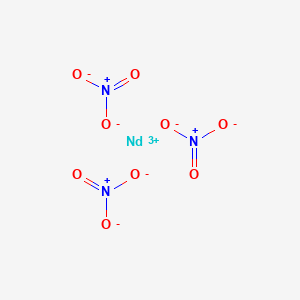
Neodymium nitrate, hexahydrate (CAS# 16454-60-7), 100%
- Identification number(s):
- EINECS Number: 233-153-9
|
3 Hazards identification
- Hazard designation:
Xi Irritant
O Oxidising
- Information pertaining to particular dangers for man and environment
R 8 Contact with combustible material may cause fire.
R 36/37/38 Irritating to eyes, respiratory system and skin.
|
4 First aid measures
- After inhalation
Supply fresh air. If required, provide artificial respiration. Keep patient warm. Consult doctor if symptoms persist.
Seek immediate medical advice.
- After skin contact
Instantly wash with water and soap and rinse thoroughly.
Seek immediate medical advice.
- After eye contact
Rinse opened eye for several minutes under running water. Then consult doctor.
- After swallowing Seek immediate medical advice.
- Information for doctor
- The following symptoms may occur: Methaemoglobinaemia
|
5 Fire fighting measures
- Suitable extinguishing agents
CO2, extinguishing powder or water jet. Fight larger fires with water jet.
- Special hazards caused by the material, its products of combustion or
flue gases:
Can be released in case of fire:
Nitrogen oxides (NOx)
- Protective equipment:
Wear self-contained breathing apparatus.
Wear full protective suit.
|
6 Accidental release measures
- Person-related safety precautions:
Wear protective equipment. Keep unprotected persons away.
Ensure adequate ventilation
- Measures for environmental protection:
Do not allow material to be released to the environment without proper governmental permits.
- Measures for cleaning/collecting: Ensure adequate ventilation.
- Additional information:
See Section 7 for information on safe handling
See section 8 for information on personal protection equipment.
See Section 13 for information on disposal.
|
7 Handling and storage
- Handling
- Information for safe handling:
Keep containers tightly sealed.
Store in cool, dry place in tightly closed containers.
Ensure good ventilation/exhaustion at the workplace.
- Information about protection against explosions and fires:
Substance/product can reduce the ignition temperature of flammable substances.
This substance is an oxidizer and its heat of reaction with reducing agents or combustibles may cause ignition.
- Storage
- Requirements to be met by storerooms and containers:
No special requirements.
- Information about storage in one common storage facility:
Store away from flammable substances.
Store away from reducing agents.
Do not store together with acids.
Do not store together with alkalis (caustic solutions).
- Further information about storage conditions:
Keep container tightly sealed.
Store in cool, dry conditions in well sealed containers.
|
8 Exposure controls and personal protection
- Additional information about design of technical systems:
Properly operating chemical fume hood designed for hazardous chemicals and having an average face velocity of at least 100 feet per minute.
- Components with critical values that require monitoring at the
workplace:
Not required.
- Additional information: No data
- Personal protective equipment
- General protective and hygienic measures
The usual precautionary measures should be adhered to in handling the chemicals.
Keep away from foodstuffs, beverages and food.
Instantly remove any soiled and impregnated garments.
Wash hands during breaks and at the end of the work.
Avoid contact with the eyes and skin.
- Breathing equipment: Use breathing protection with high concentrations.
- Protection of hands: Impervious gloves
- Eye protection:
Safety glasses
Face protection
- Body protection: Protective work clothing.
|
9 Physical and chemical properties:
- General Information
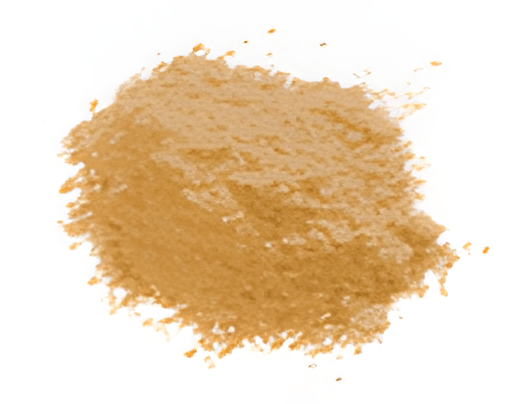
- Form: Crystalline
- Colour: Violet
- Smell: Odourless
- Value/Range Unit Method
- Change in condition
- Melting point/Melting range: 69-71 ° C
- Boiling point/Boiling range: Not determined
- Sublimation temperature / start: Not determined
- Flash point: Not applicable
- Inflammability (solid, gaseous)
Contact with combustible material may cause fire.
- Ignition temperature: Not determined
- Decomposition temperature: Not determined
- Critical values for explosion:
- Lower: Not determined
- Upper: Not determined
- Steam pressure: Not determined
- Density Not determined
- Solubility in / Miscibility with
- Water: at 25 ° C 1529 g/l
- pH-value: (200 g/l) at 20 ° C 3.0-4.0
|
10 Stability and reactivity
- Thermal decomposition / conditions to be avoided:
No decomposition if used and stored according to specifications.
- Materials to be avoided:
Reducing agents, easily oxidized materials
Acids
Bases
Aluminum and aluminum alloys.
- Dangerous reactions:
Reacts with reducing agents
Reacts with flammable substances
- Dangerous products of decomposition: Nitrous vitriol gases
|
11 Toxicological information
- Acute toxicity:
LD/LC50 values that are relevant for classification:
Oral: LD50: 2750 mg/kg (rat)
- Primary irritant effect:
- on the skin: Irritant for skin and mucous membranes.
- on the eye: Irritant effect.
- Sensitization: No sensitizing effect known.
- Additional toxicological information:
To the best of our knowledge the acute and chronic toxicity of this substance is not fully known.
No classification data on carcinogenic properties of this material is available from the EPA, IARC, NTP, OSHA or ACGIH.
|
12 Ecological information:
- General notes:
Do not allow material to be released to the environment without proper governmental permits.
Water hazard class 1 (Self-assessment): slightly hazardous for water.
Do not allow undiluted product or large quantities of it to reach ground water, water bodies or sewage system.
|
13 Disposal considerations
- Product:
- Recommendation
Consult state, local or national regulations for proper disposal.
Hand over to disposers of hazardous waste.
Must be specially treated under adherence to official regulations.
- Uncleaned packagings:
- Recommendation:
Disposal must be made according to official regulations.
|
14 Transport information
- Land transport ADR/RID and GGVS/GGVE (cross-border/domestic)
- ADR/RID-GGVS/E Class: 5.1 (O2) Oxidizing substances.
- Kemler Number: 50
- UN-Number: 1477
- Packaging group: III
- Label 5.1
- Designation of goods: 1477 NITRATES, INORGANIC, N.O.S. (Neodymium
nitrate)
- Maritime transport IMDG/GGVSea:
- IMDG/GGVSea Class: 5.1
- UN Number: 1477
- Label 5.1
- Packaging group: III
- Correct technical name: NITRATES, INORGANIC, N.O.S.
- Air transport ICAO-TI and IATA-DGR:
- ICAO/IATA Class: 5.1
- UN/ID Number: 1477
- Label 5.1
- Packaging group: III
- Correct technical name: NITRATES, INORGANIC, N.O.S.
|
15 Regulatory information
- Designation according to EC guidelines:
- Code letter and hazard designation of product:
Xi Irritant O Oxidising
- Risk phrases:
8 Contact with combustible material may cause fire.
36/37/38 Irritating to eyes, respiratory system and skin.
- Safety phrases:
17 Keep away from combustible material.
26 In case of contact with eyes, rinse immediately with plenty of water and seek medical advice.
36/37/39 Wear suitable protective clothing, gloves and eye/face protection.
- National regulations
- Information about limitation of use:
For use only by technically qualified individuals.
Employment restrictions concerning young persons must be observed.
- Water hazard class:
Water hazard class 1 (Self-assessment): slightly hazardous for water.
|
16 Other information:
Employers should use this information only as a supplement to other information gathered by them, and should make independent judgement of suitability of this information to ensure proper use and protect the health and safety of employees. This information is furnished without warranty, and any use of the product not in conformance with this Material Safety Data Sheet, or in combination with any other product or process, is the responsibility of the user.
|
|
| American Elements Products can also be sourced at these sites: |
 |
 |
 |
 |
 |
 |
 |
|
 |
 |
 |
 |
 |
 |
 |
 |
 |
 |
 |
 |
 |
 |
 |
 |
 |
 |
 |
 |
 |
 |
 |
 |
|