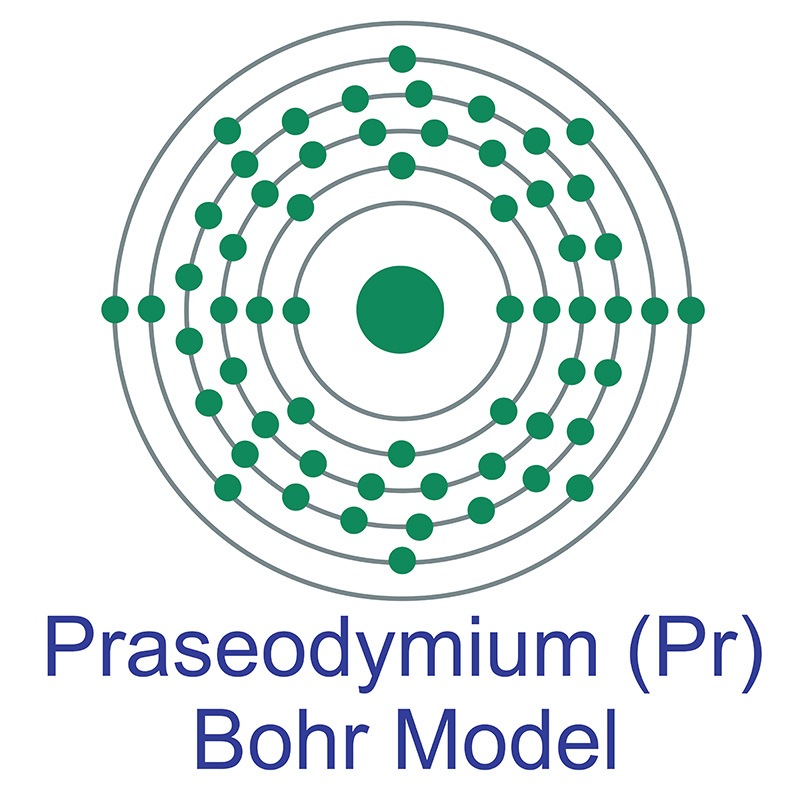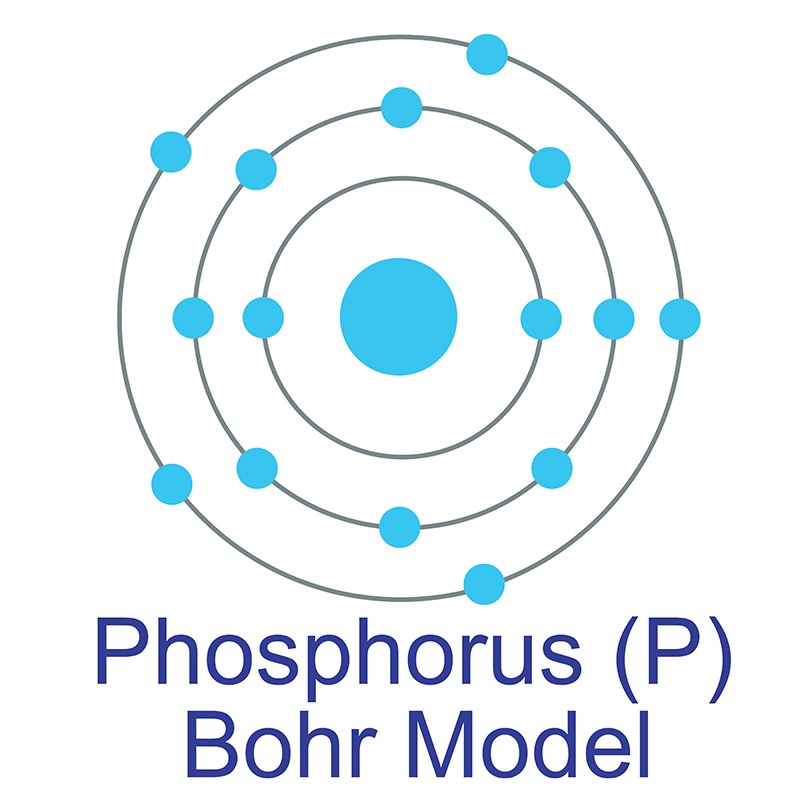
American Elements produces to many standard grades when applicable, including Mil Spec (military grade); ACS, Reagent and Technical Grade; Food, Agricultural and Pharmaceutical Grade; Optical Grade, USP and EP/BP (European Pharmacopeia/British Pharmacopeia) and follows applicable ASTM testing standards.See safety data and research below and pricing/lead time above. American Elements specializes in producing high purity Praseodymium Phosphide sputtering targets with the highest possible density and smallest possible average grain sizes for use in semiconductor, chemical vapor deposition (CVD) and physical vapor deposition (PVD) display and optical applications. Our standard Sputtering Targets for thin film are available monoblock or bonded with dimensions and configurations up to 820 mm with hole drill locations and threading, beveling, grooves and backing designed to work with both older sputtering devises as well as the latest process equipment, such as large area coating for solar energy or fuel cells and flip-chip applications. Research sized targets are also produced as well as custom sizes and alloys. All targets are analyzed using best demonstrated techniques including X-Ray Fluorescence (XRF), Glow Discharge Mass Spectrometry (GDMS), and Inductively Coupled Plasma (ICP). "Sputtering" allows for thin film deposition of an ultra high purity sputtering metallic or oxide material onto another solid substrate by the controlled removal and conversion of the target material into a directed gaseous/plasma phase through ionic bombardment. We can also provide targets outside this range in addition to just about any size rectangular, annular, or oval target. Materials are produced using crystallization, solid state and other ultra high purification processes such as sublimation. American Elements specializes in producing custom compositions for commercial and research applications and for new proprietary technologies. American Elements also casts any of the rare earth metals and most other advanced materials into rod, bar or plate form, as well as other machined shapes and through other processes such as nanoparticles (See also application discussion at Nanotechnology Information and at Quantum Dots) and in the form of solutions and organometallics. We also produce Praseodymium Metal as rods, powder and plates. Other shapes are available by request. Praseodymium is a Block F, Group 3, Period 6 element. The number of electrons in each of Praseodymium's shells is 2, 8, 18, 21, 8, 2 and its electronic configuration is [Xe]4f3 6s2. In its elemental form praseodymium's CAS number is 7440-10-0. The praseodymium atom has a radius of 182.pm and it's Van der Waals radius is is unknown. Praseodymium is somewhat toxic. Praseodymium resembles the typical trivalent rare earths, however, it will exhibit a +4 state when stabilized in a zirconia host. Praseodymium is available as metal and compounds with purities from 99% to 99.999% (ACS grade to ultra-high purity); metals in the form of foil, sputtering target, and rod, and compounds as submicron and nanopowder. The element is found in most all light rare earth derivatives. It is highly valued in glass and ceramic production as a bright yellow pigment because of its optimum reflectance at 560 nm. Much research is being done on its optical properties for use in amplification of telecommunication systems, including as a doping agent in fluoride fibers. The origin of the element name comes from the Greek words 'prasios didymos' meaning green twin. See Praseodymium research below. |
PACKAGING SPECIFICATIONS FOR BULK & RESEARCH QUANTITIES |
Typical bulk packaging includes palletized plastic 5 gallon/25 kg. pails, fiber and steel drums to 1 ton super sacks in full container (FCL) or truck load (T/L) quantities. Research and sample quantities and hygroscopic, oxidizing or other air sensitive materials may be packaged under argon or vacuum. Shipping documentation includes a Certificate of Analysis and Material Safety Data Sheet (MSDS). Solutions are packaged in polypropylene, plastic or glass jars up to palletized 440 gallon liquid totes.
|
|
| |
Customers for this product have also looked at: |
Recent Research & Development for Praseodymium
- Synthesis mechanism of low-voltage praseodymium oxide doped zinc oxide varistor ceramics prepared through modified citrate gel coating.
Abdullah WR, Zakaria A, Ghazali MS.
Int J Mol Sci. 2012;13(4):5278-89. Epub 2012 Apr 24.
PMID:
22606043
[PubMed - in process]
- Inorganic-organic hybrid compounds based on novel lanthanide-antimony oxohalide nanoclusters.
Hu B, Zou GD, Feng ML, Huang XY.
Dalton Trans. 2012 May 2. [Epub ahead of print]
PMID:
22549083
[PubMed - as supplied by publisher]
- High pressure luminescence spectra of CaMoO(4):Pr(3+).
Mahlik S, Grinberg M, Cavalli E, Bettinelli M.
J Phys Condens Matter. 2012 May 30;24(21):215402. Epub 2012 Apr 27.
PMID:
22543332
[PubMed - in process]
- Bremsstrahlung parameters of praseodymium-142 in different human tissues: a dosimetric perspective for (142)Pr radionuclide therapy.
Bakht MK, Jabal-Ameli H, Ahmadi SJ, Sadeghi M, Sadjadi S, Tenreiro C.
Ann Nucl Med. 2012 Apr 12. [Epub ahead of print]
PMID:
22528970
[PubMed - as supplied by publisher]
- Superbroadband near-IR photoluminescence from Pr3+-doped fluorotellurite glasses.
Zhou B, Tao L, Tsang YH, Jin W, Pun EY.
Opt Express. 2012 Feb 13;20(4):3803-13. doi: 10.1364/OE.20.003803.
PMID:
22418137
[PubMed - in process]
- Upgrade of the resonance ionization laser ion source at ISOLDE on-line isotope separation facility: new lasers and new ion beams.
Fedosseev VN, Berg LE, Fedorov DV, Fink D, Launila OJ, Losito R, Marsh BA, Rossel RE, Rothe S, Seliverstov MD, Sjödin AM, Wendt KD.
Rev Sci Instrum. 2012 Feb;83(2):02A903.
PMID:
22380244
[PubMed - in process]
- Uncovering the global life cycles of the rare Earth elements.
Du X, Graedel TE.
Sci Rep. 2011;1:145. Epub 2011 Nov 4.
PMID:
22355662
[PubMed]
- Nonaaqua-praseodymium triiodide-thio-urea (1/2).
Antonenko TA, Alikberova LY, Albov DV.
Acta Crystallogr Sect E Struct Rep Online. 2012 Feb 1;68(Pt 2):m110. Epub 2012 Jan 7.
PMID:
22346801
[PubMed - in process]
- Di-?-pivalato-?O,O':O';?O:O,O'-bis-[(methanol-?O)bis-(2,2,6,6-tetra-methylhepta-ne-3,5-dionato)praseo-dymium(III)].
Meng Q, Cross AM, May PS, Sykes AG, Berry MT.
Acta Crystallogr Sect E Struct Rep Online. 2011 Nov 1;67(Pt 11):m1514-5. Epub 2011 Oct 12.
PMID:
22219764
[PubMed - in process]
- The matlockite-type praseodymium(III) oxide bromide PrOBr.
Talmon-Gros P, Schurz CM, Schleid T.
Acta Crystallogr Sect E Struct Rep Online. 2011 Dec 1;67(Pt 12):i74. Epub 2011 Nov 23.
PMID:
22199472
[PubMed - in process]
- Selected trace elements in the sacramento river, california: occurrence and distribution.
Taylor HE, Antweiler RC, Roth DA, Alpers CN, Dileanis P.
Arch Environ Contam Toxicol. 2012 May;62(4):557-69. Epub 2011 Dec 23.
PMID:
22193863
[PubMed - in process]
- NaYF4:Pr3+ nanocrystals displaying photon cascade emission.
Gusowski MA, Swart HC, Karlsson LS, Trzebiatowska-Gusowska M.
Nanoscale. 2012 Jan 21;4(2):541-6. Epub 2011 Nov 29.
PMID:
22127460
[PubMed - indexed for MEDLINE]
- Tetra-kis(?-4-tert-butyl-benzoato)-?O:O,O';?O,O':O';?O:O'-bis-[aqua-bis-(4-tert-butyl-benzoato-?O,O')(4-tert-butyl-benzoic acid-?O)praseodymium(III)].
Dai J, Pan RK, Yang J.
Acta Crystallogr Sect E Struct Rep Online. 2011 Aug 1;67(Pt 8):m1160-1. Epub 2011 Jul 30.
PMID:
22090916
[PubMed]
- Unusual spectral renormalization in hexaborides.
Patil S, Adhikary G, Balakrishnan G, Maiti K.
J Phys Condens Matter. 2011 Dec 14;23(49):495601. Epub 2011 Nov 17.
PMID:
22089641
[PubMed - indexed for MEDLINE]
- Novel lanthanide-based polymeric chains and corresponding ultrafast dynamics in solution.
Thielemann DT, Klinger M, Wolf TJ, Lan Y, Wernsdorfer W, Busse M, Roesky PW, Unterreiner AN, Powell AK, Junk PC, Deacon GB.
Inorg Chem. 2011 Dec 5;50(23):11990-2000. Epub 2011 Nov 8.
PMID:
22066577
[PubMed]
- catena-Poly[[[bis-(3-amino-pyrazine-2-carboxyl-ato)triaqua-praseodymium(III)]-?-3-amino-pyrazine-2-carboxyl-ato-[(3-amino-pyrazine-2-carboxyl-ato)diaqua-formatopraseodymium(III)]-?-3-amino-pyrazine-2-carboxyl-ato] hexa-hydrate].
Gao S, Ng SW.
Acta Crystallogr Sect E Struct Rep Online. 2011 Sep 1;67(Pt 9):m1221-2. Epub 2011 Aug 11.
PMID:
22065704
[PubMed]
- Tetra-kis(?-2-phen-oxy-propionato)-?O,O':O';?O:O,O',?O:O'-bis-[(1,10-phenanthroline-?N,N')(2-phen-oxy-propionato-?O,O')praseodymium(III)].
Shen JB, Liu JL, Zhao GL.
Acta Crystallogr Sect E Struct Rep Online. 2011 Sep 1;67(Pt 9):m1321. Epub 2011 Aug 31.
PMID:
22058896
[PubMed]
- Poly[diaquabis-(?(4)-fumarato-?O:O:O:O)(?(4)-fumarato-?O:O,O:O:O,O)(?(2)-fumaric acid-?O:O)dipraseodymium(III)].
Liu PL, Cao W, Wang J, Zeng RH, Zeng Z.
Acta Crystallogr Sect E Struct Rep Online. 2011 Oct 1;67(Pt 10):m1433-4. Epub 2011 Sep 30.
PMID:
22058712
[PubMed]
- Spectroscopic properties and upconversion in Pr3+:YF3 nanoparticles.
Pellé F, Dhaouadi M, Michely L, Aschehoug P, Toncelli A, Veronesi S, Tonelli M.
Phys Chem Chem Phys. 2011 Oct 21;13(39):17453-60. Epub 2011 Sep 2.
PMID:
21887443
[PubMed - indexed for MEDLINE]
- Signatures of spin-glass behaviour in PrIr2B2 and heavy fermion behaviour in PrIr2B2C.
Anupam, Anand VK, Hossain Z, Adroja DT, Geibel C.
J Phys Condens Matter. 2011 Sep 21;23(37):376001. Epub 2011 Aug 31.
PMID:
21878715
[PubMed - indexed for MEDLINE]
|
Material Safety Data Sheet |
|
1 Identification of substance
- Product details
- Trade name Praseodymium metal
|
2 Composition/Data on components:
- Chemical characterization:
Designation: (CAS#)
Praseodymium (CAS# 7440-10-0); 100%
- Identification number(s):
- EINECS Number: 231-120-3
|
3 Hazards identification
- Hazard designation: · void
- Information pertaining to particular dangers for man and environment
Not applicable
|
4 First aid measures
- After inhalation
Supply fresh air. If required, provide artificial respiration. Keep patient warm. Consult doctor if symptoms persist.
Seek immediate medical advice.
- After skin contact
Instantly wash with water and soap and rinse thoroughly.
Seek immediate medical advice.
- After eye contact
Rinse opened eye for several minutes under running water. Then consult doctor.
- After swallowing Seek medical treatment.
|
5 Fire fighting measures
- Suitable extinguishing agents
Special powder for metal fires. Do not use water.
- For safety reasons unsuitable extinguishing agents Water.
- Protective equipment:
Wear self-contained breathing apparatus.
Wear full protective suit.
|
6 Accidental release measures
- Person-related safety precautions:
Wear protective equipment. Keep unprotected persons away.
Ensure adequate ventilation
- Measures for environmental protection:
Do not allow material to be released to the environment without proper governmental permits.
- Measures for cleaning/collecting: Collect mechanically.
- Additional information:
See Section 7 for information on safe handling
See section 8 for information on personal protection equipment.
See Section 13 for information on disposal.
|
7 Handling and storage
- Handling
- Information for safe handling:
Keep containers tightly sealed.
Store in cool, dry place in tightly closed containers.
No special precautions necessary if used correctly.
- Information about protection against explosions and fires:
No special measures required.
- Storage
- Requirements to be met by storerooms and containers:
No special requirements.
- Information about storage in one common storage facility:
Do not store together with oxidizing and acidic materials.
Store away from halogens.
- Further information about storage conditions:
Store under dry inert gas.
Keep container tightly sealed.
Store in cool, dry conditions in well sealed containers.
|
8 Exposure controls and personal protection
- Additional information about design of technical systems:
Properly operating chemical fume hood designed for hazardous chemicals and having an average face velocity of at least 100 feet per minute.
- Components with critical values that require monitoring at the
workplace:
Not required.
- Additional information: No data
- Personal protective equipment
- General protective and hygienic measures
The usual precautionary measures should be adhered to in handling the chemicals.
Keep away from foodstuffs, beverages and food.
Instantly remove any soiled and impregnated garments.
Wash hands during breaks and at the end of the work.
- Breathing equipment: Use breathing protection with high concentrations.
- Protection of hands: Impervious gloves
- Eye protection: Safety glasses
- Body protection: Protective work clothing.
|
9 Physical and chemical properties:
- General Information
- Form: Solid.
- Colour: Silver-coloured
- Smell: Odourless
- Value/Range Unit Method
- Change in condition
- Melting point/Melting range: 931 ° C
- Boiling point/Boiling range: 3127 ° C
- Sublimation temperature / start: Not determined
- Flash point: Not applicable
- Inflammability (solid, gaseous) Product is not inflammable.
Powder: highly flammable
- Ignition temperature: Not determined
- Decomposition temperature: Not determined
- Danger of explosion: Product is not explosive.
- Critical values for explosion:
- Lower: Not determined
- Upper: Not determined
- Steam pressure: Not determined
- Density at 20 ° C 6.773 g/cm³
- Solubility in / Miscibility with
- Water: Not determined
|
10 Stability and reactivity
- Thermal decomposition / conditions to be avoided:
No decomposition if used and stored according to specifications.
- Materials to be avoided:
Oxidizing agents
Acids
Halogens
Water/moisture
Air
- Dangerous reactions:
Powder: contact with water liberates extremely flammable gases.
- Dangerous products of decomposition: Metal oxide
|
11 Toxicological information
- Acute toxicity:
- Primary irritant effect:
- on the skin: May cause irritation
- on the eye: May cause irritation
- Sensitization: No sensitizing effect known.
- Additional toxicological information:
To the best of our knowledge the acute and chronic toxicity of this substance is not fully known.
No classification data on carcinogenic properties of this material is available from the EPA, IARC, NTP, OSHA or ACGIH.
|
12 Ecological information:
- General notes:
Do not allow material to be released to the environment without proper governmental permits.
Water hazard class 1 (Self-assessment): slightly hazardous for water.
Do not allow undiluted product or large quantities of it to reach ground water, water bodies or sewage system.
|
13 Disposal considerations
- Product:
- Recommendation
Consult state, local or national regulations for proper disposal.
Hand over to disposers of hazardous waste.
Must be specially treated under adherence to official regulations.
- Uncleaned packagings:
- Recommendation:
Disposal must be made according to official regulations.
|
14 Transport information
- Land transport ADR/RID and GGVS/GGVE (cross-border/domestic)
- ADR/RID-GGVS/E Class: None
- Maritime transport IMDG/GGVSea:
- IMDG/GGVSea Class: None
- Air transport ICAO-TI and IATA-DGR:
- ICAO/IATA Class: None
- Transport/Additional information:
Not dangerous according to the above specifications.
|
15 Regulatory information
- Designation according to EC guidelines:
Observe the normal safety regulations when handling chemicals
The product is not subject to identification regulations under EC Directives and the Ordinance on Hazardous Materials (GefStoffV).
- National regulations
- Information about limitation of use:
For use only by technically qualified individuals.
- Water hazard class:
Water hazard class 1 (Self-assessment): slightly hazardous for water.
|
16 Other information:
Employers should use this information only as a supplement to other information gathered by them, and should make independent judgement of suitability of this information to ensure proper use and protect the health and safety of employees. This information is furnished without warranty, and any use of the product not in conformance with this Material Safety Data Sheet, or in combination with any other product or process, is the responsibility of the user.
|
|
| American Elements is a copyrighted U.S. Trademark. All rights reserved. |
| |