American Elements Logo and U.S. Registered Trademark


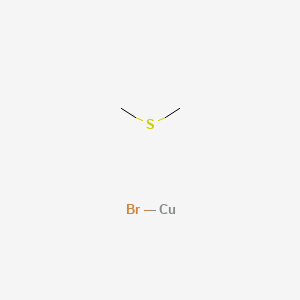
Copper Bromide CuBr
CuBr

7787-70-4
Product Product Code Order or Specifications
(2N) 99% Copper Bromide CU-BR-02 Contact American Elements
(3N) 99.9% Copper Bromide CU-BR-03 Contact American Elements
(4N) 99.99% Copper Bromide CU-BR-04 Contact American Elements
(5N) 99.999% Copper Bromide CU-BR-05 Contact American Elements
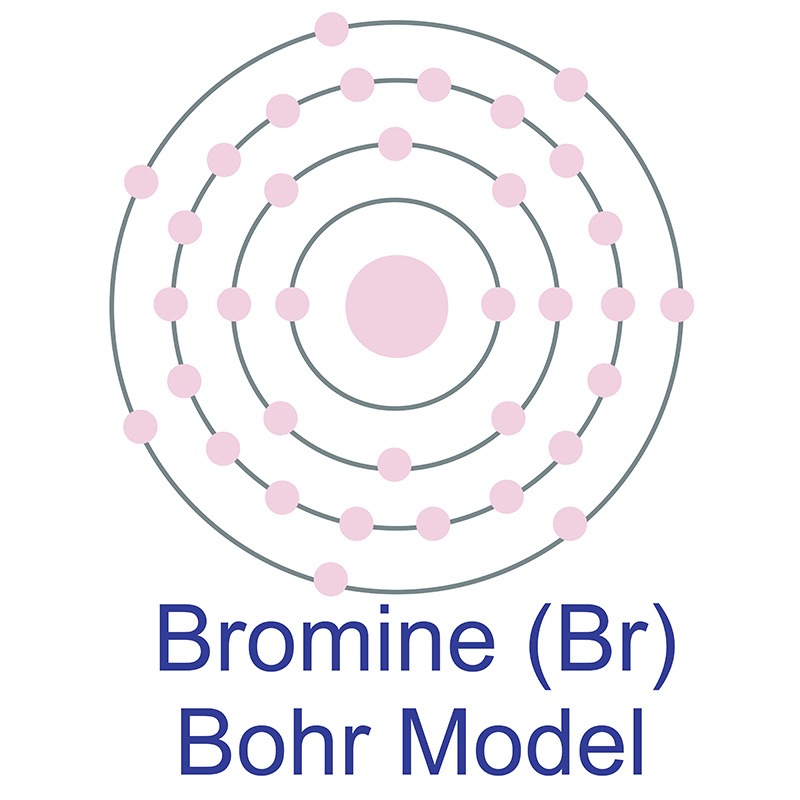
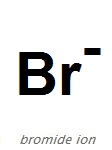
Bromide IonCopper Bromide is generally immediately available in most volumes. High purity, submicron and nanopowder forms may be considered. Most metal bromide compounds are water soluble for uses in water treatment, chemical analysis and in ultra high purity for certain crystal growth applications. Bromide in an aqueous solution can be detected by adding carbon disulfide (CS2) and chlorine.American Elements produces to many standard grades when applicable, including Mil Spec (military grade); ACS, Reagent and Technical Grade; Food, Agricultural and Pharmaceutical Grade; Optical Grade, USP and EP/BP (European Pharmacopoeia/British Pharmacopoeia)and follows applicable ASTM testing standards.Typical and custom packaging is available. Additional technical, research and safety (MSDS) information is available as is a Reference Calculator for converting relevant units of measurement.

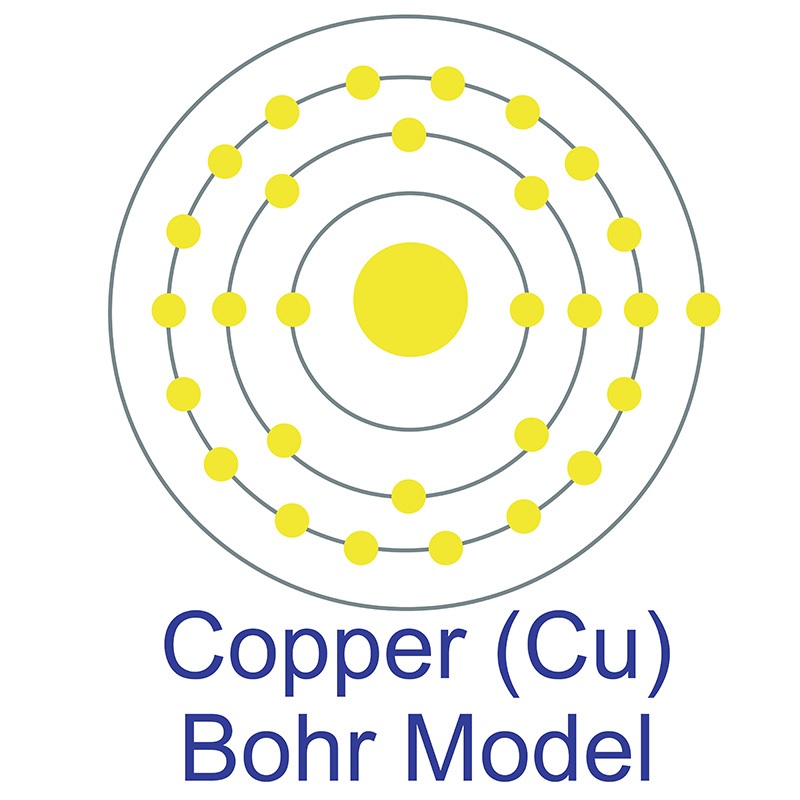
Copper(Cu) atomic and molecular weight, atomic number and elemental symbolCopper is a Block D, Group 11, Period 4 element. The number of electrons in each of Copper's shells is 2, 8, 18, 1 and its electronic configuration is [Ar] 3d10 4s1. In its elemental form copper's CAS number is 7440-50-8. The copper atom has a radius of 127.8 .pm and it's Van der Waals radius is 140.pm. Copper is an essential trace element in animals and plants, but in excess copper is toxic. Due to its high electrical conductivity, large amounts of copper are used by the electrical industry for wire. Of all pure metals, only silver has a higher electrical conductivity. Copper is also resistant to corrosion caused by moisture, making it a widely used material in pipes, coins, and jewelry. Copper is often too soft for its applications, so it is incorporated in numerous alloys. For example, brass is a copper-zinc alloy, and bronze is a copper-tin alloy. Copper sulfate (CuSO 4·H2O), also known as blue vitrol, is the most well-known Elemental Coppercopper compound. It is used as Copper Bohr Modelan agricultural poison, an algicide, and as a pigment for inks. Cuprous chloride (CuCl) is a powder used to absorb carbon dioxide (CO2). Copper cyanide (CuCN) is often used in electroplating applications. Copper is available as metal and compounds with purities from 99% to 99.9999% (ACS grade to ultra-high purity); metals in the form of foil, sputtering target, and rod, and compounds as submicron and nanopowder. Copper was first discovered by Early Man. The origin of the word copper comes from the Latin word 'cuprium' which translates as "metal of Cyprus". Cyprus, a Mediterranean island, was known as an ancient source of mined copper. See Copper research below.

Formula CAS No. Appearance Molecular Weight
CUBr 7787-70-4 Pale Green Powder 286.90
PRODUCT CATALOG Copper Products Foil Submicron & Nanopowder Tolling Ultra High Purity Sputtering Target Crystal Growth Rod, Plate, Powder, etc. Home

Have a Question? Ask a Chemical Engineer or Material Scientist   Request an MSDS or Certificate of Analysis


Search by Material, Product Name, Product Code, CAS Number, Formula, Element, Anion, Form, EC Number, MDL Number or PubChem ID.


German   Korean   French   Japanese   Spanish   Chinese (Simplified)   Portuguese   Russian   Chinese (Taiwan)   Italian   Turkish   Polish   Dutch   Czech   Swedish   Hungarian   Danish   Hebrew

Production Catalog Available in 36 Countries & Languages

Customers for this product have also looked at:
Copper Oxide Copper Nitrate Copper Pellets Copper Acetylacetonate Copper Acetate
Copper Tin Silver Alloy Copper Metal Copper Oxide Pellets Copper Wire Copper Foil
Copper Chloride Copper Sputtering Target Copper Powder Copper Nanoparticles Aluminum Magnesium Copper Alloy


Recent Research & Development for Copper

  • Booster biocides and microfouling. Fay F, Linossier I, Carteau D, Dheilly A, Silkina A, Vallee-Rehel K. Biofouling. 2010 Oct;26(7):787-98. PubMed PMID: 20824571.

  • Label-Free Detection of Lectins on Carbohydrate-Modified Boron-Doped Diamond Surfaces. Szunerits S, Niedzio?lka-Jo¨nsson J, Boukherroub R, Woisel P, Baumann JS, Siriwardena A. Anal Chem. 2010 Sep 9. [Epub ahead of print] PubMed PMID: 20828205.

  • Conserved and novel functions for Arabidopsis MIA40 in assembly of proteins in mitochondria and peroxisomes. Carrie C, Giraud E, Duncan O, Xu L, Wang Y, Huang S, Clifton R, Murcha M, Filipovska A, Rackham O, Vrielink A, Whelan J. J Biol Chem. 2010 Sep 9. [Epub ahead of print] PubMed PMID: 20829360.

  • Metomyl Degradation by Electro-Fenton and Electro-Fenton-Like Processes: A Kinetics Study of the Effect of the Nature and Concentration of Some Transition Metal Ions As Catalyst. Oturan N, Zhou M, Oturan MA. J Phys Chem A. 2010 Sep 9. [Epub ahead of print] PubMed PMID: 20828190.

  • Copper-Catalyzed Synthesis of a-Amino Imides from Tertiary Amines: Ugi-Type Three-Component Assemblies Involving Direct Functionalization of sp(3) C-Hs Adjacent to Nitrogen Atoms. Ye X, Xie C, Pan Y, Han L, Xie T. Org Lett. 2010 Sep 9. [Epub ahead of print] PubMed PMID: 20828188.

  • Asymmetric Diels-Alder and Inverse-Electron-Demand Hetero-Diels-Alder Reactions of ß,?-Unsaturated a-Ketoesters with Cyclopentadiene Catalyzed by N,N'-Dioxide Copper(II) Complex. Zhu Y, Chen X, Xie M, Dong S, Qiao Z, Lin L, Liu X, Feng X. Chemistry. 2010 Sep 8. [Epub ahead of print] PubMed PMID: 20827702.

  • Prevalence of heavy metal resistance in bacteria isolated from tannery effluents and affected soil. Alam MZ, Ahmad S, Malik A. Environ Monit Assess. 2010 Sep 8. [Epub ahead of print] PubMed PMID: 20824329.

  • Pyridine Activation via Copper(I)-Catalyzed Annulation toward Indolizines. Barluenga J, Lonzi G, Riesgo L, Lo´pez LA, Toma´s M. J Am Chem Soc. 2010 Sep 8. [Epub ahead of print] PubMed PMID: 20825189.

  • Reactive Adsorption of Ammonia on Cu-Based MOF/Graphene Composites. Petit C, Mendoza B, Bandosz TJ. Langmuir. 2010 Sep 8. [Epub ahead of print] PubMed PMID: 20825199.

  • Preparation and characterisation of divalent hard and soft metal (M = Ca, Co, Cu, Zn, Cd, Hg and Pb) complexes of 1,10-dithia-18-crown-6: structural versatility. Park IH, Park KM, Lee SS. Dalton Trans. 2010 Sep 7. [Epub ahead of print] PubMed PMID: 20830403.

  • Polynuclear complexes of macrocyclic oxamide with 5-sulfosalicylate: syntheses, crystal structures and magnetic properties. Sun YQ, Fan LL, Gao DZ, Wang QL, Du M, Liao DZ, Zhang CX. Dalton Trans. 2010 Sep 7. [Epub ahead of print] PubMed PMID: 20830390.

  • Effects of feeding urea and copper sulphate in different combinations on live body weight, carcass weight, percent weight to body weight of different organs and histopathological tissue changes in broilers. Shahzad MN, Javed MT, Shabir S, Irfan M, Hussain R. Exp Toxicol Pathol. 2010 Sep 7. [Epub ahead of print] PubMed PMID: 20829007.

  • Automatic trace metal monitoring station use for early warning and short term events in polluted rivers: application to streams loaded by mining tailing. Lourino-Cabana B, Iftekhar S, Billon G, Mikkelsen O, Ouddane B. J Environ Monit. 2010 Sep 7. [Epub ahead of print] PubMed PMID: 20830408.

  • The cellular redox state as a modulator in cadmium and copper responses in Arabidopsis thaliana seedlings. Cuypers A, Karen S, Jos R, Kelly O, Els K, Tony R, Nele H, Nathalie V, Suzy VS, Frank VB, Yves G, Jan C, Jaco V. J Plant Physiol. 2010 Sep 7. [Epub ahead of print] PubMed PMID: 20828869.

  • Copper tolerance and response of antioxidative enzymes in axenically grown Brassica juncea (L.) plants. Singh S, Singh S, Ramachandran V, Eapen S. Ecotoxicol Environ Saf. 2010 Sep 6. [Epub ahead of print] PubMed PMID: 20825988.

  • Comparative analysis of plasmids in the genus listeria. Kuenne C, Voget S, Pischimarov J, Oehm S, Goesmann A, Daniel R, Hain T, Chakraborty T. PLoS One. 2010 Sep 2;5(9). pii: e12511. PubMed PMID: 20824078; PubMed Central PMCID: PMC2932693.

  • Changes in the Daphnia magna midgut upon ingestion of copper oxide nanoparticles: A transmission electron microscopy study. Heinlaan M, Kahru A, Kasemets K, Arbeille B, Prensier G, Dubourguier HC. Water Res. 2010 Aug 21. [Epub ahead of print] PubMed PMID: 20828783.

  • Emergency contraception: past, present and future. Cremer M, Masch R. Minerva Ginecol. 2010 Aug;62(4):361-71. PubMed PMID: 20827252.

  • [Study on the in-depth composition of beads formed by fuse breaking of electric wire at different oxygen concentrations by Auger electron spectroscopy]. Gao W, Wu Y, Liu SJ, Wang LT. Guang Pu Xue Yu Guang Pu Fen Xi. 2010 Jul;30(7):2003-5. Chinese. PubMed PMID: 20828019.

  • Screening metagenomic libraries for laccase activities. Ferrer M, Beloqui A, Golyshin PN. Methods Mol Biol. 2010;668:189-202. PubMed PMID: 20830565.


USA Science & Engineering FestivalSponsors of the United States Science & Engineering Festival on April 28, 2012 in Washington D.C. Please join us and our customers & co-sponsors NASA, Lockheed Martin and the Department of Defense inspiring the next generation of scientists and engineers.


  Print this Page
Periodic table of the elements science and academic information, elements and advanced materials data, scientific presentations and all pages, designs, concepts, logos, and color schemes herein are the copyrighted proprietary rights and intellectual property of American Elements. American Elements is a U.S. Registered Trademark. © 2001-2012. American Elements. All rights reserved.
Learn Six Sigma


American Elements is a copyrighted U.S. Trademark. All rights reserved.