Recent Research & Development for Gadolinium
- Feasibility of Using MR Enterography (MRE) for the Assessment of Terminal Ileitis and Inflammatory Activity in Children with Crohn's Disease (CD).
Silverstein J, Grand D, Kawatu D, Shah SA, Steinkeler J, Leleiko N.
J Pediatr Gastroenterol Nutr. 2012 Jan 10. [Epub ahead of print]
PMID:
22241511
[PubMed - as supplied by publisher]
- [Pleomorphic adenoma of parotid gland: MR imaging findings].
Zhang B, Shi HM.
Shanghai Kou Qiang Yi Xue. 2011 Dec;20(6):648-52. Chinese.
PMID:
22241320
[PubMed - in process]
- CMR With Late Gadolinium Enhancement in Genotype Positive-Phenotype Negative Hypertrophic Cardiomyopathy.
Rowin EJ, Maron MS, Lesser JR, Maron BJ.
JACC Cardiovasc Imaging. 2012 Jan;5(1):119-22. No abstract available.
PMID:
22239901
[PubMed - in process]
- Peptide-mediated nanoengineering of inorganic particle sur-faces: A general route toward surface functionalization via peptide adhesion domains.
Schwemmer T, Baumgartner J, Faivre D, Boerner HG.
J Am Chem Soc. 2011 Dec 23. [Epub ahead of print]
PMID:
22239472
[PubMed - as supplied by publisher]
- Aqueductal developmental venous anomaly as an unusual cause of congenital hydrocephalus: a case report and review of the literature.
Paulson D, Hwang SW, Whitehead WE, Curry DJ, Luerssen TG, Jea A.
J Med Case Reports. 2012 Jan 11;6(1):7. [Epub ahead of print]
PMID:
22236945
[PubMed - as supplied by publisher]
- MR Imaging and CT Evaluation of Congenital Pulmonary Vein Abnormalities in Neonates and Infants.
Vyas HV, Greenberg SB, Krishnamurthy R.
Radiographics. 2012 Jan;32(1):87-98.
PMID:
22236895
[PubMed - in process]
- In vivo MRI Characterization of Progressive Cardiac Dysfunction in the mdx Mouse Model of Muscular Dystrophy.
Stuckey DJ, Carr CA, Camelliti P, Tyler DJ, Davies KE, Clarke K.
PLoS One. 2012;7(1):e28569. Epub 2012 Jan 3.
PMID:
22235247
[PubMed - in process]
- Impact of inflammation on brain volume in multiple sclerosis.
Cheriyan J, Kim S, Wolansky LJ, Cook SD, Cadavid D.
Arch Neurol. 2012 Jan;69(1):82-8.
PMID:
22232347
[PubMed - in process]
- A calcium-permeable non-selective cation channel in the thick ascending limb apical membrane of the mouse kidney.
Guinamard R, Paulais M, Lourdel S, Teulon J.
Biochim Biophys Acta. 2011 Dec 31. [Epub ahead of print]
PMID:
22230350
[PubMed - as supplied by publisher]
- Ultrasonography, computed tomography and magnetic resonance imaging of hepatocellular carcinoma: toward improved treatment decisions.
Murakami T, Imai Y, Okada M, Hyodo T, Lee WJ, Kim MJ, Kim T, Choi BI.
Oncology. 2011;81 Suppl 1:86-99. Epub 2011 Dec 22.
PMID:
22212941
[PubMed - in process]
- Diagnostic imaging of hepatocellular carcinoma: recent progress.
Kudo M.
Oncology. 2011;81 Suppl 1:73-85. Epub 2011 Dec 22.
PMID:
22212940
[PubMed - in process]
- Usefulness of combination of imaging modalities in the diagnosis of hepatocellular carcinoma using sonazoid®-enhanced ultrasound, gadolinium diethylene-triamine-pentaacetic Acid-enhanced magnetic resonance imaging, and contrast-enhanced computed tomography.
Alaboudy A, Inoue T, Hatanaka K, Chung H, Hyodo T, Kumano S, Murakami T, Moustafa EF, Kudo M.
Oncology. 2011;81 Suppl 1:66-72. Epub 2011 Dec 22.
PMID:
22212939
[PubMed - in process]
- Gd(2)O(3) nanoparticles in hematopoietic cells for MRI contrast enhancement.
Hedlund A, Ahrén M, Gustafsson H, Abrikossova N, Warntjes M, Jönsson JI, Uvdal K, Engström M.
Int J Nanomedicine. 2011;6:3233-40. Epub 2011 Dec 9.
PMID:
22228991
[PubMed - in process]
- Hepatic Uptake of Tc-99m DPD on Bone Scintigraphy: The Influence of the Interval With Gadolinium-Containing Contrast of MRI.
Pak K, Kim SJ, Kim IJ, Suh KT.
Clin Nucl Med. 2012 Feb;37(2):134-6.
PMID:
22228334
[PubMed - in process]
- Hepatic parenchymal enhancement at Gd-EOB-DTPA-enhanced MR imaging: correlation with morphological grading of severity in cirrhosis and chronic hepatitis.
Kanki A, Tamada T, Higaki A, Noda Y, Tanimoto D, Sato T, Higashi H, Ito K.
Magn Reson Imaging. 2012 Jan 5. [Epub ahead of print]
PMID:
22227353
[PubMed - as supplied by publisher]
- A simple way to acquire T(1)-weighted MR images of rat liver with respiratory triggering.
Morikawa S, Murayama H, Fujimoto S, Shiino A, Inubushi T.
Magn Reson Imaging. 2012 Jan 5. [Epub ahead of print]
PMID:
22227350
[PubMed - as supplied by publisher]
- Firategrast for relapsing remitting multiple sclerosis: a phase 2, randomised, double-blind, placebo-controlled trial.
Miller DH, Weber T, Grove R, Wardell C, Horrigan J, Graff O, Atkinson G, Dua P, Yousry T, Macmanus D, Montalban X.
Lancet Neurol. 2012 Jan 5. [Epub ahead of print]
PMID:
22226929
[PubMed - as supplied by publisher]
- Potential of the gastric motility drug lorglumide in prostate cancer imaging.
Sturzu A, Sheikh S, Klose U, Echner H, Kalbacher H, Deeg M, Nägele T, Horger M, Schwentner C, Ernemann U, Heckl S.
Eur J Pharm Sci. 2011 Dec 30. [Epub ahead of print]
PMID:
22226647
[PubMed - as supplied by publisher]
- Assessment of Distribution and Evolution of Mechanical Dyssynchrony in a Porcine Model of Myocardial Infarction by Cardiovascular Magnetic Resonance.
Abd-Elmoniem KZ, Santaularia Tomas M, Sasano T, Soleimanifard S, Vonken EJ, Youssef A, Agarwal H, Dimaano VL, Calkins H, Stuber M, Prince JL, Abraham TP, Abraham MR.
J Cardiovasc Magn Reson. 2012 Jan 6;14(1):1. [Epub ahead of print]
PMID:
22226320
[PubMed - as supplied by publisher]
- Hyperpolarized 13C spectroscopy detects early changes in tumor vasculature and metabolism after VEGF neutralization.
Bohndiek SE, Kettunen MI, Hu DE, Brindle KM.
Cancer Res. 2012 Jan 5. [Epub ahead of print]
PMID:
22223844
[PubMed - as supplied by publisher]
|
Material Safety Data Sheet |
|
1 Identification of substance
- Product details
- Trade name Gadolinium (III) oxalate
|
2 Composition/Data on components:
- Chemical characterization:
Designation: (CAS#)
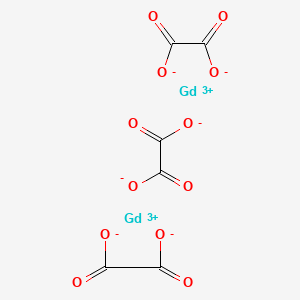
Gadolinium oxalate, decahydrate
(CAS# 22992-15-0), 100%
- Identification number(s):
- EC Number: 607-007-00-3
|
3 Hazards identification
- Hazard designation: Xn Harmful
- Information pertaining to particular dangers for man and environment
R 21/22 Harmful in contact with skin and if swallowed.
|
4 First aid measures
- After inhalation
Supply fresh air. If required, provide artificial respiration. Keep patient warm. Consult doctor if symptoms persist.
Seek immediate medical advice.
- After skin contact
Instantly wash with water and soap and rinse thoroughly.
Seek immediate medical advice.
- After eye contact
Rinse opened eye for several minutes under running water. Then consult doctor.
- After swallowing Seek immediate medical advice.
|
5 Fire fighting measures
- Suitable extinguishing agents
CO2, extinguishing powder or water jet. Fight larger fires with water jet or alcohol-resistant foam.
- Special hazards caused by the material, its products of combustion or
flue gases:
Can be released in case of fire:
Carbon monoxide and carbon dioxide
Metal oxide
- Protective equipment:
Wear self-contained breathing apparatus.
Wear full protective suit.
|
6 Accidental release measures
- Person-related safety precautions:
Wear protective equipment. Keep unprotected persons away.
Ensure adequate ventilation
- Measures for environmental protection:
Do not allow material to be released to the environment without proper governmental permits.
- Measures for cleaning/collecting:
Dispose of contaminated material as waste according to item 13.
- Additional information:
See Section 7 for information on safe handling
See section 8 for information on personal protection equipment.
See Section 13 for information on disposal.
|
7 Handling and storage
- Handling
- Information for safe handling:
Keep containers tightly sealed.
Store in cool, dry place in tightly closed containers.
Ensure good ventilation/exhaustion at the workplace.
- Information about protection against explosions and fires:
No special measures required.
- Storage
- Requirements to be met by storerooms and containers:
No special requirements.
- Information about storage in one common storage facility:
Store away from water.
- Further information about storage conditions:
Keep container tightly sealed.
Store in cool, dry conditions in well sealed containers.
Protect from humidity and keep away from water.
This product is hygroscopic.
|
8 Exposure controls and personal protection
- Additional information about design of technical systems:
Properly operating chemical fume hood designed for hazardous chemicals and having an average face velocity of at least 100 feet per minute.
- Components with critical values that require monitoring at the
workplace:
Not required.
- Additional information: No data
- Personal protective equipment
- General protective and hygienic measures
The usual precautionary measures should be adhered to in handling the chemicals.
Keep away from foodstuffs, beverages and food.
Instantly remove any soiled and impregnated garments.
Wash hands during breaks and at the end of the work.
Avoid contact with the eyes and skin.
- Breathing equipment: Use breathing protection with high concentrations.
- Protection of hands: Impervious gloves
- Eye protection:
Safety glasses
Face protection
- Body protection: Protective work clothing.
|
9 Physical and chemical properties:
- General Information
- Form: Crystalline
- Colour: White
- Smell: Not determined
- Value/Range Unit Method
- Change in condition
- Melting point/Melting range: 110 ° C
- Boiling point/Boiling range: Not determined
- Sublimation temperature / start: Not determined
- Flash point: Not applicable
- Ignition temperature: Not determined
- Decomposition temperature: Not determined
- Danger of explosion: Product is not explosive.
- Critical values for explosion:
- Lower: Not determined
- Upper: Not determined
- Steam pressure: Not determined
- Density Not determined
- Solubility in / Miscibility with
- Water: Soluble
Fully miscible
|
10 Stability and reactivity
- Thermal decomposition / conditions to be avoided:
No decomposition if used and stored according to specifications.
- Materials to be avoided: Water/moisture
- Dangerous reactions: No dangerous reactions known
- Dangerous products of decomposition:
Carbon monoxide and carbon dioxide
Metal oxide
|
11 Toxicological information
- Acute toxicity:
- Primary irritant effect:
- on the skin: Irritant for skin and mucous membranes.
- on the eye: Irritant effect.
- Sensitization: No sensitizing effect known.
- Additional toxicological information:
Danger by skin resorption.
To the best of our knowledge the acute and chronic toxicity of this substance is not fully known.
No classification data on carcinogenic properties of this material is available from the EPA, IARC, NTP, OSHA or ACGIH.
|
12 Ecological information:
- General notes:
Do not allow material to be released to the environment without proper governmental permits.
Water hazard class 1 (Self-assessment): slightly hazardous for water.
Do not allow undiluted product or large quantities of it to reach ground water, water bodies or sewage system.
|
13 Disposal considerations
- Product:
- Recommendation
Consult state, local or national regulations for proper disposal.
Hand over to disposers of hazardous waste.
Must be specially treated under adherence to official regulations.
- Uncleaned packagings:
- Recommendation:
Disposal must be made according to official regulations.
|
14 Transport information
- Land transport ADR/RID and GGVS/GGVE (cross-border/domestic)
- ADR/RID-GGVS/E Class: 6.1 (T5) Toxic substances.
- Kemler Number: 60
- UN-Number: 3288
- Packaging group: III
- Label 6.1
- Designation of goods: 3288 TOXIC SOLID, INORGANIC, N.O.S.
(Gadolinium (III) oxalate )
- Maritime transport IMDG/GGVSea:
- IMDG/GGVSea Class: 6.1
- UN Number: 3288
- Label 6.1
- Packaging group: III
- Correct technical name: TOXIC SOLID, INORGANIC, N.O.S. (Gadolinium
(III) oxalate)
- Air transport ICAO-TI and IATA-DGR:
- ICAO/IATA Class: 6.1
- UN/ID Number: 3288
- Label 6.1
- Packaging group: III
- Correct technical name: TOXIC SOLID, INORGANIC, N.O.S. (Gadolinium
(III) oxalate)
|
15 Regulatory information
- Designation according to EC guidelines:
- Code letter and hazard designation of product: Xn Harmful
- Risk phrases: 21/22 Harmful in contact with skin and if swallowed.
- Safety phrases: 24/25 Avoid contact with skin and eyes.
- National regulations
- Information about limitation of use:
For use only by technically qualified individuals.
Employment restrictions concerning young persons must be observed.
- Water hazard class:
Water hazard class 1 (Self-assessment): slightly hazardous for water.
|
16 Other information:
Employers should use this information only as a supplement to other information gathered by them, and should make independent judgement of suitability of this information to ensure proper use and protect the health and safety of employees. This information is furnished without warranty, and any use of the product not in conformance with this Material Safety Data Sheet, or in combination with any other product or process, is the responsibility of the user.
|
|
| American Elements is a copyrighted U.S. Trademark. All rights reserved. |
|