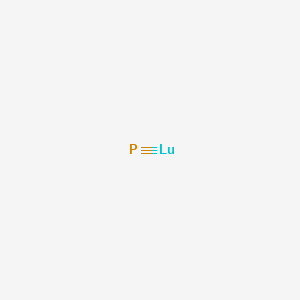
Lutetium Phosphide is a semiconductor used in high power, high frequency applications and in laser diodes.American Elements produces to many standard grades when applicable, including Mil Spec (military grade); ACS, Reagent and Technical Grade; Food, Agricultural and Pharmaceutical Grade; Optical Grade, USP and EP/BP (European Pharmacopoeia/British Pharmacopoeia)and follows applicable ASTM testing standards.Typical and custom packaging is available. Additional technical, research and safety (MSDS) information is available as is a Reference Calculator for converting relevant units of measurement.
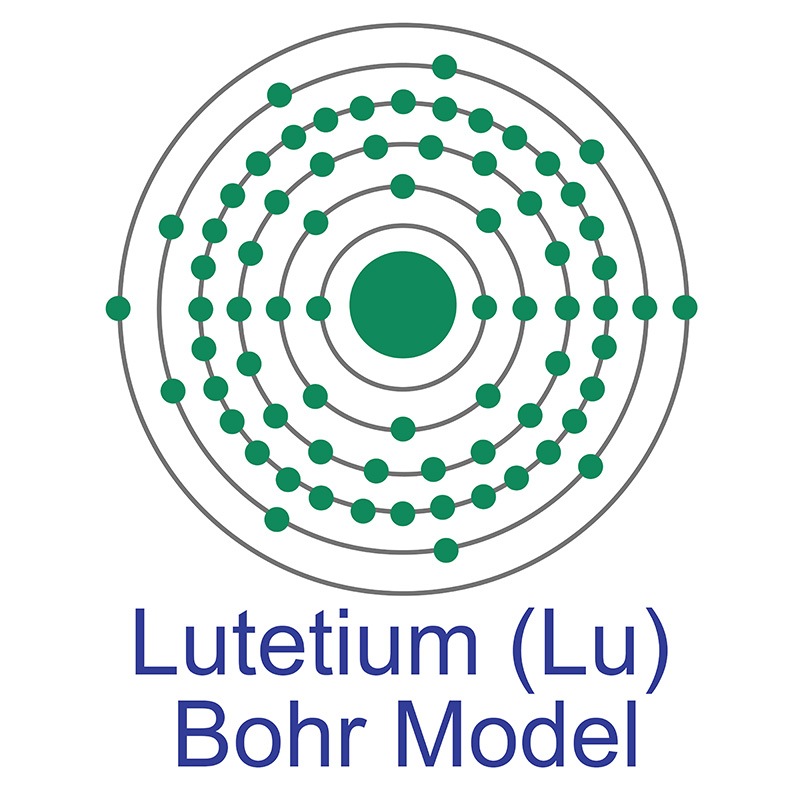
Lutetium is a Block F, Group 3, Period 6 element. The number of electrons in each of Lutetium's shells is 2, 8, 18, 32, 9, 2 and its electronic configuration is [Xe] 4f15 5d1 6s2. In its elemental form lutetium's CAS number is 7439-94-3. The lutetium atom has a radius of 171.8.pm and it's Van der Waals radius is unknown. Lutetium is not toxic. Lutetium is the last member of the rare earth series. Lutetium is available as metal and compounds with purities from 99% to 99.999% (ACS grade to ultra-high purity); metals in the form of foil, sputtering target, and rod, and compounds as submicron and nanopowder. Unlike most rare earths it lacks a magnetic moment. It also has the smallest metallic radius of any rare earth. It also has the smallest metallic radius of any rare earth. It is perhaps the least naturally abundant of the lanthanides. It is the ideal host for x-ray phosphors because it produces the densest known white material, lutetium tantalate (LuTaO4). It is utilized as a dopant in matching lattice parameters of certain substrate garnet crystals, such as indium-gallium-garnet (IGG) crystals due its lack of a magnetic moment.Lutetium is the last member of the rare earth series. Lutetium is available as metal and compounds with purities from 99% to 99.999% (ACS grade to ultra-high purity); metals in the form of foil, sputtering target, and rod, and compounds as submicron and nanopowder. Unlike most rare earths it lacks a magnetic moment. It also has the smallest metallic radius of any rare earth. Lutetium was first discovered by George Urbain in 1907. The name Lutetium originates from the Latin word Lutetia meaning Paris. See Lutetium research below.
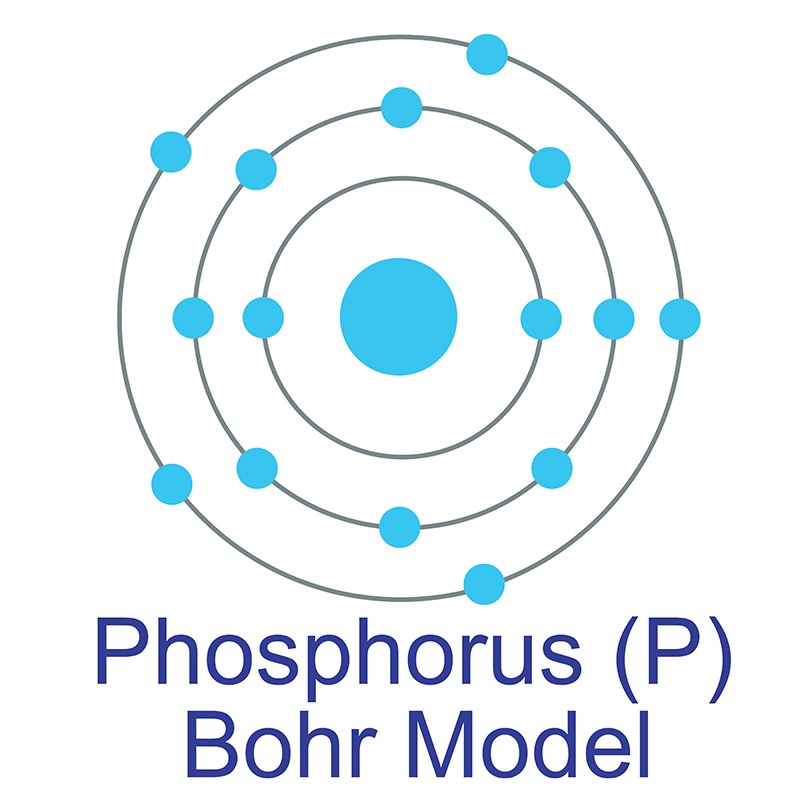
 Phosphorus is a Block P, Group 15, Period 3 element. The number of electrons in each of Phosphorus's shells is 2, 8, 5 and its electronic configuration is [Ne] 3s2 3p3. In its elemental form Phosphorus's CAS number is 7723-14-0. The Phosphorus atom has a radius of 110.5.pm and it's Van der Waals radius is 180.pm. Although white phosphorus is very toxic, red phosphorus is not considered toxic. Phosphorus information, including Technical Data, Safety Data and its High Purity properties, research, applications and other useful facts are discussed below. Scientific facts such as the atomic structure, ionization energy, abundance on Earth, conductivity and thermal properties are included.
American Elements semi conducting materials are crystal structures produced from ultra high purity starting materials synthesized by our high purity production facility which includes several large electric muffle furnaces, a tube furnace for hydrogen reduction, 50 gallon glass-lined Pfaudler reactors supported by our analytical laboratory containing X-ray diffraction, SEM, AA, BET surface area, and ICP Spectrometry for trace metals analysis. See a discussion of American Elements Ultra High Purity and Analytical capabilities. See Crystal Growth for processes used to fabricate semiconductor materials, which include:
-
Crystal "pulling" by the Czochaiski method for production of semiconductor materials
-
Flux growth and gradient freeze
-
Directional solidification of fluorites using both the Bridgman-Stockbarger and float zoning techniques
|
PACKAGING SPECIFICATIONS FOR BULK & RESEARCH QUANTITIES |
Typical bulk packaging includes palletized plastic 5 gallon/25 kg. pails, fiber and steel drums to 1 ton super sacks in full container (FCL) or truck load (T/L) quantities. Research and sample quantities and hygroscopic, oxidizing or other air sensitive materials may be packaged under argon or vacuum. Shipping documentation includes a Certificate of Analysis and Material Safety Data Sheet (MSDS). Solutions are packaged in polypropylene, plastic or glass jars up to palletized 440 gallon liquid totes.
|
|
| |
Customers for this product have also looked at: |
Recent Research & Development for Lutetium
- Use of internal scintillator radioactivity to calibrate DOI function of a PET detector with a dual-ended-scintillator readout.
Bircher C, Shao Y.
Med Phys. 2012 Feb;39(2):777.
PMID:
22320787
[PubMed - in process]
- Phthalocyanine with a giant dielectric constant.
Yazici A, Unüs N, Altindal A, Salih B, Bekaroglu O.
Dalton Trans. 2012 Feb 7. [Epub ahead of print]
PMID:
22310939
[PubMed - as supplied by publisher]
- Towards the Real Octupolar Cube: ABAB Bis(phthalocyaninato)lutetium(III) Complex exhibiting Out-standing Quadratic Hyperpolarizability.
Ayhan MM, Singh A, Hirel C, Gürek AG, Ahsen V, Jeanneau E, Ledoux-Rak I, Zyss J, Andraud C, Bretonničre Y.
J Am Chem Soc. 2012 Feb 6. [Epub ahead of print]
PMID:
22308960
[PubMed - as supplied by publisher]
- Rare-Earth-Metal-Hydrocarbyl Complexes Bearing Linked Cyclopentadienyl or Fluorenyl Ligands: Synthesis, Catalyzed Styrene Polymerization, and Structure-Reactivity Relationship.
Jian Z, Cui D, Hou Z.
Chemistry. 2012 Jan 26. doi: 10.1002/chem.201102682. [Epub ahead of print]
PMID:
22282393
[PubMed - as supplied by publisher]
- Outpatient therapeutic nuclear oncology.
Turner JH.
Ann Nucl Med. 2012 Jan 7. [Epub ahead of print]
PMID:
22222779
[PubMed - as supplied by publisher]
- Poly[tetra-aquadi-?(4)-oxalato-lutetium(III)potassium].
Zhang FM, Sun TZ, Hou GF, Yan PF, Li GM.
Acta Crystallogr Sect E Struct Rep Online. 2011 Nov 1;67(Pt 11):m1591. Epub 2011 Oct 22.
PMID:
22219822
[PubMed - in process]
- Selected Trace Elements in the Sacramento River, California: Occurrence and Distribution.
Taylor HE, Antweiler RC, Roth DA, Alpers CN, Dileanis P.
Arch Environ Contam Toxicol. 2011 Dec 23. [Epub ahead of print]
PMID:
22193863
[PubMed - as supplied by publisher]
- Nuclear chemical transformations of ytterbium and lutetium radionuclides following (n,?) and beta decay reactions in Tris(2,2,6,6-tetramethyle-3,5-heptanedionato)Yb(III).
Nassan L, Achkar B, Yassine T.
Appl Radiat Isot. 2011 Dec 6. [Epub ahead of print]
PMID:
22189373
[PubMed - as supplied by publisher]
- Influence of cations on the complexation yield of DOTATATE with yttrium and lutetium: a perspective study for enhancing the (90)Y and (177)Lu labeling conditions.
Asti M, Tegoni M, Farioli D, Iori M, Guidotti C, Cutler CS, Mayer P, Versari A, Salvo D.
Nucl Med Biol. 2011 Dec 13. [Epub ahead of print]
PMID:
22172388
[PubMed - as supplied by publisher]
- A novel compensation method for the anode gain non-uniformity of multi-anode photomultiplier tubes.
Lee CM, Il Kwon S, Ko GB, Ito M, Yoon HS, Lee DS, Hong SJ, Lee JS.
Phys Med Biol. 2012 Jan 7;57(1):191-207.
PMID:
22156011
[PubMed - in process]
- Automated Module Radiolabeling of Peptides and Antibodies with Gallium-68, Lutetium-177 and Iodine-131.
De Decker M, Turner JH.
Cancer Biother Radiopharm. 2011 Dec 7. [Epub ahead of print]
PMID:
22149590
[PubMed - as supplied by publisher]
- An unusual organoyttrium alkyl complex containing a [C5HMe3(?(3)-CH2)-C5H4N-?]- ligand and an elusive cyclopentadienide-based scandium tuck-over zwitterion obtained by C-H bond activation.
Jian Z, Cui D.
Chemistry. 2011 Dec 16;17(51):14578-85. doi: 10.1002/chem.201102378. Epub 2011 Nov 14.
PMID:
22083978
[PubMed - in process]
- Evaluation of 177Lu-DOTA-sst2 antagonist versus 177Lu-DOTA-sst2 agonist binding in human cancers in vitro.
Cescato R, Waser B, Fani M, Reubi JC.
J Nucl Med. 2011 Dec;52(12):1886-90. Epub 2011 Nov 8.
PMID:
22068898
[PubMed - indexed for MEDLINE]
- Reactions of late lanthanide metal atoms and methanol in solid argon: a matrix isolation infrared spectroscopic and theoretical study.
Gong Y, Andrews L, Chen M, Dixon DA.
J Phys Chem A. 2011 Dec 29;115(51):14581-92. Epub 2011 Dec 5.
PMID:
22054215
[PubMed - in process]
- Nuclear medicine techniques for the imaging and treatment of neuroendocrine tumours.
Teunissen JJ, Kwekkeboom DJ, Valkema R, Krenning EP.
Endocr Relat Cancer. 2011 Oct 17;18 Suppl 1:S27-51. Print 2011 Oct. Review.
PMID:
22005114
[PubMed - indexed for MEDLINE]
- A Positron Emission Tomograph Based on LSO-APD Modules with a Sampling ADC Read-out System for a Students' Advanced Laboratory Course.
Schneider FR, Mann AB, Konorov I, Delso G, Paul S, Ziegler SI.
Z Med Phys. 2011 Oct 20. [Epub ahead of print]
PMID:
22019183
[PubMed - as supplied by publisher]
- Preparation and scintillating properties of sol-gel eu, tb co-doped lu(2)o(3) nanopowders.
de Jesús Morales Ramírez A, Murillo AG, de Jesús Carrillo Romo F, Hernández MG, Palmerin JM, Guerrero RR.
Int J Mol Sci. 2011;12(9):6240-54. Epub 2011 Sep 23.
PMID:
22016655
[PubMed - in process]
- Timing and optimized acquisition parameters for the whole-body imaging of š??Lu-EDTMP toward performing bone pain palliation treatment.
Liu C, Brasic JR, Liu X, Li H, Xiang X, Luo Z, Wang Y, Kuai D, Zhang G, Zaknun JJ.
Nucl Med Commun. 2012 Jan;33(1):90-6.
PMID:
22001721
[PubMed - in process]
- Physical performance of the new hybrid PET?CT Discovery-690.
Bettinardi V, Presotto L, Rapisarda E, Picchio M, Gianolli L, Gilardi MC.
Med Phys. 2011 Oct;38(10):5394-411.
PMID:
21992359
[PubMed - indexed for MEDLINE]
- Dihydrogen addition in a dinuclear rare-earth metal hydride complex supported by a metalated TREN ligand.
Venugopal A, Fegler W, Spaniol TP, Maron L, Okuda J.
J Am Chem Soc. 2011 Nov 9;133(44):17574-7. Epub 2011 Oct 18.
|
Material Safety Data Sheet |
|
1 Identification of substance
- Product details
- Trade name Lutetium metal
|
2 Composition/Data on components:
- Chemical characterization:
Designation: (CAS#)
Lutetium (CAS# 7439-94-3), 100%
- Identification number(s):
- EINECS Number: 231-103-0
|
3 Hazards identification
- Hazard designation: · void
- Information pertaining to particular dangers for man and environment
Fine powder:
R 11 Highly flammable
|
4 First aid measures
- General information No special measures required.
- After inhalation No special measures required.
- After skin contact The product is not skin irritating.
- After eye contact Seek medical treatment in case of complaints.
- After swallowing Seek medical treatment in case of complaints.
|
5 Fire fighting measures
- Suitable extinguishing agents Extinguishing powder. Do not use water.
- For safety reasons unsuitable extinguishing agents Water.
- Protective equipment: No special measures required.
|
6 Accidental release measures
- Person-related safety precautions: Not required.
- Measures for environmental protection:
Do not allow material to be released to the environment without proper governmental permits.
- Measures for cleaning/collecting: Collect mechanically.
- Additional information:
See Section 7 for information on safe handling
See section 8 for information on personal protection equipment.
See Section 13 for information on disposal.
|
7 Handling and storage
- Handling
- Information for safe handling:
Handle under dry protective gas.
Keep containers tightly sealed.
Store in cool, dry place in tightly closed containers.
No special precautions necessary if used correctly.
- Information about protection against explosions and fires:
Fine powder: highly flammable
- Storage
- Requirements to be met by storerooms and containers:
No special requirements.
- Information about storage in one common storage facility:
Store away from air.
Store away from water.
Do not store together with oxidizing and acidic materials.
Store away from halogens.
- Further information about storage conditions:
Store under dry inert gas.
|
8 Exposure controls and personal protection
- Additional information about design of technical systems:
No further data; see item 7.
- Components with critical values that require monitoring at the
workplace:
Not required.
- Additional information: No data
- Personal protective equipment
- General protective and hygienic measures
The usual precautionary measures should be adhered to in handling the chemicals.
- Breathing equipment: Not required.
- Protection of hands: Not required.
- Eye protection: Safety glasses
- Body protection: Protective work clothing.
|
9 Physical and chemical properties:
- General Information
- Form: Pieces
- Colour: Silver grey
- Smell: Odourless
- Value/Range Unit Method
- Change in condition
- Melting point/Melting range: 1663 ° C
- Boiling point/Boiling range: 3402 ° C
- Sublimation temperature / start: Not determined
- Flash point: Not applicable
- Inflammability (solid, gaseous) Product is not inflammable.
Powder: flammable
- Ignition temperature: Not determined
- Decomposition temperature: Not determined
- Danger of explosion: Product is not explosive.
- Critical values for explosion:
- Lower: Not determined
- Upper: Not determined
- Steam pressure: Not determined
- Density at 20 ° C 9.84 g/cm³
- Solubility in / Miscibility with
- Water: Not determined
|
10 Stability and reactivity
- Thermal decomposition / conditions to be avoided:
No decomposition if used and stored according to specifications.
- Materials to be avoided:
Oxidizing agents
Acids
Halogens
Water/moisture
Air
- Dangerous reactions:
Powder: contact with water liberates extremely flammable gases.
- Dangerous products of decomposition: Metal oxide
|
11 Toxicological information
- Acute toxicity:
- Primary irritant effect:
- on the skin: No irritant effect.
- on the eye: No irritant effect.
- Sensitization: No sensitizing effect known.
- Additional toxicological information:
To the best of our knowledge the acute and chronic toxicity of this substance is not fully known.
|
12 Ecological information:
- General notes:
Do not allow material to be released to the environment without proper governmental permits.
Water hazard class 1 (Self-assessment): slightly hazardous for water.
Do not allow undiluted product or large quantities of it to reach ground water, water bodies or sewage system.
|
13 Disposal considerations
- Product:
- Recommendation
Consult state, local or national regulations for proper disposal.
Hand over to disposers of hazardous waste.
Must be specially treated under adherence to official regulations.
- Uncleaned packagings:
- Recommendation:
Disposal must be made according to official regulations.
|
14 Transport information
- Land transport ADR/RID and GGVS/GGVE (cross-border/domestic)
- ADR/RID-GGVS/E Class: None
- Maritime transport IMDG/GGVSea:
- IMDG/GGVSea Class: None
- Air transport ICAO-TI and IATA-DGR:
- ICAO/IATA Class: None
- Transport/Additional information:
Not dangerous according to the above specifications.
|
15 Regulatory information
- Designation according to EC guidelines:
Observe the normal safety regulations when handling chemicals
The product is not subject to identification regulations under EC Directives and the Ordinance on Hazardous Materials (GefStoffV).
- National regulations
- Information about limitation of use:
For use only by technically qualified individuals.
- Water hazard class:
Water hazard class 1 (Self-assessment): slightly hazardous for water.
|
16 Other information:
Employers should use this information only as a supplement to other information gathered by them, and should make independent judgement of suitability of this information to ensure proper use and protect the health and safety of employees. This information is furnished without warranty, and any use of the product not in conformance with this Material Safety Data Sheet, or in combination with any other product or process, is the responsibility of the user.
|
|
| American Elements is a copyrighted U.S. Trademark. All rights reserved. |
| |