American Elements Logo and U.S. Registered Trademark
Lead Antimonide
Product
Product Code
Order or Specifications
99.999% Lead Antimonide Powder
PB-SB-05-P
Contact American Elements
99.999% Lead Antimonide Ingot
PB-SB-05-I
Contact American Elements
99.999% Lead Antimonide Chunk
PB-SB-05-CK
Contact American Elements
99.999% Lead Antimonide Lump
PB-SB-05-L
Contact American Elements
99.999% Lead Antimonide Sputtering Target
PB-SB-05-ST
Contact American Elements
Lead Antimonide is used in a number of industrial applications including infrared detection and imaging. Additional technical, research and safety (MSDS) information is available as is a Reference Calculator for converting relevant units of measurement.

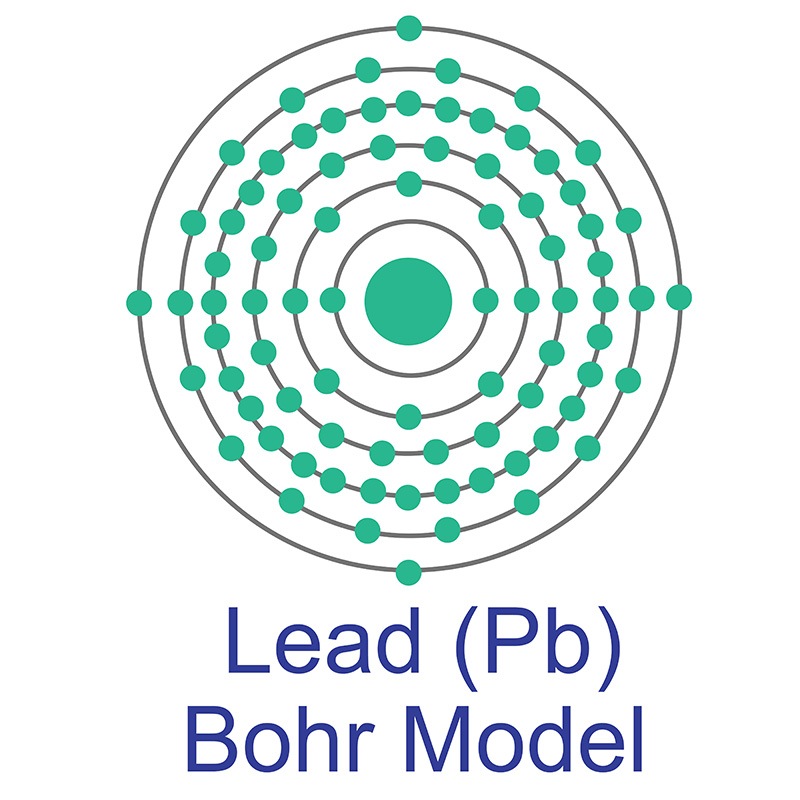
Lead is a Block P, Group 14, Period 6 element. The electronic configuration is [Xe] 4f14 5d10 6s2 6p2. In its elemental form lead's CAS number is 7439-92-1. The lead atom has a radius of 175.pm and it's Van der Waals radius is 202.pm. Lead is a bluish-white metal of bright luster, naturally occurring as a mixture of four stable isotopes: 204Pb (1.48%), 206Pb (23.6%), 207Pb (22.6%), and 208Pb (52.3%). It is highly resistant to corrosion and can be used to contain corrosive liquids such as sulfuric acid. Great quantities of Lead, both as the dioxide and the metal, are used in batteries, cable covering, plumbing, and ammunition. Alloys include solder, type metal, and various antifriction metals and compounds. Lead is extremely effective at absorbing sound and vibration. It is also used as radiation shielding for X-ray equipment and nuclear reactors. Oxides of Lead are used in producing fine "crystal glass" and "flint glass" of a high index of refraction for achromatic lenses. Lead ceramics and crystalline material have a wide range of industrial and optical applications, including infrared detection and imaging. Lead-based semiconductors, such as lead telluride, lead selenide and lead antimonide are finding application in photovoltaic (solar energy) cells and infra red detectors.

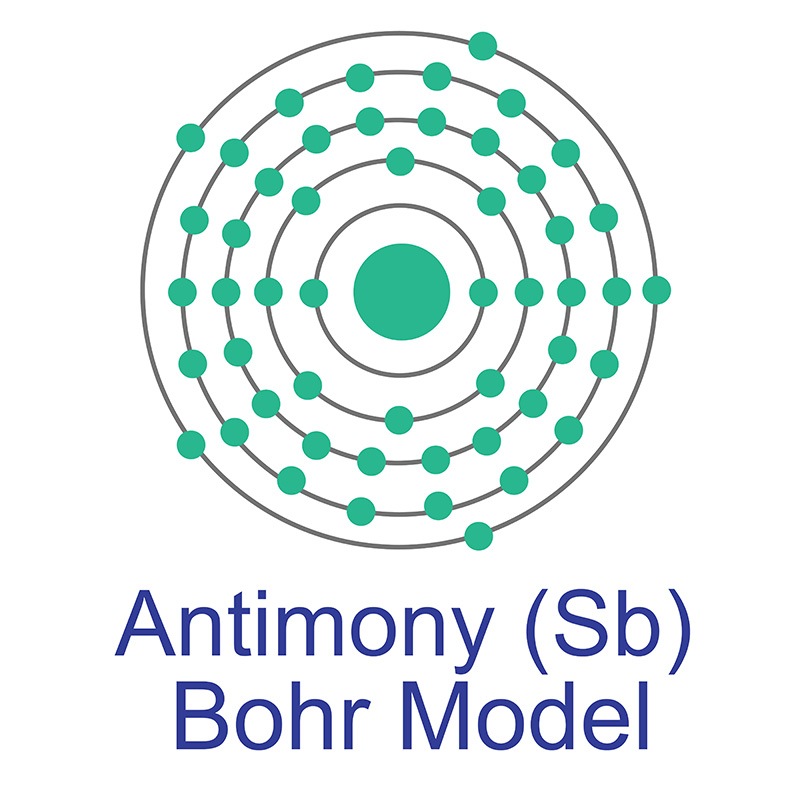
Antimony is a Block P, Group 15, Period 5 element. The electronic configuration is [Kr] 4d10 5s2 5p3. In its elemental form antimony's CAS number is 7440-36-0. The antimony atom has a radius of 145.pm and it's Van der Waals radius is 200.pm. Antimony is finding use in semiconductor technology for making infrared detectors, diodes and Hall-effect devices in crystalline structures, such as antimony telluride and gallium antimonide. Antimony is however a poor conductor of heat and electricity. It greatly increases the hardness and mechanical strength of lead. This has found applications in batteries, antifriction alloys, small arms and tracer bullets and cable sheathing. Antimony compounds are used in manufacturing flame-proofing compounds, paints, ceramic enamels, glass, and pottery glazes. Antimony is available as metal and compounds with purities from 99% to 99.9999% (ACS grade to ultra-high purity); metals in the form of foil, sputtering target, and rod, and compounds as submicron and nanopowder.

American Elements semi conducting materials are crystal structures produced from ultra high purity starting materials synthesized by our high purity production facility which includes several large electric muffle furnaces, a tube furnace for hydrogen reduction, 50 gallon glass-lined Pfaudler reactors supported by our analytical laboratory containing X-ray diffraction, SEM, AA, BET surface area, and ICP Spectrometry for trace metals analysis. See a discussion of American Elements Ultra High Purity and Analytical capabilities. See Crystal Growth for processes used to fabricate semiconductor materials, which include:

  • Crystal "pulling" by the Czochaiski method for production of semiconductor materials
  • Flux growth and gradient freeze
  • Directional solidification of fluorites using both the Bridgman-Stockbarger and float zoning techniques
Formula CAS No. Appearance Molecular Weight
PbSb 12266-38-5   328.94
PRODUCT CATALOG Submicron & Nanopowder Tolling Ultra High Purity Sputtering Target Crystal Growth Rod, Plate, Powder, etc.
Periodic table of the elements science and academic information, elements and advanced materials data, scientific presentations and all pages, designs, concepts, logos, and color schemes herein are the copyrighted proprietary rights and intellectual property of American Elements. American Elements is a U.S. Registered Trademark. © 2001-2009. American Elements. All rights reserved.


Recent Research & Development for Lead

  • Evolution of the Respiratory System in Nonavian Theropods: Evidence From Rib and Vertebral Morphology. Schachner ER, Lyson TR, Dodson P. Anat Rec (Hoboken). 2009 Aug 26;292(9):1501-1513. [Epub ahead of print] PMID: 19711481 [PubMed - as supplied by publisher]

  • Hereditary hemochromatosis gene (HFE) variants are associated with birth weight and childhood leukemia risk. Dorak MT, Mackay RK, Relton CL, Worwood M, Parker L, Hall AG. Pediatr Blood Cancer. 2009 Aug 26. [Epub ahead of print] PMID: 19711434 [PubMed - as supplied by publisher]

  • Calpain activation by hepatitis C virus proteins inhibits the extrinsic apoptotic signaling pathway. Simonin Y, Disson O, Lerat H, Antoine E, Binamé F, Rosenberg AR, Desagher S, Lassus P, Bioulac-Sage P, Hibner U. Hepatology. 2009 Jul 20. [Epub ahead of print] PMID: 19711428 [PubMed - as supplied by publisher]

  • Lectin-based glycoproteomics to explore and analyze hepatocellular carcinoma-related glycoprotein markers. Dai Z, Zhou J, Qiu SJ, Liu YK, Fan J. Electrophoresis. 2009 Aug 26;30(17):2957-2966. [Epub ahead of print] PMID: 19711376 [PubMed - as supplied by publisher]

  • Treatment of subsyndromal depressive symptoms in middle-aged and older adults with schizophrenia: effect on functioning. Kasckow J, Lanouette N, Patterson T, Fellows I, Golshan S, Solorzano E, Zisook S. Int J Geriatr Psychiatry. 2009 Aug 26. [Epub ahead of print] PMID: 19711335 [PubMed - as supplied by publisher]

  • Personality, Sexuality, and Substance Use as Predictors of Sexual Risk Taking in College Students. Turchik JA, Garske JP, Probst DR, Irvin CR. J Sex Res. 2009 Aug 26:1-9. [Epub ahead of print] PMID: 19711220 [PubMed - as supplied by publisher]

  • Concentration of four heavy metals (cadmium, lead, mercury, and arsenic) in organs of two cyprinid fish (Cyprinus carpio and Capoeta sp.) from the Kor River (Iran). Ebrahimi M, Taherianfard M. Environ Monit Assess. 2009 Aug 27. [Epub ahead of print] PMID: 19711190 [PubMed - as supplied by publisher]

  • A computational model of rapid task-related plasticity of auditory cortical receptive fields. Mesgarani N, Fritz J, Shamma S. J Comput Neurosci. 2009 Aug 27. [Epub ahead of print] PMID: 19711179 [PubMed - as supplied by publisher]

  • Bariatric Support Line: A Prospective Study of Support Line Activity. McDougall K, Segaran E, Sufi P, Heath DI. Obes Surg. 2009 Aug 27. [Epub ahead of print] PMID: 19711140 [PubMed - as supplied by publisher]

  • Treatment with Sibutramine prior to Roux-en-Y Gastric Bypass leads to an Improvement of Metabolic Parameters and to a Reduction of Liver Size and Operative Time. Aberle J, Freier A, Busch P, Mommsen N, Beil FU, Dannheim V, Mann O. Obes Surg. 2009 Aug 27. [Epub ahead of print] PMID: 19711139 [PubMed - as supplied by publisher]

  • The Clinical Application of a PACS-Dependent 12-Lead ECG and Image Information System in E-Medicine and Telemedicine. Hsieh JC, Lo HC. J Digit Imaging. 2009 Aug 27. [Epub ahead of print] PMID: 19711129 [PubMed - as supplied by publisher]

  • Mutations in the IL1RN locus lead to autoinflammation. Gabay C, Palmer G. Nat Rev Rheumatol. 2009 Sep;5(9):480-2. No abstract available. PMID: 19710672 [PubMed - in process]

  • Congenital B12 deficiency following maternal gastric bypass. Celiker MY, Chawla A. J Perinatol. 2009 Sep;29(9):640-2. PMID: 19710657 [PubMed - in process]

  • Behavioral Disinhibition and Reduced Anxiety-like Behaviors in Monoamine Oxidase B-Deficient Mice. Bortolato M, Godar SC, Davarian S, Chen K, Shih JC. Neuropsychopharmacology. 2009 Aug 26. [Epub ahead of print] PMID: 19710633 [PubMed - as supplied by publisher]

  • Impact of comorbidities on the management of psoriasis. Gerdes S, Mrowietz U. Curr Probl Dermatol. 2009;38:21-36. Epub 2009 Jul 28. PMID: 19710548 [PubMed - in process]

  • Suicide for survival--death of infected erythrocytes as a host mechanism to survive malaria. Föller M, Bobbala D, Koka S, Huber SM, Gulbins E, Lang F. Cell Physiol Biochem. 2009;24(3-4):133-40. Epub 2009 Aug 3. PMID: 19710527 [PubMed - in process]

  • Effect of the non-peptide thrombopoietin receptor agonist eltrombopag on bone marrow cells from patients with acute myeloid leukemia and myelodysplastic syndrome. Will B, Kawahara M, Luciano JP, Bruns I, Parekh S, Erickson-Miller CL, Aivado MA, Verma A, Steidl U. Blood. 2009 Aug 26. [Epub ahead of print] PMID: 19710504 [PubMed - as supplied by publisher]

  • Knockdown of the Drosophila GTPase, Nucleostemin 1, Impairs Large Ribosomal Subunit Biogenesis, Cell Growth, and Midgut Precursor Cell Maintenance. Rosby R, Cui Z, Rogers E, Delivron MA, Robinson VL, Dimario PJ. Mol Biol Cell. 2009 Aug 26. [Epub ahead of print] PMID: 19710426 [PubMed - as supplied by publisher]

  • Down syndrome and malignancies: a unique clinical relationship: a paper from the 2008 william beaumont hospital symposium on molecular pathology. Xavier AC, Ge Y, Taub JW. J Mol Diagn. 2009 Sep;11(5):371-80. PMID: 19710397 [PubMed - in process]

  • A novel indole-3-propanamide exerts its immunosuppressive activity by inhibiting JAK3 in T cells. Carbonnelle D, Duflos M, Marchand P, Chauvet C, Petit JY, Lang F. J Pharmacol Exp Ther. 2009 Aug 26. [Epub ahead of print] PMID: 19710367 [PubMed - as supplied by publisher]


American Elements Products can also be sourced at these sites:


electronics-ee.com