Bismuth Telluride - Antimony Telluride Solid Solution are moderate to highly concentrated liquid solutions of Lead Sulfate. They are an excellent source of Lead Sulfate for applications requiring solubabilzed materials. American Elements can prepare dissolved homogenous solutions at customer specified concentrations or to the maximum stoichiometric concentration. Packaging is available in 55 gallon drums, smaller units and larger liquid totes. American Elements maintains solution production facilities in the United States, Northern Europe (Liverpool, UK), Southern Europe (Milan, Italy), Australia and China to allow for lower freight costs and quicker delivery to our customers. .American Elements metal and rare earth compound solutions have numerous applications, but are commonly used in petrochemical cracking and automotive catalysts, water treatment, plating, textiles, research and in optic, laser, crystal and glass applications. Ultra high purity and high purity compositions improve both optical quality and usefulness as scientific standards. Nanoscale (See also Nanotechnology Information and Quantum Dots) elemental powders and suspensions, as alternative high surface area forms, may be considered. We also produce Lead Sulfate Powder. Most metal sulfate compounds are readily soluble in water for uses such as water treatment, unlike fluorides and oxides which tend to be insoluble. Organometallic forms are soluble in organic solutions and sometimes in both aqueous and organic solutions. Metallic ions can also be dispersed utilizing suspended or coated nanoparticles (See also application discussion at Nanotechnology Information and at Quantum Dots) and deposited utilizing sputtering targets and evaporation materials for uses such as solar energy materials and fuel cells.American Elements produces to many standard grades when applicable, including Mil Spec (military grade); ACS, Reagent and Technical Grade; Food, Agricultural and Pharmaceutical Grade; Optical Grade, USP and EP/BP (European Pharmacopoeia/British Pharmacopoeia)and follows applicable ASTM testing standards.Typical and custom packaging is available. Additional technical, research and safety (MSDS) information is available as is a Reference Calculator for converting relevant units of measurement.
Bismuth is a Block P, Group 15, Period 6 element. The number of electrons in each of Bismuth's shells is 2, 8, 18, 32, 18, 5 and its electronic configuration is [Xe] 4f14 5d10 6s2 6p3. In its elemental form bismuth's CAS number is 7440-69-9. The bismuth atom has a radius of 154.5.pm and it's Van der Waals radius is 200.pm. Bismuth is not toxic. Bismuth is the most diamagnetic of all metals, and the thermal conductivity is lower than any metal, except mercury. It has a high electrical resistance, and has the highest Hall Effect of any metal (i.e., greatest increase in electrical resistance when placed in a magnetic field). Bismuth expands on solidification. This property makes bismuth alloys particularly suited to the making of sharp castings of objects subject to damage by high temperatures. With other metals such as tin, cadmium , etc., bismuth forms low-melting alloys which are extensively used for safety devices in fire detection and extinguishing systems. Bismuth is used in producing malleable irons and is finding use as a catalyst for making acrylic fibers. When bismuth is heated in air it burns with a blue flame, forming yellow fumes of the oxide. The metal is also used as a thermocoupling material, and has found application as a carrier for 235 U or 233 U fuel in nuclear reactors. Its soluble salts are characterized by forming unsoluble basic salts on the addition of water, a property sometimes used in detection work. Bismuth oxychloride is used extensively in cosmetics. Bismuth was first discovered by Early Man. The name Bismuth originates from the German word 'wissmuth' meaning white mass. See Bismuth research below.
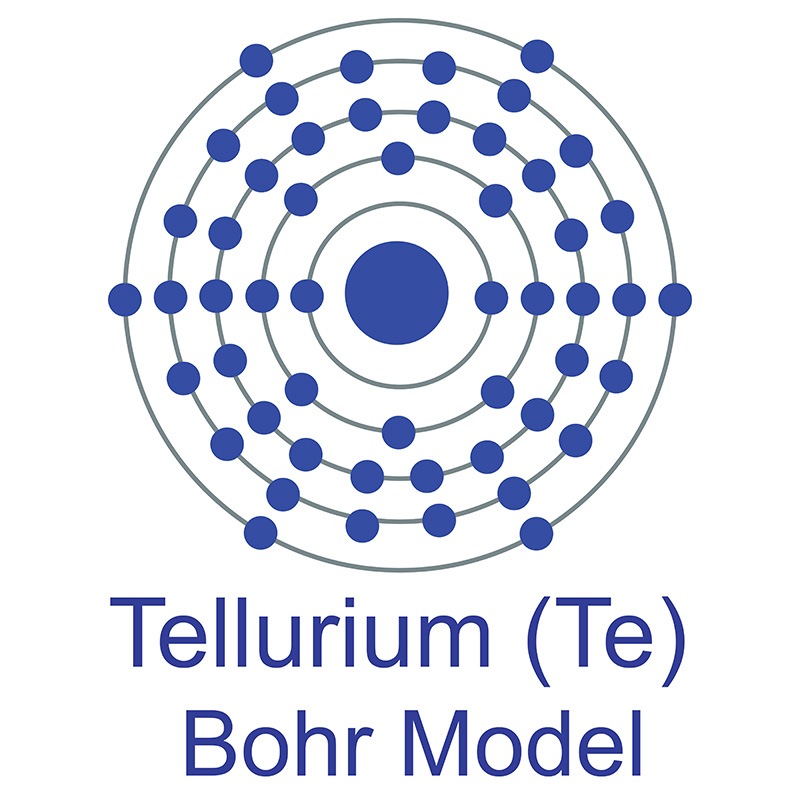
Tellurium is a Block P, Group 16, Period 5 element. The number of electrons in each of Tellurium's shells is 2, 8, 18, 18, 6 and its electronic configuration is [Kr] 4d10 5s2 5p4. In its elemental form tellurium's CAS number is 13494-80-9. Tellurium is very toxic and can cause birth defects. The tellurium atom has a radius of 143.2.pm and it's Van der Waals radius is 206.pm. Tellurium is a p-type semiconductor, and shows greater conductivity in certain directions, depending on alignment of the atoms. It is grown in crystalline form with other elements such as indium telluride. Its conductivity increases slightly with exposure to light which makes many tellurides candidates for solar energyapplications. Tellurium improves the machinability of copper and stainless steel, and its addition to lead decreases the corrosive action of sulfuric acid on lead and improves its strength and hardness. Tellurium is used as a basic ingredient in blasting caps, and is added to cast iron for chill control. Tellurium is used in ceramics. Bismuth telluride has been used in thermoelectric devices. Iron is available as metal and compounds with purities from 99% to 99.999% (ACS grade to ultra-high purity); metals in the form of foil, sputtering target, and rod, and compounds as submicron and nanopowder. Tellurium was first discovered by Franz Muller von Reichenstein in 1782. The name Tellurium originates from the Greek word 'Tellus' meaning Earth. See Tellurium research below.
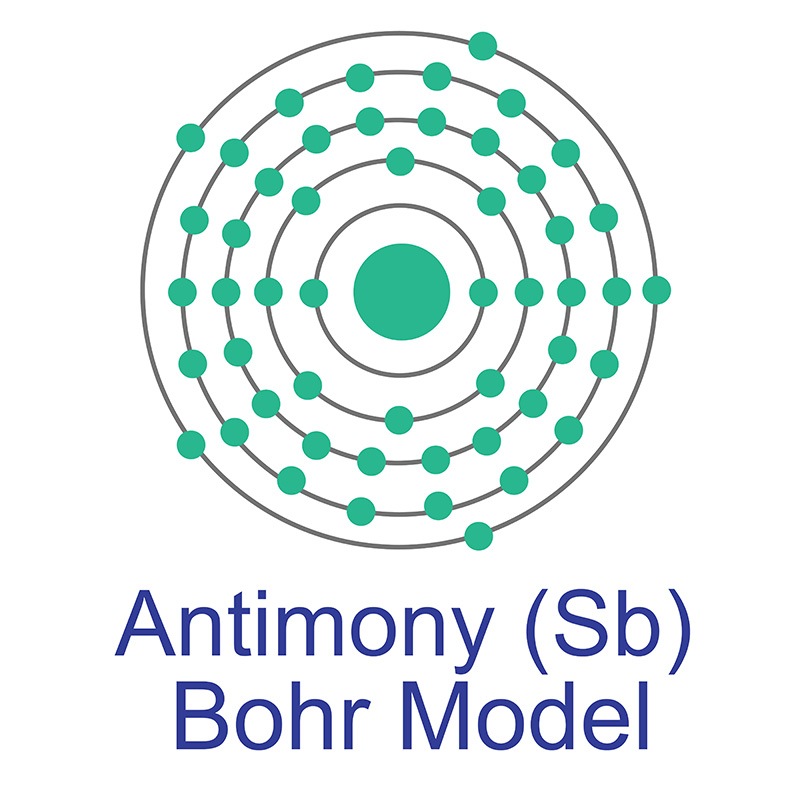
Antimony is a Block P, Group 15, Period 5 element. The number of electrons in each of Antimony's shells is 2, 8, 18, 18, 5 and its electronic configuration is [Kr] 4d10 5s2 5p3. In its elemental form antimony's CAS number is 7440-36-0. The antimony atom has a radius of 145.pm and it's Van der Waals radius is 200.pm. The chemical state of antimony affects the toxicity of the element and its compounds. Antimony is finding use in semiconductor technology for making infrared detectors, diodes and Hall-effect devices in crystalline structures, such as antimony telluride and gallium antimonide. Antimony is however a poor conductor of heat and electricity. It greatly increases the hardness and mechanical strength of lead. This has found applications in batteries, antifriction alloys, small arms and tracer bullets and cable sheathing. Antimony compounds are used in manufacturing flame-proofing compounds, paints, ceramic enamels, glass, and pottery glazes. Antimony is available as metal and compounds with purities from 99% to 99.9999% (ACS grade to ultra-high purity); metals in the form of foil, sputtering target, and rod, and compounds as submicron and nanopowder. See Antimony research below.
|
Recent Research & Development for Bismuth
- Dichloromethane as solvent for the synthesis
of polycationic clusters at room temperature - a link to standard organometallic
chemistry. Akerstedt J, Zaffaroni R, Kloo L. Dalton Trans. 2010 Sep 21;39(35):8132-4. Epub 2010 Aug 3. PubMed PMID:
20683511.
- Validation of measures of satisfaction with and impact of continuous and
conventional glucose monitoring. Juvenile Diabetes Research Foundation Continuous Glucose Monitoring Study
Group. Diabetes Technol Ther. 2010 Sep;12(9):679-84.
PubMed PMID: 20799388.
- Degradation and Mineralization of Bisphenol A by
Mesoporous Bi(2)WO(6) under Simulated Solar Light Irradiation. Wang C, Zhang H, Li F, Zhu L. Environ Sci
Technol. 2010 Sep 1;44(17):6843-8. PubMed PMID: 20704289.
- Prospective
Evaluation of a Newly Designed T-configured Stent Graft System for Palliative
Treatment of Advanced Hilar Malignant Biliary Obstructions. Gwon DI, Ko GY, Yoon HK, Kim JH, Lee JM, Ohm JY, Sung KB. J Vasc Interv Radiol.
2010 Sep;21(9):1410-1418. PubMed PMID: 20800780.
- The initialization and manipulation of quantum information stored in silicon by
bismuth dopants. Morley GW, Warner M, Stoneham AM, Greenland PT, van Tol J, Kay CW, Aeppli G. Nat Mater. 2010 Sep;9(9):725-9. Epub 2010 Aug 15. PubMed PMID:
20711180.
- Novel synthesis of bismuth tungstate hollow
nanospheres in water-ethanol mixed solvent. Wu D, Zhu H, Zhang C, Chen L. Chem Commun (Camb). 2010 Aug 25.
[Epub ahead of print] PubMed PMID: 20740222.
- X-ray Crystal
Structures of [XeF][MF(6)] (M = As, Sb, Bi), [XeF][M(2)F(11)] (M = Sb, Bi) and
Estimated Thermochemical Data and Predicted Stabilities for Noble-Gas
Fluorocation Salts using Volume-Based Thermodynamics. Elliott HS, Lehmann JF, Mercier HP, Jenkins HD, Schrobilgen GJ. Inorg Chem. 2010 Aug 24.
[Epub ahead of print] PubMed PMID: 20735068.
- Bismuth shielding in CT: support for use in
children. Kim S, Frush DP, Yoshizumi TT. Pediatr Radiol. 2010 Aug 24. [Epub ahead of print] PubMed PMID:
20734038.
- First-line eradication of Helicobacter pylori: are the standard
triple therapies obsolete? A different perspective. Buzás GM. World J Gastroenterol. 2010
Aug 21;16(31):3865-70. PubMed PMID: 20712046.
- Efficient conversion of triacylglycerols and fatty acids
to biodiesel in a microwave reactor using metal triflate catalysts. Socha AM, Sello JK. Org Biomol
Chem. 2010 Aug 17. [Epub ahead of print] PubMed PMID: 20714659.
- Ex vivo assessment of
genotoxicity and cytotoxicity in murine fibroblasts exposed to white MTA or white
Portland cement with 15% bismuth oxide. Zeferino EG, Bueno CE, Oyama LM, Ribeiro DA. Int Endod J. 2010 Aug 16. [Epub ahead of
print] PubMed PMID: 20722754.
- 2-Pyridyl selenolates of antimony and bismuth: Synthesis,
characterization, structures and their use as single source molecular precursor
for the preparation of metal selenide nanostructures and thin films. Sharma RK, Kedarnath G, Jain VK, Wadawale A, Nalliath M, Pillai CG,
Vishwanadh B. Dalton
Trans. 2010 Aug 12. [Epub ahead of print] PubMed PMID: 20714620.
- Conventional
and pretargeted radioimmunotherapy using bismuth-213 to target and treat
non-Hodgkin lymphomas expressing CD20: a preclinical model toward optimal
consolidation therapy to eradicate minimal residual disease. Park SI, Shenoi J, Pagel JM, Hamlin DK, Wilbur DS, Orgun N, Kenoyer AL, Frayo
S, Axtman A, Bäck T, Lin Y, Fisher DR, Gopal AK, Green DJ, Press OW. Blood. 2010 Aug 11.
[Epub ahead of print] PubMed PMID: 20702781.
- Ultrathin topological insulator Bi2Se3 nanoribbons exfoliated by
atomic force microscopy. Hong SS, Kundhikanjana W, Cha JJ, Lai K, Kong D, Meister S, Kelly MA, Shen
ZX, Cui Y. Nano Lett. 2010 Aug 11;10(8):3118-22. PubMed PMID:
20698625.
- Bismuth paste injection
for empyema thoracis: a 100-year-old method revisited. Reda Mahmoud TA, Ismail NI, Muda AS, Abdul Rahman MR. Ann Thorac Surg. 2010
Aug;90(2):654-5. PubMed PMID: 20667375.
- Management of Helicobacter pylori infection. Costa F, D'Elios MM. Expert Rev
Anti Infect Ther. 2010 Aug;8(8):887-92. PubMed PMID: 20695744.
- Spontaneous regression of an abdominal aortic aneurysm in an
immunocompromised patient. Bellows PH, Anaya-Ayala JE, Younes HK, Charlton-Ouw KM, Bismuth J, Davies MG,
Peden EK. Vasc Med. 2010 Aug;15(4):315-9. PubMed PMID: 20724377.
- I{kappa}B kinase overcomes PI3K/Akt and ERK/MAPK to control FOXO3a
activity in acute myeloid leukemia. Chapuis N, Park S, Leotoing L, Tamburini J, Verdier F, Bardet V, Green AS,
Willems L, Agou F, Ifrah N, Dreyfus F, Bismuth G, Baud V, Lacombe C, Mayeux P,
Bouscary D. Blood. 2010 Jul 29. [Epub ahead of print]
PubMed PMID: 20671123.
- Incorporating simulation in vascular surgery education. Bismuth J, Donovan MA, O'Malley MK, El Sayed HF, Naoum JJ, Peden EK, Davies
MG, Lumsden AB. J Vasc
Surg. 2010 Jul 29. [Epub ahead of print] PubMed PMID: 20674243.
- Biomimetic calcium-silicate cements aged in simulated body solutions. Osteoblast
response and analyses of apatite coating. Gandolfi MG, Ciapetti G, Perut F, Taddei P, Modena E, Rossi PL, Prati C. J Appl Biomater Biomech. 2009
Sep-Dec;7(3):160-70. PubMed PMID: 20740425.
|
Recent Research & Development for Tellurium
- Bulk and Surface Structure and High-Temperature Thermoelectric Properties of Inverse Clathrate-III in the Si-P-Te System.
Zaikina JV, Mori T, Kovnir K, Teschner D, Senyshyn A, Schwarz U, Grin Y, Shevelkov AV.
Chemistry. 2010 Oct 13. [Epub ahead of print]PMID: 20945448 [PubMed - as supplied by publisher]Related citations
- Tellurium dioxide Erbium doped planar rib waveguide amplifiers with net gain and 2.8 dB/cm internal gain.
Vu K, Madden S.
Opt Express. 2010 Aug 30;18(18):19192-200. doi: 10.1364/OE.18.019192.PMID: 20940815 [PubMed - in process]Related citations
- Water-Processable Polymer-Nanocrystal Hybrids for Thermoelectrics.
See KC, Feser JP, Chen CE, Majumdar A, Urban JJ, Segalman RA.
Nano Lett. 2010 Oct 5. [Epub ahead of print]PMID: 20923178 [PubMed - as supplied by publisher]Related citations
- Methylated Metal(loid) Species in Humans.
Hirner AV, Rettenmeier AW.
Met Ions Life Sci. 2010;7:465-521. Epub 2010 Jan 30.PMID: 20877816 [PubMed - in process]Free ArticleRelated citations
- Formation, occurrence, significance, and analysis of organoselenium and organotellurium compounds in the environment.
Wallschläger D, Feldmann J.
Met Ions Life Sci. 2010;7:319-64. Epub 2010 Jan 30.PMID: 20877812 [PubMed - in process]Free ArticleRelated citations
- Dicationic Tellurium Analogues of the Classic N-Heterocyclic Carbene.
Dutton JL, Ragogna PJ.
Chemistry. 2010 Sep 16. [Epub ahead of print]PMID: 20848623 [PubMed - as supplied by publisher]Related citations
- Tellurite-induced carbonylation of the Escherichia coli pyruvate dehydrogenase multienzyme complex.
Contreras Ndel P, Vásquez CC.
Arch Microbiol. 2010 Nov;192(11):969-73. Epub 2010 Sep 7.PMID: 20821193 [PubMed - in process]Related citations
- Seebeck tuning in chalcogenide nanoplate assemblies by nanoscale heterostructuring.
Mehta RJ, Karthik C, Singh B, Teki R, Borca-Tasciuc T, Ramanath G.
ACS Nano. 2010 Sep 28;4(9):5055-60.PMID: 20812700 [PubMed - in process]Related citations
- Inhibition of creatine kinase activity by 3-butyl-1-phenyl-2-(phenyltelluro)oct-en-1-one in the cerebral cortex and cerebellum of young rats.
de Andrade RB, Gemelli T, Guerra RB, Funchal C, Wannmacher CM.
J Appl Toxicol. 2010 Aug;30(6):611-6.PMID: 20809551 [PubMed - in process]Related citations
- Tellurium: an element with great biological potency and potential.
Ba LA, Döring M, Jamier V, Jacob C.
Org Biomol Chem. 2010 Oct 7;8(19):4203-16. Epub 2010 Aug 17.PMID: 20714663 [PubMed - in process]Related citations
- Hypervalent adducts of chalcogen-containing peri-substituted naphthalenes; reactions of sulfur, selenium, and tellurium with dihalogens.
Knight FR, Fuller AL, Bühl M, Slawin AM, Woollins JD.
Inorg Chem. 2010 Aug 16;49(16):7577-96.PMID: 20690768 [PubMed - in process]Related citations
- Speciation and determination of ultra trace amounts of inorganic tellurium in environmental water samples by dispersive liquid-liquid microextraction and electrothermal atomic absorption spectrometry.
Najafi NM, Tavakoli H, Alizadeh R, Seidi S.
Anal Chim Acta. 2010 Jun 18;670(1-2):18-23. Epub 2010 May 2.PMID: 20685411 [PubMed - in process]Related citations
- Selenium- and tellurium-containing multifunctional redox agents as biochemical redox modulators with selective cytotoxicity.
Jamier V, Ba LA, Jacob C.
Chemistry. 2010 Sep 24;16(36):10920-8.PMID: 20677196 [PubMed - in process]Related citations
- Sulfate assimilation mediates tellurite reduction and toxicity in Saccharomyces cerevisiae.
Ottosson LG, Logg K, Ibstedt S, Sunnerhagen P, Käll M, Blomberg A, Warringer J.
Eukaryot Cell. 2010 Oct;9(10):1635-47. Epub 2010 Jul 30.PMID: 20675578 [PubMed - in process]Related citations
- Metalloids, soil chemistry and the environment.
Lombi E, Holm PE.
Adv Exp Med Biol. 2010;679:33-44. Review.PMID: 20666222 [PubMed - indexed for MEDLINE]Related citations
- Na(+), K (+) and Tl(+) hydration from QM/MM computations and MD simulations with a polarizable force field.
Lev BB, Salahub DR, Noskov SY.
Interdiscip Sci. 2010 Mar;2(1):12-20. Epub 2010 Jan 28.PMID: 20640793 [PubMed - indexed for MEDLINE]Related citations
- Immunocompetence and alterations in hepatic gene expression in rainbow trout exposed to CdS/CdTe quantum dots.
Gagné F, Fortier M, Yu L, Osachoff HL, Skirrow RC, van Aggelen G, Gagnon C, Fournier M.
J Environ Monit. 2010 Aug 5;12(8):1556-65. Epub 2010 Jul 1.PMID: 20596552 [PubMed - in process]Related citations
- Chalcogen chemistry of group(IV) closo-dodecaborates, synthesis, theory and coordination chemistry.
Dimmer JA, Hornung M, Weigend F, Wesemann L.
Dalton Trans. 2010 Aug 28;39(32):7504-12. Epub 2010 Jul 1.PMID: 20593101 [PubMed - in process]Related citations
- New noncentrosymmetric tellurite phosphate material: synthesis, characterization, and calculations of Te2O(PO4)2.
Kim MK, Kim SH, Chang HY, Halasyamani PS, Ok KM.
Inorg Chem. 2010 Aug 2;49(15):7028-34.PMID: 20586470 [PubMed - in process]Related citations
- An efficient one-pot synthesis of symmetrical diselenides or ditellurides from halides with CuO nanopowder/Se0 or Te0/base.
Singh D, Deobald AM, Camargo LR, Tabarelli G, Rodrigues OE, Braga AL.
Org Lett. 2010 Aug 6;12(15):3288-91.PMID: 20586442 [PubMed - in process]Related citations
|
Customers for this product have also looked at: |
Recent Research & Development for Antimony
- Synthesis of four different antimony(III) O,O'-dialkyldithiophosphates: Characterization by (31)P CP/MAS NMR, single-crystal X-ray diffraction, and adsorption at a stibnite surface (Sb(2)S(3)).
Larsson AC, Ivanov MA, Gerasimenko AV, Ivanov AV.
J Colloid Interface Sci. 2011 Nov 6. [Epub ahead of print]
PMID:
22115160
[PubMed - as supplied by publisher]
- Sensing of Aqueous Fluoride Anions by Cationic Stibine-Palladium Complexes.
Wade CR, Ke IS, Gabbaï FP.
Angew Chem Int Ed Engl. 2011 Nov 24. doi: 10.1002/anie.201106242. [Epub ahead of print]
PMID:
22113959
[PubMed - as supplied by publisher]
- Electrical characterization of n/p-type nickel silicide/silicon junctions by Sb segregation.
Jun M, Park Y, Hyun Y, Choi SJ, Zyung T, Jang M.
J Nanosci Nanotechnol. 2011 Aug;11(8):7339-42.
PMID:
22103191
[PubMed - in process]
- Hydride generation in-atomizer collection atomic absorption spectrometry for the determination of antimony in acetic acid leachates from pewter cups.
Dessuy MB, Kratzer J, Vale MG, Welz B, Dedina J.
Talanta. 2011 Dec 15;87:255-61. Epub 2011 Oct 17.
PMID:
22099676
[PubMed - in process]
- Electrical and optical performance of transparent conducting oxide films deposited by electrostatic spray assisted vapour deposition.
Hou X, Choy KL, Liu JP.
J Nanosci Nanotechnol. 2011 Sep;11(9):8114-9.
PMID:
22097539
[PubMed - in process]
- Biomolecule-assisted green route to Sb2S3 crystals with three-dimensional dandelionlike patterns.
Xiang W, Ji G, Wei J, Yang Y, Yuan H, Liu X.
J Nanosci Nanotechnol. 2011 Sep;11(9):7820-32.
PMID:
22097493
[PubMed - in process]
- Use of antimony in the treatment of leishmaniasis: current status and future directions.
Haldar AK, Sen P, Roy S.
Mol Biol Int. 2011;2011:571242. Epub 2011 Jun 8.
PMID:
22091408
[PubMed - in process]
- Comparison between one day and two days protocols for sentinel node mapping of breast cancer patients.
Ali J, Alireza R, Mostafa M, Naser FM, Bahram M, Ramin S.
Hell J Nucl Med. 2011 Sep;14(3):313-5.
PMID:
22087458
[PubMed - in process]
- Identification of Gunshot Residues in Fabric Targets Using Sector Field Inductively Coupled Plasma Mass Spectrometry Technique and Ternary Graphs*
Freitas JC, Sarkis JE, Neto ON, Viebig SB.
J Forensic Sci. 2011 Nov 10. doi: 10.1111/j.1556-4029.2011.01956.x. [Epub ahead of print]
PMID:
22074259
[PubMed - as supplied by publisher]
- MAP Kinase1 of Leishmania Donovani: Down Regulation Associates With Antimony Resistance in Field Isolates.
Ashutosh, Garg M, Sundar S, Duncan R, Nakhasi HL, Goyal N.
Antimicrob Agents Chemother. 2011 Nov 7. [Epub ahead of print]
PMID:
22064540
[PubMed - as supplied by publisher]
- Use of carbon nanotubes and electrothermal atomic absorption spectrometry for the speciation of very low amounts of arsenic and antimony in waters.
López-García I, Rivas RE, Hernández-Córdoba M.
Talanta. 2011 Oct 30;86:52-7. Epub 2011 Aug 27.
PMID:
22063510
[PubMed - in process]
- Frequency of use controls chemical leaching from drinking-water containers subject to disinfection.
Andra SS, Makris KC, Shine JP.
Water Res. 2011 Dec 15;45(20):6677-87. Epub 2011 Oct 12.
PMID:
22040714
[PubMed - in process]
- Antimony leaching from MSWI bottom ash: Modelling of the effect of pH and carbonation.
Cornelis G, Gerven TV, Vandecasteele C.
Waste Manag. 2011 Oct 27. [Epub ahead of print]
PMID:
22035902
[PubMed - as supplied by publisher]
- Discovery of Safe and Orally Effective 4-Aminoquinaldine Analogues as Apoptotic Inducers with Activity against Experimental Visceral Leishmaniasis.
Palit P, Hazra A, Maity A, Vijayan RS, Manoharan P, Banerjee S, Mondal NB, Ghoshal N, Ali N.
Antimicrob Agents Chemother. 2011 Oct 24. [Epub ahead of print]
PMID:
22024817
[PubMed - as supplied by publisher]
- Bone marrow leishmaniasis: a review of situation in Thailand.
Wiwanitkit V.
Asian Pac J Trop Med. 2011 Oct;4(10):757-9.
PMID:
22014727
[PubMed - in process]
- Spectroelectrochemistry of cytochrome c and azurin immobilized in nanoporous antimony-doped tin oxide.
Kwan P, Schmitt D, Volosin AM, McIntosh CL, Seo DK, Jones AK.
Chem Commun (Camb). 2011 Dec 7;47(45):12367-9. Epub 2011 Oct 20.
PMID:
22011849
[PubMed - in process]
- Structural diversity for phosphine complexes of stibenium and stibinidenium cations.
Chitnis SS, Peters B, Conrad E, Burford N, McDonald R, Ferguson MJ.
Chem Commun (Camb). 2011 Nov 8;47(45):12331-3. Epub 2011 Oct 20.
PMID:
22011846
[PubMed - in process]
- Pressure-induced disordered substitution alloy in sb(2)te(3).
Zhao J, Liu H, Ehm L, Chen Z, Sinogeikin S, Zhao Y, Gu G.
Inorg Chem. 2011 Nov 21;50(22):11291-3. Epub 2011 Oct 18.
PMID:
22007692
[PubMed - in process]
- Electrospun antimony doped tin oxide (ATO) nanofibers as a versatile conducting matrix.
Ostermann R, Zieba R, Rudolph M, Schlettwein D, Smarsly BM.
Chem Commun (Camb). 2011 Nov 28;47(44):12119-21. Epub 2011 Oct 14.
PMID:
22003493
[PubMed - in process]
- Multi-metal(loid) methylation in methanoarchaea is linked to central intermediates of methanogenesis.
Thomas F, Diaz-Bone RA, Wuerfel O, Huber B, Weidenbach K, Schmitz RA, Hensel R.
Appl Environ Microbiol. 2011 Oct 14. [Epub ahead of print]
PMID:
22003009
[PubMed - as supplied by publisher]
|
| American Elements is a copyrighted U.S. Trademark. All rights reserved. |
|